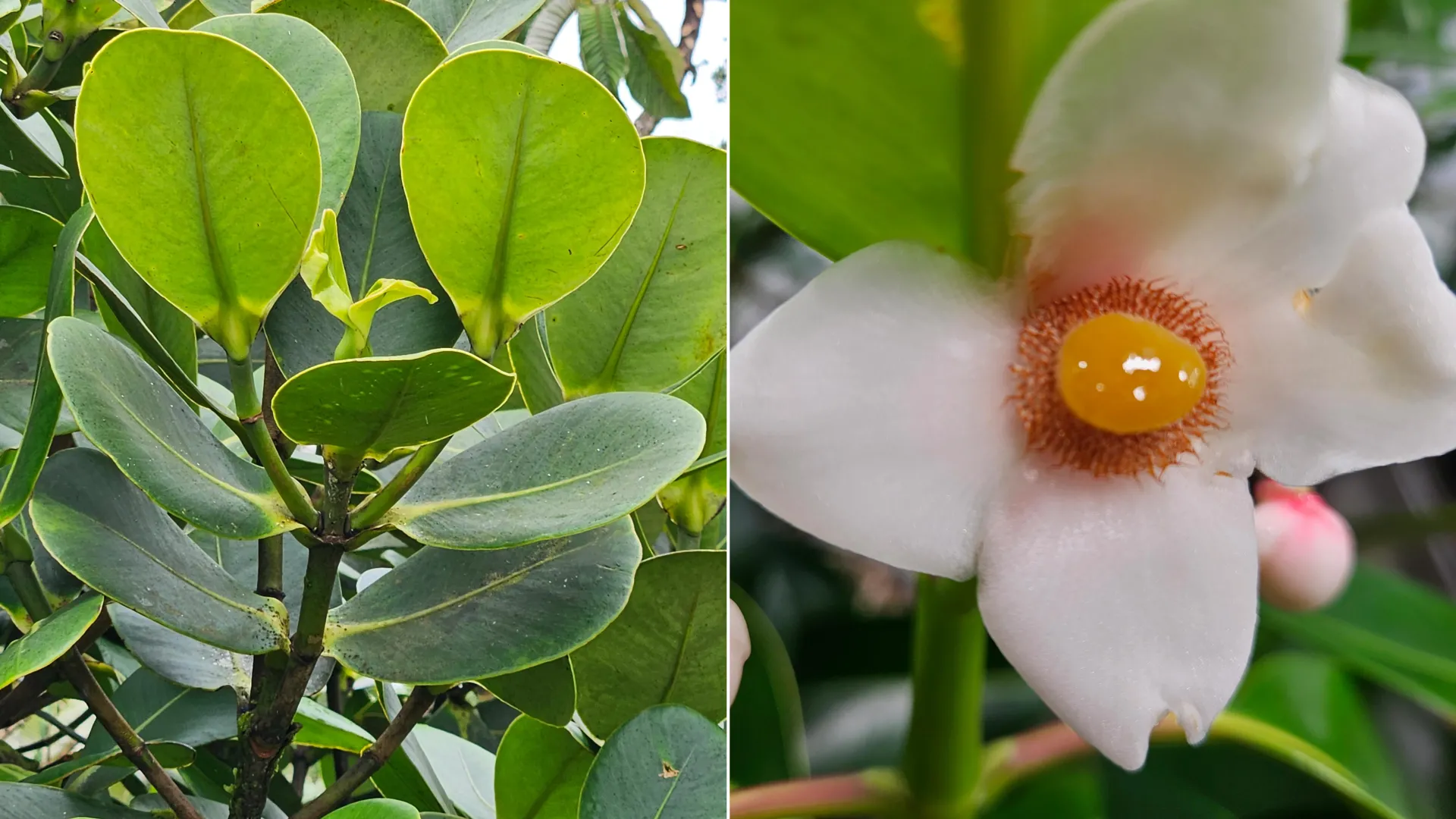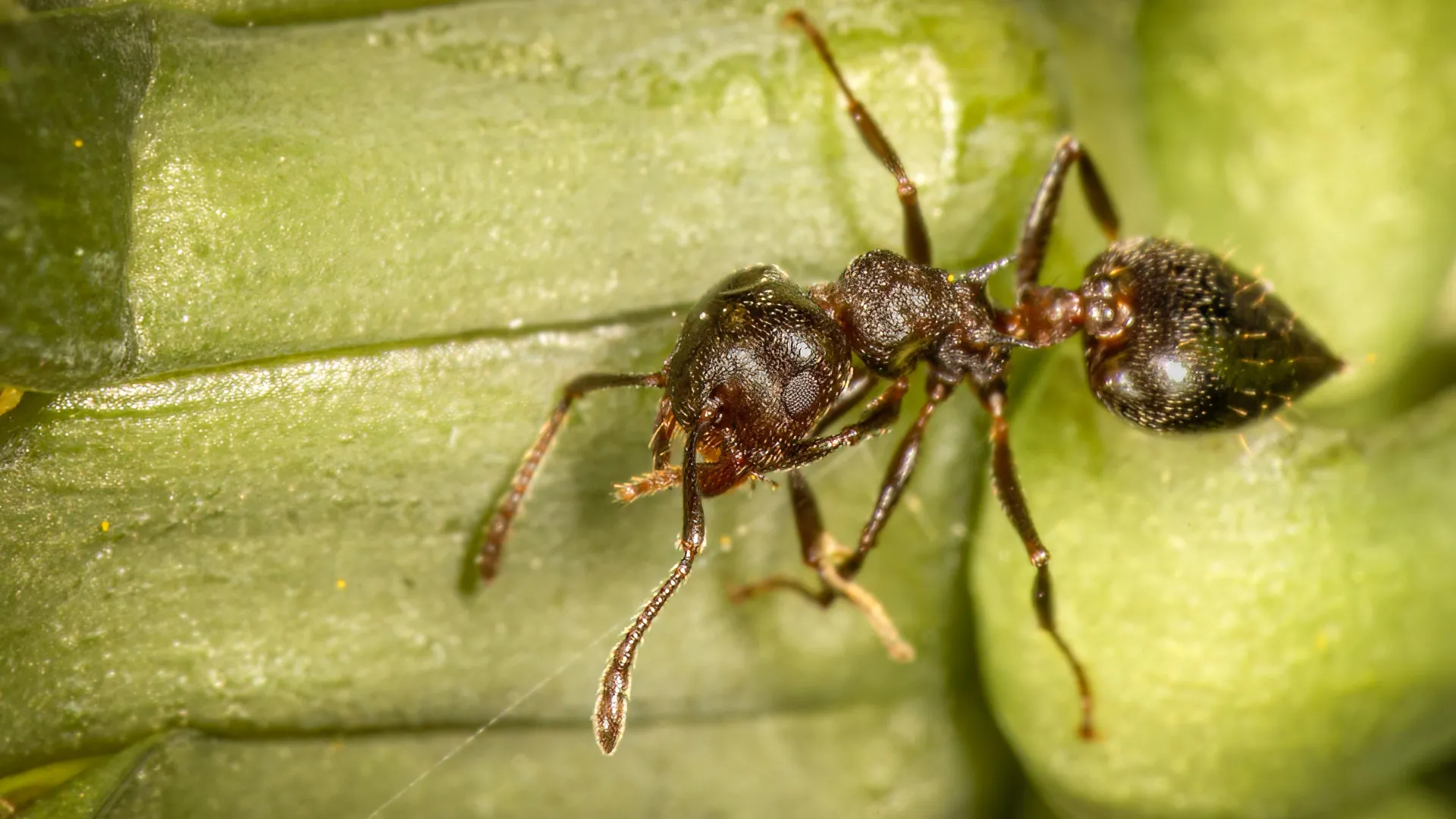
Deep within the verdant, humid canopy of Malaysian Borneo, a quiet but profound ecological transformation is unfolding. For at least 10 million years, the tropical plant Macaranga pearsonii has maintained a highly specialized, mutually beneficial partnership with specific colonies of ants. The plant provides bespoke housing in the form of hollowed stems, known as domatia, and nutrient-rich food bodies, while the ants serve as a vigilant, aggressive private security force, protecting their host from herbivorous insects and encroaching vegetation. However, a recent investigation conducted by an international consortium of researchers has identified a significant disruption to this ancient symbiosis, as predatory wasps increasingly commandeer these ant-constructed shelters for their own reproductive purposes.
The study, recently published in the journal PeerJ, details how these wasps are repurposing the evolutionary architecture of the Macaranga plants. By transforming the protective nurseries of the ants into larders for their own offspring, the wasps are fundamentally altering the biological dynamics of the forest floor and understory. This phenomenon appears to be inextricably linked to human-driven environmental changes, suggesting that the broader ecological impacts of landscape alteration extend far beyond immediate biodiversity loss and into the complex, often unseen, web of long-term species interactions.
A Chronology of Discovery and Ecological Shift
The research team, comprised of scientists from Queen Mary University of London, the Royal Botanic Gardens, Kew, and the Biology Center of the Czech Academy of Sciences, began their fieldwork by surveying Macaranga pearsonii populations across a gradient of forest disturbance. Their study sites ranged from relatively intact logged forests to highly modified oil palm plantations.
During the initial phase of the survey, the research team noted an unusual physical state of the plants. While examining the hollowed stems—structures that should have been teeming with the protective ant colonies—researchers discovered evidence of internal structural modifications. Upon further dissection, the team found that the cavities were no longer functioning as ant housing. Instead, they were filled with paralyzed flies, which served as a live food source for developing wasp larvae.
Lead author Mr. Lestina, who first documented the phenomenon, described the process during the field studies. The adult wasps, rather than acting as a component of the plant’s defense system, utilize the hollow stems as a secure, insulated nursery. By hunting and paralyzing flies and depositing them within the domatia, the wasps essentially convert the plant’s evolutionary investment in ant protection into a temporary storage facility for their progeny. This shift represents a direct appropriation of a biological resource that has been optimized for a different species for millions of years.
Supporting Data and Environmental Correlation
The data collected by the research team highlights a stark correlation between human-altered landscapes and the prevalence of wasp occupation. In the oil palm plantations, where the ecological pressure on indigenous species is highest, the frequency of wasp-occupied Macaranga stems was significantly higher than in the logged forest control sites.
Quantitative analysis of the sampled trees revealed a consistent inverse relationship: trees that housed wasp larvae displayed significantly smaller ant colonies. This finding suggests that the wasps are not merely opportunistic visitors but are likely acting as a disruptive force that limits the size and efficacy of the ant populations. While further longitudinal research is required to definitively prove that the wasps are actively displacing the ants, the current observational evidence suggests that the presence of the wasps is a major stressor for the established ant colonies.
The implications for the plants are significant. The Macaranga pearsonii is a pioneer species, one of the first to recolonize disturbed areas following natural or human-induced clearings. The effectiveness of this colonization is historically contingent on the presence of ants, which defend the young, vulnerable trees from herbivores. If the presence of wasps leads to a decline in ant defense, the plants are left vulnerable to leaf-eating caterpillars and other pests, which could ultimately lower the success rate of forest regeneration.
Official Perspectives and Scientific Implications
Dr. Kalsum M. Yusah, a co-author of the study, emphasized the broader context of these findings within the scope of global habitat loss. "Human activities are transforming habitats worldwide, and this kind of shift in species interactions is exactly what we expect to see," Dr. Yusah noted. The research highlights that even if a species is native to the region, its proliferation into new, human-disturbed niches can create a cascade of unforeseen negative consequences.
The team’s work underscores a critical nuance in environmental science: the difference between species extinction and the extinction of interactions. "We don’t yet know whether this wasp is native or introduced, but its spread is clearly linked to disturbed landscapes," Dr. Yusah added. The research suggests that the disturbance provides an "opening" for the wasps, allowing them to exploit a resource that was previously guarded by the aggressive ant colonies.
Senior author Dr. Fayle, from Queen Mary University of London, highlighted the evolutionary trajectory of such disruptions. He noted that the breakdown of mutualistic benefits is a major driver of long-term evolutionary change. "If these structures become less valuable to the plants because wasps exploit them, the plants may stop investing in them," Dr. Fayle explained. Such a shift could lead to the loss of the genetic investment in hollow stems, permanently altering the plant’s biology and its future ability to form symbiotic relationships.
Broader Impact on Tropical Forest Resilience
The relationship between Macaranga pearsonii and its associated ants is just one of thousands of interconnected, highly specific ecological partnerships that underpin the health and stability of tropical rainforests. The complexity of these systems is what allows tropical ecosystems to be so resilient, yet it is also what makes them vulnerable to "subtle" disruptions.
Ecologists have long monitored the dramatic effects of deforestation, such as the loss of keystone species and the resulting collapse of trophic levels. However, the study in PeerJ serves as an early warning that ecological systems can begin to degrade in ways that are not immediately visible to the casual observer. The transformation of a protective nursery into a wasp-stocked pantry is a form of ecological destabilization that could have profound consequences for forest composition.
If the Macaranga plants become less healthy due to the loss of their ant defenders, the entire recovery process of a disturbed forest could be slowed. Furthermore, if this "invader" dynamic becomes widespread, other similar mutualistic partnerships could also face pressure. This would potentially shift the balance of power within the forest, allowing species that are better adapted to human-altered environments to become dominant, while those that depend on ancient, stable partnerships are pushed toward the margins.
Future Research and Conservation Considerations
The scientific community has responded to these findings with a call for more extensive monitoring of species interactions in secondary and degraded forests. While current conservation efforts often prioritize large-scale habitat protection, this research demonstrates that "micro-scale" conservation—the protection of specific interspecies relationships—is equally vital.
Future studies will likely focus on the mechanisms by which the wasps locate and occupy the hollow stems. Researchers are eager to determine whether the wasps possess a competitive advantage that allows them to actively evict the ants, or if they are simply filling a vacuum left by declining ant populations. Understanding this mechanism will be essential for developing strategies to mitigate the impact of such shifts in tropical forest management.
As human-altered landscapes continue to expand, the window of opportunity to observe and document these fundamental shifts is closing. The case of the Macaranga plants provides a rare, tangible example of the hidden costs of habitat degradation. It serves as a reminder that the resilience of the natural world is not infinite, and that the long-term stability of the planet’s ecosystems depends on the maintenance of these ancient, intricate, and often delicate partnerships. The disruption occurring inside the stems of the Macaranga is, in many ways, a microcosm of the wider challenges facing tropical ecosystems in the 21st century.