The landscape of preclinical research is undergoing a seismic shift, driven by the convergence of digital pathology, artificial intelligence, and a regulatory environment increasingly hostile to the necessity of animal testing. For decades, the pathology workflow was a linear, terminal process: tissue was sectioned, stained, examined under a microscope, reported upon, and subsequently consigned to long-term storage in dusty archive cabinets. Today, that paradigm is being inverted. By digitizing these legacy archives and leveraging sophisticated machine learning models, researchers are finding that the most valuable data for future drug discovery may already be sitting in their own repositories.
The Evolution of the Digital Workspace
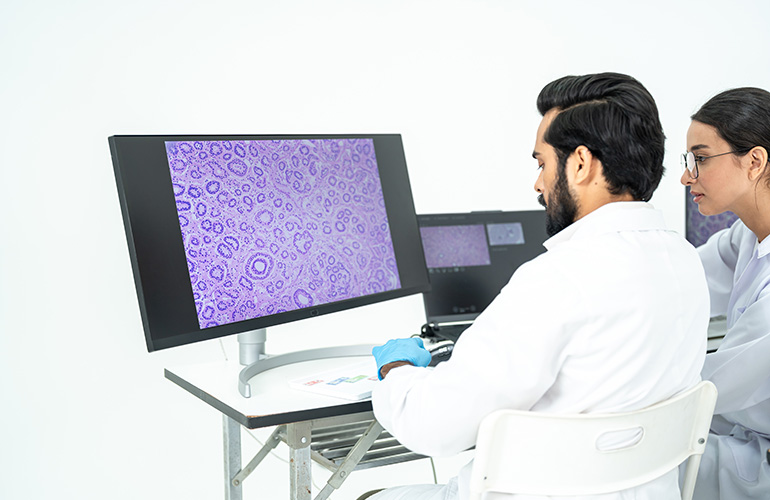
The catalyst for this transformation was the COVID-19 pandemic, which forced a rapid, necessity-driven adoption of digital pathology. As laboratory access became restricted, pathologists were compelled to move away from physical glass slides toward high-resolution digital imaging. What began as a temporary workaround for remote operations quickly revealed a secondary, more profound utility: the ability to treat pathology slides not just as static images for human review, but as rich, pixelated datasets ready for algorithmic analysis.
Dr. Aleksandra Zuraw, a veterinary pathologist at Charles River Laboratories, notes that this transition represents a fundamental change in the definition of a pathology endpoint. "Before, the pathology endpoint was just a report," Zuraw explains. "Now you have the digitized slide, which is pixels." This shift allows for the extraction of molecular patterns—often invisible to the human eye—that correlate with specific physiological responses to drug candidates. By pairing these digitized images with existing molecular measurements and comprehensive pathology reports, researchers can now train AI models to recognize biological signals that were previously overlooked.
Chronology of a Regulatory Pivot
The move toward reducing reliance on animal models has gained significant legal and bureaucratic momentum over the last several years. The foundational shift began in December 2022, when the U.S. Congress enacted the FDA Modernization Act 2.0. This landmark legislation removed the statutory requirement that animal testing be used for all new drug development, effectively opening the door for the acceptance of New Approach Methodologies (NAMs).
Following this legislation, the regulatory timeline accelerated:
- April 2024: Charles River Laboratories launched its Alternative Methods Advancement Project, a strategic initiative aimed at integrating NAMs into standard preclinical toxicology workflows.
- April 2025: The FDA released a formal roadmap for the systematic reduction of animal testing in preclinical safety studies, prioritizing monoclonal antibodies before moving to broader biologics and chemical entities.
- September 2026: The FDA issued updated guidance providing concrete frameworks for how developers can utilize alternative data sources to support clinical trial applications.
This regulatory trajectory suggests a three-to-five-year transition period in which the industry is expected to move from a reliance on animal-heavy studies to a model where NAMs become the default, with animal testing reserved for cases where alternative data is insufficient.
Maximizing Existing Resources: Virtual Controls and Archived Tissue
One of the most immediate impacts of this new approach is the implementation of "virtual control groups." In standard toxicology, a significant number of animals—often a major fraction of the total study cohort—are used solely as a control group to establish a baseline. By mining historical data from thousands of previous studies, researchers are now creating matched virtual controls. If the study conditions and animal models are sufficiently comparable, these virtual controls can replace the need for concurrent control animals, significantly reducing the total number of subjects required per study.
The technical challenge, as Dr. Zuraw highlights, lies in ensuring statistical validity. The goal is to generate enough high-quality, matched historical data to ensure that differences observed in a trial are truly due to the drug and not to environmental or biological variance between the virtual baseline and the current test subject.
Furthermore, the industry is re-evaluating the utility of Formalin-Fixed, Paraffin-Embedded (FFPE) blocks. These blocks, which contain preserved tissue from years of previous experiments, are a goldmine of molecular data. Previously, if a researcher needed to understand a drug’s specific effect on cellular protein expression after a study concluded, they would likely have had to initiate an entirely new animal experiment. Today, thanks to refined protocols for extracting information from FFPE samples—supported by the Organisation for Economic Co-operation and Development’s (OECD) 2025 guidelines on omics analysis—scientists can revisit these blocks. This allows for the retrospective analysis of gene expression and protein activity, effectively squeezing more scientific insight from the same animals without requiring further intervention.
Technological Frontiers: Virtual Staining and AI
Beyond retrospective analysis, the field is moving toward prospective innovation, most notably in the form of "virtual staining." This technique allows scanners to capture images of unstained tissue sections, after which software generates a digital overlay that simulates the appearance of traditional chemical stains, such as hematoxylin and eosin (H&E).
The implications of this are twofold. First, it reduces the costs and chemical waste associated with traditional staining. Second, it facilitates a more flexible analytical environment where a single unstained sample can be digitally "stained" in multiple ways to highlight different biological features, all without damaging the original tissue. According to recent reviews in bioengineering, the proliferation of these applications is accelerating, moving from experimental demonstrations toward standardized clinical and preclinical use.
Broader Implications for Drug Discovery
The shift toward mining archived data and digital pathology is not merely an ethical move to reduce animal welfare concerns; it is a pragmatic strategy to increase the speed and accuracy of drug discovery. By reducing the number of animals required, firms can lower the costs associated with animal housing, ethical oversight, and long-term study maintenance.
However, the transition is not without its hurdles. Industry experts emphasize that the success of these methods depends on "early adopters" who are willing to troubleshoot the regulatory hurdles and establish the technical precedents that smaller firms can follow. The "snowball effect" described by Dr. Zuraw refers to the necessity of building a critical mass of digital data. As labs invest in the infrastructure required to create, store, and share digital pathology files, the barrier to entry for AI-driven discovery decreases, leading to a self-reinforcing cycle of innovation.
The integration of these methods represents a profound maturation of the pharmaceutical industry. By moving away from the "one-way street" of traditional pathology—where tissue was used once and forgotten—researchers are transforming their archives into a living library of biological information. This transition promises to shorten the timeline from drug conception to human clinical trials, ensuring that the information gained from every animal model is maximized, while simultaneously aligning the industry with the global mandate for more humane and efficient research practices. As the FDA continues to refine its guidance, the question for the next decade will not be whether digital pathology can replace traditional methods, but how quickly the industry can scale these innovations to meet the high standards of modern drug safety and efficacy.