In the dense, humid understory of Malaysian Borneo, a ten-million-year-old biological pact is beginning to fracture. A recent study conducted by an international consortium of researchers from Queen Mary University of London, the Royal Botanic Gardens, Kew, and the Biology Center of the Czech Academy of Sciences has identified a significant ecological shift: predatory wasps are systematically encroaching upon the specialized hollow stems of the Macaranga pearsonii tree, effectively displacing the ant colonies that have served as the plant’s primary defense force for millennia.
The findings, published in the journal PeerJ, document a departure from the established mutualistic relationship between the plant and its symbiotic ants. This evolutionary alliance, characterized by a sophisticated exchange of resources for security, is now being disrupted by environmental disturbances, particularly in areas converted to oil palm plantations and logged forests.
The Mechanism of an Ancient Partnership
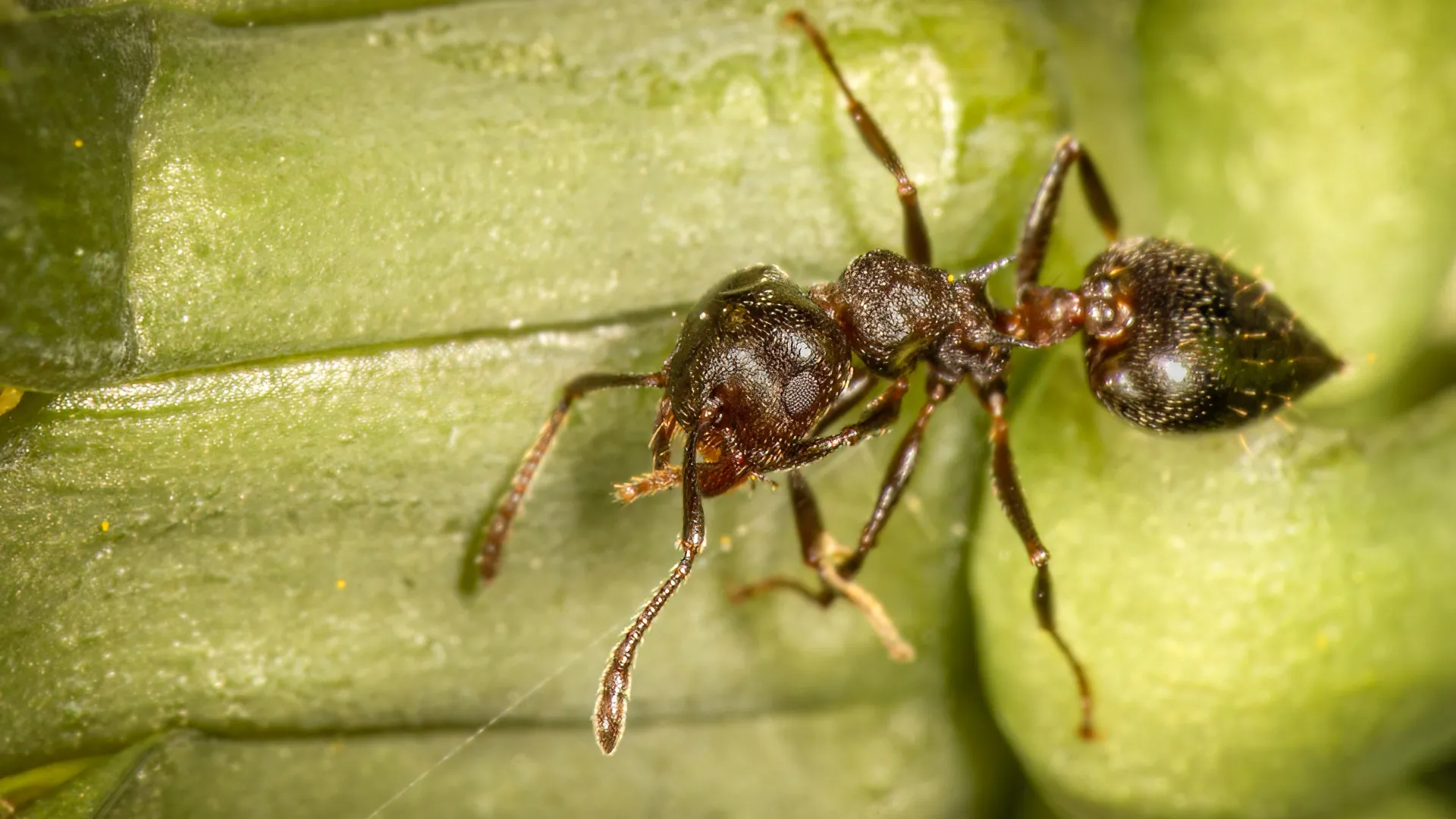
The relationship between Macaranga pearsonii—often referred to as an "ant-plant"—and its resident ants is a classic example of mutualism in tropical biology. The plant invests metabolic energy into developing domatia, which are specialized hollow chambers within its stems. Furthermore, the plant secretes nutritious food bodies, providing a consistent source of sustenance for the ant colony.
In return, the ants provide a robust security detail. They aggressively patrol the foliage, removing herbivores such as caterpillars and preventing competitive vines from encroaching on the plant’s light access. This defensive strategy has allowed Macaranga species to thrive as pioneer plants, rapidly colonizing gaps in the forest canopy. For approximately 10 million years, this division of labor has been a cornerstone of forest succession in Southeast Asia.
Observations from the Field: The Rise of the Invaders
The research team, led by Mr. Lestina, conducted extensive fieldwork across various stages of forest degradation. By dissecting young Macaranga trees, they discovered that the domatia were being repurposed. Instead of housing protective ants, the stems were found to be filled with the paralyzed prey of predatory wasps, serving as a larval nursery.
"While surveying these ant-plants, I noticed that many stems had been hollowed out in an unusual way," Lestina noted. "When we opened them, they were full of flies being eaten alive by wasp larvae. Adult wasps hunt and paralyze the flies, then store them inside the plant’s cavities as food for their young."
This shift effectively turns the plant’s structural investment against it. The energy intended to support a long-term bodyguard is instead hijacked to facilitate the reproductive success of a predator that offers no defensive benefit to the tree. The data indicates a clear correlation between the level of human-induced habitat alteration and the frequency of wasp occupancy. Trees within oil palm plantations exhibited significantly higher rates of wasp infestation compared to those in relatively undisturbed logged forests, suggesting that the wasps are better adapted to or are taking advantage of the simplified, disturbed landscapes created by industrial agriculture.
Implications of Diminishing Ant Populations
The presence of these wasps appears to be inversely proportional to the health and size of the ant colonies. In instances where wasps occupied the domatia, the ant colonies were notably smaller or entirely absent. While the researchers emphasize that further controlled experiments are required to establish a direct causal link regarding the displacement, the observed pattern suggests a competitive exclusion process where the wasps effectively oust the ants from their traditional nesting sites.
The potential loss of ant defenders is not merely a localized nuisance; it poses a risk to the long-term viability of the plant species. If the Macaranga loses its primary line of defense against herbivores, the plants may suffer from increased tissue damage, reduced growth rates, and lower reproductive output. Given that Macaranga species are vital for early-stage forest regeneration, their decline could slow the recovery of forest ecosystems following damage from logging or other disturbances.
Broader Ecological Consequences and Evolutionary Risks
Dr. Kalsum M. Yusah, a co-author of the study, emphasized that this shift is emblematic of a larger trend in human-altered landscapes. "Human activities are transforming habitats worldwide, and this kind of shift in species interactions is exactly what we expect to see," Yusah stated. "We don’t yet know whether this wasp is native or introduced, but its spread is clearly linked to disturbed landscapes."
This development raises concerns regarding the resilience of complex tropical ecosystems. When human intervention alters the competitive balance, it can facilitate the expansion of opportunistic species that may not fill the same ecological niche as the species they displace. The researchers hypothesize that if these hollow stem structures become liabilities rather than assets due to wasp exploitation, the plant may undergo evolutionary pressure to cease investing in them altogether.
Dr. Fayle, the senior author from Queen Mary University of London, noted that such outcomes represent a "hidden" cost of biodiversity loss. "When mutualistic benefits break down, it can drive long-term evolutionary change. If these structures become less valuable to the plants because wasps exploit them, the plants may stop investing in them. These subtle, long-term consequences of human activity are far less understood than straightforward biodiversity loss."
Scientific Context: A Cascade of Instability
This study serves as a sentinel for the broader state of tropical ecosystems. The relationship between Macaranga and ants is but one of thousands of intricate partnerships that underpin the stability of the tropics. If environmental disturbance lowers the barrier for "invaders"—even native species behaving opportunistically—it could lead to a cascading destabilization of other mutualisms.
Such a transformation could fundamentally alter the composition of tropical forests. Should defense-heavy plants like Macaranga be outcompeted or weakened, the dominant flora in these regions may shift toward species that rely on chemical defenses or different structural strategies, permanently altering the trophic structure of the forest.
A Call for Further Longitudinal Research
The research team advocates for a more nuanced approach to monitoring forest health. Traditional conservation metrics often focus on the presence or absence of charismatic megafauna or total canopy cover. However, the Macaranga study demonstrates that ecological systems can reach a "tipping point" within their microscopic interactions long before the broader landscape shows visible degradation.
Future research will need to focus on whether the wasp presence is a permanent fixture in plantation ecosystems or if it is a transient phenomenon that will subside as landscapes stabilize. Additionally, there is an urgent need to determine the precise mechanism of displacement: are the wasps actively killing the ants, or are they simply occupying empty stems that have been abandoned by ants due to environmental stressors?
As industrial expansion continues to push into the remaining primary forests of Borneo, the fate of the Macaranga and its ants serves as a stark reminder. Ecosystems are not static collections of species; they are dynamic, evolved networks of relationships. When those relationships are severed, the resulting void is rarely filled by a functional equivalent, but rather by an opportunistic disruption that can echo through the entire forest, from the hollow stem of a pioneer tree to the composition of the future canopy. The warning is clear: the most profound damage to our planet’s biodiversity often occurs in the quiet, hidden spaces where ancient partnerships are forced to adapt to a rapidly changing world.