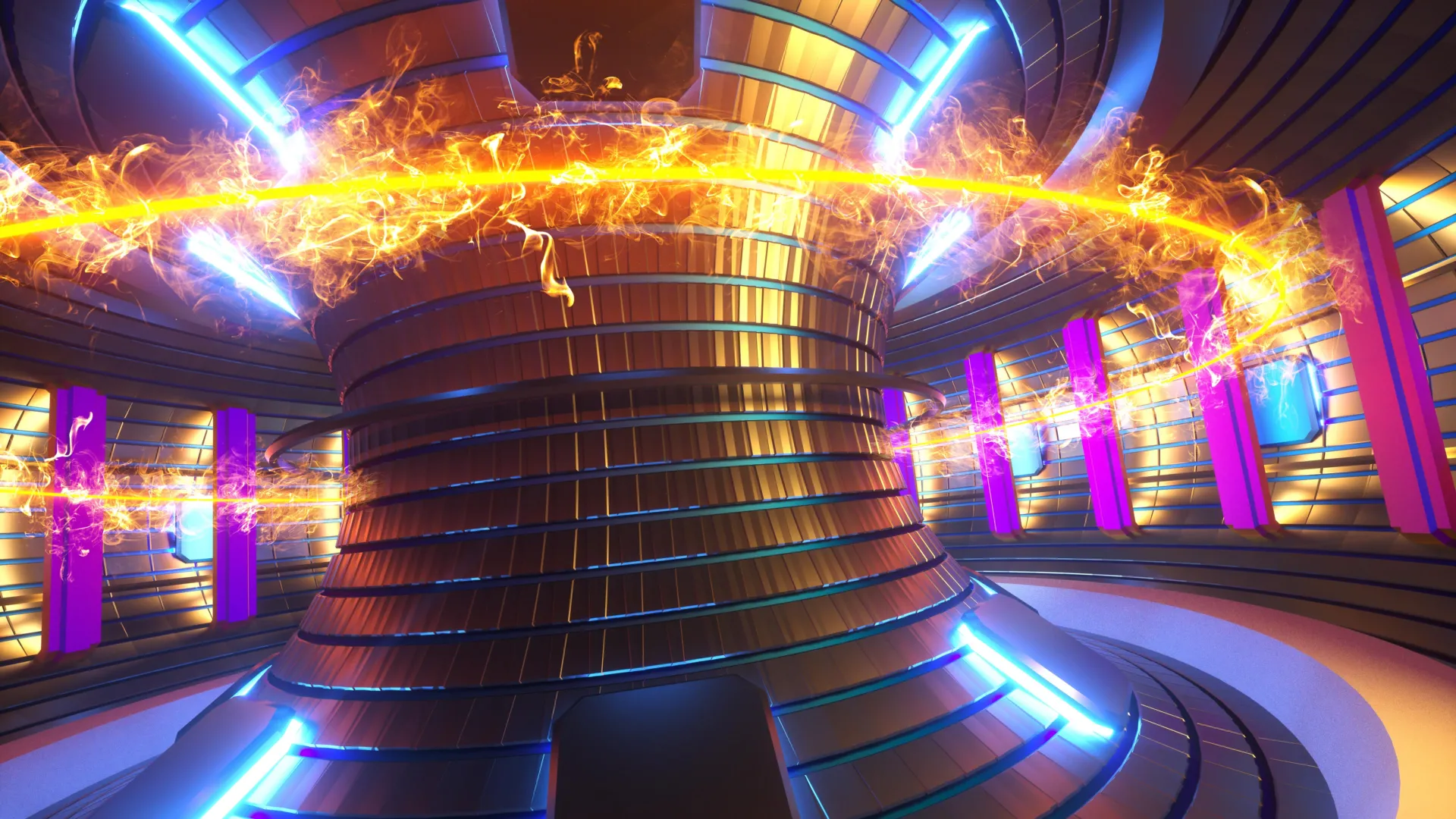
Scientists at the U.S. Department of Energy’s (DOE) Princeton Plasma Physics Laboratory (PPPL) have identified a potentially transformative method for achieving fusion ignition, marking a significant milestone in the decades-long global pursuit of practical, limitless clean energy. By fundamentally rethinking the sequence in which plasma is handled inside a reactor, researchers have calculated that changing the order of heating and compression could dramatically reduce the energy overhead required to spark a self-sustaining fusion reaction.
For more than seventy years, the international scientific community has relied on a foundational mathematical benchmark known as the Lawson criterion to gauge whether a plasma mixture possesses the requisite temperature, density, and confinement time to achieve net energy generation without outside intervention. However, while the Lawson criterion successfully defines the thermodynamic finish line, it has historically failed to chart the most efficient route to cross it. The new theoretical framework, developed by PPPL physicists Luis Delgado-Aparicio, Masayuki Ono, and Jonathan Menard, updates this traditional equation by integrating four crucial physical variables that routinely dictate actual reactor performance. Their findings, recently published in the peer-reviewed journal Physical Review Letters, outline a promising pathway that avoids the brute-force energy requirements historically favored by commercial and academic developers alike.
Historical Context and the Evolution of Fusion Research
The pursuit of controlled nuclear fusion—the very process that powers the sun and stars—dates back to the atomic research programs of the mid-20th century. When light atomic nuclei, typically isotopes of hydrogen such as deuterium and tritium, are subjected to temperatures exceeding 100 million degrees Celsius, they overcome their natural electrostatic repulsion and fuse together. This union releases an immense quantity of energy, holding the promise of a baseload power source that produces zero greenhouse gas emissions and leaves behind no long-lived radioactive waste.
For decades, achieving this state has meant creating and sustaining a "burning plasma," wherein the heat generated by the fusion reactions themselves is sufficient to keep the surrounding fuel at the requisite temperature, eliminating the need for continuous external heating systems. Yet, realizing this milestone has proved notoriously difficult. Most proposed confinement strategies rely on powerful magnetic fields—primarily configured within doughnut-shaped devices known as tokamaks or twisted, three-dimensional geometry systems called stellarators—to isolate the ultra-hot plasma from physical container walls.
Traditionally, experimental design has followed a straightforward, linear path: technicians compress the gaseous fuel into a high-density state first, and then pump enormous quantities of external power into the plasma to drive up its temperature. According to Delgado-Aparicio, this approach is akin to attempting to climb directly up the steepest, most unforgiving face of a towering mountain range simply because the peak represents the final destination.
Navigating the Cordey Saddle and Shifting the Energy Paradigm
To illustrate the mechanics of their new findings, the PPPL research team utilized the geographical metaphor of a mountain pass. In the mathematical landscape of fusion physics, the boundary separating a plasma that requires constant external intervention from one capable of sustaining its own reactions features a critical geographic equivalent: the Cordey saddle.
In topological terms, a saddle point represents a low-lying passage between two higher elevations. In the context of plasma dynamics, the Cordey saddle serves as the most energetically accessible gateway to ignition.
To quantify this landscape, physicists rely on a dimensionless metric designated as Q. The Q-factor measures the ratio of fusion power produced by the reactor against the external heating power delivered to the plasma. A Q value of 5, for instance, denotes that the fusion reactions are generating five times more power than the external heating apparatus is consuming. In an idealized, pristine laboratory plasma consisting exclusively of pure fusion fuel, theoretical calculations place the Cordey saddle at approximately Q = 5.
However, real-world reactors operate in a far more complex environment. Internal impurities, radiation losses, and intense magnetic field pressures routinely distort the mathematical terrain, shifting the location of the Cordey saddle and raising the Q threshold required to pass through it.
By analyzing these variables holistically rather than in isolation, the PPPL team discovered that reversing the traditional operational sequence yields profound efficiency gains. Instead of compressing the fuel first, reactors could heat the plasma prior to increasing its density. This heat-first methodology successfully steers clear of the catastrophic energy spikes associated with head-on compression climbs, allowing future facilities to reach the Cordey saddle through a much smarter, lower-energy trajectory.
The Hidden Threat of Tungsten Contamination
Among the most striking revelations of the PPPL study is the disproportionate impact of microscopic impurities within the reactor vessel. As researchers design next-generation magnetic confinement devices capable of withstanding environments hotter than the solar core, they have increasingly turned to tungsten—an exceptionally durable, heat-resistant metal—to line the interior plasma-facing walls.
Despite its thermal resilience, tungsten poses a severe operational hazard if even minuscule quantities manage to erode and enter the plasma. The team’s calculations reveal that a tungsten contamination concentration of just one part in 10,000 is sufficient to approximately double the pressure required to achieve fusion ignition.
When the researchers expanded their mathematical models from two dimensions into a comprehensive three-dimensional analysis, they discovered that the resulting pressure spikes could easily breach the stability limits of the plasma itself. This finding underscores the reality that seemingly negligible material degradation can threaten the fundamental feasibility of specific reactor architectures, emphasizing the critical need for predictive modeling prior to construction.
Balancing Instabilities and Harnessing Energy Losses
Interestingly, the study also highlights a counterintuitive aspect of plasma physics: physical processes that complicate the journey to ignition may simultaneously assist in stabilizing the reactor during routine operation.
For years, fusion engineers have guarded against the threat of thermal "runaway" instability. This phenomenon occurs when an upswing in fusion reactions generates an excess of internal heat, which in turn accelerates the reaction rate further, triggering a potentially dangerous, self-reinforcing feedback loop.
The PPPL calculations indicate that inherent energy losses within the plasma can naturally counteract this thermal runaway. While these energy dissipations make the initial climb to the Cordey saddle more difficult, they simultaneously provide a self-regulating ballast. This built-in stabilizing mechanism could enable a burning plasma to maintain a steady-state equilibrium without requiring constant, high-frequency adjustments from control systems.
Furthermore, unlike nuclear fission power plants—which maintain long-chain reactions and large inventories of fissile material—magnetic fusion devices hold only seconds’ worth of fuel at any given moment. Should a containment failure or loss of control occur, the plasma immediately cools and the fusion reaction extinguishes itself safely, leaving no possibility of a runaway meltdown.
Technological Solutions and Future Horizons
To counter the barriers identified in their calculations, the PPPL researchers point to several advanced technologies currently under development across the broader scientific community.
One primary solution involves coating the interior walls of fusion reactors with liquid lithium, a mitigation strategy pioneered and tested by PPPL over multiple years. Liquid lithium surfaces can actively trap eroding tungsten atoms, preventing them from migrating into the plasma core while simultaneously reducing heat dissipation.
Additionally, the implementation of spin-polarized fuel—a method wherein atomic nuclei are magnetically aligned prior to injection—offers a viable pathway to boost the baseline fusion reaction rate. When combined with the heat-first operational strategy, these innovations could significantly lower the engineering hurdles standing in the way of commercial fusion deployment.
At present, the proposed heat-first operational strategy remains theoretical, grounded in advanced mathematical calculations rather than direct empirical validation. Existing experimental facilities have yet to routinely achieve the extreme operational regimes associated with the Cordey saddle, precluding immediate physical testing of the predicted route.
To bridge this gap, the PPPL team plans to execute a series of high-fidelity digital experiments. By deploying advanced computer simulations, researchers will test whether prioritizing plasma heating over early compression yields the anticipated performance enhancements in virtual environments.
As private venture capital and government initiatives continue to pour billions of dollars into the commercialization of fusion energy, establishing accurate, predictive computational models is more critical than ever. By identifying hidden inefficiencies and mapping optimized pathways to ignition before physical steel is ever welded, the work conducted at the Princeton Plasma Physics Laboratory provides an invaluable blueprint for the future of global clean energy development.