From Single-Celled Algae to the Frontiers of Neuroscience
The origins of this breakthrough do not lie in a hospital laboratory or a neurobiology department, but in the study of a humble, single-celled green alga known as Chlamydomonas. In the early 2000s, Peter Hegemann of Humboldt University of Berlin and Georg Nagel of the University of Würzburg embarked on a quest to understand how these microorganisms navigate their environment.
For Chlamydomonas, survival is predicated on phototaxis—the ability to move toward or away from light sources to optimize photosynthesis. The researchers identified that the alga’s light-sensing capability relied on a specific protein embedded in its outer membrane: channelrhodopsin. This protein acts as an ion channel, equipped with a light-absorbing molecule called retinaldehyde. When struck by specific wavelengths of light, the retinaldehyde shifts its molecular structure, inducing a conformational change in the channelrhodopsin. This creates a physical gateway through which positively charged ions, such as sodium, can flow into the cell.
This electrochemical influx triggers an electrical signal, effectively instructing the alga to propel itself via its flagella. While this mechanism is rudimentary in an evolutionary sense, it provided the vital missing piece of the puzzle for neuroscientists who had long struggled to stimulate individual neurons without damaging surrounding tissue or relying on imprecise chemical methods.
The Chronology of Innovation
The evolution of optogenetics from a theoretical concept to a mainstream research standard followed a rapid and highly collaborative trajectory:
- 2002–2003: Hegemann and Nagel successfully isolate and characterize the channelrhodopsin protein, demonstrating its function as a light-gated ion channel.
- 2005: Karl Deisseroth, working at Stanford University, successfully expresses channelrhodopsin in mammalian neurons. His team demonstrates that these neurons can be triggered to fire action potentials with millisecond precision using pulses of blue light.
- 2007: The first applications of optogenetics in freely moving animals are published, allowing researchers to observe behavioral changes in real-time.
- 2012: A landmark study led by Susumu Tonegawa at MIT, co-authored by Deisseroth, utilizes optogenetics to demonstrate the physical reactivation of a specific memory in mice, proving that individual neural engrams can be toggled.
- 2020s: Optogenetics begins the transition from laboratory research to clinical investigation, with human trials commencing for retinal restoration and neurological disorder management.
The Mechanics of Precision Control
Traditional methods of brain stimulation—such as Deep Brain Stimulation (DBS)—are often described as "blunt instruments." They involve inserting electrodes into the brain to provide electrical pulses to large regions of neural tissue. While effective for conditions like Parkinson’s disease, they often stimulate unintended pathways, leading to side effects.
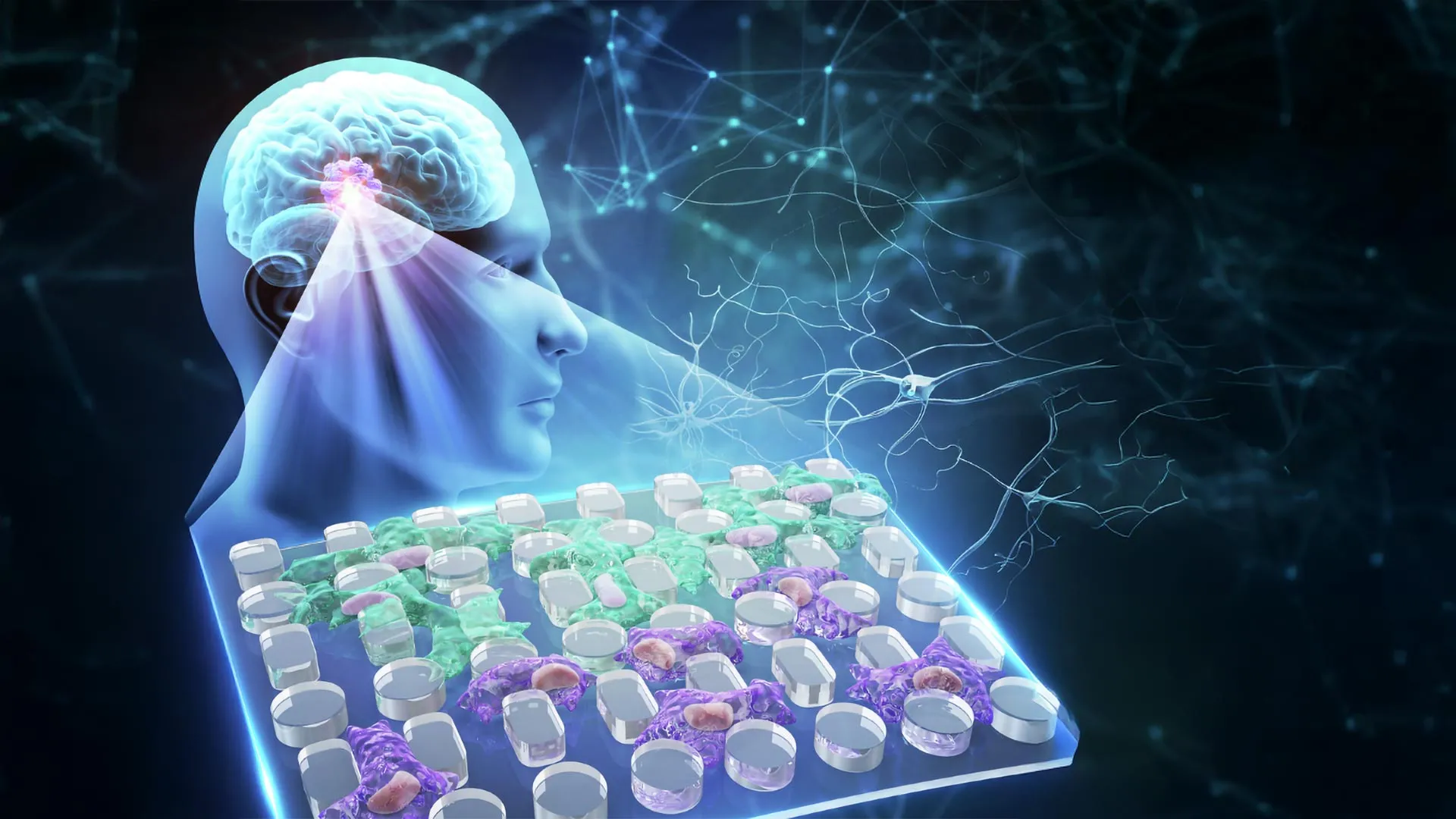
Optogenetics circumvents this by utilizing genetic engineering to introduce light-sensitive opsins into specific, targeted populations of neurons. Once the genes are delivered—typically via a harmless viral vector—the target cells begin expressing the protein. Because scientists can control the light source via fiber optics or LED arrays, they gain a "surgical" level of control over the brain’s circuitry. They can activate or silence specific clusters of neurons at precise intervals, effectively allowing researchers to isolate the function of a single circuit within the complex, interconnected web of the mammalian brain.
Data and Implications for Human Health
The scientific community has widely lauded the Nobel committee’s decision, viewing it as a validation of the importance of "blue-sky" research—scientific inquiry driven by curiosity rather than immediate commercial application. Since the publication of the foundational papers, the number of academic citations related to optogenetics has grown exponentially, with thousands of laboratories globally integrating the technology into their workflows.
The implications for clinical medicine are vast. Currently, early-stage clinical trials are evaluating whether optogenetic proteins can be introduced into the retina to restore vision in patients suffering from degenerative conditions like retinitis pigmentosa. By converting surviving retinal cells into "photo-receivers," clinicians hope to bypass damaged photoreceptors entirely.
Beyond ophthalmology, the potential to treat neuropsychiatric disorders is a subject of intense scrutiny. Researchers are investigating how optogenetics might be used to modulate the neural pathways associated with Parkinson’s disease, epilepsy, and even treatment-resistant depression. By mapping the specific "faulty" circuits in these conditions, scientists hope to develop future therapeutic interventions that provide targeted relief without the systemic impacts of pharmacological treatments.
Reflections on the Discovery
The Nobel committee’s recognition of Deisseroth, Hegemann, and Nagel underscores a critical lesson in the history of science: the most transformative tools often emerge from the most unexpected sources. The study of Chlamydomonas swimming behavior seemed, at the time, to be a niche exercise in cellular biology. Today, it serves as the foundation for the most sophisticated brain-mapping technology in human history.
"This award acknowledges that our understanding of the brain is not limited by our imagination, but by the precision of our tools," remarked a senior fellow at a leading neurological research institute, who requested anonymity to speak on the broader scientific community’s response. "The work of these three men has moved us from simply observing the brain’s electrical ‘weather’ to actually learning how to code the message itself."
Future Outlook and Ethical Considerations
As optogenetics moves toward human clinical application, it brings with it a complex set of ethical considerations. The ability to manipulate neural circuits—and by extension, behaviors and memories—raises questions about the long-term safety of viral gene delivery and the potential for off-target effects. Furthermore, the capacity to modify brain activity, even for therapeutic purposes, necessitates a robust regulatory framework to ensure that these powerful tools are used with the utmost caution and transparency.
Despite these challenges, the trajectory of the field remains overwhelmingly optimistic. With ongoing advancements in light-delivery hardware, such as wireless, biocompatible micro-LEDs that can be implanted without the need for cumbersome fiber-optic cables, the technology is becoming increasingly sophisticated.
The 2026 Nobel Prize serves as a profound reminder that the barriers to understanding the human mind are slowly being dismantled. By looking at how a single-celled organism responds to the sun, scientists have unlocked a mechanism that may eventually help humanity solve the most intricate puzzles of consciousness, memory, and disease. The legacy of Deisseroth, Hegemann, and Nagel is not just in the light-gated channels they discovered, but in the light they have shed on the dark, complex architecture of the mammalian nervous system. As the field continues to mature, it is likely that the "optogenetic era" will be remembered as the turning point where we transitioned from merely studying the brain to actively mastering its language.