In a landmark achievement for the field of condensed matter physics, researchers at the Massachusetts Institute of Technology (MIT) have successfully engineered a novel terahertz microscope capable of capturing quantum-level vibrations within superconducting materials. This breakthrough, detailed in a study published in the journal Nature, marks the first time that scientists have directly observed the subtle, high-frequency oscillations of electrons—often described as a "jiggling" superfluid—inside a material known as bismuth strontium calcium copper oxide (BSCCO). By overcoming a fundamental physical constraint known as the diffraction limit, the MIT team has opened a new window into the quantum world, potentially accelerating the development of room-temperature superconductors and ultra-fast wireless communication technologies.
The Technical Challenge: Bridging the Terahertz Gap
To understand the significance of this development, one must first look at the electromagnetic spectrum. Different wavelengths of light reveal different properties of matter. Visible light provides information about surface aesthetics and geometry; X-rays, with their high energy and short wavelengths, penetrate solid objects to reveal internal structures; and infrared light identifies thermal signatures. Terahertz radiation, which sits between the microwave and infrared regions of the spectrum, is uniquely suited for studying the fundamental building blocks of matter.
Terahertz waves pulse at a rate of over one trillion cycles per second. This frequency is particularly significant because it matches the natural resonant frequencies of atoms and electrons as they move collectively within a solid. However, utilizing terahertz light for microscopic imaging has historically been plagued by the "diffraction limit." This principle of physics dictates that a wave of light cannot be focused into a spot smaller than half of its wavelength.
Because terahertz wavelengths are relatively long—measuring hundreds of microns—traditional optical systems cannot focus them tightly enough to see microscopic details. For perspective, a single human hair is roughly 70 microns wide, meaning a standard terahertz beam would wash over an entire microscopic sample without resolving any of its internal features. This "Terahertz Gap" has long prevented scientists from seeing the quantum fingerprints of advanced materials.
Engineering the Solution: Spintronic Emitters and Near-Field Imaging
The MIT research team, led by Alexander von Hoegen, a postdoctoral associate in the Materials Research Laboratory, and Nuh Gedik, the Donner Professor of Physics, devised a sophisticated workaround to the diffraction limit. Instead of attempting to focus a terahertz beam through traditional lenses, they utilized a "near-field" approach involving spintronic emitters.
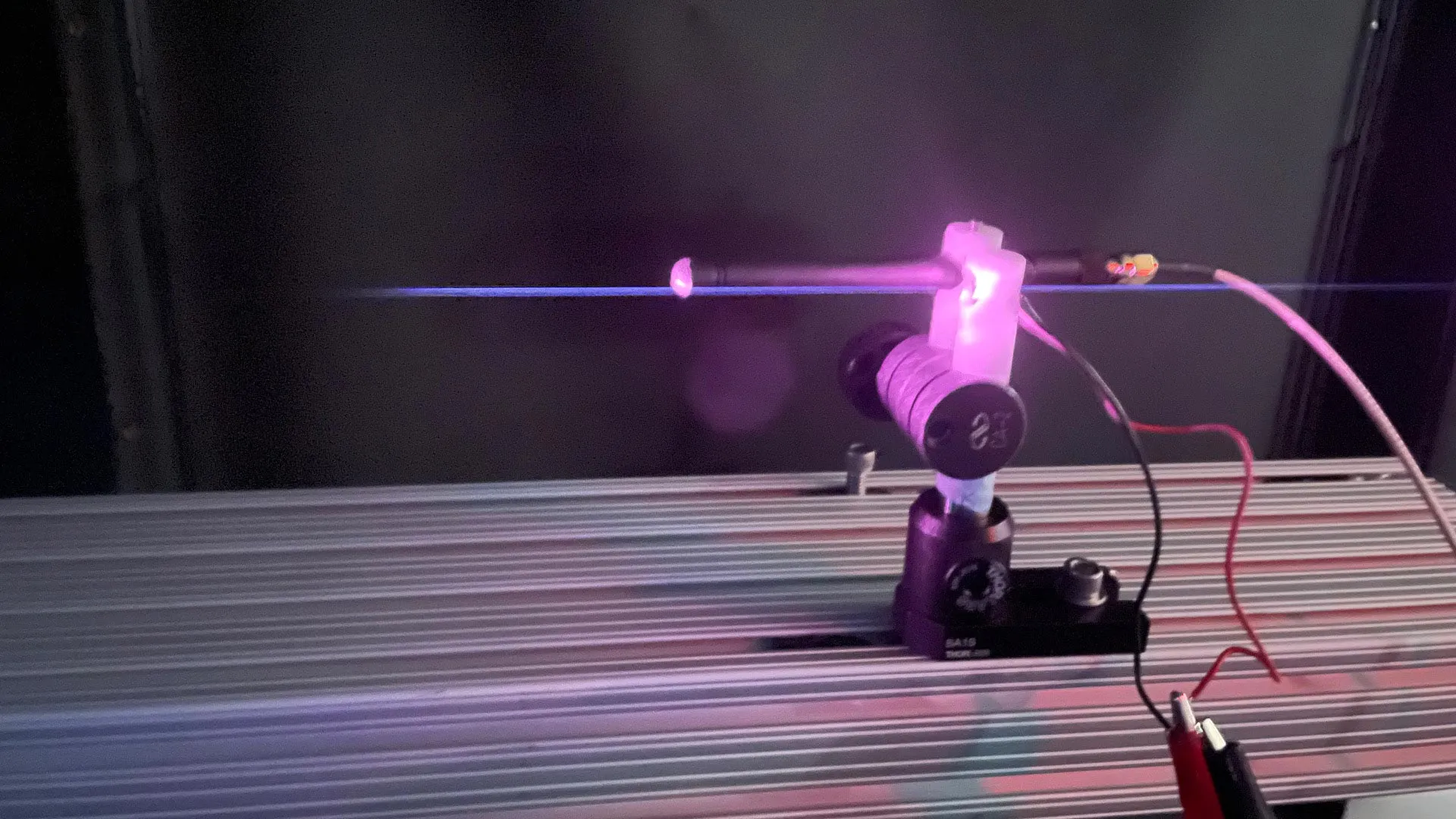
Spintronic emitters are advanced components consisting of stacked, ultrathin layers of metallic films. When these layers are struck by a high-intensity femtosecond laser, they undergo a rapid redistribution of electron spins, which in turn generates a localized burst of terahertz radiation. The key to the MIT breakthrough was placing the superconducting sample in extreme proximity—mere nanometers—to the source of the terahertz pulse.
By capturing the light before it had the opportunity to propagate and spread out, the researchers effectively "compressed" the long-wavelength radiation into a microscopic area. To refine the signal, the team incorporated a Bragg mirror—a specialized, multi-layered structure designed to reflect specific wavelengths while allowing others to pass. This mirror served a dual purpose: it protected the delicate superconducting sample from the heat of the primary laser and filtered out unwanted background noise, ensuring that only the terahertz interactions were recorded.
Case Study: Observing the "Superfluid" in BSCCO
The material chosen for the demonstration was bismuth strontium calcium copper oxide, commonly referred to by its acronym, BSCCO. Discovered in 1988, BSCCO belongs to a class of cuprate superconductors that function at "high" temperatures (relatively speaking, though still far below freezing). In its superconducting state, electrons in BSCCO form Cooper pairs, moving through the crystal lattice without resistance.
Using their new microscope, the MIT team cooled a thin flake of BSCCO to temperatures near absolute zero. As they scanned the terahertz pulses across the material, they observed a phenomenon that had been predicted by theoretical models but never visually confirmed: a collective, frictionless oscillation of the superconducting electrons.
"We see the terahertz field gets dramatically distorted, with little oscillations following the main pulse," von Hoegen explained. These "echoes" or distortions are the result of the material’s electrons absorbing the terahertz energy and then re-emitting it as they vibrate in unison. Professor Gedik described this motion as a "superconducting gel" that jiggles when kicked by the light pulse. This collective mode is a hallmark of quantum coherence, and observing it directly provides invaluable data on how superconductivity is maintained or lost at the microscopic level.
A Chronology of Progress in Superconductivity and Imaging
The development of the terahertz microscope is the latest chapter in a century-long pursuit of understanding how materials conduct electricity.
- 1911: Heike Kamerlingh Onnes discovers superconductivity in mercury cooled to 4.2 Kelvin.
- 1957: The BCS Theory (Bardeen, Cooper, and Schrieffer) explains superconductivity in low-temperature metals.
- 1986-1988: Discovery of "high-temperature" cuprate superconductors like YBCO and BSCCO, which work above the boiling point of liquid nitrogen (77 K).
- 2000s: The rise of Terahertz Time-Domain Spectroscopy (THz-TDS) allows scientists to probe materials using THz pulses, but only at bulk scales.
- 2024: The MIT team successfully integrates spintronic emitters with near-field microscopy to break the diffraction limit, enabling quantum-scale THz imaging.
This timeline highlights the shift from observing that superconductivity happens to understanding how it happens at the sub-micron scale.
Supporting Data and Technical Specifications
The precision of the MIT microscope is evidenced by the scale of the measurements achieved during the experiment. While the terahertz wavelength used was approximately 100 microns, the team was able to resolve features and interactions occurring at a scale of roughly 1 to 2 microns—a 50-fold improvement over the diffraction limit.
The pulses generated by the spintronic emitters are incredibly short, lasting only a few picoseconds (trillionths of a second). This temporal resolution is necessary to capture the "jiggle" of the superconducting electrons, which occurs at frequencies between 0.5 and 3 terahertz. The ability to distinguish between the initial excitation pulse and the subsequent "echo" emitted by the material allows researchers to calculate the density and phase of the superconducting superfluid with unprecedented accuracy.
Broader Implications: From 6G Wireless to Quantum Computing
The implications of this technology extend far beyond the laboratory. One of the most immediate applications is in the field of telecommunications. As current 5G networks reach their capacity, the industry is looking toward the terahertz band for "6G" and "7G" wireless systems. Terahertz frequencies offer much higher bandwidth than the microwaves currently used, potentially enabling data transmission speeds that are hundreds of times faster.
However, building terahertz-compatible hardware requires materials that can efficiently emit, modulate, and detect these high-frequency waves. The MIT microscope allows engineers to study how terahertz light interacts with microscopic circuits and antennas, paving the way for the miniaturized components needed for future smartphones and satellite arrays.
Furthermore, the study of BSCCO and other "unconventional" superconductors is vital for the future of energy and transportation. If scientists can use the data from terahertz microscopy to understand the mechanisms that allow BSCCO to remain superconducting at higher temperatures, they may eventually be able to synthesize materials that work at room temperature. Such a discovery would revolutionize the global power grid by eliminating transmission losses and enable the widespread use of powerful maglev trains.
In the realm of quantum computing, the ability to observe collective electronic modes could lead to more stable qubits. Superconducting qubits are a leading platform for quantum processors, but they are highly sensitive to environmental noise. By visualizing the "jiggle" of the electrons, researchers can identify sources of decoherence and design better shielding or material compositions to keep quantum information intact.
Official Responses and Collaborative Efforts
The success of the project was the result of a massive collaborative effort. In addition to the lead authors at MIT, the research involved scientists from Harvard University, the Max Planck Institute for the Structure and Dynamics of Matter, the Max Planck Institute for the Physics of Complex Systems, and Brookhaven National Laboratory.
"There’s a huge push to take Wi-Fi or telecommunications to the next level," said Alexander von Hoegen, emphasizing the practical utility of the tool. "If you have a terahertz microscope, you could study how terahertz light interacts with microscopically small devices that could serve as future antennas or receivers."
Professor Gedik noted that the microscope is not limited to superconductors. The team is already planning to use the tool to investigate other two-dimensional materials, such as graphene and transition metal dichalcogenides, which exhibit exotic magnetic and electronic phases. "We can now resonantly zoom in on these interesting physics," he said.
The research was supported by several prestigious organizations, including the U.S. Department of Energy (DOE) and the Gordon and Betty Moore Foundation. These institutions have expressed continued interest in how near-field terahertz spectroscopy can be scaled to study other fundamental excitations, such as lattice vibrations (phonons) and magnetic processes (magnons).
Conclusion: A New Era of Microscopic Exploration
The development of the terahertz microscope represents a significant leap forward in our ability to probe the hidden dynamics of matter. By bypassing the limitations of light’s wavelength, MIT researchers have provided the scientific community with a powerful new instrument for discovery. As this technology matures, it will likely become a standard tool in material science labs worldwide, driving innovations in electronics, energy, and our fundamental understanding of the quantum universe. The "superconducting gel" of BSCCO is just the first of many quantum phenomena that will finally be brought into focus.