In a landmark study published in the Proceedings of the National Academy of Sciences, a multidisciplinary team of researchers led by Michigan State University has unraveled the complex biochemical mechanism that allows sperm to rapidly increase their energy production. The discovery of a molecular "switch" involving the enzyme aldolase provides a definitive map of how sperm transition from a dormant state to the high-energy "hyperactivated" state required for fertilization. This breakthrough not only offers new avenues for treating male-factor infertility, which contributes to nearly half of all infertility cases worldwide, but also establishes a foundational blueprint for a new generation of nonhormonal, on-demand male contraceptives.
The research, headed by Melanie Balbach, an assistant professor in the Department of Biochemistry and Molecular Biology at MSU, identifies the specific metabolic reprogramming that occurs as sperm enter the female reproductive tract. By pinpointing the enzymes that regulate this energy surge, the study addresses a long-standing mystery in reproductive biology: how a cell with limited internal resources can suddenly generate enough power to penetrate the protective layers of an egg.
The Biochemical Mechanics of Sperm Activation
To understand the significance of the MSU discovery, it is necessary to examine the unique life cycle of mammalian sperm. Unlike most cells in the human body, which maintain a relatively steady baseline of metabolic activity, sperm exist in two distinct states. Prior to ejaculation, they are stored in the male reproductive tract in a state of metabolic quiescence. In this low-energy phase, their movement is minimal, preserving their limited fuel reserves for the arduous journey ahead.
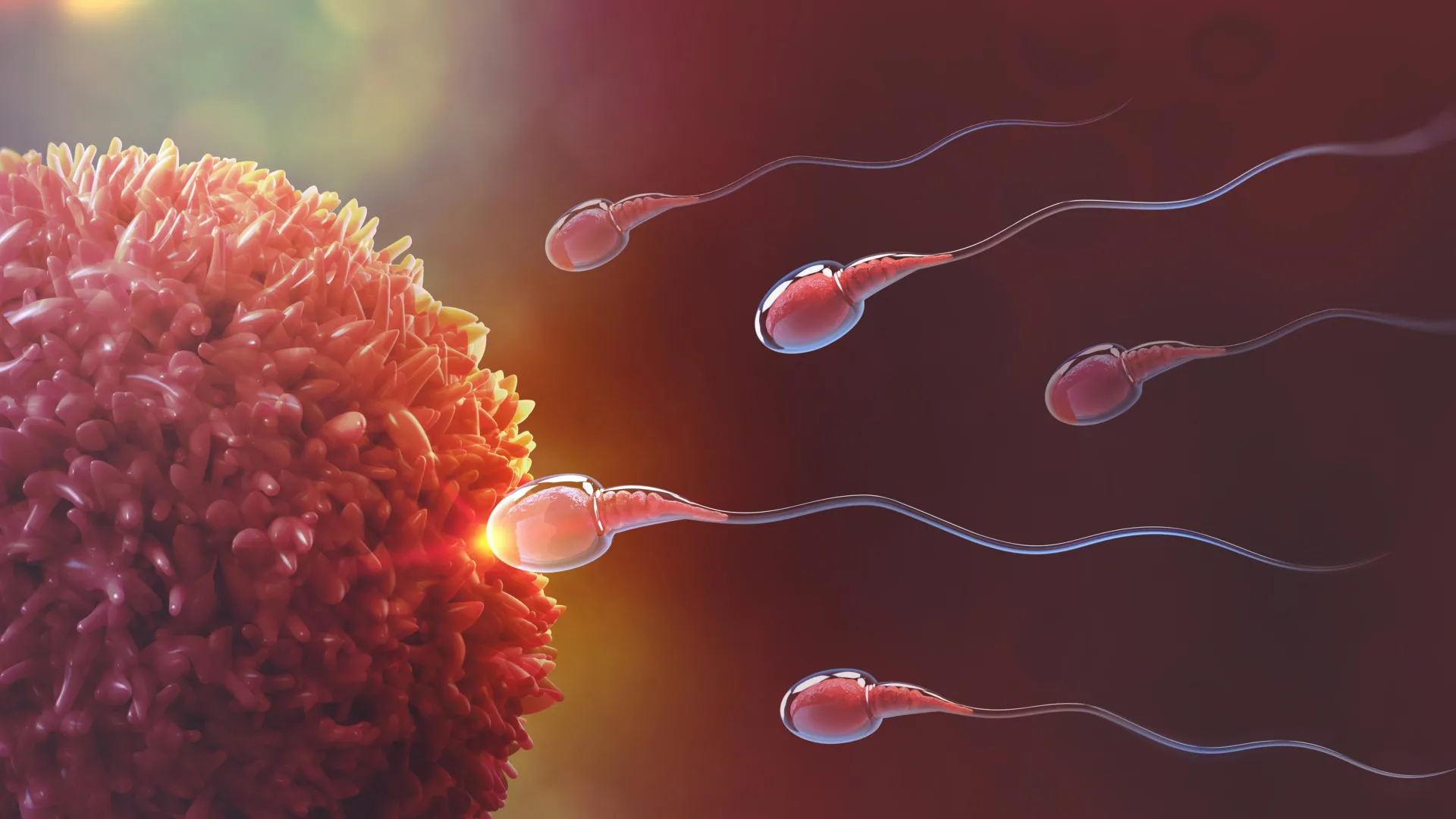
Upon entering the female reproductive tract, sperm undergo a process known as "capacitation." This transformation involves a dramatic shift in physiology: the sperm’s tail (flagellum) begins to beat with significantly more force—a movement called hyperactivation—and the outer membrane undergoes chemical changes to prepare for fusion with the egg. These processes are extremely energy-intensive, requiring a sudden and massive spike in adenosine triphosphate (ATP) production, the primary energy currency of the cell.
Dr. Balbach’s team focused on how sperm manage this "metabolic switch." Through their research, they identified that sperm rely heavily on glycolysis—the process of breaking down glucose into energy—but do so through a highly specialized pathway. The enzyme aldolase emerged as a critical regulator in this process, acting as a gatekeeper that determines the speed and efficiency of glucose metabolism during the final moments before fertilization.
Methodology: Mapping the Metabolic Highway
The researchers employed a sophisticated technique to track the movement of nutrients within the sperm cells. Working in collaboration with experts at the Memorial Sloan Kettering Cancer Center and the Van Andel Institute, the team used advanced mass spectrometry and metabolomics to observe the chemical path of glucose.
To explain the complexity of this tracking, Dr. Balbach utilized a transportation analogy. "You can think of this approach like painting the roof of a car bright pink and then following that car through traffic using a drone," she explained. By "painting" the glucose molecules with isotopic labels, the researchers were able to watch how the fuel moved through the cell’s internal machinery.
The findings revealed that activated sperm do not just use more fuel; they use it differently. In the activated state, the "pink cars" (glucose molecules) moved significantly faster and followed specific metabolic "routes" that were underutilized in the inactive state. The researchers also identified specific "intersections" or enzymatic steps where the process could potentially become bottlenecked or, conversely, where it could be targeted for inhibition.
A Chronology of Discovery and Research Evolution
The path to this discovery began several years ago while Dr. Balbach was a postdoctoral researcher at Weill Cornell Medicine. During that period, she was part of a team that demonstrated that blocking a specific enzyme in sperm could render male mice temporarily infertile. This earlier work proved the concept that sperm function could be "turned off" without interfering with the underlying process of sperm production (spermatogenesis).
In 2023, Dr. Balbach joined the faculty at Michigan State University, bringing her pioneering work on sperm metabolism to the university’s Department of Biochemistry and Molecular Biology. Utilizing the high-tech resources of MSU’s Mass Spectrometry and Metabolomics Core, she expanded her scope to look at the broader metabolic landscape.
The timeline of the current study involved several phases:
- Isolation and Observation: Initial trials focused on observing the differences in ATP levels between dormant and activated murine (mouse) sperm.
- Pathway Mapping: Using isotopic labeling to identify the primary fuel sources (glucose and fructose) and the enzymes involved in their breakdown.
- Enzyme Identification: The identification of aldolase as the primary regulator of the glycolytic surge.
- Validation: Testing inhibitors to see if blocking these metabolic pathways could effectively halt sperm motility without causing permanent damage to the cell.
Implications for the Global Infertility Crisis
The World Health Organization (WHO) estimates that approximately 1 in 6 people globally experience infertility in their lifetime. While much of the focus of assisted reproductive technology (ART) has historically been on female physiology, male-factor issues are equally prevalent.
The MSU study provides a new diagnostic framework for male infertility. Currently, semen analysis focuses largely on sperm count, morphology (shape), and basic motility. However, many men with "normal" sperm parameters still struggle with infertility. Dr. Balbach’s research suggests that a failure in the "metabolic switch" could be a hidden cause. If sperm cannot successfully transition to a high-energy state, they will never reach or penetrate the egg, regardless of how many are present.
By understanding the role of aldolase and other metabolic regulators, clinicians may eventually be able to develop tests that measure a sperm sample’s "metabolic readiness." Furthermore, this knowledge could lead to improvements in In Vitro Fertilization (IVF) and Intrauterine Insemination (IUI) by optimizing the media used to "wash" and prepare sperm, ensuring they have the exact nutrient mix required to trigger their energy surge.
The Path to Nonhormonal Male Contraception
Perhaps the most culturally and socially significant application of this research lies in the development of male birth control. For decades, the burden of contraception has fallen disproportionately on women. Existing male options are largely limited to condoms, which have a significant "typical use" failure rate, or vasectomies, which are intended to be permanent.
Previous attempts to create a "male pill" have mostly focused on hormonal approaches that suppress testosterone to stop sperm production. However, these trials have frequently been plagued by side effects similar to those experienced by women on the pill, including mood swings, weight gain, and acne, often leading to the discontinuation of clinical trials.
The metabolic approach identified by the MSU team offers several advantages:
- Targeted Action: Because the enzyme "switch" is specific to sperm activation, a drug targeting it would likely have no effect on other tissues in the body, minimizing systemic side effects.
- On-Demand Capability: Because the switch happens just before fertilization, an inhibitor could potentially be taken shortly before intercourse or provide a window of infertility that lasts only hours or days, rather than weeks.
- Rapid Reversibility: Unlike hormonal methods that can take months to clear the system and restore sperm production, a metabolic inhibitor would simply stop the energy surge of the sperm currently in the tract. New sperm produced later would be unaffected once the drug wears off.
"Right now, about 50% of all pregnancies are unplanned," Dr. Balbach noted. "Providing men with additional options and agency in their fertility is essential. It also creates freedom for those using female birth control, which is hormone-based and often carries significant health risks."
Expert Analysis and Future Directions
The scientific community has reacted to the study with cautious optimism. Independent reproductive biologists note that while the results in mouse models are compelling, the transition to human applications requires rigorous testing. Human sperm metabolism, while similar to that of mice, has subtle differences, particularly in how they utilize fructose versus glucose.
Dr. Balbach is already looking toward these next steps. Her future research at MSU will aim to confirm if the same "traffic-control" enzymes function identically in human sperm. The team is also exploring how other fuel sources found in the female reproductive tract might influence sperm longevity and velocity.
Furthermore, the study opens the door to "unisex" contraceptive research. If an inhibitor can be developed that targets the enzymes within the sperm, it could theoretically be delivered as a vaginal insert or cream used by the female partner, effectively "disarming" the sperm upon entry without affecting the female partner’s hormonal balance.
Conclusion: A New Era of Reproductive Science
The identification of the aldolase-driven metabolic switch marks a pivotal shift in how scientists view sperm. No longer seen as simple "delivery vehicles" for DNA, sperm are now understood to be metabolically flexible cells capable of complex reprogramming.
The support for this research by the National Institute of Child Health and Human Development underscores its importance to public health. As the team at Michigan State University continues to map the intricate pathways of reproductive biology, their work stands at the intersection of basic science and life-changing medical application. Whether through the creation of a long-awaited male contraceptive or the development of more effective treatments for couples struggling to conceive, the discovery of this molecular switch represents a significant leap forward in our understanding of the beginning of life.