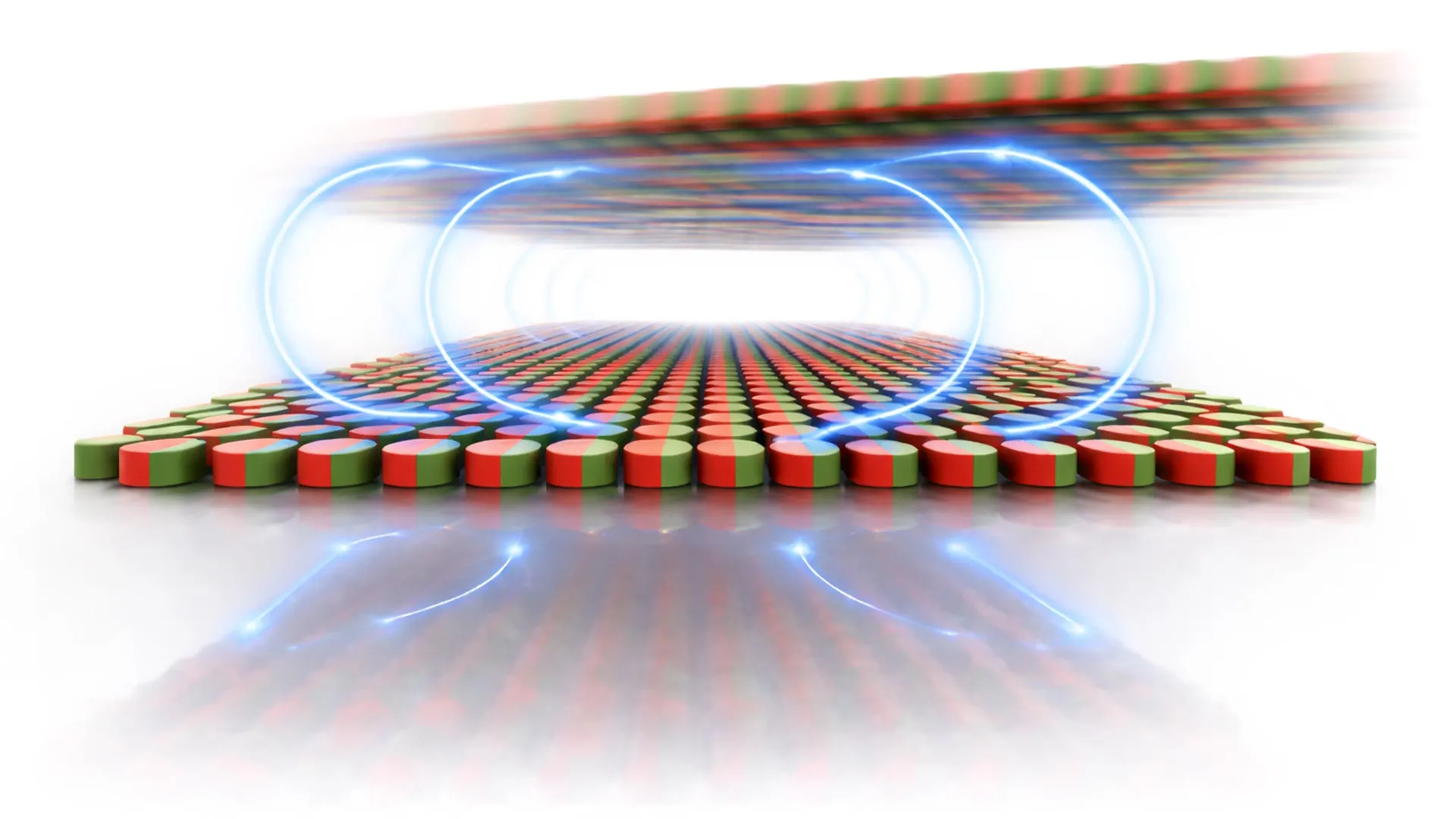
In a landmark study that disrupts over three centuries of established physical theory, researchers at the University of Konstanz have identified a fundamentally new category of sliding friction. This phenomenon occurs entirely without physical contact, arising instead from the collective behavior and internal reorganization of magnetic elements. The discovery, led by physicists at the German institution, demonstrates that friction does not always follow the linear progression described by Amontons’ law—one of the oldest empirical rules in physics. Instead, the team observed that resistance to motion can reach a distinct peak when the magnetic ordering within a system becomes "frustrated," or forced into conflicting configurations.
The research, recently published in a leading scientific journal, represents a significant shift in the field of tribology—the study of interacting surfaces in relative motion. By decoupling friction from surface contact and wear, the findings provide a new framework for understanding energy dissipation in complex systems and offer a blueprint for developing the next generation of contactless mechanical components.
The Historical Context of Amontons’ Law
To understand the magnitude of the University of Konstanz discovery, one must look back to 1699, when the French physicist Guillaume Amontons rediscovered the laws of friction originally proposed by Leonardo da Vinci. Amontons’ second law states that the force of friction is directly proportional to the applied load—the force pressing two surfaces together. This principle has remained a cornerstone of mechanical engineering and physics for over 300 years.
In everyday life, this law is intuitive: pushing a heavy cabinet across a floor is more difficult than pushing a light one because the increased weight (load) creates more significant microscopic interlocking between the surfaces. On a molecular level, traditional friction is explained by the deformation of "asperities"—the tiny bumps and irregularities present on even the smoothest surfaces. As the load increases, these asperities deform and create a larger effective contact area, leading to higher resistance.
However, the University of Konstanz team hypothesized that this linear relationship might fail in systems where motion triggers profound internal changes rather than mere surface deformations. Magnetic materials provided the perfect testing ground for this theory, as the internal alignment of magnetic "spins" can be altered by external movement, potentially creating a new source of resistance that bypasses physical contact entirely.
The Experimental Architecture: A Tabletop Magnetic Array
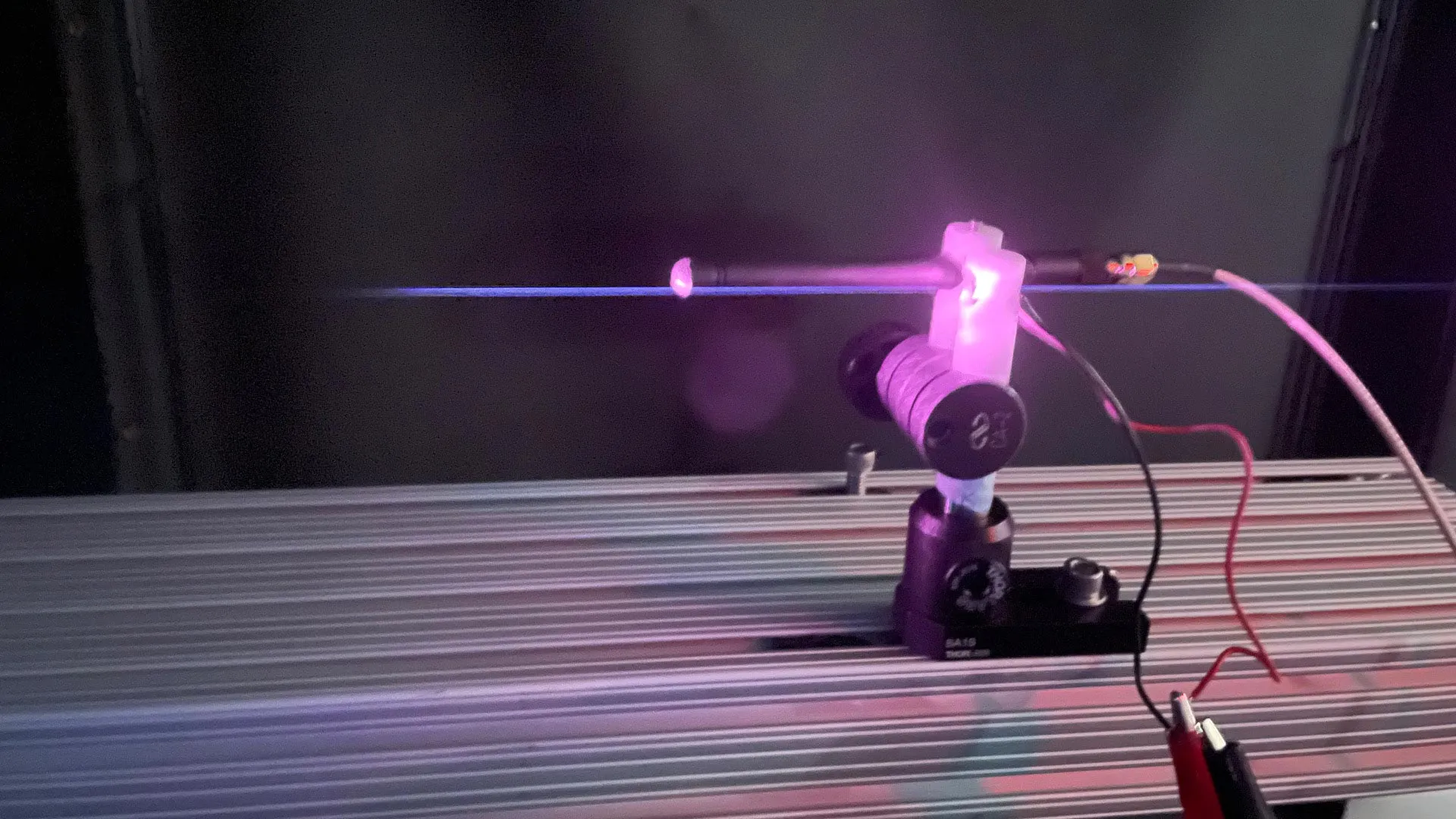
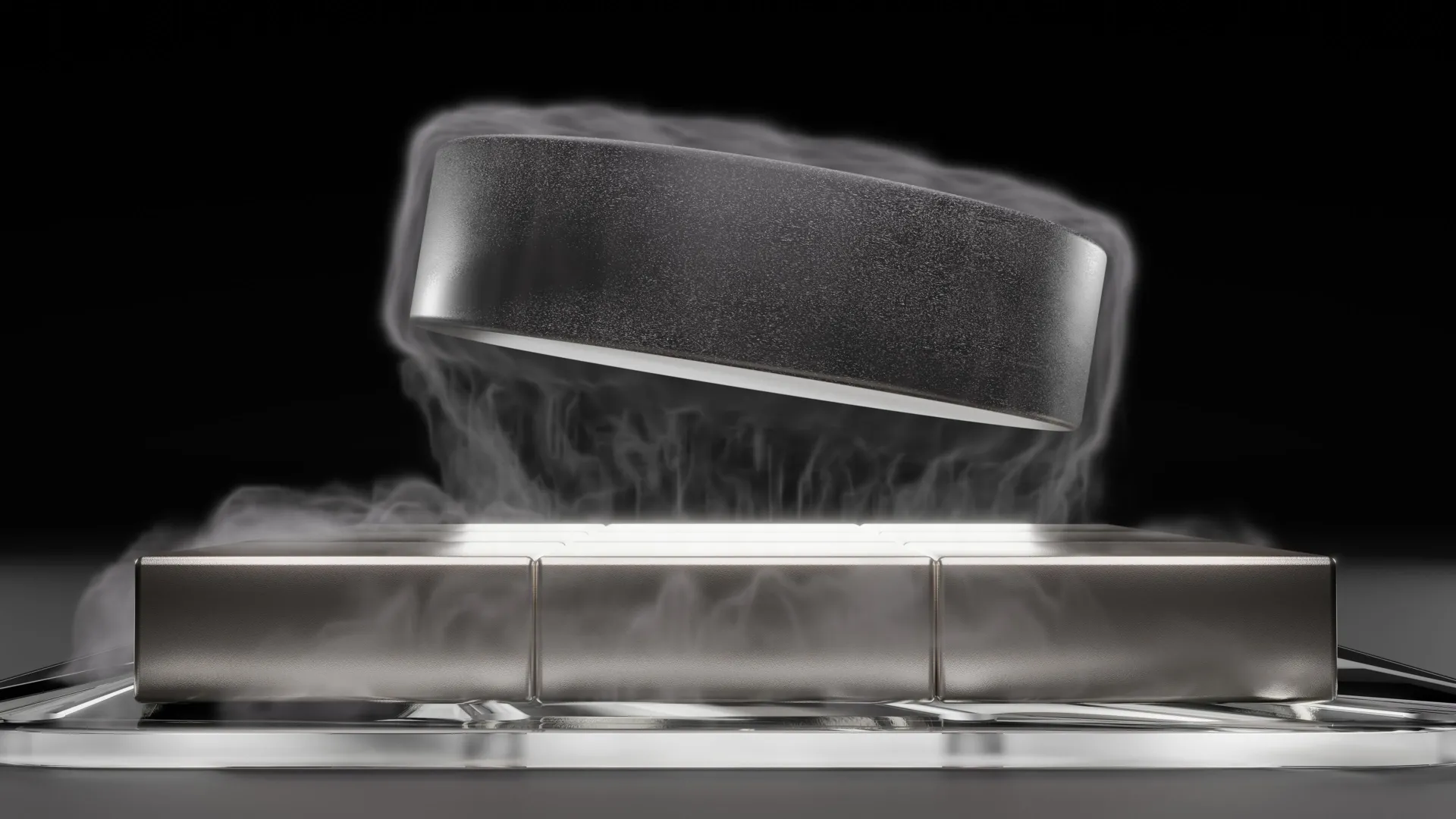
To test the boundaries of classical friction, researchers Hongri Gu, Anton Lüders, and Clemens Bechinger designed a sophisticated tabletop experiment. The setup consisted of a two-dimensional array of magnetic rotors—freely rotating magnetic elements—positioned precisely above a second, static magnetic layer.
The critical feature of this experiment was the total absence of physical touch. The upper and lower layers were separated by a controlled air gap, ensuring that any resistance encountered during motion was purely the result of magnetic field interactions. By adjusting the vertical distance between these layers, the researchers could simulate a "load" without ever bringing the materials into contact. As the distance decreased, the magnetic coupling between the layers intensified, mimicking the increase in pressure between two physical surfaces.
Using high-precision sensors and optical tracking, the team was able to measure the force required to move the top layer while simultaneously observing how the individual magnetic rotors reoriented themselves in real-time. This dual observation allowed the researchers to correlate the macroscopic force of friction with the microscopic behavior of the magnetic moments.
The Phenomenon of Magnetic Frustration and the Friction Peak
The experimental results yielded a pattern that directly contradicts the steady, linear increase predicted by Amontons’ law. Instead of a consistent rise in friction as the layers were brought closer together, the researchers observed a "peak" at intermediate distances.
This unexpected behavior is rooted in a state known as magnetic frustration. In the Konstanz experiment, the two layers possessed conflicting magnetic preferences. The upper layer of rotors was designed to naturally align in an antiparallel configuration, where neighboring magnets point in opposite directions. Conversely, the lower magnetic layer exerted a force that encouraged a parallel arrangement.
At large distances, the magnetic interaction was too weak to cause significant resistance. At very close distances, the influence of the bottom layer was so dominant that it forced the upper rotors into a stable, locked state, allowing for relatively smooth movement. However, at intermediate distances, neither preference could dominate. This created a "regime of competing interactions," where the magnetic rotors were forced into unstable, constantly switching states.
"By changing the distance between the magnetic layers, we could drive the system into a regime of competing interactions where the rotors constantly reorganize as they slide," explained Hongri Gu, who conducted the experimental trials. This constant, turbulent reorganization requires energy, which is dissipated as friction.
Theoretical Framework: Hysteresis and Internal Reorganization
The theoretical explanation for this phenomenon was developed by Anton Lüders, who focused on the concept of magnetic hysteresis. In physics, hysteresis refers to systems where the current state depends on its history. As the magnetic layers move past one another, the rotors do not snap instantly into new positions; they "lag" and then jump abruptly between configurations.
This "jumpy" movement is inherently dissipative. Each time a magnetic rotor flips or reorients to resolve the frustration between the layers, energy is lost to the system in the form of heat, even though no physical rubbing occurs. This process creates a "sawtooth" energy landscape where the system must overcome energy barriers to continue moving.
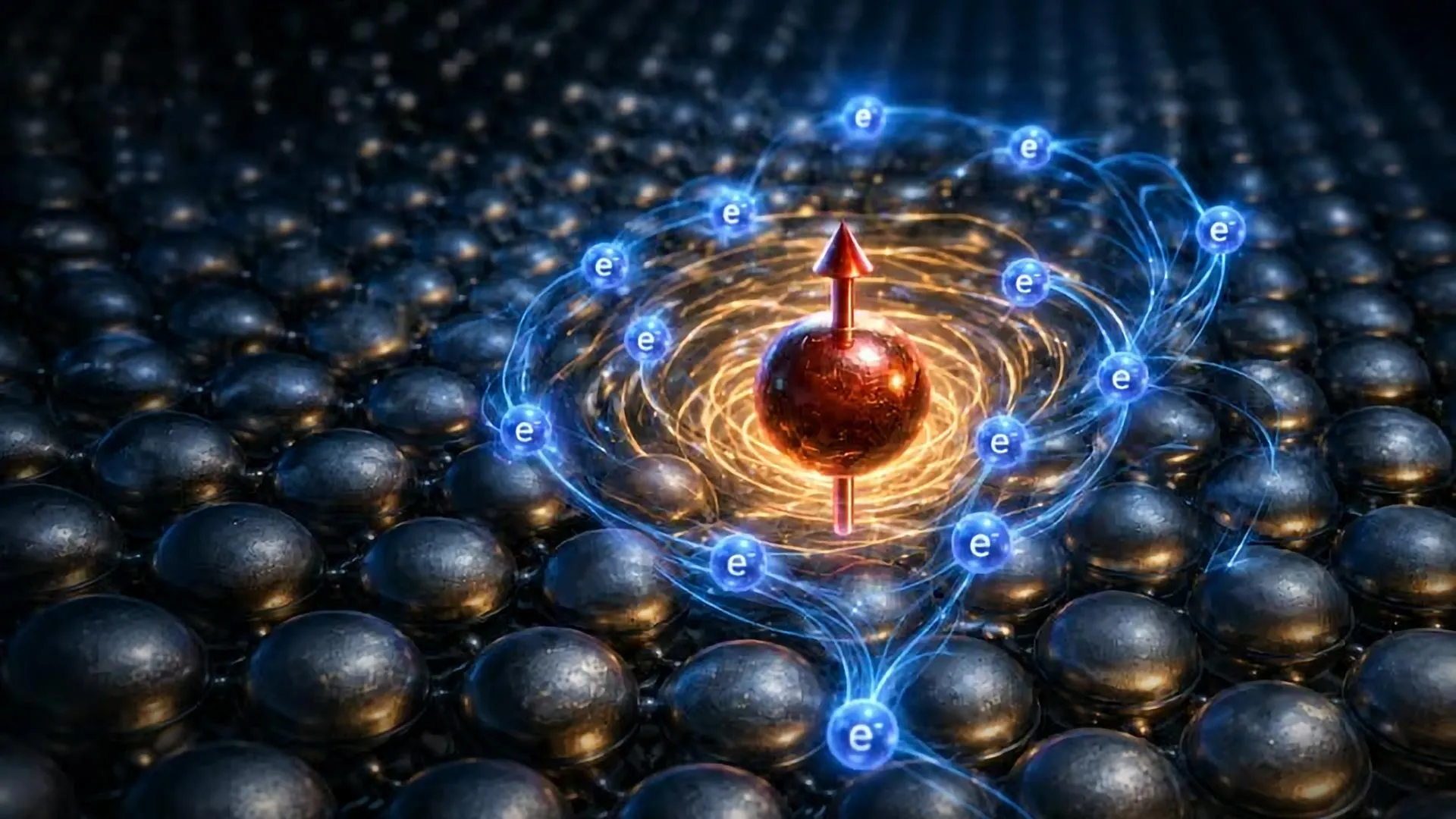
"From a theoretical perspective, this system is remarkable because friction does not originate from a physical surface contact, but from the collective dynamics of magnetic moments," Lüders noted. The peak in friction occurs precisely where this internal reorganization is most chaotic and frequent.
A Chronology of Friction Research
The discovery marks a new chapter in a long history of tribological milestones:
- 1490s: Leonardo da Vinci records the first systematic studies of friction, noting the relationship between load and resistance.
- 1699: Guillaume Amontons formalizes these observations into laws, stating friction is independent of the original area of contact.
- 1785: Charles-Augustin de Coulomb adds the distinction between static and kinetic friction.
- 1950s: The development of the "Adhesion Theory of Friction" by Bowden and Tabor explains the molecular basis of contact.
- 2024: The University of Konstanz identifies "Contactless Magnetic Friction," proving that collective internal dynamics can generate friction that violates Amontons’ linear load-dependency.
Supporting Data and Technical Implications
The data collected by the Konstanz team shows that the friction force ($F_f$) in magnetic systems is a non-monotonic function of the distance ($d$). In traditional systems, $F_f$ would increase as $1/d^x$. In the magnetic model, the curve shows a distinct bell shape at specific coupling strengths.
This discovery has profound implications for the development of "frictional metamaterials." These are synthetic structures designed to have friction properties that do not exist in nature. By engineering the magnetic layout of a surface, scientists could theoretically create materials where friction decreases as you press harder, or where friction only exists at specific speeds or distances.
Furthermore, because this friction is contactless, it eliminates the primary enemy of mechanical engineering: wear and tear. In traditional machinery, friction eventually destroys the interacting surfaces, leading to component failure. Magnetic friction offers a path toward "eternal" mechanical components that experience resistance without degradation.
Potential Applications: From MEMS to Aerospace
The practical applications of this research span several high-tech industries. One of the most immediate beneficiaries could be the field of Micro-Electro-Mechanical Systems (MEMS). These tiny devices, used in everything from smartphone sensors to medical implants, often fail due to the high surface-to-volume ratio which makes traditional friction and stiction (static friction) devastating. Contactless magnetic friction could allow for micro-gears and motors that operate for decades without wearing down.
In the realm of heavy industry, magnetic bearings already exist to reduce contact, but they often lack the fine-tuned damping control provided by traditional lubricants. The Konstanz findings suggest that "magnetic dampers" could be created to provide adjustable, remote-controlled resistance for vibration isolation in buildings or precision aerospace instruments.
"What is remarkable is that friction here arises entirely from internal reorganization," says Clemens Bechinger, the project supervisor. "There is no wear, no surface roughness, and no direct contact. Dissipation is generated solely by collective magnetic rearrangements."
Future Directions: Magnetism and Tribology Converge
The research also opens a new door for physicists to study magnetism through the lens of mechanics. By measuring the mechanical force required to move a magnetic system, researchers can gain insights into the "spin dynamics" of a material—a task that usually requires complex neutron scattering or spectroscopic equipment.
Looking forward, the team intends to investigate whether similar effects occur in atomically thin materials, such as graphene or transition metal dichalcogenides, where magnetic ordering and mechanical motion are intrinsically linked. If the phenomenon scales down to the atomic level, it could revolutionize data storage technology, where "magnetic read heads" move at high speeds over storage disks.
As industries move toward more sustainable and long-lasting technologies, the ability to tune friction remotely and reversibly—without the need for oils or physical contact—represents a significant leap forward. The work at the University of Konstanz has effectively bridged the gap between magnetism and tribology, proving that even after 300 years, the most basic laws of physics still hold surprises for those willing to look beneath the surface.