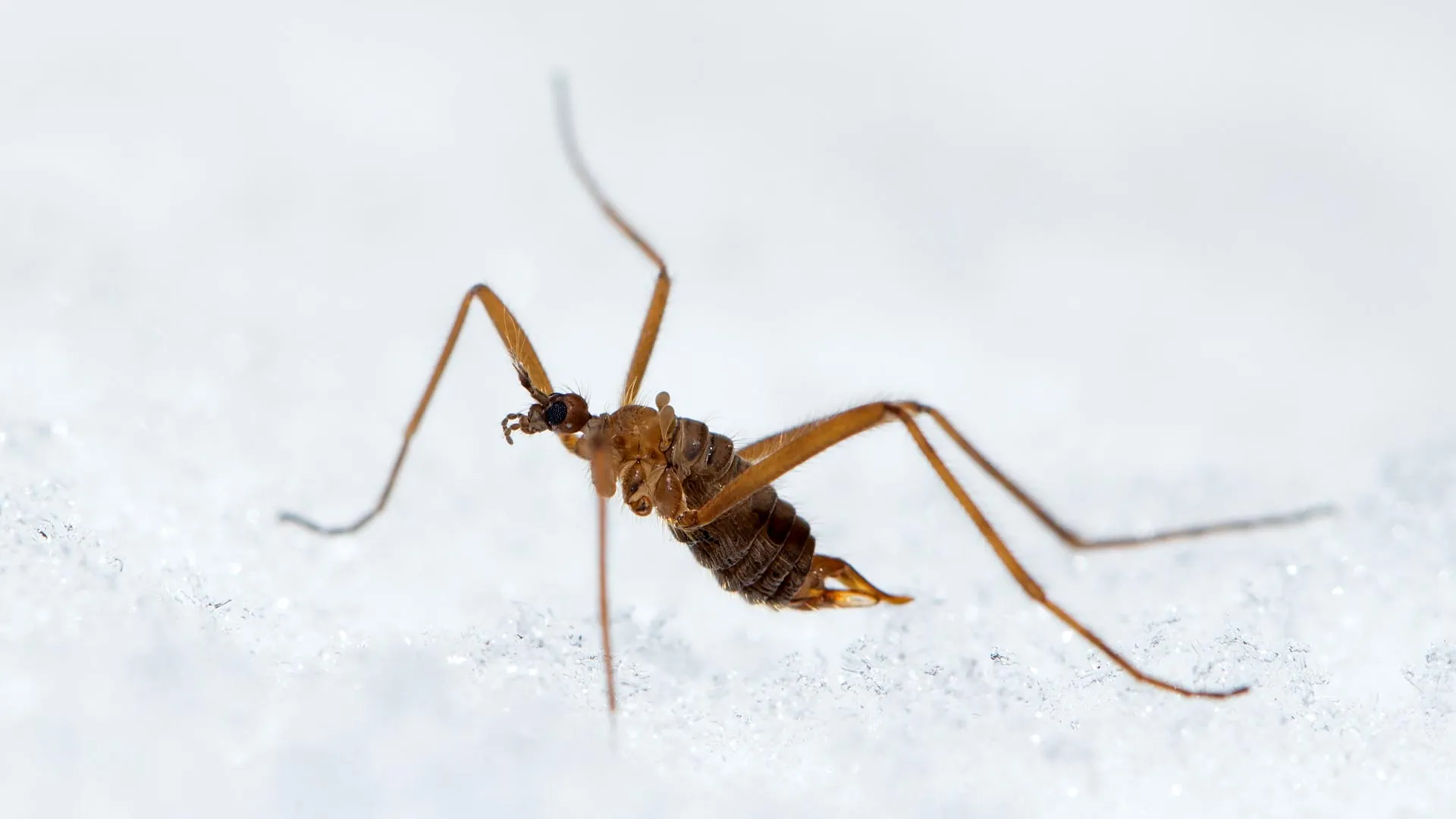
In the stark, frozen landscapes of winter, where most life retreats into dormancy or succumbs to the biting cold, a tiny, wingless insect known as the snow fly (Chionea alexandriana) thrives. Far from being a fragile creature at the mercy of its environment, this unassuming insect possesses a remarkable arsenal of biological adaptations that allow it to remain active and reproduce in temperatures as low as -6 degrees Celsius (21.2 degrees Fahrenheit). A groundbreaking study, published on March 24 in the prestigious journal Current Biology, has unveiled the intricate strategies employed by these "cold-blooded" marvels, revealing a sophisticated interplay of heat generation, antifreeze proteins, and dampened cold sensitivity that pushes the boundaries of insect survival.
The research, spearheaded by Northwestern University’s Marco Gallio, a leading expert in how temperature shapes biology, along with Marcus Stensmyr of Lund University in Sweden, offers unprecedented insights into the evolutionary ingenuity that allows life to flourish in extreme conditions. Contrary to the common understanding that cold-blooded organisms must seek shelter and enter a state of torpor when temperatures plummet, snow flies exhibit a peculiar preference for frigid environments, actively hiding when the snow melts and conditions become warmer. This counterintuitive behavior has long puzzled entomologists, prompting a deep dive into the genetic and physiological mechanisms that underpin their extraordinary resilience.
A Genomic Revelation: Unlocking the Secrets of Cold Adaptation
The initial phase of the study involved an ambitious undertaking: sequencing the genome of the snow fly for the first time and comparing it with that of related insect species not adapted to cold. This meticulous work, carried out by Ph.D. student Richard Suhendra under the guidance of William Kath from Northwestern’s McCormick School of Engineering, aimed to identify genetic blueprints that confer cold tolerance. The results, however, proved to be more surprising than anticipated.
"We couldn’t find many of the genes within any database," stated Gallio, the Soretta and Henry Shapiro Research Professor in Molecular Biology and professor of neurobiology at Northwestern’s Weinberg College of Arts and Sciences. "Initially, I thought we must have sequenced some alien species. It’s very rare for an active gene, which makes a protein, to not have a match."
This initial bewilderment quickly gave way to excitement as further analysis revealed the function of these enigmatic genes. They are responsible for producing antifreeze proteins, molecules that play a critical role in preventing ice crystal formation within the insect’s cells. These proteins, structurally similar to those found in Arctic fish, bind to nascent ice crystals, inhibiting their growth and thereby protecting cellular integrity from the damaging effects of freezing. The discovery that evolution has converged on such similar solutions for the shared challenge of surviving sub-zero temperatures across vastly different species highlights a fundamental principle of biological adaptation.
Internal Furnaces: The Power of Endogenous Heat Production
Beyond their ability to thwart ice formation, the study unearthed another astonishing capability of snow flies: the generation of their own body heat. The genomic analysis identified genes associated with energy metabolism and cellular processes known to produce heat, particularly those linked to mitochondrial thermogenesis in brown adipose tissue. This is a strategy commonly employed by mammals, such as marmots and polar bears, which utilize specialized fat tissue to generate warmth, especially during hibernation.
"We found genes that in larger animals are associated with mitochondrial thermogenesis in brown adipose tissue," Gallio explained. "Many animals like marmots and polar bears have brown fat, which is there to produce heat. When they go into hibernation, they burn this stored fat to produce heat rather than to produce chemical energy. So, in some ways snow flies use a combination of the strategies used by polar bears and by Arctic fish."
This endogenous heat production, even if modest, is crucial for survival in extreme cold. To validate these findings, researchers conducted experiments involving modified fruit flies. Matthew Capek, a Ph.D. student in the Gallio Lab, engineered fruit flies to express one of the snow fly’s antifreeze proteins and exposed them to freezing temperatures. The modified fruit flies exhibited significantly higher survival rates compared to their unmanipulated counterparts, confirming the protein’s protective function.
In parallel, direct measurements of snow fly internal temperatures revealed that the insects consistently maintained a temperature a few degrees Celsius higher than their immediate surroundings when exposed to sub-zero conditions. This suggests a more subtle, cellular-level heat generation mechanism, distinct from the shivering observed in other insects like bees and moths. "But we found no evidence of shivering," noted Stensmyr. "Snow flies instead likely produce heat at the cellular level, more similar to how mammals and even some plants generate heat." This slight thermal advantage could be the critical difference between freezing and surviving, providing the fleeting warmth needed to seek refuge before temperatures drop further.
A Dampened Response to Cold’s Sting
The snow fly’s resilience extends to its sensory perception. The study identified that these insects possess a significantly reduced sensitivity to the noxious stimuli associated with extreme cold. While most organisms experience pain or discomfort when exposed to freezing temperatures, signaling a need to retreat, snow flies appear to have evolved a muted response.
The research team pinpointed a key sensory protein, an irritant receptor, that is substantially less responsive in snow flies compared to other insects, such as mosquitoes and fruit flies. This dampened sensory pathway means that the insects can tolerate higher levels of cold-induced cellular stress without triggering a strong avoidance response. Gallio elaborated, "It turns out that a specific irritant receptor is 30 times less sensitive in snow flies than in mosquitoes and fruit flies. So, they can cope with higher levels of noxious irritants produced by cold exposure." This remarkable adaptation allows them to remain active and continue their vital activities, such as finding mates and laying eggs, even when subjected to conditions that would incapacitate most other species.
Broader Implications: A Blueprint for Cold Resilience
The findings from this comprehensive study have far-reaching implications, extending beyond the fascinating biology of a single insect species. Understanding the intricate molecular and physiological mechanisms that enable snow flies to thrive in extreme cold could pave the way for innovative applications in various fields.
The ability to prevent ice crystal formation and maintain cellular integrity at sub-zero temperatures is of immense interest to cryobiology, the study of life at low temperatures. This research could inform the development of improved cryopreservation techniques for cells, tissues, and organs, potentially revolutionizing organ transplantation and the storage of biological samples. Furthermore, the insights gained into heat generation at the cellular level might inspire new approaches to thermal management in materials science and bioengineering, leading to more efficient and robust technologies for cold environments.
The study also underscores the vast, untapped potential of biodiversity for scientific discovery. As Gallio emphasized, "Insects are cold-blooded, so they are at the mercy of external temperatures. But they have a mind-boggling ability to adapt to extremes. When it gets cold, a common strategy is to find shelter and become dormant until conditions get better. But instead of slowing down, snow flies actually prefer freezing cold, snowy conditions and hide away when the snow melts and it gets warm. They really push the limit of what’s possible. Now we’ve found snow flies aren’t just tolerating the cold, they have multiple ways to counteract it."
This work was made possible through significant funding from various institutions, including the National Institutes of Health, the Pew Scholars Program, the McKnight Foundation, the Paula M. Trienens Institute for Sustainability and Energy, the Crafoord Foundation, the National Science Foundation, the Simons Foundation, and the NSF-Simons National Institute for Theory and Mathematics in Biology (NITMB). External collaborations, including the DNAzoo project with Olga Dudchenko and Erez Lieberman Aiden from Rice University and Baylor College of Medicine, were also instrumental.
Future Frontiers: Continued Exploration of Extreme Survival
The researchers are not resting on their laurels. Their future research agenda includes a deeper investigation into the precise cellular mechanisms of heat generation in snow flies and a comprehensive cataloging of all the antifreeze proteins they produce. This ongoing work promises to further illuminate the remarkable evolutionary strategies employed by life to conquer seemingly insurmountable environmental challenges and may reveal similar adaptations in other organisms inhabiting extreme cold habitats. The snow fly, once an obscure subject of entomological curiosity, has now emerged as a powerful model organism, offering a compelling glimpse into the boundless ingenuity of nature and its potential to inspire future scientific and technological advancements.