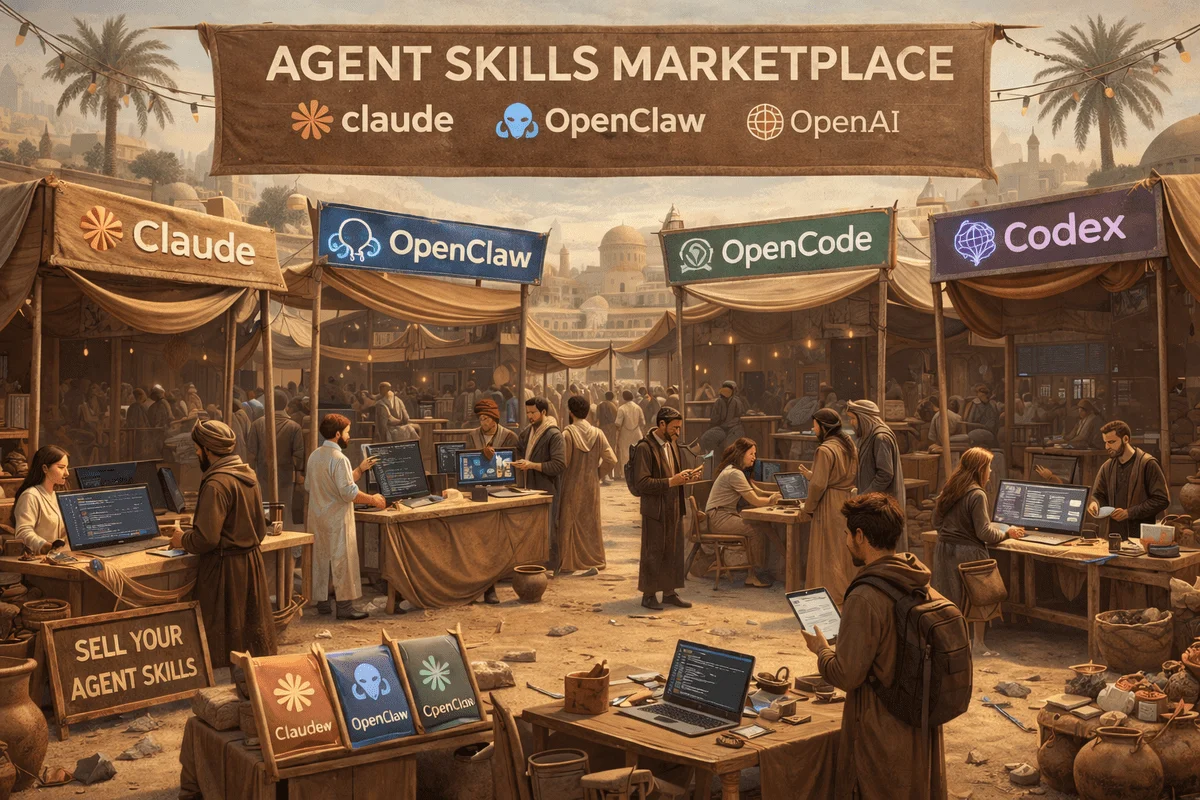
The landscape of artificial intelligence is undergoing a profound transformation, moving rapidly beyond the foundational large language models and simple API integrations towards a sophisticated ecosystem of autonomous AI agents. Not long ago, the primary focus for enhancing AI capabilities revolved around connecting models to external tools and application programming interfaces (APIs) through protocols such as Model Context Protocols (MCPs). While this method remains relevant, a pivotal new layer has emerged: agent skills. These skills represent reusable, modular capability packages, often standardized around formats like a simple SKILL.md file, providing AI agents with structured and efficient ways to complete specific tasks and execute complex workflows.
This paradigm shift towards skill-centric AI agents is critical because it significantly enhances their utility, efficiency, and extensibility. Rather than developers needing to repeatedly code similar instructions or build capabilities from the ground up, they can now leverage ready-made skills for a vast array of tasks, including coding, research, data automation, content generation, and many specialized functions. Early innovators, such as the creators behind platforms like OpenClaw, have been instrumental in this evolution, fostering public skill registries like ClawHub that streamline the discovery and installation of new agent abilities. The burgeoning market for these skills underscores a broader industry trend towards modularity and reusability in AI development, mirroring similar shifts seen in software engineering with package managers and open-source libraries.
This article delves into the leading agent skill marketplaces that are defining this new ecosystem, facilitating the easy discovery, review, and installation of skills, often with a single command. These platforms are rapidly becoming indispensable components of the broader AI agent infrastructure, granting users access to trusted, pre-built capabilities, thereby accelerating development cycles and democratizing access to advanced AI functionalities.
The Genesis of AI Agent Skills: From Concept to Cornerstone
The evolution of AI agents can be traced through several stages. Initially, AI tools were largely reactive, performing single functions based on direct prompts. The advent of large language models (LLMs) brought about a significant leap, enabling more complex reasoning and multi-step processes. However, even these powerful models often lacked the ability to interact with the real world or specific digital environments in a structured, reliable manner. This led to the development of tool-use capabilities, where LLMs could call external APIs to fetch information or perform actions. The limitations, however, quickly became apparent: managing a multitude of direct API integrations was cumbersome, prone to errors, and lacked standardization.
The concept of "agent skills" emerged as a solution to these challenges. A skill encapsulates a specific capability or a sequence of actions, complete with its own logic, parameters, and expected outputs. By abstracting complex tool interactions into discrete, reusable skills, developers can imbue their AI agents with sophisticated functionalities without reinventing the wheel. The adoption of open standards like SKILL.md further accelerates this process, ensuring interoperability and fostering a collaborative development environment. This shift is not merely an incremental improvement but a foundational change in how AI agents are designed, built, and deployed, moving them closer to genuinely autonomous and adaptable systems. Industry analysts project that the global market for AI software, including agent platforms and skill development, could exceed hundreds of billions of dollars in the coming years, driven by this modular approach.
The Rise of Marketplaces: Catalyzing AI Agent Adoption
With the proliferation of agent skills, the need for centralized repositories became evident. Just as app stores revolutionized software distribution for mobile devices, and package managers streamlined library management for developers, skill marketplaces are now doing the same for AI agents. These platforms serve as critical hubs for discoverability, quality assurance, and streamlined integration, acting as a bridge between skill developers and agent users. They address key challenges such as finding relevant skills, verifying their functionality, and ensuring secure implementation.
The rapid growth of these marketplaces, with some indexing hundreds of thousands of skills within a short span, underscores the intense demand for modular AI components. This growth trajectory mirrors the early days of GitHub for code collaboration and Hugging Face for machine learning models, both of which became central to their respective ecosystems by providing a common platform for sharing and discovery. The strategic importance of these marketplaces extends beyond mere listing; they foster community, drive innovation through competition, and establish de facto standards for skill development and deployment.
Leading Players in the AI Agent Skill Marketplace Ecosystem
The competitive landscape of AI agent skill marketplaces is dynamic, with several platforms distinguishing themselves through their scale, features, and strategic approaches.
1. SkillsMP: The Extensive Discovery Engine
SkillsMP (skillsmp.com) stands out as one of the largest and most comprehensive discovery platforms in the burgeoning agent skills ecosystem. Boasting an impressive index of over 425,000 skills, the platform positions itself as a vast aggregation layer rather than a tightly curated store. Built upon the open SKILL.md standard, SkillsMP primarily functions as a search-and-discovery portal, indexing skills predominantly from GitHub repositories and making them accessible across various AI tools, including Claude Code, Codex Command Line Interface (CLI), and ChatGPT.
The sheer volume of skills available on SkillsMP offers unparalleled breadth, making it an invaluable resource for users seeking a wide range of functionalities. While it does not currently provide an official CLI or automatic installer, users can browse skills directly on the website and download a ZIP file containing all necessary files for their selected skill. This approach emphasizes flexibility and direct access to the underlying skill code, appealing to developers who prefer manual integration and granular control. The platform’s commitment to open standards and its extensive index reflect a strategy focused on maximizing discoverability across the fragmented AI agent landscape, providing a crucial service for a rapidly expanding developer community. Industry observers note that SkillsMP’s strategy allows for rapid iteration and community-driven skill development, though it places a higher onus on the user for vetting and integration.
2. LobeHub Skills: Productized Experience and Rapid Growth
LobeHub Skills (lobehub.com/skills) has rapidly emerged as a significant player, offering a more polished and productized experience compared to many smaller directories. With over 169,739 skills currently indexed, it provides a substantial library while placing a strong emphasis on trust, discoverability, and seamless packaging within the broader LobeHub ecosystem. This platform feels less like a simple listing site and more like an integrated component of a comprehensive AI development environment.
LobeHub’s approach prioritizes user experience and ease of integration, often featuring detailed skill descriptions, user reviews, and clear installation instructions. Its growth reflects a demand for higher-quality, curated experiences in the AI skill market. A key feature is its command-line interface (CLI) for simplified installation. For instance, a user can download a skill like davila7-claude-code-templates-humanizer for a Claude Code agent using a straightforward command: npx -y @lobehub/market-cli skills install davila7-claude-code-templates-humanizer --agent claude-code. This streamlined installation process signifies a commitment to reducing friction for developers and users, contributing to LobeHub’s strong adoption rates and fostering a more integrated ecosystem for AI agent development.
3. agentskill.sh: Pragmatic Discovery and Cross-Tool Integration
agentskill.sh (agentskill.sh) offers a practical marketplace designed for fast discovery and installation of agent skills. The platform proudly supports over 110,000 skills compatible with more than 20 diverse artificial intelligence tools, including Claude Code, Cursor, Copilot, Windsurf, Zed, and others. This broad compatibility makes it particularly valuable for users who operate within multi-agent environments or employ various AI-powered development tools.
The strength of agentskill.sh lies in its pragmatic approach, enabling users to quickly browse and install skills directly into their preferred agent tools. It supports a flexible installation mechanism, often leveraging plugin systems within the target AI environment. For example, installing agentskill.sh into Claude Code involves adding its marketplace URL as a plugin: /plugin marketplace add https://agentskill.sh/marketplace.json, followed by installing specific skills like /plugin install learn@agentskill-sh or directly downloading a skill using /learn @openclaw/sherpa-onnx-tts. This focus on rapid, cross-tool integration addresses a crucial need for interoperability in a rapidly diversifying AI agent landscape, providing a cohesive experience for developers working across different platforms.
4. skills.sh by Vercel: An Open Leaderboard for Innovation
skills.sh (skills.sh), backed by Vercel, has rapidly established itself as one of the most visible and influential hubs in the agent skills ecosystem. It uniquely combines skill discovery and installation with an "open leaderboard" functionality, providing insights into which skills are gaining traction and demonstrating real-world utility. Since its launch, skills.sh has tracked over 87,000 unique skills, offering a dynamic perspective on innovation rather than just a static directory.
Vercel’s involvement lends significant credibility and technical backing to the platform, leveraging its expertise in developer tools and cloud infrastructure. The leaderboard feature not only aids in discovery but also fosters a sense of community and friendly competition among skill developers, encouraging the creation of high-quality, impactful skills. The platform streamlines skill installation via its CLI, exemplified by commands such as npx skills add https://github.com/vercel-labs/agent-skills --skill vercel-react-best-practices. This combination of robust tooling, ecosystem visibility, and a focus on developer experience positions skills.sh as a key driver of innovation and adoption in the agent skill space.
5. ClawHub: Detailed Registry for the OpenClaw Ecosystem and Beyond
ClawHub (clawhub.ai) functions as the public skill registry most closely associated with OpenClaw, yet its utility extends far beyond a single agent setup. It operates as a broader marketplace for reusable agent skills, highly valued for the comprehensive detail provided on each listing. With more than 20,000 skills registered, ClawHub offers a substantial ecosystem for users to explore, complemented by richer metadata compared to many other skill marketplaces.
The emphasis on detailed listings, often including examples, usage instructions, and dependency information, makes ClawHub a preferred choice for developers seeking thorough documentation and transparent skill functionality. This commitment to detailed metadata enhances trust and simplifies the integration process, reducing potential compatibility issues. Its command-line installation is straightforward: npx clawhub@latest install sonoscli. ClawHub’s approach reflects a philosophy that values clarity and depth, catering to users who require robust information to make informed decisions about skill adoption, thereby contributing to a more mature and reliable AI agent ecosystem.
The Broader Impact and Implications of Skill Marketplaces
The emergence and rapid growth of AI agent skill marketplaces represent a significant milestone in the broader evolution of artificial intelligence. Their impact extends across several critical dimensions:
Democratization of AI Development: By providing pre-built, reusable components, these marketplaces significantly lower the barrier to entry for developing sophisticated AI agents. Individuals and small teams can now leverage advanced functionalities without needing deep expertise in every underlying technology, accelerating innovation and making AI more accessible.
Accelerated Innovation and Productivity: Developers can focus on higher-level problem-solving and unique application logic rather than reinventing common functionalities. This modular approach fosters a "build on the shoulders of giants" mentality, dramatically increasing development velocity and efficiency.
Standardization and Interoperability: The widespread adoption of formats like SKILL.md, championed by these marketplaces, drives standardization across the AI agent ecosystem. This interoperability ensures that skills developed for one agent platform can potentially be adapted or directly used by others, fostering a more cohesive and less fragmented environment.
Economic Opportunities: These platforms create new economic opportunities for skill developers, who can contribute to and potentially monetize their creations. This can spur a vibrant marketplace for specialized AI capabilities, akin to plugin ecosystems in traditional software.
Challenges and Future Considerations: While the benefits are clear, challenges remain. Quality control and trust are paramount; marketplaces must implement robust vetting processes to ensure skills are reliable, perform as advertised, and are free from malicious code. Security vulnerabilities pose a significant risk, as executing third-party skills requires careful consideration of permissions and potential data exposure. Monetization models for skill developers are still evolving, and finding sustainable ways to reward contributions will be key to fostering a thriving ecosystem. Furthermore, ethical AI and governance will become increasingly important as agents gain more autonomous capabilities, requiring marketplaces to consider mechanisms for ensuring responsible skill development and use.
The Road Ahead: Maturing the AI Agent Skill Ecosystem
In many respects, skill marketplaces are becoming for artificial intelligence agents what GitHub is for code and Hugging Face is for machine learning models: a central, indispensable layer for discovering, sharing, and adopting reusable building blocks. The trajectory suggests continued rapid evolution, with future developments likely including more specialized marketplaces catering to specific industry verticals, AI-powered skill discovery and recommendation engines, and enhanced cross-platform compatibility features.
As AI agents become more sophisticated and deeply integrated into various industries—from healthcare and finance to manufacturing and creative arts—the role of these skill marketplaces will only grow. They are not just directories; they are foundational infrastructure enabling the next generation of intelligent, adaptable, and autonomous AI systems. The ability to discover, compare, and install reusable skills with just a few commands is transforming AI development from a bespoke, labor-intensive process into a modular, efficient, and democratized endeavor, setting the stage for an unprecedented era of AI-driven innovation.