The Evolution of Google NotebookLM: A Strategic Shift
Google NotebookLM first emerged as an experimental project, leveraging large language models to assist users in understanding and organizing information from their personal documents. Its initial promise lay in its ability to generate summaries, explain complex concepts, and answer questions based on uploaded sources, primarily catering to students and researchers looking for an intelligent note-taking companion. However, the rapid advancements in AI, particularly within Google’s own Gemini family of models, have propelled NotebookLM into a new era. The current iteration reflects a deliberate strategic pivot by Google to integrate advanced AI functionalities directly into workflows, thereby reducing friction in the research and content creation pipeline. This shift aligns with broader industry trends where AI is increasingly moving from assistive roles to generative and transformative functions, aiming to democratize complex tasks previously requiring specialized skills or extensive time investments.
The updates introduced throughout the current year represent not just incremental improvements but a fundamental re-architecture of NotebookLM’s operational scope. By incorporating more sophisticated AI models, Google has imbued the platform with a deeper understanding of context, nuance, and user intent, allowing for more precise outputs and a more intuitive user experience. This continuous development mirrors Google’s broader commitment to embedding generative AI across its product suite, from Workspace applications to search functionalities, ultimately aiming to enhance productivity and foster innovation across diverse professional domains.
Key Features Driving a New Era of Productivity
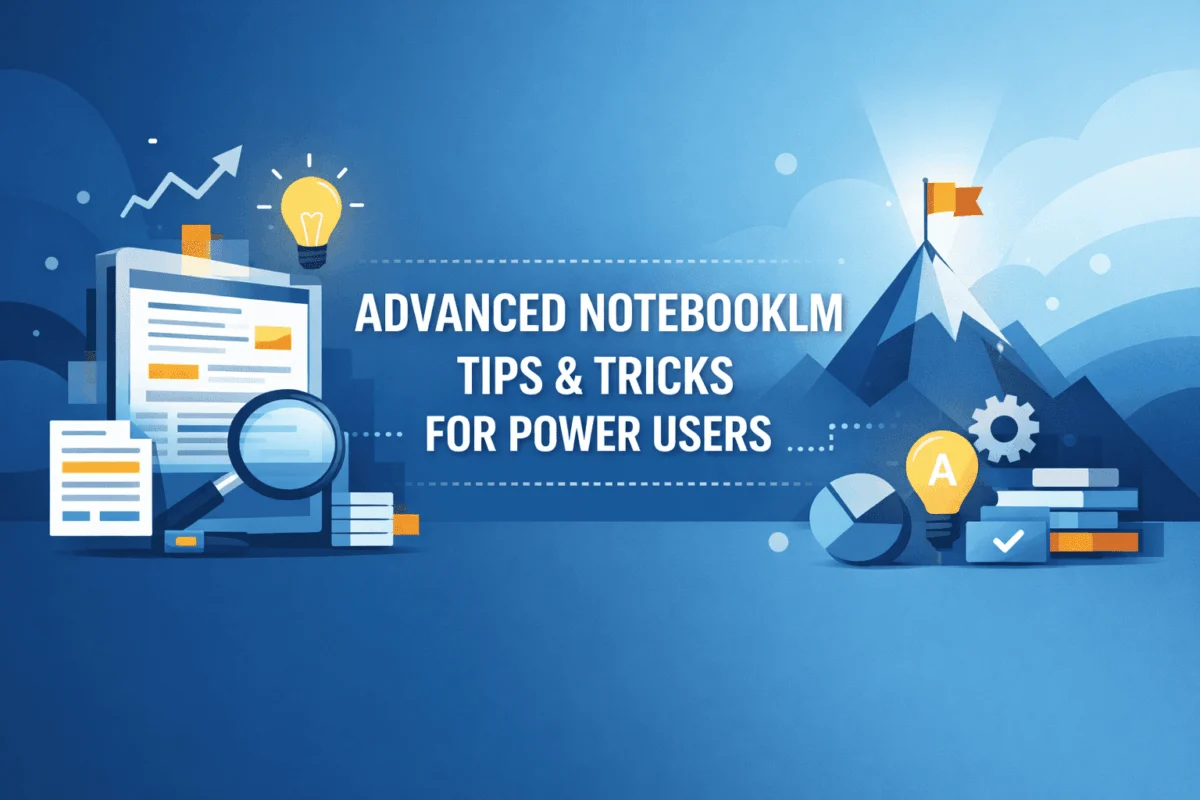
The latest enhancements to NotebookLM are not merely cosmetic; they represent a suite of powerful tools engineered to streamline advanced workflows. These features are particularly impactful for "power users" – individuals and teams who require robust capabilities for deep research, data analysis, and multi-format content generation. Below, we delve into five of the most significant newly introduced capabilities and their implications for daily professional practice.
Precision in Presentation: Granular Slide Revisions
Generating presentation decks from raw research has long been a compelling yet often frustrating application of AI. Earlier versions of NotebookLM, like many generative AI tools, often operated on an "all-or-nothing" principle: if a single slide required adjustment, users frequently found themselves regenerating an entire deck, leading to inefficiency and rework. The introduction of prompt-based slide revisions directly addresses this "regeneration tax," offering unparalleled control over presentation outputs.
This feature empowers users to target individual slides within a generated deck for specific modifications using natural language prompts. When a slide deck is opened in NotebookLM’s Studio panel, a dedicated revision interface becomes accessible. Here, professionals can issue granular instructions such as "Adjust the Q4 revenue metric to reflect the updated value in the source document ‘Financials_FY2025.csv’ and add a footnote citing the source," or "Reformat this bulleted list of market trends into a comparative table showing year-over-year growth for each category." This level of surgical precision ensures that revisions are confined to the intended slide, preserving the integrity and structure of the rest of the presentation. For data-heavy presentations, the ability to tie revisions directly to specific datasets within the user’s uploaded sources ensures accuracy and accountability. Experts recommend treating the initial prompt for deck generation as a broad storyboard to establish the overall structure. Subsequent passes can then be dedicated to applying precise constraints and fact-checking, significantly reducing back-and-forth edits and accelerating the finalization process. This methodical approach ensures both speed and accuracy, critical in fast-paced corporate environments.
Seamless Integration: PPTX Export for Enterprise Workflows
While NotebookLM excels as a drafting and synthesis environment, the corporate world largely operates on established presentation software like Microsoft PowerPoint or Google Slides. Historically, translating AI-generated insights into these standard formats involved cumbersome manual copy-pasting, disrupting workflow continuity and introducing potential for errors. The new PPTX export feature provides a crucial bridge, ensuring a seamless transition from AI-powered ideation to production-ready deliverables.
By enabling the direct export of generated slide decks as PPTX files, NotebookLM preserves the visual layout, thematic elements, and content structure within a universally recognized format. Although the exported slides are primarily image-based layers, they are fully presentation-ready and can be directly incorporated into existing corporate slide masters or templates. This functionality significantly streamlines the final stages of content creation, allowing users to leverage NotebookLM’s generative power for initial drafts and then easily integrate these drafts into their organization’s established visual identity. To maximize efficiency, power users are advised to encode their company’s brand guidelines – such as specific font types (e.g., Arial headings), color palettes (e.g., highlighting key metrics in blue), or background preferences (e.g., dark background) – directly into their initial NotebookLM prompts. By establishing these stylistic constraints early, the exported PPTX files will require minimal, if any, post-export formatting, making NotebookLM an ideal private drafting space that delivers production-ready material. This feature alone can shave hours off presentation preparation, freeing up valuable time for strategic thinking and refinement.
Dynamic Communication: Cinematic Video Overviews
Translating complex data, technical reports, or intricate workflows into easily digestible, engaging explainer videos has traditionally been one of the most resource-intensive aspects of cross-functional communication. It typically involves scriptwriting, storyboarding, voice-over recording, and motion graphics production – a multi-stage process requiring diverse skill sets and significant time. NotebookLM’s new Cinematic Video Overviews feature fundamentally transforms this challenge, condensing these disparate tasks into a single, automated workflow.
Powered by a sophisticated stack of Google’s advanced AI models, including Gemini 3 for multimodal understanding, and specialized models like Veo 3 for video generation (alongside proprietary components such as Nano Banana Pro), this feature enables users to generate fully animated, narrative-led videos directly from their curated notebook sources. For presenting findings to non-technical stakeholders, C-suite executives, or broader audiences, this capability is a game-changer. It democratizes video production, allowing researchers, analysts, and project managers to communicate complex ideas with high visual fidelity and narrative coherence without needing extensive video editing expertise. The resulting videos can distill intricate reports into compelling visual stories, significantly enhancing comprehension and engagement. Achieving optimal results with this feature necessitates a highly structured notebook; seeding the model with segmented transcripts, meticulously organized data reports, or prior slide outlines helps the AI infer a tight, logical narrative arc. Furthermore, steering prompts can be employed to dictate the audience level and focus, such as "Produce a high-level, 5-minute explanation for non-technical executives focusing strictly on business impact and return on investment (ROI)." This ensures the generated video is perfectly tailored to its intended audience and objective.
On-Demand Artifact Creation Directly from Chat
Many of the most valuable insights and compelling frameworks emerge organically during informal, iterative exploration through chat. Prior to the Workspace update, users might uncover a brilliant explanation or a critical interpretation during a chat session, only to then have to manually reconstruct or transfer that information into a formal document in a separate interface. The new capability to request artifact creation directly within a chat thread eliminates this context-switching, fostering a more fluid and responsive workflow.
If a particular chat conversation yields a compelling framework, a succinct explanation of a complex topic, or a validated data interpretation, users can simply type a command like, "Turn this into a Slide Deck" or "Generate a 2-page brief for the engineering team based on these findings." The system instantly processes the relevant portions of the chat thread and generates the requested artifact in place, preserving the exact phrasing, vocabulary, and nuanced understanding cultivated during the interaction. This feature is invaluable for capturing fleeting insights and formalizing them without breaking the cognitive flow. It transforms the chat interface from merely an exploratory tool into a primary drafting canvas. Experts advise using the chat environment for iterative refinement of complex arguments or data interpretations. Once a concept is fully articulated, immediately converting that thread into an artifact ensures that no context or valuable phrasing is lost. For recurring deliverables, maintaining a library of standardized artifact-creation prompts further streamlines this process, enabling consistent and efficient output generation.
Expanded Knowledge Base: EPUB and Long-Form Source Support
Data science, advanced research, and academic pursuits frequently demand the digestion of dense, extensive textual material, ranging from technical manuals and academic treatises to comprehensive enterprise playbooks and digital books. The previous limitations on source formats could hinder comprehensive analysis. The integration of EPUB support marks a significant expansion of NotebookLM’s ingest capabilities, allowing users to upload full-length digital books alongside existing support for PDFs, CSVs, web links, and code repositories.
This enhancement means NotebookLM can now perform cross-referencing, citation-backed analysis, and deep synthesis across hundreds, if not thousands, of pages of text without requiring arduous manual chunking or time-consuming formatting conversions. For researchers, this translates into the ability to query vast bodies of knowledge with unprecedented ease. Users can build specialized "book-centric" notebooks, uploading an EPUB technical manual alongside their own proprietary datasets and internal documentation. Instead of broad, generic questions, focused prompts can be used to query specific intersections of data, such as "Compare the data governance methodologies outlined in Chapter 4 of the EPUB document ‘Data Security Handbook 2.0’ with our internal CSV metrics on data breaches from Q1." Beyond analytical tasks, long-form sources can also be leveraged to generate bespoke study aids, quizzes, or even Audio Overviews, significantly accelerating the learning curve on new technical topics or complex subjects. This vastly expands NotebookLM’s utility as a comprehensive knowledge management and learning platform.
Broader Industry Context and Google’s Vision
These updates to Google NotebookLM are not isolated but rather indicative of a broader trend in the technology industry: the relentless pursuit of AI-driven productivity solutions. The market for AI-powered knowledge management and content creation tools is projected to grow substantially, with estimates suggesting a multi-billion dollar valuation in the coming years. Companies are increasingly seeking solutions that can automate tedious tasks, accelerate research cycles, and enhance the quality and volume of content production.
Google’s investment in NotebookLM, particularly its integration with advanced models like Gemini and Veo, reflects a clear strategic vision. This vision encompasses democratizing access to sophisticated AI capabilities, empowering individual users and small teams to perform tasks that once required specialized departments or significant outsourcing. By providing an end-to-end platform for research, synthesis, and multi-format content generation, Google aims to solidify its position as a leader in AI-driven productivity, fostering a new paradigm for how knowledge workers interact with information. This aligns with Google’s long-standing mission to organize the world’s information and make it universally accessible and useful, now with a powerful generative layer.
Analysis of Implications: The Transformed End-to-End Workflow
The cumulative effect of these advanced features is a profoundly streamlined end-to-end workflow for knowledge professionals. What used to be a fragmented process involving multiple tools and significant manual effort can now be orchestrated largely within NotebookLM.
Consider a typical scenario: A researcher needs to synthesize findings from an academic textbook (EPUB), internal reports (PDFs), and market data (CSVs) to prepare a presentation for executives, along with a technical brief for the engineering team, and an explainer video for external stakeholders.
- Ingestion: The researcher uploads the EPUB textbook, various PDFs, and CSVs directly into NotebookLM.
- Deep Research & Synthesis: Using the chat interface, they query the combined sources to extract key insights, compare methodologies, and interpret data, perhaps asking, "Summarize the key findings from the EPUB on AI ethics and cross-reference them with our internal guidelines in the PDF."
- Artifact Generation from Chat: Once a compelling argument or data interpretation emerges in the chat, the researcher instantly prompts, "Turn this conversation thread into a 2-page brief for the engineering team, focusing on technical implementation."
- Presentation Drafting: The researcher then prompts for a slide deck, "Create a 10-slide executive presentation on the business implications of these findings, using a dark background and Arial headings."
- Granular Refinement: After initial generation, they use prompt-based slide revisions to adjust specific metrics, reformat charts, or add footnotes citing sources for individual slides, ensuring precision without regenerating the entire deck.
- Corporate Integration: The completed slide deck is exported directly as a PPTX file, ready for final touches within the corporate presentation suite.
- Multi-Modal Communication: Finally, for broader communication, the researcher leverages Cinematic Video Overviews, prompting, "Generate a high-level 3-minute video explanation for external stakeholders, focusing on market opportunity and ROI."
This workflow minimizes context-switching, reduces the "regeneration tax" associated with AI outputs, and accelerates the transition from raw analysis to polished, multi-format deliverables. It empowers users to manage complex information, generate diverse content, and communicate effectively across various audiences with unprecedented speed and efficiency. The implications for productivity gains are substantial, potentially transforming hours of manual synthesis and formatting into minutes of guided AI interaction.
Challenges and Future Outlook
While the advancements in NotebookLM are transformative, certain considerations remain pertinent. The quality of AI-generated content, while significantly improved, still benefits from human oversight and fact-checking, particularly for sensitive or critical information. The "image-based layers" in PPTX exports, while presentation-ready, might limit granular text editing within PowerPoint itself, requiring users to return to NotebookLM for text-level changes. As AI models continue to evolve, future iterations of NotebookLM could potentially offer even deeper integration with editable elements in exported files, further reducing friction.
Looking ahead, Google is likely to continue pushing the boundaries of NotebookLM, potentially integrating even more sophisticated multimodal capabilities, real-time collaboration features, and tighter integration with other Google Workspace applications. The ongoing evolution of AI models, such as future generations of Gemini, will undoubtedly unlock new possibilities for automated research, synthesis, and content creation, further cementing NotebookLM’s role as a cornerstone of the modern knowledge worker’s toolkit.
In conclusion, Google NotebookLM has transcended its initial purpose, emerging as a powerful, integrated platform for advanced research and content production. By providing surgical precision in content editing, seamless integration with enterprise tools, dynamic multi-modal communication options, on-demand artifact creation, and expansive source ingestion capabilities, it empowers power users to navigate the complexities of information with unparalleled efficiency. The platform not only streamlines existing workflows but also opens new avenues for knowledge dissemination, marking a significant step forward in the application of artificial intelligence for professional productivity.