In the vast, silent expanse of the cosmos, particles of nearly unimaginable energy occasionally streak toward Earth, carrying secrets from the dawn of time. In 2023, one such particle—a subatomic entity known as a neutrino—collided with the Earth’s atmosphere, sparking a scientific investigation that has now led to a revolutionary new theory regarding the fundamental nature of the universe. Detected by the KM3NeT neutrino observatory in the Mediterranean Sea, this specific neutrino possessed an energy level so extreme that it defied every known model of cosmic acceleration. It was measured at a scale approximately 100,000 times more energetic than the maximum output of the Large Hadron Collider (LHC), the most powerful human-made particle accelerator located at CERN.
For months, the global physics community grappled with a singular question: what could possibly generate such a monumental burst of energy? No supernova, no known pulsar, and no active galactic nucleus seemed capable of accelerating a single subatomic particle to these heights. Now, a team of theoretical physicists at the University of Massachusetts Amherst has proposed an explanation that bridges the gap between the infinitely small and the infinitely large. Their research, recently published in the prestigious journal Physical Review Letters, suggests that the source of this "impossible" particle was the explosive death of a "quasi-extremal primordial black hole"—a theoretical relic from the Big Bang that may hold the key to understanding dark matter and the evolution of the early universe.
The 2023 Detection: A Challenge to Standard Physics
The 2023 event sent shockwaves through the astrophysical community. Neutrinos, often called "ghost particles" because they lack an electric charge and have nearly zero mass, are notoriously difficult to detect. They stream through solid matter—including the entire Earth—by the trillions every second without leaving a trace. To catch them, scientists build massive detectors in remote environments, such as deep under the Antarctic ice or at the bottom of the sea, where the surrounding medium can capture the faint flashes of light produced when a neutrino occasionally strikes an atom.
When the KM3NeT Collaboration recorded the ultra-high-energy (UHE) neutrino in 2023, the data was scrutinized for errors. The energy signature was not just high; it was anomalous. In the realm of particle physics, energy is often measured in electronvolts (eV). While the LHC operates in the tera-electronvolt (TeV) range, this neutrino was estimated to be in the exa-electronvolt (EeV) range. Under the Standard Model of particle physics, even the most violent cosmic events, such as the collapse of massive stars into black holes, struggle to produce neutrinos of this magnitude.
The UMass Amherst team, led by Assistant Professors Michael Baker and Andrea Thamm, alongside postdoctoral researcher Joaquim Iguaz Juan, began looking beyond the Standard Model. They hypothesized that the particle did not come from a traditional stellar-mass black hole, but rather from a much smaller, much older, and far more volatile type of object: a primordial black hole (PBH).
A Chronology of Primordial Black Hole Theory
The concept of primordial black holes dates back to the early 1970s, when the late physicist Stephen Hawking first proposed their existence. Unlike stellar-mass black holes, which form from the gravitational collapse of dying stars, PBHs are theorized to have formed in the first fractions of a second following the Big Bang. During this period of cosmic inflation, the density of the universe was so high that localized fluctuations in matter could have collapsed directly into black holes of varying sizes—some as small as a grain of sand, others as massive as a mountain or a planet.
Hawking’s most famous contribution to this field was the realization that black holes are not truly "black" in the sense of being permanent traps. Through a quantum mechanical process now known as Hawking radiation, black holes slowly lose mass over time. According to this theory, black holes emit a steady stream of particles. The rate of this emission is inversely proportional to the black hole’s mass: the smaller the black hole, the hotter it becomes and the faster it evaporates.
As a primordial black hole reaches the end of its life, its evaporation accelerates into a runaway process. In its final moments, the black hole becomes so hot that it releases a massive burst of high-energy particles before vanishing entirely in a titanic explosion. For decades, this remained a purely theoretical prediction, as no telescope had ever witnessed such an event. The 2023 neutrino detection, however, provided the first tangible evidence that these theoretical "fireworks" might actually be occurring in our cosmic neighborhood.
The Dark Charge Model: Solving the IceCube Paradox
While the KM3NeT detection was a breakthrough, it presented a significant scientific conflict. Another major neutrino observatory, IceCube, located at the South Pole, has been operational for over a decade. Despite its vast size and sensitivity, IceCube had never recorded a neutrino with an energy profile matching the 2023 KM3NeT event. If primordial black holes were common enough to explode near Earth, why had IceCube missed them?
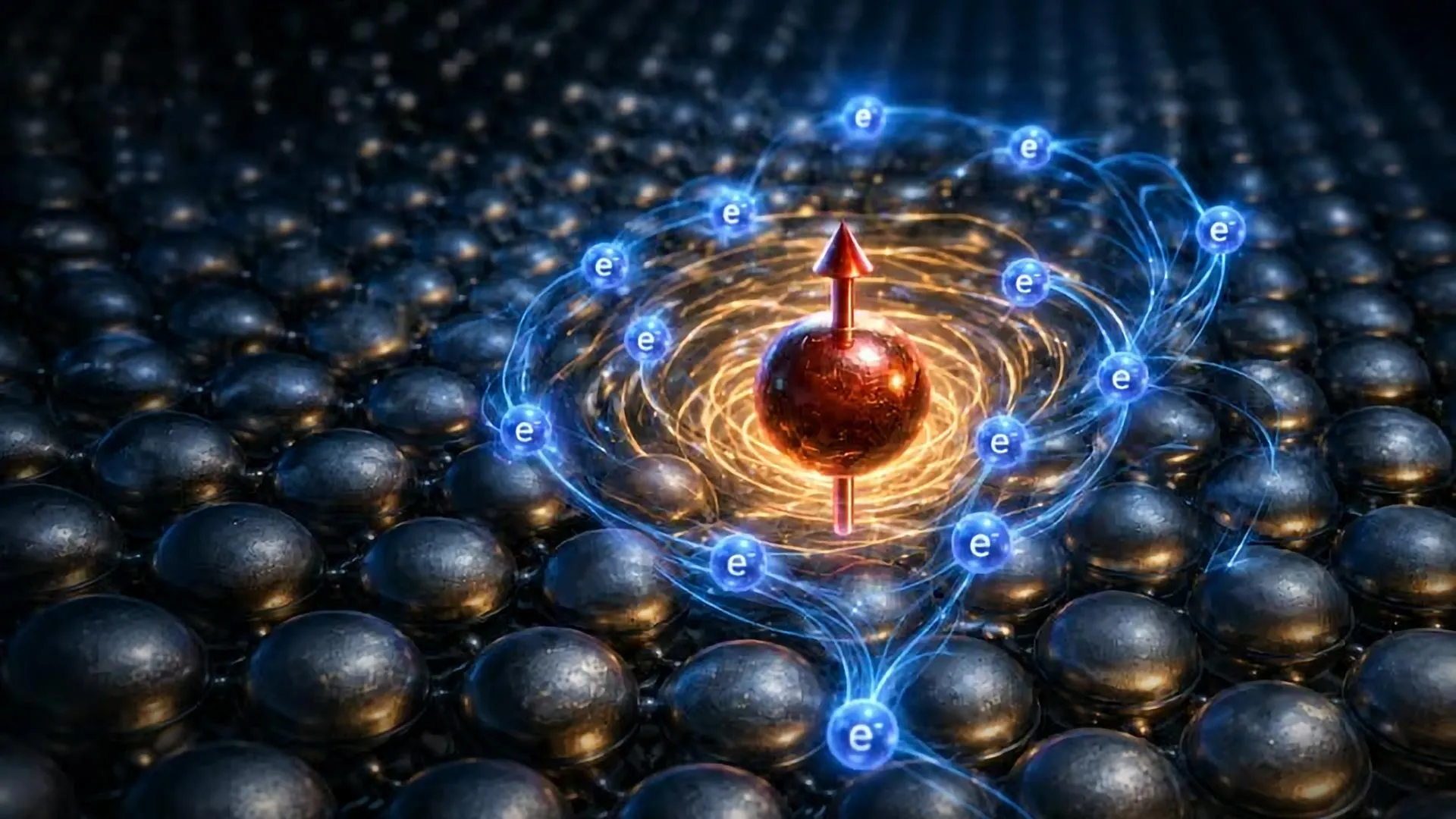
The UMass Amherst team believes the answer lies in a concept they call "dark charge." In their study, they propose that these specific black holes are "quasi-extremal." In physics, an "extremal" black hole is one that possesses the maximum amount of charge or angular momentum possible for its mass. These objects are highly stable and behave differently than standard black holes.
The researchers’ "dark charge" model introduces a new force that mirrors electromagnetism but operates within a "hidden sector" of physics. This model includes a theoretical "dark electron," a particle much heavier than the standard electron. According to their calculations, a primordial black hole carrying this dark charge would evaporate in a specific way, releasing a unique spectrum of particles—including ultra-high-energy neutrinos—that would be detectable by some instruments but not others, depending on the geometry of the event and the specific energy thresholds of the detectors.
"Our dark-charge model is more complex than previous theories," explains Michael Baker. "But that complexity allows it to align with the reality of the data. It provides a mechanism that explains why we see these extraordinary energy spikes in some instances but not in a constant stream."
Implications for Dark Matter and Beyond the Standard Model
The implications of this theory extend far beyond explaining a single subatomic particle. For decades, one of the greatest mysteries in science has been the nature of dark matter—the invisible substance that makes up roughly 85% of the matter in the universe. While we can see its gravitational effects on galaxies, we have never directly observed a dark matter particle.
The UMass Amherst team suggests that if their dark charge model is correct, primordial black holes could themselves be the dark matter. A vast population of these small, ancient black holes scattered throughout the universe would account for the "missing" mass that astronomers observe. Furthermore, the dark charge force would explain how these black holes interact with one another and with the rest of the cosmos in ways that standard gravity cannot fully account for.
"If our hypothesized dark charge is true," says Joaquim Iguaz Juan, "then we believe there could be a significant population of PBHs, which would be consistent with other astrophysical observations and account for all the missing dark matter in the universe."
This would represent a monumental shift in our understanding of cosmology. It would suggest that the universe is populated by "dark" versions of the particles and forces we are familiar with, creating a "shadow" physics that exists alongside our own.
The Future of Neutrino Astronomy and Experimental Verification
The scientific community is now looking toward the future to verify these findings. The 2023 detection is being treated as a "proof of concept" for a new era of neutrino astronomy. If PBH explosions are occurring as frequently as the UMass Amherst team predicts—perhaps once every decade within a detectable range—then the next generation of observatories will be crucial.
Upcoming projects, such as the IceCube-Gen2 expansion and the Pacific Ocean Neutrino Experiment (P-ONE), will provide much greater sensitivity to ultra-high-energy events. If these detectors begin to pick up more of these "impossible" neutrinos, it will bolster the case for the existence of primordial black holes and Hawking radiation.
Furthermore, the detection of other particles during these events—such as Higgs bosons, quarks, or even hypothetical dark matter particles—would provide a "laboratory in the sky." Scientists would no longer be limited by the energy constraints of Earth-bound accelerators like the LHC. Instead, they could use the final moments of a dying primordial black hole to study the physics of the Big Bang itself.
A Paradigm Shift in Particle Physics
The proposal by the UMass Amherst researchers serves as a bridge between several disparate fields of physics: general relativity (black holes), quantum mechanics (Hawking radiation), and particle physics (neutrinos and dark matter). By providing a cohesive explanation for the 2023 neutrino event, they have opened a new window into the early universe.
While the existence of quasi-extremal primordial black holes remains to be definitively proven through repeated observations, the theoretical framework is now more robust than ever. The 2023 neutrino may have been a singular event, but its legacy could be the confirmation of Stephen Hawking’s most daring predictions and the eventual resolution of the dark matter mystery.
As Andrea Thamm concludes, "We could now be on the cusp of experimentally verifying Hawking radiation, obtaining evidence for both primordial black holes and new particles beyond the Standard Model. This is more than just an explanation for one neutrino; it is a potential map for the next century of physics."
The search now continues, as telescopes and underground sensors wait for the next silent, high-energy messenger to arrive from the depths of time, carrying the signature of a black hole’s final, explosive breath.