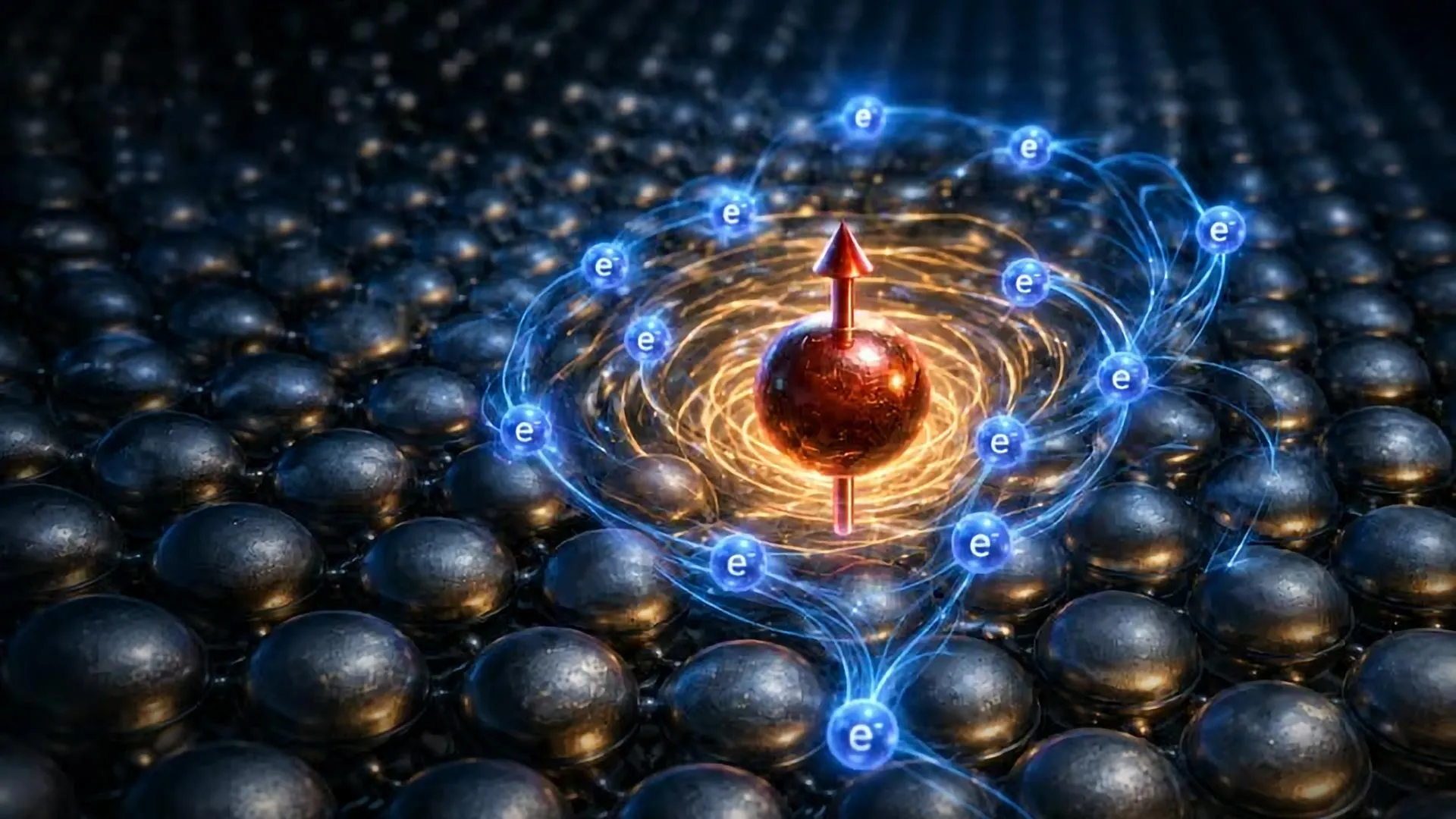
As global computing demands escalate at an exponential rate, the limitations of traditional silicon-based semi-conductors have become increasingly apparent, prompting a worldwide scientific race to identify more efficient ways to process and store massive datasets. A burgeoning field known as "orbitronics" has emerged as a frontrunner in this pursuit, focusing on the manipulation of an electron’s orbital angular momentum (OAM)—the motion of an electron as it circles an atom’s nucleus—to carry information. While the potential of orbitronics has been recognized for years, its practical application has been hindered by a reliance on heavy, expensive, and scarce magnetic materials. However, a landmark study recently published in the journal Nature Physics has introduced a revolutionary approach that bypasses these hurdles by utilizing "chiral phonons" in non-magnetic materials, signaling a paradigm shift in the future of information technology.
The Evolution from Spintronics to Orbitronics
To understand the significance of this breakthrough, one must look at the trajectory of modern condensed matter physics. For decades, the industry has looked toward spintronics—a field that exploits the intrinsic "spin" of electrons—to create faster and more energy-efficient devices. Spintronics has already seen commercial success in hard drive read heads and Magnetic Random Access Memory (MRAM). However, spintronics typically requires materials with strong spin-orbit coupling, which are often heavy elements or require complex magnetic configurations.
Orbitronics offers a compelling alternative. By focusing on the orbital motion of electrons rather than their spin, researchers can potentially achieve higher information density and lower energy consumption. Until recently, the generation of "orbital currents" required the injection of charge currents into specific transition metals. Many of these metals, such as platinum or tantalum, are increasingly categorized as critical materials due to their high cost, environmental impact of mining, and precarious global supply chains. The new research, led by North Carolina State University and the University of Utah, demonstrates that these rare materials may no longer be necessary.
Chiral Phonons: The New Engine of Electron Motion
The core of this discovery lies in the behavior of phonons—quasiparticles that represent collective vibrations of atoms within a crystal lattice. In most solid materials, atoms vibrate in relatively simple, symmetrical patterns. However, in "chiral" materials, the arrangement of atoms lacks mirror symmetry. Much like a human hand or the threads of a screw, these materials possess a distinct "handedness."
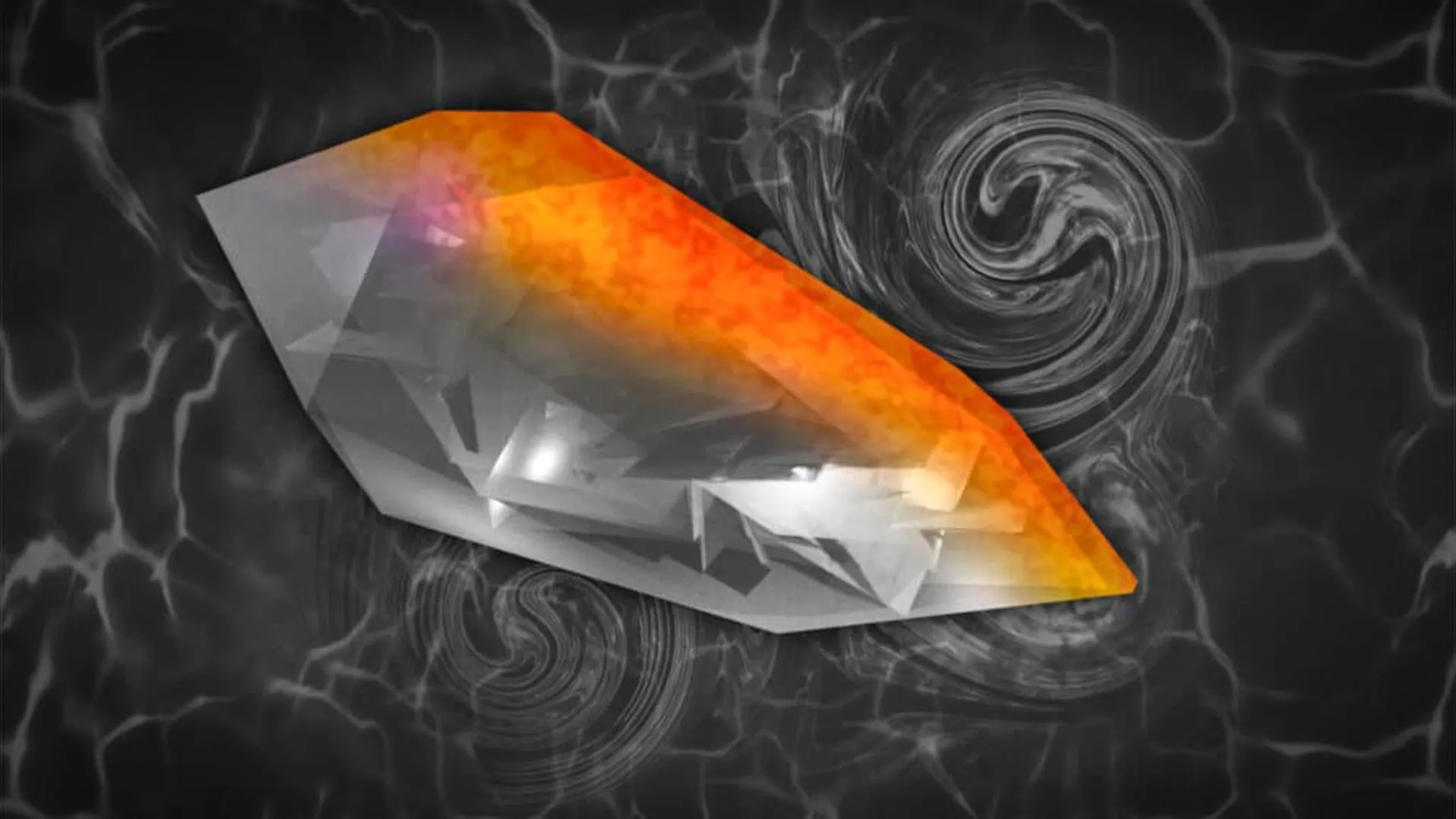
In chiral crystals such as $alpha$-quartz, the atoms are arranged in a spiral or helical architecture. When these atoms vibrate, the structural twist forces the vibrations into a circular or spiral motion. These specialized vibrations are known as chiral phonons. Because these phonons move in a circular path, they possess their own angular momentum. The researchers discovered that this angular momentum is not confined to the lattice vibrations; it can be transferred directly to the electrons flowing through the material.
"The generation of orbital currents traditionally necessitates the injection of charge current into specific transition metals," explained Dali Sun, a physicist at North Carolina State University and co-author of the study. "Our method allows for the use of cheaper, more abundant materials by leveraging the inherent geometric properties of the crystal itself."
Experimental Methodology and the Discovery of the Orbital Seebeck Effect
The research team focused their experiments on $alpha$-quartz, a naturally occurring chiral crystal that is both abundant and inexpensive. Despite being non-magnetic, quartz exhibited surprising magnetic properties when its phonons were manipulated.
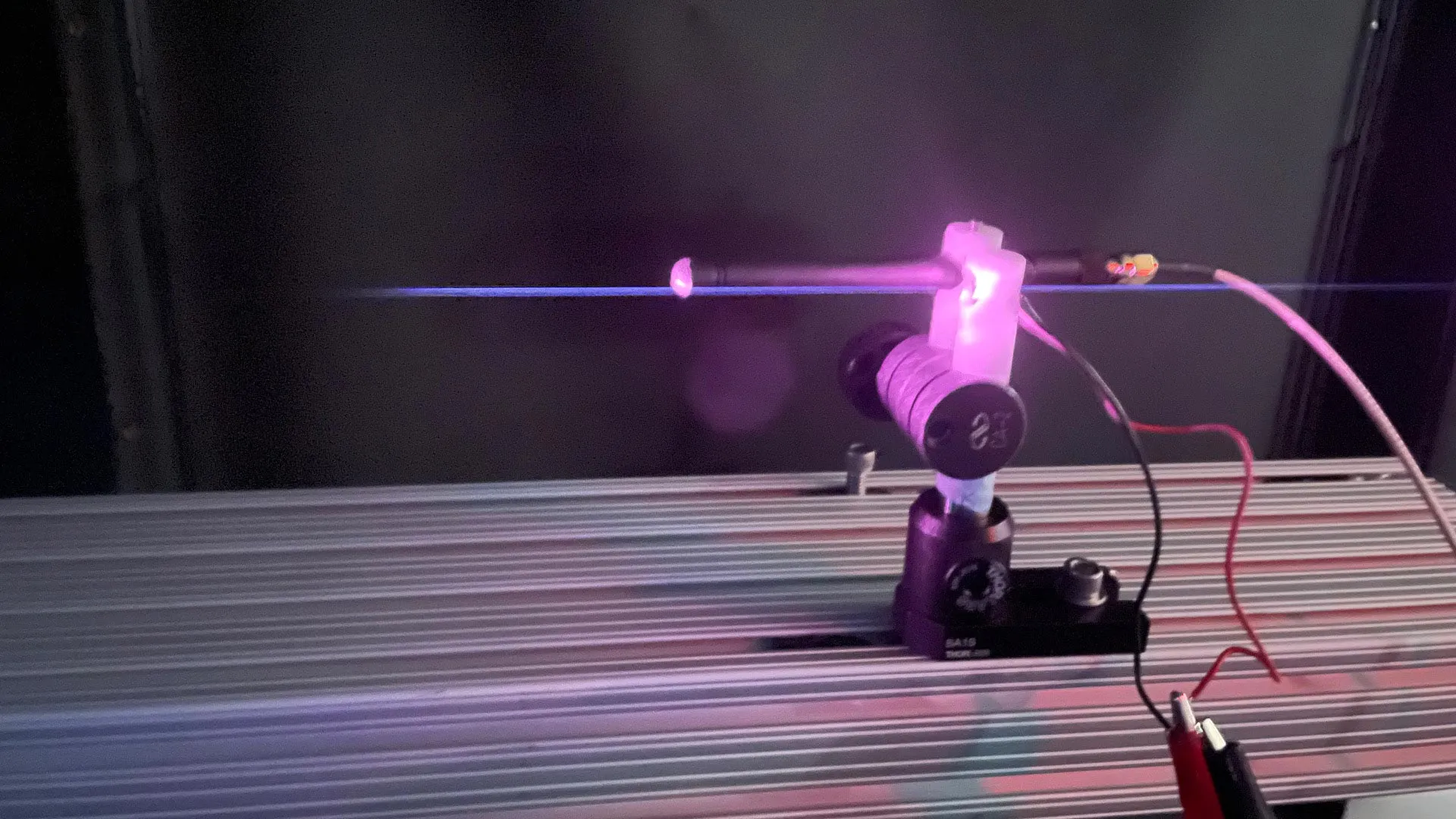
To validate their theory, the researchers employed a sophisticated experimental setup at the National High Magnetic Field Laboratory in Florida. They used specialized laser spectroscopy to observe how light interacted with the quartz crystal. By measuring changes in the color and wavelength of reflected light—a process known as Raman scattering—the team was able to confirm that the circular motion of chiral phonons generated a measurable internal magnetic field.
The experiment involved a multi-step process:
- Alignment: Under normal conditions, chiral phonons exist in a disorganized state of both left- and right-handedness. The team applied an external magnetic field to temporarily align these phonons into a uniform state.
- Persistence: Once aligned, the collective motion of the phonons became strong enough to transfer angular momentum to the electrons. Remarkably, this effect persisted even after the external magnetic field was removed.
- The Orbital Seebeck Effect: The researchers dubbed this phenomenon the "orbital Seebeck effect." This is a direct analogue to the spin Seebeck effect, but instead of driving a flow of spin, the thermal or vibrational gradients drive a flow of orbital angular momentum.
- Detection: To measure the hidden orbital flow, the scientists layered thin films of tungsten and titanium on top of the quartz. These metal layers acted as converters, transforming the orbital motion into a detectable electrical signal.
"We don’t need a magnet. We don’t need a battery. We don’t need to use voltage," said Valy Vardeny, distinguished professor at the University of Utah. "We just need a material with chiral phonons. Before, it was unimaginable. Now, we’ve invented a new field."
Data and Material Science Implications
The shift away from transition metals has profound economic and geopolitical implications. Currently, the electronics industry is heavily reliant on "critical minerals." According to data from the U.S. Geological Survey, the demand for these materials is expected to grow by 400% to 600% over the next several decades. By demonstrating that OAM can be generated in common materials like quartz, the researchers have opened a door to a more sustainable manufacturing path.
Furthermore, the study indicates that this effect is not unique to quartz. The researchers noted that other chiral materials, such as tellurium, selenium, and even certain hybrid organic-inorganic perovskites, could host similar chiral phonon interactions. This suggests a vast library of potential materials that could be used to build next-generation orbitronic devices.
In terms of performance, the study found that the orbital angular momentum generated via chiral phonons is significantly more stable than previously thought. Because the motion is tied to the structural lattice of the material rather than a fleeting magnetic state, the information-carrying currents can persist over longer distances and through more complex circuits without degrading.
Collaborative Effort and Academic Significance
The findings, published in Nature Physics, are the result of an extensive international collaboration. The study involved researchers from:
- North Carolina State University
- University of Utah
- Nanjing Normal University
- The Air Force Research Laboratory
- University of Washington
- University of North Carolina at Chapel Hill
- National High Magnetic Field Laboratory
- University of Illinois at Urbana-Champaign
- University of South Carolina
- Pennsylvania State University
This interdisciplinary approach allowed the team to bridge the gap between theoretical physics and experimental engineering. The peer-reviewed nature of the publication underscores the scientific rigor of the discovery, which has already begun to spark discussions among solid-state physicists regarding the reclassification of "non-magnetic" materials.
Analysis of Broader Technological Impact
The long-term implications of the orbital Seebeck effect extend far beyond the laboratory. As Rikard Bodin, a doctoral candidate at the University of Utah and co-author of the paper, noted, the discovery provides new "levers" for engineers to pull.
"When we talk about discovering things like the orbital Seebeck effect, I can’t tell you that your TV is going to run on it tomorrow," Bodin said. "But it’s creating more tools that we can use to do new things. Now that it’s here, someone else can push it forward, and before you know it, it’s ubiquitous. That’s how technology evolves."
Potential applications for this technology include:
- Ultra-Low Power Computing: Since the orbital Seebeck effect can generate information flow without high voltage or constant battery drain, it could lead to processors that generate significantly less heat.
- Quantum Information Science: The ability to control angular momentum in non-magnetic materials provides a new platform for quantum bits (qubits) that are less susceptible to magnetic interference.
- Advanced Sensors: The sensitivity of chiral phonons to environmental changes could be harnessed to create highly precise sensors for medical imaging or navigation.
Conclusion
The discovery that chiral phonons can drive orbital currents marks a milestone in the field of materials science. By decoupling the requirements of magnetism from the generation of angular momentum, the research team has dismantled a major barrier to the commercialization of orbitronics. As the industry moves toward a post-silicon era, the use of abundant, chiral materials like quartz may provide the foundation for a new generation of devices that are not only faster and more powerful but also more sustainable and easier to produce. The "orbital Seebeck effect" now stands as a testament to the untapped potential of the quantum world, offering a glimpse into a future where the very vibrations of atoms serve as the backbone of global information technology.