

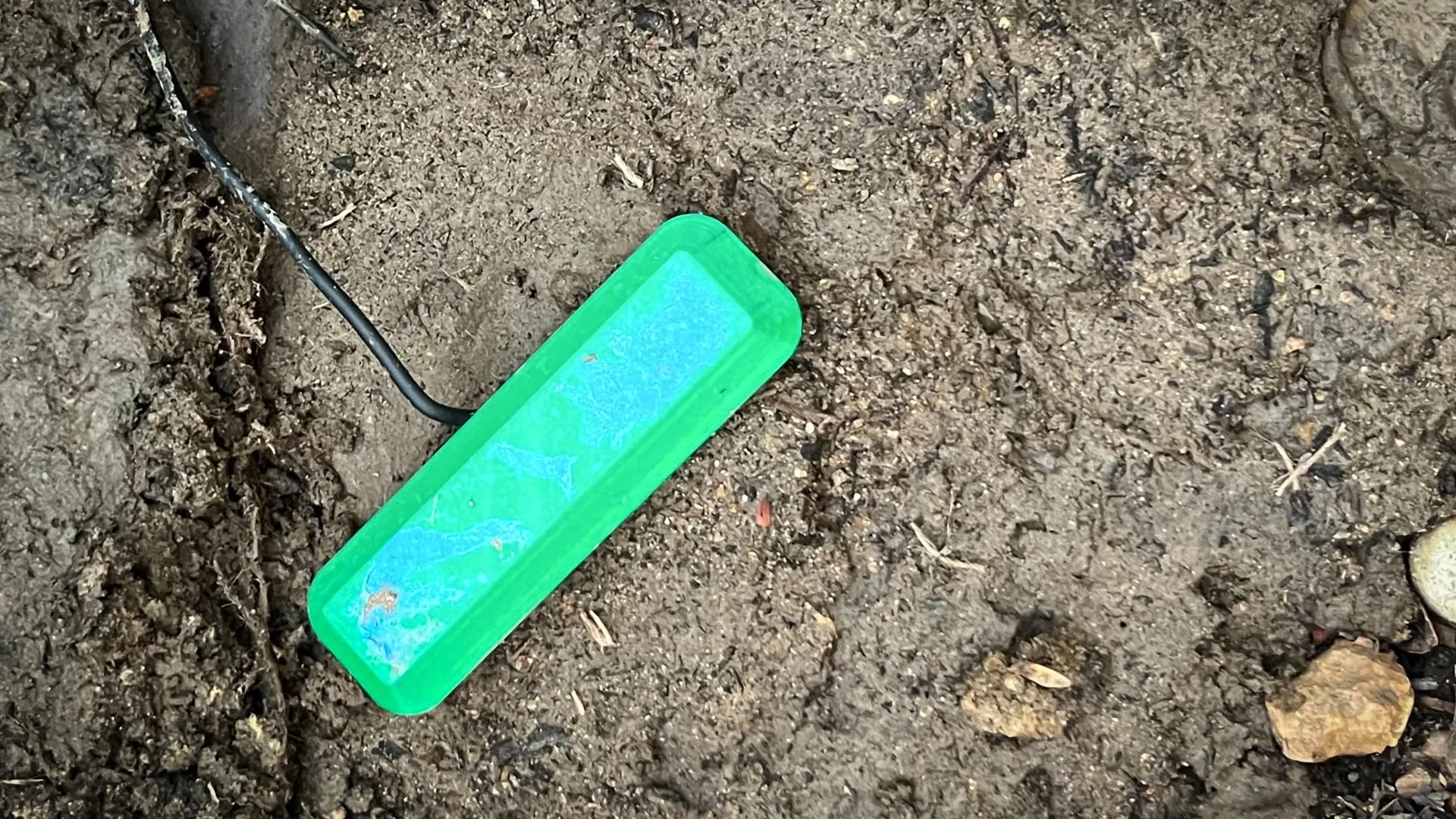
In a significant advancement for sustainable technology and the Internet of Things (IoT), a research team led by Northwestern University has engineered a new microbial fuel cell (MFC) capable of harvesting energy from common soil microbes to power underground sensors. The device, which is approximately the size of a standard paperback book, represents a breakthrough in decentralized energy, offering a viable alternative to traditional lithium-ion batteries and solar power in specialized agricultural and environmental applications. By capturing the minute amounts of energy released by electrogenic bacteria as they decompose organic matter in the dirt, the fuel cell provides a near-perpetual power source as long as organic carbon remains present in the soil.
The development comes at a critical juncture for the electronics industry. As the global network of connected devices expands toward a projected "trillion-sensor" future, the environmental and logistical costs of traditional power sources have become increasingly untenable. Traditional batteries rely on finite, often toxic materials like lithium and cobalt, which are subject to volatile global supply chains and contribute to the mounting crisis of electronic waste. Furthermore, in the context of precision agriculture—where sensors must be buried in vast fields to monitor moisture and nutrient levels—manually replacing thousands of batteries is labor-intensive and cost-prohibitive.
The Engineering Breakthrough: Solving the Hydration-Oxygen Paradox
While the concept of the microbial fuel cell dates back to the early 20th century, practical implementation has historically been hindered by inconsistent performance. To generate electricity, these systems require a delicate balance of moisture and oxygen. The microbes at the anode need to be submerged in moist soil to facilitate the movement of ions, while the cathode must be exposed to oxygen to complete the chemical reaction that generates current. In traditional designs, where the anode and cathode are placed parallel to one another, the system often fails: if the soil is too dry, the ion flow stops; if it is too wet (such as during a flood), the cathode is cut off from oxygen, and the power output drops to zero.
To overcome these hurdles, the Northwestern team spent two years iterating through various geometries and material compositions. The final design utilizes a unique perpendicular orientation. The anode, constructed from inexpensive and abundant carbon felt, is buried horizontally deep within the soil where moisture is most consistent. The cathode, made of a conductive metal, is positioned vertically, extending from the anode up to the soil surface.
This vertical "T-shaped" configuration ensures that the top of the cathode remains in contact with the air, even when the ground is saturated, while the bottom remains in contact with the moist soil. The researchers also integrated a protective cap to prevent debris and soil from clogging the air chamber, and a waterproof coating on the cathode to ensure functionality during heavy rain or flooding.
Performance Metrics and Real-World Testing
The efficacy of the Northwestern fuel cell was validated through a rigorous nine-month testing period that included both controlled laboratory environments and outdoor deployments. The results, published in the Proceedings of the Association for Computing Machinery on Interactive, Mobile, Wearable and Ubiquitous Technologies, demonstrated that the device is remarkably resilient.
According to the study, the fuel cell generated an average of 68 times more power than was required to operate its onboard sensors and communication systems. Even more impressively, the design proved to be 120% more durable than previous state-of-the-art soil-based fuel cells. The system remained operational in conditions ranging from moderately dry (41% water by volume) to completely submerged environments.
To demonstrate its practical utility, the team used the fuel cell to power a suite of sensors measuring soil moisture and detecting physical touch. The touch-sensing capability is particularly relevant for wildlife conservation and agricultural security, as it allows for the monitoring of animal movements or human activity across a monitored perimeter.
Low-Power Communication via Ambient Backscatter
Energy harvesting is only half of the equation for an autonomous sensor; the other half is data transmission. Standard Wi-Fi or cellular signals are too energy-intensive for a microbial fuel cell to support. To solve this, the Northwestern researchers utilized a technique known as ambient backscatter communication.
Instead of generating its own radio signal, the device’s antenna reflects existing radio frequency signals—such as those from local television broadcasts or cellular towers—to transmit data. By modulating the reflection of these waves, the sensor can send data to a central receiver with a fraction of the energy required by traditional transmitters. This synergy between low-power energy harvesting and low-power communication allows the device to function indefinitely without external intervention.
Historical Context and the Evolution of MFC Technology
The journey toward soil-powered computing began in 1911, when British botanist Michael Potter first observed that microorganisms could produce an electric current. However, for much of the 20th century, microbial fuel cells remained a laboratory curiosity, limited by low power density and the high cost of materials like platinum, which was often used as a catalyst.
The resurgence of interest in MFCs in the 21st century has been driven by the dual pressures of climate change and the digital revolution. Researchers have identified specific "electrogenic" bacteria, such as Geobacter sulfurreducens and Shewanella oneidensis, which possess the unique ability to transfer electrons outside their cell walls during respiration. The Northwestern study builds on this biological foundation by focusing on the "engineering" side of the problem—creating a robust housing and electrode structure that can survive the harsh, unpredictable conditions of the "wild."
Implications for Precision Agriculture and Environmental Monitoring
The primary application for this technology lies in precision agriculture, a farming management concept that uses digital observation and response to optimize crop yields and preserve resources. In a typical precision agriculture setup, sensors monitor soil pH, nitrate levels, moisture, and temperature. This data allows farmers to apply water and fertilizer only where and when it is needed, significantly reducing waste and runoff.
"Solar panels don’t work well in dirty environments because they get covered with dirt, do not work when the sun isn’t out, and take up a lot of space," noted Bill Yen, the Northwestern alumnus who led the research. "Batteries also are challenging because they run out of power. Farmers are not going to go around a 100-acre farm to regularly swap out batteries or dust off solar panels."
By turning the soil itself into a battery, the Northwestern team has provided a "set-it-and-forget-it" solution. This is equally valuable for environmental monitoring in remote wetlands, forests, or protected habitats where human interference must be minimized.
Socioeconomic Impact and the Global Supply Chain
Beyond the technical achievements, the researchers emphasized the socioeconomic importance of their work. The COVID-19 pandemic highlighted the fragility of global supply chains, particularly for the rare earth minerals and semiconductors required for high-tech batteries. By using common materials like carbon felt and standard metals, the Northwestern team aims to make environmental sensing accessible to communities that may not have the resources to maintain expensive, high-tech infrastructure.
Josiah Hester, a co-author of the study and now a professor at the Georgia Institute of Technology, highlighted the need for "local supply chains." The team has released their designs, tutorials, and simulation tools as open-source materials, inviting the global scientific community to build upon their work. This move is intended to democratize the technology, allowing researchers in developing nations to create their own soil-powered networks using locally sourced materials.
Future Research: Toward a Biodegradable Future
The next phase of the research involves further reducing the environmental footprint of the fuel cells. While the current prototype is more sustainable than a lithium battery, it still contains metal components and plastic housing. The team is currently exploring the use of fully biodegradable materials.
The vision is to create a sensor that can be "planted" in a field, monitor the soil for several years, and then naturally decompose into the earth once its mission is complete. This would eliminate the "electronic litter" problem entirely, creating a truly circular economy for environmental sensing.
While microbial fuel cells are unlikely to replace the grid or power high-consumption devices like smartphones, their role in the "trillion-sensor" economy appears secure. As a reliable, low-power, and environmentally friendly solution, soil-powered computing represents a fundamental shift in how we interact with and monitor the natural world. By tapping into the ancient metabolic processes of the earth’s smallest inhabitants, modern engineering has found a path toward a more sustainable digital future.















Leave a Reply