

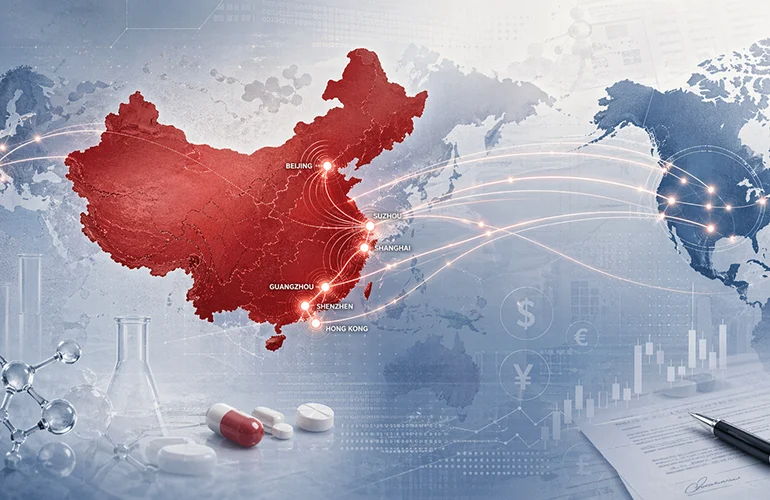
Over the past 16 months, Chinese-domiciled biopharmaceutical companies have emerged as formidable players in the global drug development landscape, securing approximately 6 out of 26 major pharmaceutical licensing and acquisition deals. These significant transactions collectively account for nearly one-third of the total headline value across all major agreements during this period, reaching an astounding $53 billion. This surge in cross-border collaborations underscores a pivotal shift in the global biopharma ecosystem, with Chinese innovation increasingly sought after by Western pharmaceutical giants.
A closer examination of these deals reveals a diverse engagement strategy. Roughly half of these high-value agreements involved firms of U.S. origin, predominantly structured as mergers and acquisitions (M&A). Just under 30% of the transactions were licensing deals with Chinese-headquartered firms, while the remaining portion comprised mixed deals involving European companies. This pattern signals not only China’s growing capacity for novel drug discovery but also a strategic imperative for multinational pharmaceutical corporations (MNCs) to tap into this burgeoning innovation hub.
The Ascent of China’s Biopharma Sector: A New Global Epicenter
China’s transformation from a generics-focused market to a hotbed of pharmaceutical innovation has been a deliberate and rapid evolution, fueled by substantial government investment, a burgeoning talent pool, and a massive domestic patient population. Historically, the Chinese pharmaceutical industry was largely characterized by the production of generic drugs and active pharmaceutical ingredients (APIs). However, a strategic pivot, initiated over a decade ago and accelerated by policies like "Made in China 2025" and the "Healthy China 2030" initiative, has fostered an environment conducive to original drug discovery and development.
Government support has manifested in various forms, including R&D subsidies, tax incentives for innovative enterprises, and the establishment of numerous science parks and incubators dedicated to life sciences. This proactive approach has cultivated a vibrant ecosystem of biotech startups and established pharmaceutical companies focused on cutting-edge research. Furthermore, regulatory reforms by the National Medical Products Administration (NMPA), including faster approval pathways for innovative drugs and alignment with international standards set by the International Council for Harmonisation of Technical Requirements for Pharmaceuticals for Human Use (ICH), have significantly streamlined market entry and increased investor confidence.
The expanding talent pool, enriched by a growing number of highly educated scientists returning from Western institutions (known as "sea turtles"), has provided the intellectual capital necessary to drive advanced research. These returnees often bring with them not only scientific expertise but also experience with Western R&D practices and an understanding of global market demands. Combined with a lower cost base for research and clinical trials compared to Western counterparts, China has become an attractive destination for drug development. This confluence of factors has positioned China as a compelling partner for global pharmaceutical companies seeking to diversify their pipelines, access novel therapeutic modalities, and gain a foothold in one of the world’s largest healthcare markets.
A Detailed Timeline of Strategic Collaborations Illuminating China’s Impact
The past 16 months have showcased a remarkable series of high-profile collaborations, underscoring the depth and breadth of China’s biopharmaceutical capabilities. These deals span critical therapeutic areas, from metabolic diseases and oncology to cardiovascular conditions and chronic illnesses, often leveraging advanced technologies like artificial intelligence (AI) in drug discovery.
-
December 2024: Merck’s Inaugural Leap into Chinese Obesity Innovation. The period of intense activity began when U.S. pharmaceutical giant Merck entered into an exclusive global license agreement with Jiangsu Province, China-headquartered Hansoh Pharma. The deal, valued at up to $2 billion, secured rights to Hansoh’s investigational oral obesity candidate, HS-10535. This move highlighted the growing global interest in novel obesity treatments and China’s emerging prowess in this highly competitive therapeutic space. Merck’s decision signaled confidence in Hansoh’s research capabilities and the potential of HS-10535 to address a significant unmet medical need.
-
March 2025: Merck Doubles Down on Chinese Cardiovascular Assets. Just three months later, Merck reinforced its commitment to Chinese innovation by licensing Hengrui Pharma’s heart drug, HRS-5346. This separate deal, also valued at up to $2 billion, targeted cardiovascular disease, another area with high global prevalence and demand for effective treatments. Merck’s successive partnerships with two prominent Chinese biotechs within a short span underscored a deliberate strategy to integrate promising Chinese assets into its global pipeline.
-
July 2025: Pfizer’s Multi-Billion-Dollar Bet on Chinese Oncology. The momentum continued when Pfizer, another pharmaceutical behemoth, licensed 3SBio’s cancer candidate SSGJ-707. This monumental agreement included an upfront payment of $1.25 billion, with potential milestone payments reaching up to $4.8 billion, complemented by a planned $100 million equity investment. The substantial upfront payment reflected Pfizer’s strong belief in the asset’s potential and 3SBio’s capabilities in oncology, a therapeutic area where Chinese researchers have made significant strides.
-
June 2025: AstraZeneca Forges AI-Driven Alliance with CSPC. AstraZeneca, a leading Anglo-Swedish pharmaceutical company, broadened its engagement with Chinese innovation by signing an AI-led chronic disease research pact with Hebei Province, China-based CSPC Pharmaceutical Group. This collaboration, potentially worth up to $5.3 billion, emphasized the integration of artificial intelligence into early-stage drug discovery, an area where Chinese tech and biotech firms are rapidly advancing. It showcased a trend towards leveraging sophisticated computational approaches to accelerate drug development for complex conditions.
-
January 2026: AbbVie’s Strategic Move in Solid Tumors. As the new year commenced, AbbVie announced a significant licensing agreement for RemeGen’s RC148, a novel bispecific antibody for advanced solid tumors. The deal, valued at up to $5.6 billion, highlighted the increasing sophistication of Chinese biotech in developing complex biologic therapies, particularly in challenging oncology indications. For AbbVie, known for its strong oncology pipeline, this partnership represented a strategic acquisition of a promising next-generation asset.
-
February 2026: AstraZeneca’s Continued Investment in CSPC for Metabolic Disorders. Demonstrating a consistent strategy, AstraZeneca returned to CSPC, this time securing rights for obesity and weight-related drug candidates. This deal, an even larger commitment, was valued at up to $18.5 billion, including a substantial $1.2 billion upfront payment. AstraZeneca’s repeated engagement with CSPC across different therapeutic areas, combined with significant upfront capital, underscored the depth of the partnership and the recognized value of CSPC’s pipeline in high-demand areas like metabolic health.
-
March 2026: Sanofi Secures Blood Cancer Drug from Sino Biopharm Unit. Early in March, French pharmaceutical giant Sanofi licensed rovadicitinib from Sino Biopharm’s Chia Tai Tianqing unit. This agreement, worth up to $1.53 billion, focused on a blood cancer drug, further diversifying the range of therapeutic areas covered by these cross-border collaborations and highlighting Chinese expertise in hematological oncology.
-
Late March 2026: Lilly Expands AI Partnership with Insilico Medicine. Capping off a busy period, Eli Lilly expanded its existing collaboration with Hong Kong-listed, yet Cambridge, Massachusetts-headquartered, Insilico Medicine. The enhanced licensing and research pact, valued at up to $2.75 billion, reinforced the growing trend of leveraging AI for drug discovery and development. Insilico Medicine, with its unique East-West bridgehead, exemplifies the globalized nature of modern biotech innovation, attracting significant investment for its AI-powered platforms.
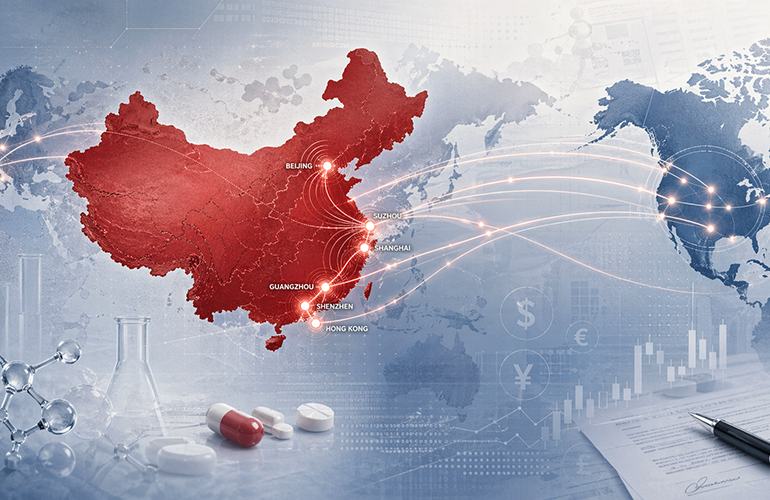
Driving Factors Behind China’s Innovation Surge: Beyond the Deals
The flurry of deals is not merely a collection of isolated events but rather a reflection of deeper structural shifts within China’s biopharma landscape. The "R&D velocity" and "lower cost" mentioned by McKinsey’s Fangning Zhang are critical components. Chinese companies can often conduct research and clinical trials at a fraction of the cost found in Western nations, while maintaining rigorous scientific standards. This cost-effectiveness, coupled with an agile and rapid development cycle, allows for faster progression of drug candidates through pipelines.
Moreover, the sheer scale of China’s domestic market offers an unparalleled advantage for clinical research. A vast and diverse patient population facilitates quicker patient recruitment for trials, accelerating data collection and regulatory submissions. This is particularly crucial for diseases prevalent in Asian populations, where genetic and environmental factors may differ from Western cohorts.
Technological advancements have also played a significant role. Chinese biotech firms are increasingly at the forefront of "next-generation modality leadership," as noted by Zhang. This includes pioneering work in areas such as novel antibody therapies (e.g., bispecifics, antibody-drug conjugates), cell and gene therapies, mRNA technology, and the aforementioned integration of AI and machine learning in drug discovery platforms. These sophisticated approaches are yielding truly innovative drug candidates that are attractive to global pharmaceutical partners.
The Shifting Global Innovation Landscape: Data and Expert Perspectives
Compelling data further supports the narrative of China’s ascendance. According to Citeline’s Pharmaprojects database, more drugs made their market debut in China than anywhere else in 2025. This marks a historic moment, as it is the first time any country has overtaken the United States on this critical metric. This data point is a powerful indicator of China’s burgeoning capacity to not only develop innovative drugs but also bring them successfully to market. It signifies a maturation of the entire drug development ecosystem, from early-stage discovery to regulatory approval and commercialization.
Fangning Zhang, a partner at McKinsey, articulated this paradigm shift concisely to Citeline sister publication Scrip, stating that China now "combines next-generation modality leadership and R&D velocity that runs faster and at lower cost than industry norms," emphatically calling Asia "biopharma’s emerging epicenter." This expert observation resonates with the observed deal flow and underscores the fundamental strengths that Chinese biotechs bring to the global stage.
The momentum is widely expected to continue. Tom Barsha, head of Asia Pacific M&A at BofA Securities, predicts that the total value of China licensing-out deals will double again over the next 18 to 24 months. This forecast suggests that the current trend is not a fleeting phenomenon but rather the beginning of a sustained trajectory. Industry analysts attribute this continued growth to several factors: the increasing number of mature drug candidates in Chinese pipelines, the strategic need for Chinese companies to gain global market access and validation, and the ongoing demand from Western pharma for novel, de-risked assets. Pharmaceutical executives often express that partnering with Chinese firms provides access to "novel targets and mechanisms of action" that might otherwise be overlooked, alongside the benefit of "strategic market entry" into the lucrative Chinese market.
Broader Impact and Implications for the Global Pharmaceutical Industry
The implications of China’s rising influence in biopharma are profound and multifaceted, reshaping the global innovation landscape.
-
Redefinition of Innovation Hubs: The traditional dominance of North America and Europe as the primary sources of pharmaceutical innovation is being challenged. China is rapidly establishing itself as a co-equal, if not leading, hub for drug discovery and development, particularly in specific therapeutic areas and technological modalities. This decentralization of innovation fosters greater global competition and potentially accelerates the pace of medical breakthroughs.
-
Increased Competition and Collaboration: For Western pharmaceutical companies, China’s rise presents a dual challenge and opportunity. While Chinese biotechs are emerging as formidable competitors in global markets, they also represent invaluable partners for accessing novel compounds, efficient R&D capabilities, and strategic entry into the vast Chinese market. This dynamic encourages more collaborative models, moving beyond simple market access to genuine scientific partnerships.
-
Strategic Market Access for Both Sides: For Western MNCs, these deals are not just about pipeline diversification; they often serve as a crucial pathway for deeper penetration into the Chinese market, leveraging local expertise and relationships. Conversely, for Chinese biotechs, partnering with global giants provides the capital, clinical development expertise, and international commercialization infrastructure necessary to bring their innovations to a worldwide patient base, transforming them from domestic players to global contenders.
-
Economic Impact and Investment Flows: The sheer value of these deals, totaling $53 billion in 16 months, signifies massive capital flows and investment in the life sciences sector. This fuels job creation, stimulates scientific research, and strengthens the overall economic ties between China and the rest of the world in the healthcare domain.
-
Challenges and Considerations: While the trajectory is largely positive, challenges remain. Concerns around intellectual property protection, while improving, are still a consideration for Western firms. Geopolitical tensions can introduce an element of uncertainty into long-term strategic partnerships. Furthermore, navigating cultural differences in business practices and regulatory nuances across different markets requires sophisticated strategic planning. However, the overwhelming trend indicates that the benefits of collaboration largely outweigh these potential hurdles.
In conclusion, the data unequivocally demonstrates that China has transitioned from being primarily a market for pharmaceutical products to a significant global source of biopharmaceutical innovation. The substantial investments by leading Western pharmaceutical companies in Chinese assets, spanning a wide array of therapeutic areas and leveraging cutting-edge technologies like AI, mark a definitive shift. With expert predictions forecasting a continued doubling of licensing-out deals, China’s role as a driving force in global drug discovery and development is not just emerging—it is firmly established, promising to reshape the future of medicine for years to come.











Leave a Reply