

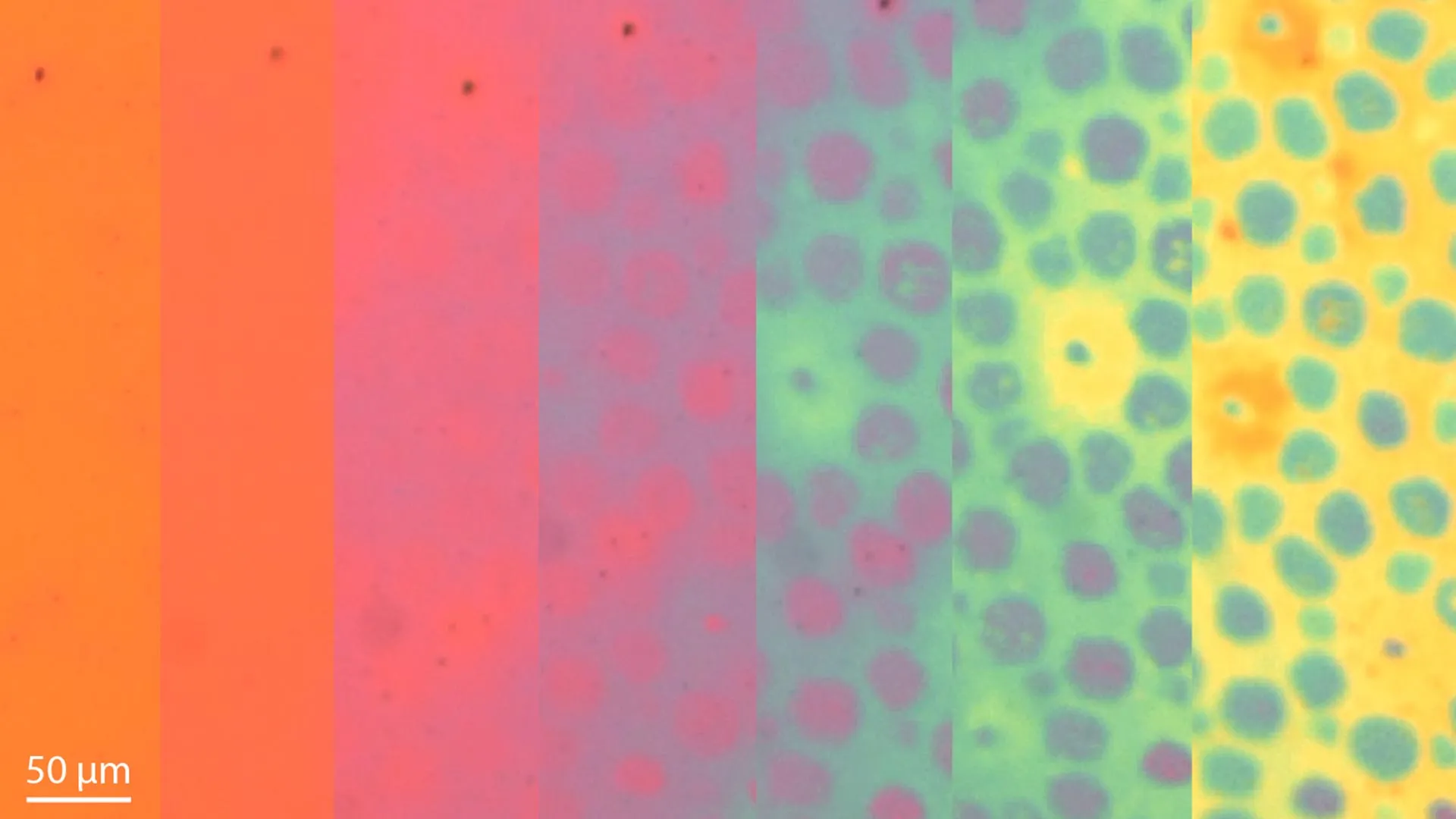
In a significant leap for materials science, researchers at Stanford University have engineered a flexible, soft material that mimics the extraordinary camouflage capabilities of cephalopods like octopuses and cuttlefish. The study, published this week in the journal Nature, details a breakthrough in "dynamic topography," where a synthetic film can rapidly alter its surface texture and color at a scale smaller than a human hair. This innovation addresses a long-standing challenge in engineering: creating man-made materials that possess the same fluid, real-time adaptability found in the biological world. By combining advanced semiconductor manufacturing techniques with water-responsive polymers, the team has created a platform that could revolutionize fields ranging from military stealth and soft robotics to wearable electronics and medical diagnostics.
The ability of cephalopods to vanish into their environment relies on a complex interplay of skin structures, including chromatophores (pigment sacs), iridophores (reflective cells), and papillae (muscular protrusions that change skin texture). While previous research has successfully replicated individual aspects of this system, such as color-changing polymers or mechanical texture-shifters, the Stanford team is the first to achieve simultaneous, high-resolution control over both optical and physical properties in a single, soft material.
The Science of Synthetic Cephalopod Skin
At the heart of this discovery is a water-responsive polymer film that reacts to precise stimuli. The research team, led by Siddharth Doshi, a doctoral student in materials science and engineering at Stanford, utilized electron-beam lithography (EBL) to "program" the material. Typically used in the production of high-end computer chips, EBL allows for the etching of incredibly fine patterns. In this application, however, the electron beam is used to modify the chemical structure of specific regions within the polymer film.
When the film is exposed to the electron beam, the targeted areas undergo a change in their hydrophilic (water-attracting) properties. Depending on the intensity and duration of the beam, these regions become either more or less absorbent than the surrounding material. When the film is subsequently exposed to water, the "programmed" areas swell at different rates and to different heights. This creates a three-dimensional topographic map that can be controlled with micron-level precision.
"Textures are crucial to the way we experience objects, both in how they look and how they feel," Doshi explained in a statement following the publication. "These animals can physically change their bodies at close to the micron scale, and now we can dynamically control the topography of a material—and the visual properties linked to it—at this same scale."
The process is entirely reversible. When an alcohol-based solvent is applied, the water is drawn out of the polymer, causing the material to contract and return to its original, flat state. This cycle of swelling and deswelling allows for a "reprogrammable" surface that can shift between states repeatedly without degrading the material’s integrity.
A Serendipitous Breakthrough in the Lab
The path to this discovery was not linear. As is often the case in high-level research, a moment of accidental observation provided the necessary spark. While conducting an earlier, unrelated experiment involving nanostructures on polymer films, Doshi used a scanning electron microscope (SEM) to inspect his samples. Rather than discarding the irradiated samples, he decided to reuse them for a different test involving moisture absorption.
To his surprise, the areas that had been scanned by the microscope’s electron beam behaved differently when exposed to water. They swelled into distinct patterns that corresponded exactly to the path the electron beam had taken during the previous inspection. This "memory effect" revealed that the electron beam was not just imaging the surface but fundamentally altering its physical response to the environment.
"We realized that we could use these electron beams to control topography at very fine scales," Doshi said. "It was definitely serendipitous." This realization allowed the team to pivot from standard imaging to a new form of "nanoscale sculpting," where light and texture are manipulated through chemical programming rather than mechanical force.
Engineering Three-Dimensional Realism: The El Capitan Demo
To demonstrate the precision of their technique, the researchers recreated a microscopic version of Yosemite National Park’s famous granite monolith, El Capitan. In its dry state, the polymer film appears as a plain, flat, and translucent sheet. However, when a drop of water is introduced, the pre-programmed "topographic map" within the film activates. Within seconds, a three-dimensional miniature of the mountain rises from the surface.
This demonstration highlights the material’s potential for haptic technology and tactile displays. Beyond mere aesthetics, the ability to control surface roughness at the micron scale has significant implications for friction and grip. By altering the topography, a surface can be made "glossy" (smooth) or "matte" (rough), which changes how light reflects off it and how it interacts with other surfaces.
Mark Brongersma, a professor of materials science and engineering and a senior author on the paper, noted that this level of control over soft materials is unprecedented. "By dynamically controlling the thickness and topography of a polymer film, you can realize a very large variety of beautiful colors and textures," Brongersma said. "The introduction of soft materials that can expand, contract, and alter their shape opens up an entirely new toolbox in the world of optics to manipulate how things look."
Structural Color and Nanophotonics
The material’s ability to change color does not rely on traditional dyes or pigments, which can fade over time. Instead, it utilizes "structural color," the same phenomenon that gives peacock feathers and butterfly wings their brilliance. By sandwiching the polymer between two thin layers of metal, the researchers created Fabry-Pérot resonators.
These resonators act as optical filters that select specific wavelengths of light to reflect based on the thickness of the polymer layer. As the polymer swells with water, the distance between the metal layers increases, shifting the reflected light from one color to another. By precisely controlling the degree of swelling, the researchers can produce a full spectrum of vibrant colors.
This integration of nanophotonics—the study of light at the scale of billionths of a meter—with soft matter physics allows for the creation of displays that are flexible, durable, and highly energy-efficient. Unlike traditional LED screens that emit light, these materials reflect ambient light, potentially leading to a new generation of "electronic paper" or wearable devices that remain visible even in direct sunlight.
Future Integration with Artificial Intelligence
While the current version of the material requires manual application of water or solvents to trigger changes, the Stanford team is already looking toward automation. The goal is to create a closed-loop system where the material can "see" its surroundings and adapt autonomously.
This would involve integrating the polymer films with computer vision and neural networks. An AI-based system could analyze the colors and textures of the background environment and then trigger micro-fluidic channels or electrical heaters within the material to modulate the swelling of the polymer in real time.
"We want to be able to control this with neural networks—basically an AI-based system—that could compare the skin and its background, then automatically modulate it to match in real time, without human intervention," Doshi added. This level of autonomy would be essential for practical applications in military camouflage, where a soldier or a vehicle would need to blend into changing terrains while on the move.
Broader Implications: From Robotics to Bioengineering
The implications of this research extend far beyond the realm of invisibility cloaks. In the field of soft robotics, the ability to change surface texture could allow robots to alter their locomotion. A robot could become "sticky" to climb a wall by increasing its surface area and friction, or "slippery" to glide through a narrow pipe by smoothing its skin.
In bioengineering, the material offers a new way to study cell behavior. Cells are highly sensitive to the topography of the surfaces they grow on. By creating a material that can change its shape at the micron scale while cells are attached to it, researchers could potentially guide the growth of tissues or study how cancer cells respond to different physical environments.
Furthermore, the team is exploring the intersection of science and art. By collaborating with artists, they hope to create "living" canvases that change their appearance based on the humidity of the room or the presence of viewers, blurring the lines between static art and dynamic technology.
Research Team and Institutional Support
The multi-disciplinary effort involved a wide array of experts from across Stanford University. Senior authors include Nicholas Melosh, a professor of materials science and engineering, and Mark Brongersma. Melosh, who is a member of Stanford Bio-X and the Wu Tsai Neurosciences Institute, emphasized the novelty of the platform. "There’s just no other system that can be this soft and swellable, and that you can pattern at the nanoscale," Melosh said. "I think there are a lot of exciting things coming up."
Additional contributors included Alberto Salleo, the Hong She and Vivian W. M. Lim Professor; Associate Professor Polly Fordyce; and several postdoctoral researchers and graduate students including Nicholas A. Güsken, Gerwin Dijk, and Jennifer E. Ortiz-Cárdenas.
The research was supported by a diverse group of funders, reflecting the broad interest in the technology’s potential. Sponsors included the Stanford Graduate Fellowship, the Meta PhD Fellowship, the Wu Tsai Human Performance Alliance, the Joe and Clara Tsai Foundation, the German National Academy of Sciences Leopoldina, the U.S. Department of Energy, the Air Force Office of Sponsored Research, and the National Science Foundation.
As the team moves toward commercialization and more complex integrations, this bio-inspired material stands as a testament to the power of serendipity in the lab and the enduring influence of nature’s designs on human innovation. The "smart skins" of the future, it seems, will not just be about what we see, but how the materials themselves feel and respond to the world around them.

















Leave a Reply