

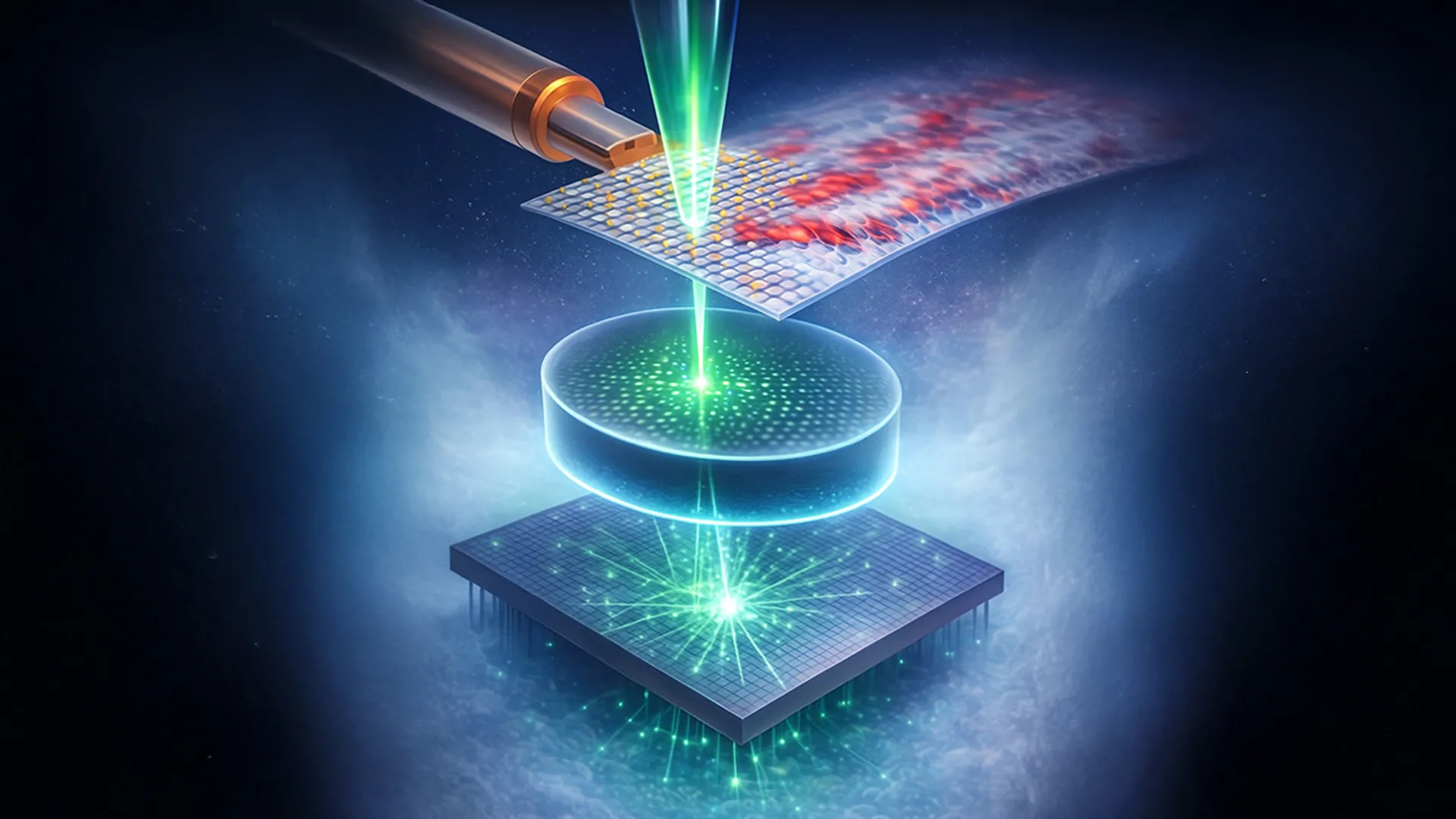
In the intricate domain of quantum materials, the behavior of electrons often defies the simplicity of classical physics. Rather than moving in a uniform, fluid-like motion, electrons in certain solids can spontaneously organize into periodic patterns known as charge density waves (CDWs). For decades, these waves have been a central focus of condensed matter physics, yet their birth, growth, and eventual dissolution have remained largely shrouded in mystery due to the extreme scales and temperatures required for observation. A collaborative research team led by Professor Yongsoo Yang from the Department of Physics at the Korea Advanced Institute of Science and Technology (KAIST) has recently overcome these hurdles, providing the scientific community with its first direct look at the spatial evolution of charge density wave order at the nanoscale.
This research, conducted in partnership with Professors SungBin Lee, Heejun Yang, and Yeongkwan Kim of KAIST, alongside specialists from Stanford University, marks a significant departure from traditional analytical methods. By employing advanced electron microscopy techniques, the team has successfully mapped the amplitude of electronic order across space and temperature, revealing a "patchy" and non-uniform landscape that challenges long-standing assumptions about how phase transitions occur in quantum systems.
The Challenge of Visualizing Quantum Inhomogeneity
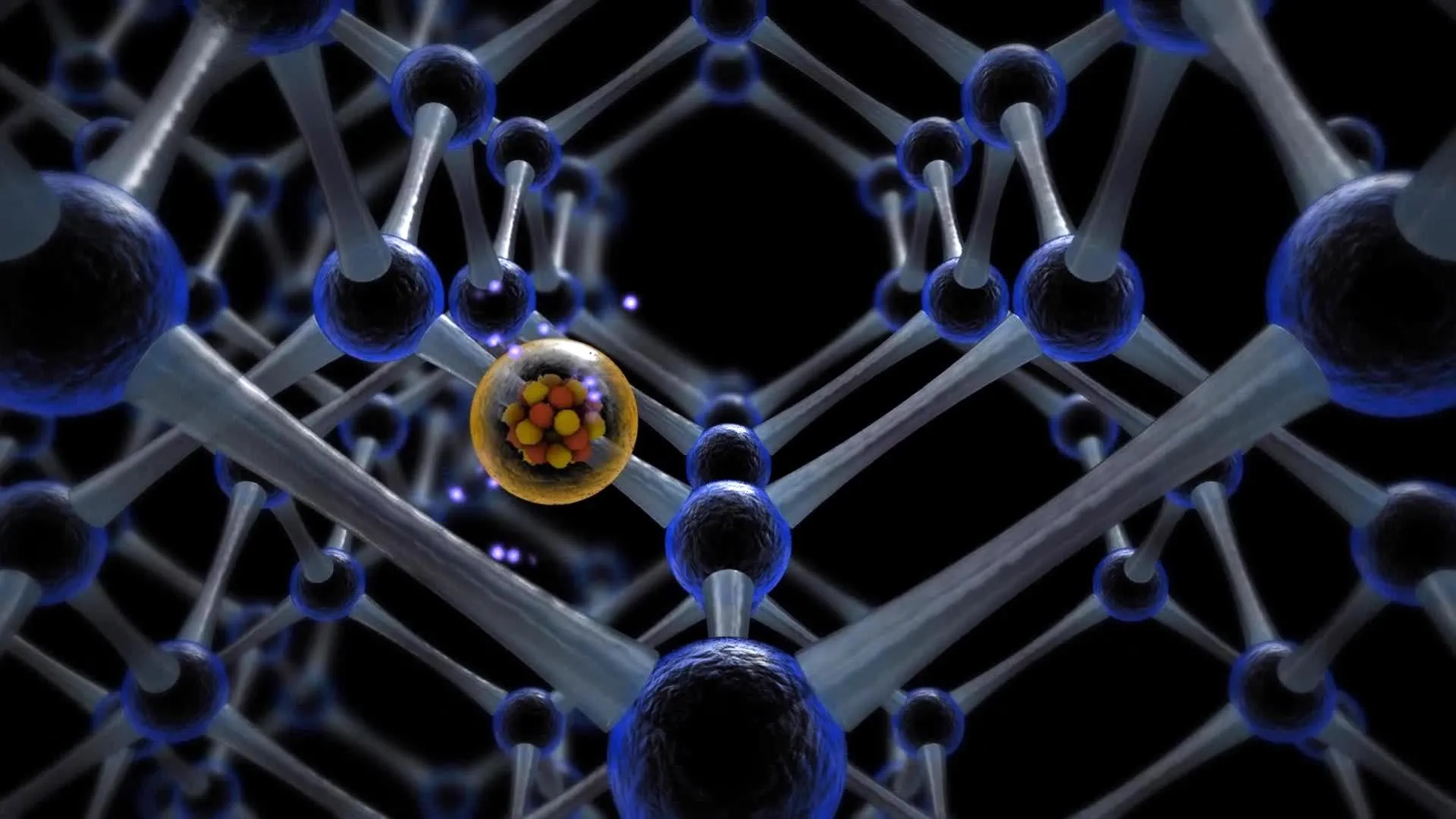
Quantum materials are defined by the collective behavior of their electrons, which can lead to exotic states such as superconductivity or magnetism. The charge density wave is one such state, appearing when electrons rearrange themselves into a static, repeating pattern—essentially a "crystal" made of electrons superimposed on the atomic lattice of the material. This phenomenon typically emerges only at cryogenic temperatures, where thermal fluctuations are suppressed enough for weak electronic interactions to take hold.
Historically, scientists have relied on bulk measurement techniques, such as X-ray or neutron diffraction, to study these states. While these methods provide valuable information about the average structure of a material, they are "blind" to local variations. They treat the material as a single, uniform entity, failing to capture the "spatial inhomogeneity"—the reality that electronic order might be strong in one nanometer-sized pocket while being entirely absent just a few nanometers away.
The KAIST-led study addresses this gap by moving beyond averages to direct, real-space imaging. The team sought to understand not just when a material enters a CDW state, but how that state physically spreads and retreats across the material’s internal landscape.
Technical Innovation: 4D-STEM and Cryogenic Imaging
The breakthrough was made possible through the use of four-dimensional scanning transmission electron microscopy (4D-STEM) integrated with a liquid-helium cooling system. This setup allowed the researchers to maintain the sample at temperatures as low as -253°C (20 Kelvin), a necessity for stabilizing the delicate quantum states under investigation.
In a standard STEM setup, an electron beam is scanned across a sample to create an image based on how many electrons pass through. In 4D-STEM, however, the microscope captures a full two-dimensional diffraction pattern at every single pixel of a two-dimensional scan. This results in a four-dimensional dataset that contains a wealth of information about the local atomic and electronic structure at every point in the material.
By analyzing these diffraction patterns, the researchers were able to extract the "amplitude" of the charge density wave—a measure of how strongly the electrons are organized into the wave pattern. The resolution achieved was staggering; the microscope could distinguish features as small as one hundred-thousandth the width of a human hair. This level of precision allowed the team to construct detailed maps showing the "geography" of electronic order within the crystal.
The "Patchy" Reality of Electronic Phase Transitions
One of the most striking findings of the study was the non-uniform nature of the electronic transition. As the material was cooled toward its transition temperature, the charge density wave did not emerge simultaneously across the entire sample. Instead, it appeared in scattered patches.
The researchers compared this process to the freezing of a lake. In a textbook scenario, one might imagine the entire surface of the water turning to ice at once. In reality, and as observed in the quantum material, ice forms first in small, isolated crystals that eventually grow and merge. However, in the case of the CDW, these "patches" of electronic order showed a surprising degree of independence.
Even as the temperature was lowered, some regions exhibited robust, well-defined electron patterns, while adjacent areas remained in a disordered, metallic state. This "patchiness" suggests that the transition to a quantum ordered state is far more sensitive to local environments than previously understood.
The Role of Lattice Strain in Disrupting Order
A critical question arising from these observations was what caused this spatial variation. The researchers found a direct correlation between electronic order and "lattice strain"—tiny distortions in the arrangement of the atoms themselves.
Using their 4D-STEM data, the team mapped the minute physical stresses within the crystal lattice. They discovered that even infinitesimal amounts of strain, which would be invisible to conventional optical or electron microscopy, were sufficient to suppress the formation of charge density waves. In regions where the atomic lattice was slightly stretched or compressed, the electronic order was significantly weakened or destroyed.
This finding provides empirical evidence for the strong coupling between a material’s physical structure (the lattice) and its collective electronic states. It suggests that in the quest to design new quantum materials, engineers must not only consider the chemical composition but also the "strain landscape" of the material, as even microscopic physical imperfections can dictate the macroscopic electronic properties.
Persistence Beyond the Transition Point
Another significant discovery was the behavior of the material above its nominal transition temperature. In classical thermodynamics, a phase transition is often seen as a sharp boundary; above a certain temperature, the ordered state should vanish completely.
However, the KAIST team observed that small, isolated pockets of CDW order persisted even when the material was heated above the temperature where long-range order is expected to disappear. These "precursor" regions indicate that the breakdown of electronic order is a gradual process of decoherence. Instead of the wave amplitude simply dropping to zero everywhere, the different patches of the wave lose their "connection" to one another, leading to a state where local order exists but global order does not.
This insight is particularly relevant for the study of high-temperature superconductors, where similar "fluctuating" orders are thought to play a role in the mechanism that allows electricity to flow without resistance.
Analytical Implications and Statistical Breakthroughs
Beyond the visual confirmation of these patterns, the study represents a milestone in the quantitative analysis of quantum materials. The researchers performed the first direct measurement of spatial correlations in CDW amplitude.
By applying statistical tools to their nanoscale maps, they were able to quantify how the strength of the electronic order at one point relates to the strength at another point a certain distance away. This allowed them to distinguish between the "local amplitude" (how strong the pattern is in one spot) and the "spatial coherence" (how well the patterns in different spots align with each other).
"Until now, the spatial coherence of charge density waves was largely inferred indirectly through diffraction peak widths," noted Dr. Yongsoo Yang. "Our approach allows us to directly visualize how electronic order varies across space and temperature, and to identify the factors that locally stabilize or suppress it."
Broader Impact on Materials Science and Quantum Computing
The implications of this research extend far beyond the study of charge density waves. The ability to map electronic order at the nanoscale provides a new framework for understanding a wide variety of "correlated electron systems."
- Superconductivity Research: Many superconductors exhibit competing states like CDWs. Understanding how to manipulate these states through strain or local environment could lead to the development of materials that remain superconducting at higher temperatures.
- Quantum Electronics: As electronic components shrink to the nanometer scale, the "patchiness" observed in this study becomes a primary concern. Designing reliable quantum circuits will require precise control over the local electronic landscapes mapped by the KAIST team.
- Metrology and Characterization: The use of 4D-STEM for mapping quantum phases sets a new standard for material characterization. This technique can now be applied to explore other exotic states, such as spin density waves or topological insulators.
Chronology of the Research and Publication
The project involved an intensive period of experimental setup and data collection at the KAIST Analysis Center for Research Advancement (KARA). The team utilized high-end equipment, including the double Cs corrected Titan cubed G2 and the Spectra Ultra, to achieve the necessary resolution.
The study, titled "Direct Visualization of the Spatial Evolution of Charge Density Wave Order," featured Seokjo Hong, Jaewhan Oh, and Jemin Park of KAIST as co-first authors. After rigorous peer review, the findings were published in the prestigious journal Physical Review Letters.
The research was primarily supported by the National Research Foundation of Korea (NRF) under various grants from the Korean Government’s Ministry of Science and ICT (MSIT), including the Individual Basic Research Program and the Nanomaterial Technology Development Program. Additional support was provided by the KAIST singularity professor program and the Korea Research Institute of Standards and Science (KRISS).
Conclusion: A New Lens for the Quantum World
The work of Professor Yongsoo Yang and his colleagues marks a turning point in condensed matter physics. By providing a direct visual link between microscopic lattice strain and macroscopic electronic phases, the team has moved the field from theoretical inference to direct observation.
As researchers continue to probe the limits of quantum materials, the "maps" provided by 4D-STEM will serve as essential guides. The discovery that electronic order is a fragile, patchy, and strain-sensitive phenomenon will undoubtedly influence the next generation of material design, pushing the boundaries of what is possible in the realm of quantum technology. The "frozen lake" of the quantum world is no longer a mystery; scientists can now see the ice forming, one patch at a time.

















Leave a Reply