

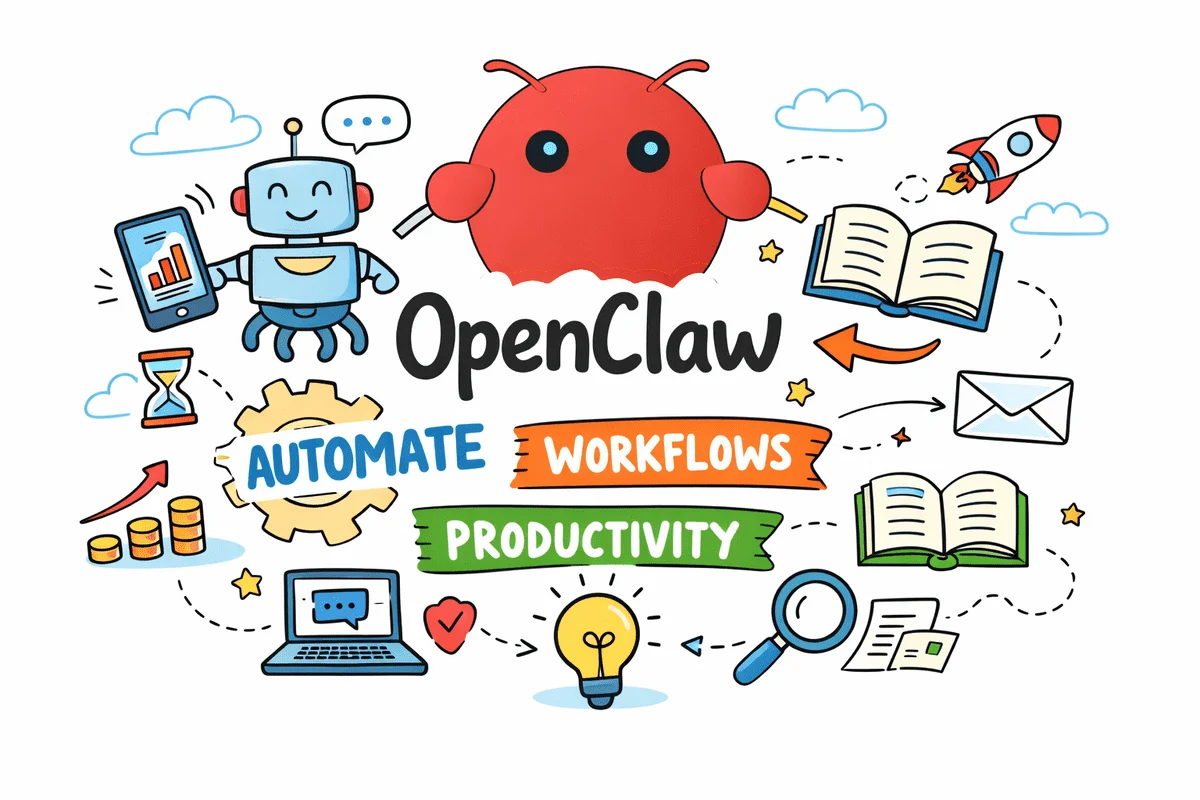
OpenClaw, an open-source agent system, is rapidly gaining prominence for its innovative approach to bridging the gap between conversational artificial intelligence and practical, executable tasks. Moving beyond mere chatbots, OpenClaw is engineered to empower AI to perform actual work, integrating seamlessly with common messaging platforms, external tools, memory systems, and automation frameworks. This comprehensive integration allows users to trigger complex workflows directly from environments they already inhabit daily, such as Telegram, WhatsApp, or Discord, thereby eliminating the need to navigate multiple disparate applications. The system represents a significant evolution in AI utility, shifting the paradigm from passive interaction to active task execution and workflow automation. This article delves into seven critical, real-world applications where OpenClaw is currently being leveraged to automate intricate processes, enhance organizational efficiency, and significantly boost productivity through intelligent agent workflows.
The Dawn of Agentic AI: Context and Evolution
The landscape of artificial intelligence has been undergoing a profound transformation, evolving from large language models (LLMs) primarily focused on generating human-like text to increasingly autonomous AI agents capable of planning, executing, and refining tasks. This shift marks a pivotal moment in AI development, moving from predictive analytics and content generation to proactive problem-solving and workflow management. Historically, AI systems often required explicit human intervention at various stages, limiting their autonomy and scalability. The advent of sophisticated LLMs, however, provided the cognitive backbone necessary for agents to understand complex instructions, reason through problems, and interact with diverse digital environments.
Before OpenClaw, the challenge for many individuals and organizations was integrating these powerful AI capabilities into existing operational frameworks without introducing further complexity. The digital workspace has often been characterized by "tool sprawl," where an abundance of specialized applications, while powerful individually, creates fragmented workflows and necessitates constant context switching. This "AI fatigue," where users struggle to harness the full potential of AI beyond isolated queries, highlighted a critical need for systems that could unify and orchestrate AI-driven tasks within familiar user interfaces. Open-source initiatives, exemplified by OpenClaw, have become crucial in democratizing access to these advanced AI capabilities, fostering innovation through community collaboration, and offering flexible alternatives to proprietary solutions. These platforms build upon the lessons learned from earlier agentic frameworks, such as Auto-GPT and BabyAGI, by focusing on practical integration and user-centric design to deliver tangible benefits in daily operations.
OpenClaw’s Core Architecture and Philosophy
At its heart, OpenClaw’s architecture is designed for interoperability and intelligence. It functions as a sophisticated orchestrator, connecting the analytical prowess of LLMs with the practical demands of daily tasks. The system’s ability to link messaging applications, where much of modern communication and initial task delegation occurs, with a robust suite of tools (APIs, web services, local scripts), persistent memory layers, and broader automation platforms, is its defining feature. This connectivity ensures that AI agents can not only understand requests but also remember past interactions, access relevant information, and execute actions across a wide spectrum of digital services.
The open-source nature of OpenClaw is a fundamental aspect of its philosophy. By making its codebase publicly accessible, OpenClaw invites a global community of developers to contribute, scrutinize, and innovate. This collaborative model accelerates development, enhances security through peer review, and ensures that the system remains adaptable to emerging technologies and diverse user needs. This approach aligns with a broader industry trend towards open standards and shared resources in AI development, aiming to prevent monopolization of AI capabilities and foster a more inclusive technological ecosystem. Industry analysts often highlight that open-source projects like OpenClaw are vital for promoting transparency and enabling widespread adoption of advanced AI, especially for small to medium-sized enterprises (SMEs) and individual developers who might lack the resources to build such intricate systems from scratch. The system’s design underscores a commitment to democratizing AI, empowering users to move beyond simple data retrieval to proactive task management, transforming their digital interactions into productive outputs.
Driving Efficiency: Key Practical Applications of OpenClaw
OpenClaw’s versatility is demonstrated across a myriad of practical applications, each tailored to specific needs but united by the common goal of enhancing efficiency and automating complex workflows. The following detailed examination of its seven primary use cases illustrates the profound impact this open-source agent system is having across various sectors.
Revolutionizing Financial Intelligence and Trading
One of the most compelling applications of OpenClaw lies in the realm of finance and algorithmic trading. Powered by cutting-edge LLMs, OpenClaw agents are being deployed to create highly responsive and intelligent trading bots. These bots transcend basic alert systems by actively monitoring real-time market news from diverse sources, tracking intricate price movements across multiple assets, and analyzing social sentiment from financial forums and news feeds. Instead of merely aggregating data, OpenClaw-powered agents can synthesize these disparate data points, identify potential market anomalies or opportunities, and deliver actionable insights directly to a user’s preferred messaging application.
The sophistication of newer LLMs allows these bots to do more than just relay information. They can summarize complex market signals, cross-reference data from conflicting sources to assess reliability, and highlight the underlying reasons why certain events or trends are significant. For instance, an agent could track a specific stock, integrate earnings call transcripts, analyze Twitter sentiment, and then provide a concise summary of potential impacts, complete with suggested actions. This level of automated, intelligent analysis significantly streamlines market research, reduces the cognitive load on traders, and provides a distinct advantage in fast-paced financial environments. Financial experts suggest that such intelligent automation could lead to more informed decision-making and potentially higher returns by enabling rapid reaction to market shifts, a critical factor in volatile markets.
Streamlining Remote Development Workflows
The paradigm of remote work has presented both opportunities and challenges for software development teams. OpenClaw offers a robust solution for managing remote coding and development workflows, allowing developers to maintain control and productivity even when away from their primary workstations. Developers are leveraging OpenClaw to dispatch instructions to specialized coding agents, execute scripts on remote machines, modify code files, troubleshoot bugs, and manage entire development pipelines via simple commands sent through their phone or chat application.
This capability fundamentally redefines the concept of developer productivity. Rather than being tethered to a desktop, a developer can initiate builds, review logs, or even deploy minor fixes from anywhere with an internet connection. For example, an agent could be instructed to run a suite of tests, report failures, and even suggest code snippets for remediation, all through a secure chat interface. This not only enhances flexibility but also ensures that development work can continue unimpeded by location constraints, fostering continuous integration and deployment practices. The ability to delegate routine or time-consuming tasks to AI agents frees human developers to focus on more complex problem-solving, architectural design, and creative coding, leading to higher overall team efficiency and faster project delivery cycles.
Personalized Daily Briefings and Proactive Automations
One of the most immediately practical and widely adopted use cases for OpenClaw involves the automation of daily briefings and scheduled information delivery. This feature leverages OpenClaw’s ability to proactively send relevant updates, eliminating the need for users to manually check multiple sources. Users can configure OpenClaw to deliver customized morning briefings containing news roundups from preferred sources, a summary of pending tasks, calendar reminders, system alerts, or even personalized learning content.
This seemingly simple automation offers profound productivity gains. A significant portion of daily productivity is often lost to the repetitive act of manually gathering information, leading to "context switching" and diminished focus. When critical information is delivered automatically and intelligently curated, it removes this friction, allowing individuals to start their day informed and immediately transition into high-value tasks. For businesses, this can translate into ensuring sales teams receive daily lead updates, project managers get real-time progress reports, or executives receive concise market summaries before their first meeting. This proactive information delivery system transforms passive data consumption into an active, frictionless process that supports continuous awareness and timely decision-making.
Forging a "Second Brain": Advanced Personal Knowledge Management
The concept of a "second brain" – an external, organized system for capturing, organizing, and retrieving knowledge – finds a powerful realization in OpenClaw. Users are increasingly employing the system as an intelligent personal memory layer, a digital extension of their cognitive processes. OpenClaw facilitates the effortless capture of notes, nascent ideas, crucial reminders, and contextual information over time. Instead of disparate notes scattered across various apps, documents, or mental silos, OpenClaw centralizes this information within a searchable and retrievable system.
The true power emerges when users need to recall specific information. OpenClaw’s LLM integration allows for semantic search and retrieval, meaning users can ask questions in natural language and retrieve relevant information even if the exact keywords aren’t present. For example, a user could ask, "What were my thoughts on the Q3 marketing strategy during the meeting last Tuesday?" and OpenClaw could pull relevant notes, meeting summaries, and related documents. This capability transforms OpenClaw from a mere storage system into an active cognitive assistant, helping individuals maintain an ongoing context across their professional and personal lives. It mitigates the common problem of forgotten ideas or misfiled information, thereby enhancing personal effectiveness, decision quality, and creative output.
Accelerating Research and Knowledge Discovery
In an era of information overload, OpenClaw is proving invaluable in structuring and accelerating research and knowledge discovery pipelines. Academics, market researchers, and corporate strategists are utilizing the system to automate critical stages of the research process. OpenClaw agents can be tasked with gathering information from specified online sources, summarizing lengthy articles or reports, organizing findings into structured formats, and extracting key insights. This transforms raw, unstructured data into actionable intelligence.
Consider a scenario where a researcher needs to track developments in a specific scientific field. OpenClaw can monitor new publications, abstract key findings, identify emerging trends, and even flag contradictory evidence, presenting a consolidated report. This level of automation drastically reduces the manual effort involved in reviewing papers, validating ideas, or collecting insights from disparate databases and web pages. By streamlining the initial, often laborious, phases of research, OpenClaw enables human researchers to devote more time to critical analysis, hypothesis generation, and synthesis, thereby accelerating the pace of discovery and improving the quality of research outcomes. This is particularly beneficial in fast-evolving fields where staying current is a constant challenge.
The Power of Specialization: Multi-Agent Orchestration
One of OpenClaw’s most advanced and differentiating features is its inherent support for multi-agent systems. Unlike single-agent architectures that rely on one general AI to handle all tasks, OpenClaw facilitates the creation of specialized workflows where multiple agents collaborate. In such setups, one agent might be designated as a "planner," breaking down a complex task into manageable sub-tasks. Another agent, the "executor," would then carry out these sub-tasks, interacting with tools and systems. A "reviewer" agent could then evaluate the execution’s success, identifying errors or areas for improvement, while a "reporter" agent compiles progress updates and final results.
This multi-agent paradigm significantly enhances the system’s capability to tackle highly complex and multi-faceted problems. By distributing responsibilities, each agent can be optimized for a specific function, leading to more robust, efficient, and accurate automation. For instance, in a content creation workflow, one agent could research a topic, another draft the initial content, a third proofread and refine, and a fourth publish it to a platform. This structured approach to automation allows for greater control, scalability, and resilience compared to monolithic AI solutions, making OpenClaw a powerful tool for orchestrating sophisticated digital operations across an organization.
Transforming Routine Business Operations
Beyond specialized applications, OpenClaw is being widely adopted to automate and optimize a spectrum of everyday business operations, particularly beneficial for small teams and enterprises. These applications, while often less "flashy," are critical for operational efficiency. Examples include organizing incoming sales leads, drafting personalized outreach emails, managing customer relationship management (CRM)-style tasks like follow-up reminders, summarizing lengthy meeting transcripts into concise action items, and tracking project progress.
The core appeal for businesses lies in the substantial reduction of repetitive tasks and the mitigation of context switching. Employees spend less time on administrative chores and more time on strategic decision-making, client engagement, and creative problem-solving – activities that directly contribute to business growth. For instance, a small business owner could have an OpenClaw agent process incoming inquiries, qualify leads based on predefined criteria, and then automatically schedule introductory calls, significantly streamlining their sales pipeline. This level of automation not only saves countless hours but also ensures consistency in operations and reduces the potential for human error, making OpenClaw an indispensable tool for enhancing overall organizational productivity and agility.
Industry Reception and Broader Implications
The rapid adoption and diverse applications of OpenClaw are indicative of a broader industry consensus: autonomous agent systems represent the next frontier in AI utility. Industry analysts and technology commentators have noted that projects like OpenClaw are critical in demonstrating the practical viability of AI agents, moving them from theoretical concepts to tangible, value-generating tools. Developers within the OpenClaw community frequently highlight the system’s flexibility and the collaborative spirit that drives its evolution, asserting its role in democratizing access to advanced automation previously reserved for large enterprises with substantial R&D budgets.
The implications of such open-source agent systems extend far beyond mere task automation. They signal a profound shift in the future of work, where human-agent collaboration becomes the norm, enhancing individual and team productivity by offloading routine cognitive and operational burdens. This could lead to a restructuring of job roles, with a greater emphasis on creative problem-solving, strategic thinking, and managing AI systems rather than executing repetitive tasks. However, this evolution also brings important ethical considerations. The development and deployment of autonomous agents necessitate careful attention to issues of accountability, transparency, bias mitigation, and data privacy. Ensuring that these systems are developed responsibly, with human oversight and ethical guidelines embedded into their design, will be paramount for their sustainable and beneficial integration into society.
The Road Ahead: Customization and Future Potential
OpenClaw, while still in its early stages of development, vividly illustrates the direction in which agent systems are heading. Its strength lies not just in its ability to process information or answer questions, but in its capacity to proactively monitor, organize, automate, and report back through the digital channels users already frequent. The numerous examples of its application, from sophisticated trading bots to personalized memory systems and intricate business automation, merely scratch the surface of its potential.
The true value proposition of OpenClaw resides in its flexibility and customizability. Instead of being confined to a fixed set of functionalities or a rigid proprietary framework, users are empowered to construct bespoke workflows that align precisely with their unique operational needs and personal preferences. This capability to build tailored solutions, test them rigorously, and refine them iteratively, represents a significant departure from traditional software adoption. It transforms users from passive consumers into active architects of their digital environments, fostering a culture of innovation and continuous improvement. As the ecosystem of integrated tools and LLM capabilities continues to expand, OpenClaw’s ability to orchestrate these components into intelligent, adaptive workflows positions it as a cornerstone for the next generation of AI-driven productivity, ultimately empowering individuals and organizations to achieve unprecedented levels of efficiency and strategic focus.













Leave a Reply