

The burgeoning artificial intelligence market, characterized by a proliferation of specialized tools ranging from advanced chatbots and sophisticated writing assistants to intricate image generators and robust coding utilities, is undergoing a significant transformation. While the initial wave of AI innovation delivered remarkable single-purpose applications, the resulting fragmentation has presented a growing challenge for individuals and enterprises seeking cohesive, integrated solutions. In this evolving landscape, Abacus AI has positioned itself as a notable contender, striving to consolidate diverse AI functionalities into a singular, unified system designed not merely to assist, but to execute complex tasks across a multitude of domains. This strategic approach aims to mitigate the prevalent "AI workflow problem," offering an integrated platform capable of advanced conversational interaction, in-depth research, media generation, application development, task automation, and persistent agent deployment.
The rapid advancements in AI, particularly since the widespread adoption of large language models (LLMs) and generative AI in the early 2020s, have ushered in an era of unprecedented digital capability. However, this explosion of innovation has also inadvertently led to a fragmented operational environment for many organizations. A typical business user might juggle subscriptions to a chatbot for customer service, a separate tool for content creation, another for code generation, and yet another for data analysis. Industry analysts, such as those at Gartner and Forrester, have consistently highlighted the growing challenge of "tool sprawl," noting that enterprises often deploy an average of 5-7 distinct AI applications, leading to increased costs, data silos, and a steep learning curve for employees. Abacus AI enters this complex scenario with a clear value proposition: to streamline and centralize these disparate functions under one roof, providing a holistic AI work system rather than a collection of isolated features.
Understanding Abacus AI’s Integrated Architecture
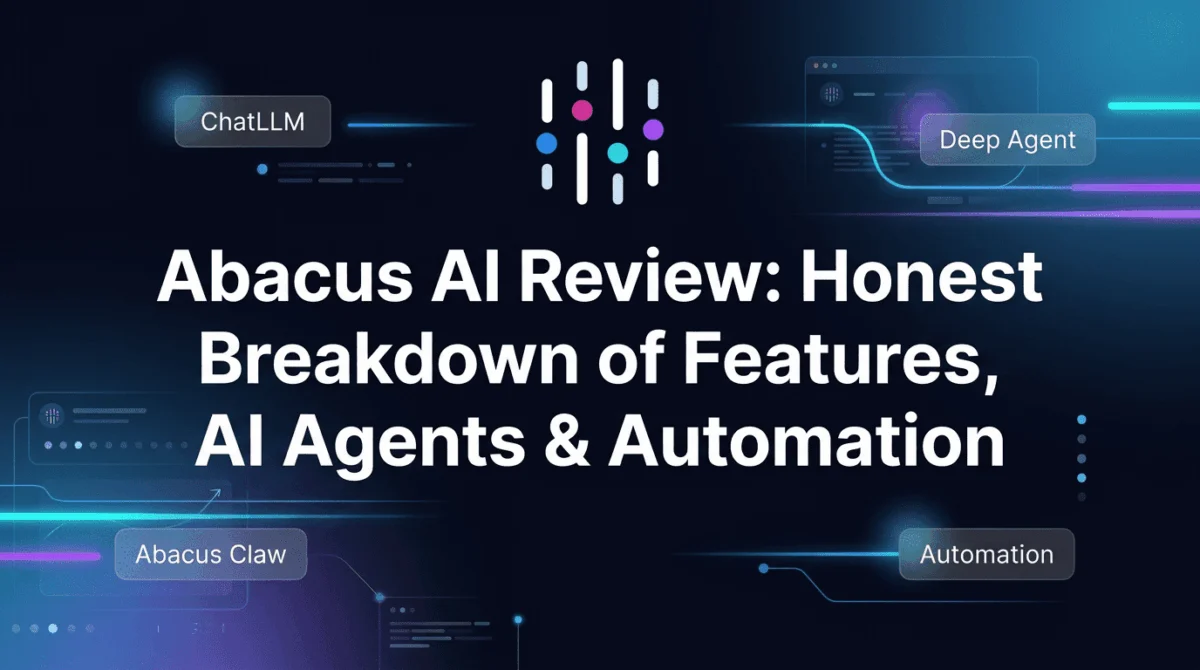
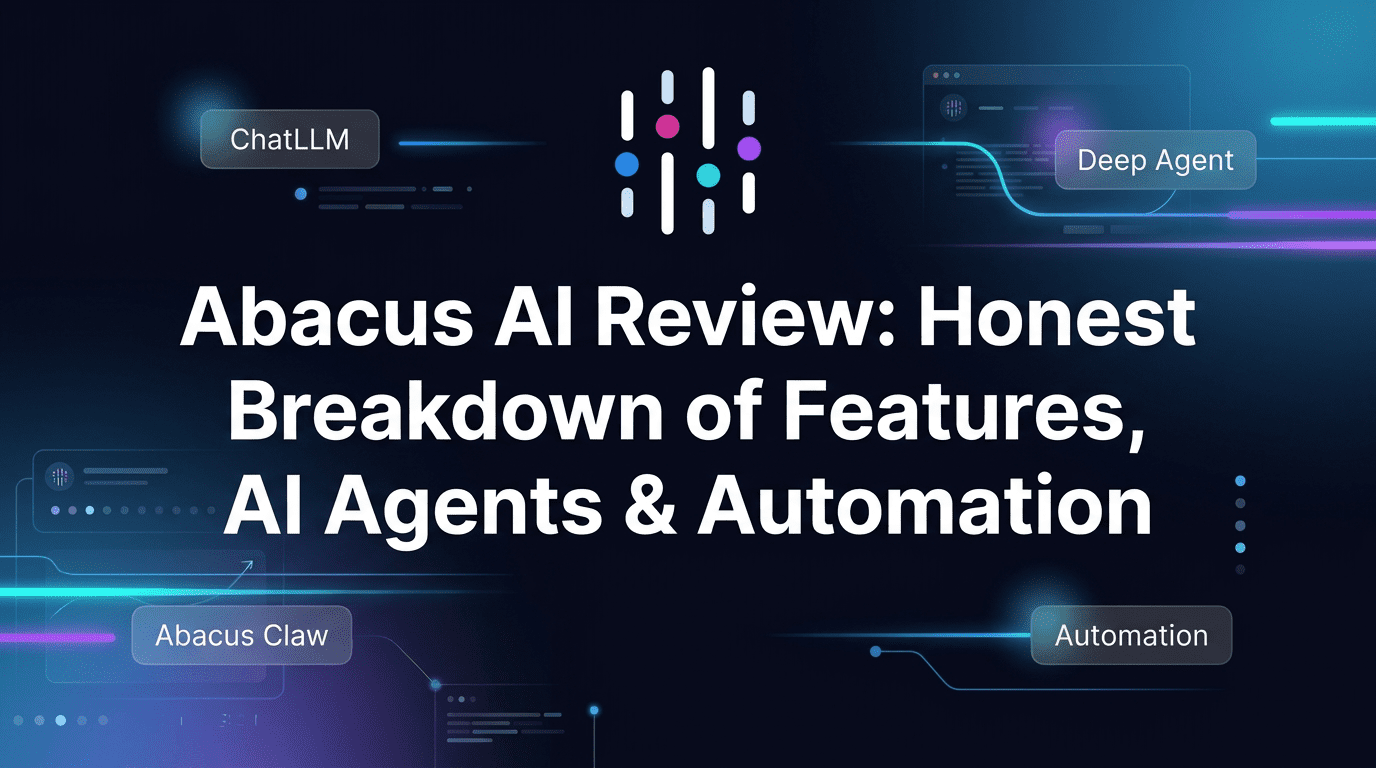
At its core, Abacus AI is structured around a multi-layered architecture designed for comprehensive AI deployment. This architecture is not merely a collection of tools but an interconnected ecosystem where different components synergistically enhance overall functionality. The platform’s primary layers – ChatLLM, Abacus AI Deep Agent, and Abacus Claw – each address a critical aspect of AI interaction and execution, moving beyond conventional chatbot capabilities to deliver a truly operational AI system. Additionally, the platform integrates media generation capabilities through modules like Abacus Studio, expanding its utility for creative and marketing teams.
ChatLLM: The Multi-Model Gateway to AI Power
ChatLLM serves as the primary interface layer for Abacus AI, presenting itself as an AI super-assistant. While superficially resembling a standard chatbot, its underlying power lies in providing users with access to an extensive array of cutting-edge AI models from a single, unified workspace. This multi-model approach is a direct response to the inherent limitations of any single AI model. As the AI landscape matures, it has become evident that no one model excels across all tasks; some are optimized for intricate coding, others for nuanced creative writing, some for extensive long-context reasoning, and still others for advanced image or video generation.
ChatLLM strategically aggregates access to frontier and open-source models, reportedly including iterations of GPT-5.5 (such as GPT-5.5 Thinking, GPT-5.5 Pro), Codex 5.3, o3, GPT-Image, Sonnet 4.6, Opus 4.7, Gemini 3.1 Pro, Grok 4.2, Qwen 3.6, DeepSeek v4, Kimi 2.6 Thinking, and GLM 5.1, among others. This diversity allows users to leverage the optimal model for specific tasks without the overhead of managing multiple subscriptions or continually comparing individual model performance. For instance, a user might employ a reasoning-focused model for complex strategic analysis, then switch to a coding-optimized model for software development, and subsequently use an image generation model for visual assets, all within the same ChatLLM environment. This capability significantly streamlines workflows for tasks such as data analysis, web research, document summarization, content drafting, and even legal review, positioning ChatLLM as a central AI workspace rather than a mere conversational tool. The value proposition here is not just convenience, but also efficiency and the ability to achieve superior results by matching the right AI specialization to the task at hand.
Abacus AI Deep Agent: Transforming Intent into Action
For power users and enterprises, the Abacus AI Deep Agent represents the platform’s execution layer, a pivotal component designed to transcend simple instruction-giving and actively complete complex, multi-step tasks. While a conventional chatbot might offer instructions on how to conduct competitive research, the Deep Agent is engineered to perform the research itself, collect pricing data, analyze market positioning, and generate a structured report. This "execution-first" paradigm marks a fundamental shift from AI as an advisory tool to AI as an operational partner.
The capabilities of the Deep Agent are extensive, encompassing a wide range of sophisticated workflows. These include, but are not limited to, conducting deep research across various data sources, creating comprehensive presentations complete with visuals and data points, automating browser-based tasks, interacting with external applications, developing and deploying web applications, and streamlining processes within enterprise ecosystems like Google Workspace. A particularly compelling feature, dubbed "vibe coding," allows users to describe desired applications, websites, or dashboards in natural language, enabling the AI to construct and iterate on these digital products. This dramatically reduces the barrier to entry for founders and non-technical business users, accelerating the journey from concept to a working prototype, thereby compressing development cycles that traditionally span weeks into significantly shorter periods. While human oversight remains crucial for refinement and validation, the Deep Agent’s ability to generate functional code and deploy applications democratizes software development and rapid prototyping.
Abacus Claw: The Dawn of Persistent AI
Perhaps one of the most innovative elements of the Abacus AI ecosystem is Abacus Claw, the platform’s always-on AI agent layer. Addressing a critical limitation of most contemporary AI tools, which are predominantly session-based and lack persistent memory, Claw introduces a paradigm of continuous, context-aware AI interaction. Built upon the open-source OpenClaw framework, Abacus Claw operates as a cloud-hosted, persistent AI assistant that seamlessly integrates with popular messaging platforms such as WhatsApp, Telegram, and Slack.
The concept of persistence in AI is transformative. Unlike traditional chatbots that require users to initiate a new session and often re-establish context for each interaction, Claw maintains memory of past conversations, user preferences, and ongoing tasks. This enables the agent to run continuously, support recurring workflows, and even proactively offer assistance or insights based on accumulated knowledge. For instance, a Claw agent could be tasked with monitoring industry news, summarizing daily reports, scheduling follow-ups based on communication, or managing recurring content publication schedules. This shift from reactive to proactive AI interaction significantly enhances productivity, making the AI feel less like a utility and more like an integrated team member. For businesses, this translates into automated follow-ups in sales workflows, continuous monitoring in operational tasks, and persistent support in content creation, thereby reducing manual effort and ensuring continuity across diverse processes. While technically proficient users can self-host OpenClaw, Abacus Claw removes the operational burden of managing infrastructure, offering a secure, preconfigured, and highly available solution.
Abacus Studio and Broader Applications
Beyond its core architectural layers, Abacus AI extends its capabilities into multimedia generation through modules like Abacus Studio. This integration allows users to access leading image generation models (e.g., GPT Image, Nano Banana Pro, FLUX, Seedream, Recraft, Ideogram) and advanced video generation models (e.g., Sora 2, Veo 3.1, Kling AI v3, Seedance 2.0). This means Abacus AI is not just a platform for text and data, but also a comprehensive creative hub, enabling the production of platform-ready short videos for marketing, social media, or internal communication. For content teams, this integration minimizes the need for multiple specialized creative tools, centralizing content production workflows.
The practical applications of Abacus AI span various sectors:
- Research and Reporting: Conducting deep market analysis, competitive intelligence, and generating structured reports for consultants, analysts, and strategic teams.
- App and Website Building: Accelerating the development of internal tools, marketing landing pages, and functional prototypes for solo founders and small development teams.
- Presentations and Documents: Creating polished business proposals, financial reports, and marketing presentations by combining research, writing, and formatting capabilities.
- Business Automation: Automating repetitive tasks such as lead qualification, data entry, report generation, and customer service responses through integrations with CRM, ERP, and communication platforms.
- Content Production: Supporting the entire content lifecycle from idea generation and drafting to image and video creation, and even scheduled repurposing of content.
Abacus AI for Teams: Collaborative Intelligence
Recognizing the collaborative nature of modern work, Abacus AI extends its functionalities to cater to teams. ChatLLM Teams offers features for shared projects, custom chatbot development, and integration with internal knowledge bases and existing enterprise systems (e.g., Google Workspace, Slack, Salesforce, HubSpot). This team-centric approach allows organizations to develop bespoke AI assistants and agents trained on their proprietary data and tailored to specific workflows. For enterprises, this is a critical differentiator, as AI’s utility significantly increases when it understands the unique context, processes, and data within an organization, moving beyond generic responses to deliver contextually relevant and actionable insights. This capability addresses a key enterprise demand for secure, customizable, and integrated AI solutions that can leverage internal data assets.
Pricing Model and Strategic Considerations
Abacus AI employs a subscription and credit-based pricing model, with ChatLLM Teams offering tiers like Basic ($10 per user per month) and Pro ($20 per user per month). While the subscription covers access, more intensive tasks such as complex agent work, video generation, advanced image creation, and extensive automation consume credits. This model presents both advantages and challenges. On one hand, it offers a cost-effective alternative to subscribing to numerous individual AI products, potentially replacing several specialized tools with a single platform. On the other hand, the credit-based system requires users to monitor usage carefully, as costs can fluctuate based on the complexity and volume of tasks performed. The absence of a free trial and a no-refund policy underscores the platform’s positioning as a serious investment for users committed to integrating comprehensive AI capabilities into their operations, rather than a casual exploration tool.
Comparative Landscape: Beyond the Chatbot
The question of Abacus AI versus ChatGPT, a common point of comparison, highlights the fundamental difference in their scope. ChatGPT excels as a general-purpose conversational AI, adept at brainstorming, writing assistance, and general knowledge queries. Abacus AI, however, is designed as a broader AI operating system for tasks. Its multi-model access, execution-focused Deep Agent, persistent Claw agents, and integrated media generation capabilities make it a significantly more comprehensive platform for workflow completion. The more apt comparison for Abacus AI is not a single chatbot, but rather a stack of specialized AI tools that it aims to consolidate and integrate. This positions Abacus AI as a strong contender for businesses and power users who require an all-in-one AI work platform capable of advanced chat, automation, app building, deep research, and persistent operational support.
Conclusion: The Shift from Assistance to Execution
Abacus AI represents a pivotal shift in the AI paradigm, moving beyond mere assistance to active execution of work. Its integrated suite of tools—ChatLLM for multi-model interaction, Deep Agent for complex task completion, Claw for persistent, context-aware automation, and Abacus Studio for rich media generation—collectively address the pressing need for consolidated, powerful AI solutions in a fragmented market. While the platform demands a learning investment and careful management of its credit-based system, its potential for transforming productivity, accelerating development cycles, and streamlining complex business operations is substantial. For founders, developers, analysts, and enterprises grappling with tool sprawl and seeking to leverage AI for tangible outputs—be it applications, detailed reports, automated workflows, or engaging multimedia content—Abacus AI offers a robust, integrated ecosystem. It is designed not just to help users work faster, but fundamentally to empower them to offload and automate significant portions of their work, thereby redefining the very nature of digital productivity in the coming years.









Leave a Reply