

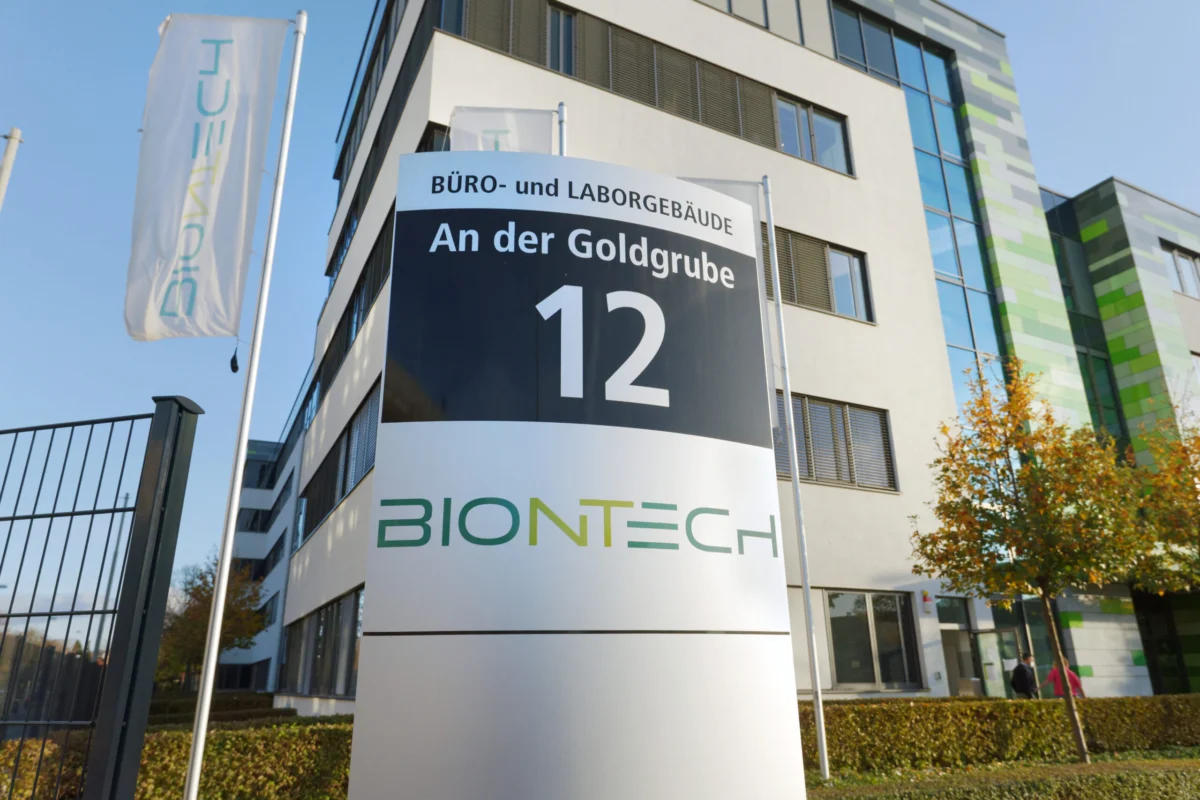
The German biotechnology powerhouse BioNTech, once synonymous with its groundbreaking COVID-19 vaccine, Comirnaty, is undergoing a profound strategic transformation, shedding 1,860 jobs and divesting almost entirely from infectious disease programs to make an ambitious, multi-billion-euro bet on its oncology roots. This dramatic pivot comes in the wake of a precipitous decline in vaccine revenue and a shifting political landscape that has seen federal funding for mRNA vaccine development curtailed. From a staggering €19 billion in revenue in 2021, the company’s financial performance plummeted to just €118 million in the first quarter of 2026, underscoring the urgency of its strategic realignment.
The Rise and Fall of a Pandemic Titan
BioNTech’s journey to global prominence began with an unprecedented sprint. Founded in 2008 with an initial focus on developing cancer immunotherapies, the company quickly leveraged its messenger RNA (mRNA) platform expertise when the SARS-CoV-2 genetic sequence became publicly available in January 2020. Recognizing the potential of mRNA technology to rapidly develop a vaccine, BioNTech initiated "Project Lightspeed." This endeavor was significantly bolstered by a €375 million grant from the German government, aimed at accelerating both development and production capabilities.
A pivotal moment arrived with its alliance with pharmaceutical giant Pfizer. While Pfizer famously declined U.S. government support via Operation Warp Speed R&D funding to maintain scientific independence, the U.S. government nonetheless placed a substantial $2 billion advance-purchase order for 100 million doses in July 2020, followed by commitments for hundreds of millions more. This crucial purchase guarantee, combined with the emergency use authorization (EUA) granted in December 2020, propelled Comirnaty into one of the best-selling pharmaceutical products in history. The vaccine generated approximately €36 billion in revenue for BioNTech across 2021 and 2022, transforming the relatively unknown biotech into a household name and a financial behemoth. The company’s market capitalization soared, reflecting its critical role in the global fight against the pandemic.
However, the extraordinary demand for COVID-19 vaccines proved unsustainable. As the pandemic receded, global vaccination rates slowed, and existing stockpiles grew, demand for Comirnaty went into a steep decline. This dramatic shift is starkly illustrated by BioNTech’s financial trajectory: revenue collapsed from its peak of €19 billion in 2021 to a mere €118 million in the first quarter of 2026. This precipitous drop signaled the end of an era defined by emergency vaccine production and underscored the imperative for a sustainable, long-term business model beyond infectious disease crises.
Political Headwinds and a Shifting mRNA Landscape
Adding to the commercial challenges, the political climate surrounding mRNA technology in the U.S. underwent a significant transformation. In August 2025, HHS Secretary Robert F. Kennedy Jr. announced the termination of 22 investments in mRNA vaccine development under the Biomedical Advanced Research and Development Authority (BARDA), effectively rejecting the platform for certain applications. Secretary Kennedy Jr. stated that data indicated mRNA vaccines "fail to protect effectively against upper respiratory infections like COVID and flu," a conclusion that sparked considerable debate within the scientific community.
This wind-down had immediate repercussions across the mRNA sector, impacting companies and institutions alike. Contract terminations were issued to Emory University and Tiba Biotech, while mRNA work with Luminary Labs, ModeX, and Seqirus was de-scoped. Pre-award proposals from major players like Pfizer, Sanofi Pasteur, CSL Seqirus, and Gritstone were also rejected. This policy shift signaled a clear departure from the previous administration’s approach, which had heavily supported mRNA vaccine development through initiatives like Operation Warp Speed.
The scientific community’s response to Secretary Kennedy Jr.’s assertions was swift and largely critical. Researchers at prestigious institutions such as Johns Hopkins, Harvard, and the National Academy of Medicine publicly disagreed with the conclusions regarding mRNA vaccine efficacy, emphasizing their proven ability to prevent severe disease, hospitalization, and death from respiratory viruses. They highlighted the critical role mRNA technology played in mitigating the COVID-19 pandemic and warned of the risks associated with cutting federal funding for such a rapidly evolving and promising platform. Despite these counter-arguments, the message from the Trump 2.0 administration was clear: federal dollars would be actively steered away from mRNA vaccine development for certain indications, creating significant headwinds for companies like BioNTech that had built their recent success on this technology.
Strategic Consolidation and Painful Restructuring
Against this backdrop of plummeting revenue and political uncertainty, BioNTech embarked on a strategy of consolidation and rationalization. In June 2025, the company announced the acquisition of CureVac, another German mRNA specialist, in an all-stock deal valued at $1.25 billion. CureVac, too, had experienced its own pandemic arc. Its first-generation COVID-19 vaccine candidate showed only 48% efficacy in a Phase 3 trial in 2021, leading the company and its partner Bayer to abandon COVID-19 development as more efficacious rivals entered the market. CureVac subsequently refocused on next-generation mRNA platforms, partnering with GSK, and was lauded by BioNTech for its research and manufacturing site in Tübingen, which BioNTech described as a "major prize." The acquisition was initially seen as a move to strengthen BioNTech’s mRNA capabilities, diversify its pipeline, and enhance its manufacturing footprint.

However, the ink had barely dried on the CureVac deal when BioNTech announced a far more drastic restructuring. Just five months after the acquisition closed, the company revealed plans to shutter the Tübingen site—the very asset it had recently hailed—along with facilities in Idar-Oberstein, Marburg, and Singapore. These closures are projected to result in the elimination of approximately 1,860 jobs. Furthermore, BioNTech is exiting in-house COVID-19 vaccine manufacturing entirely, ceding all future production responsibilities to its partner, Pfizer. This strategic divestment from vaccine manufacturing is expected to yield substantial annual savings, estimated at €500 million by 2029.
The decision to close sites and shed jobs, particularly the Tübingen facility acquired through CureVac, underscores the rapid and decisive nature of BioNTech’s strategic shift. It suggests a comprehensive re-evaluation of its operational footprint and a determination to streamline resources toward its newly prioritized oncology pipeline, even if it means incurring significant restructuring costs and job losses in the short term. The acquisition of CureVac, initially seen as an expansion, quickly transformed into an asset consolidation play, with BioNTech retaining what it deemed essential for its long-term vision while divesting redundant or underperforming assets.
The Full-Circle Pivot to Oncology: A Multi-Billion-Euro Bet
Despite the dramatic financial downturn and extensive restructuring, BioNTech remains in a remarkably strong financial position. The company still holds a substantial cash reserve of €16.8 billion. This formidable war chest is now being deployed in a "bet-the-company" pivot back to its original scientific focus: oncology. This strategic reorientation is not merely a shift in focus but a full-scale commitment, backed by aggressive R&D investment and an ambitious clinical development plan.
BioNTech plans to initiate 15 Phase 3 oncology trials by the end of the year, with seven late-stage data readouts anticipated in 2026 alone. This aggressive timeline signals the company’s intent to rapidly advance its oncology candidates through clinical development and bring new treatments to market. Notably, the company expects zero oncology revenue this year, highlighting that this is a long-term investment phase, not an immediate revenue generator. Simultaneously with the announcement of layoffs and site closures, BioNTech’s board also approved a €1 billion share buyback program, a move often interpreted as a signal of confidence in the company’s future prospects and an effort to enhance shareholder value amidst the restructuring.
The extent of BioNTech’s exit from infectious disease research is striking. As recently as March 2025, the company’s clinical pipeline listed nine infectious disease programs, including a next-generation COVID vaccine, a COVID-influenza combination with Pfizer, a standalone influenza vaccine, an HSV vaccine, tuberculosis and malaria vaccines funded by the Gates Foundation, an mpox vaccine funded by CEPI, and a shingles vaccine in collaboration with Pfizer. A protein-based therapeutic for bacterial vaginosis rounded out its non-oncology portfolio. Today, BioNTech’s public pipeline page lists only a single infectious disease program: mpox, which is externally funded by the Coalition for Epidemic Preparedness Innovations (CEPI). This near-complete divestment from a field where it achieved unprecedented success speaks volumes about the company’s determination to focus its resources.
Conversely, the oncology pipeline has expanded significantly. The live site now features more than 25 Phase 2 and Phase 3 clinical trials, alongside over 10 novel-novel combination studies. The centerpiece of this renewed oncology effort is Pumitamig (BNT327), a bispecific PD-L1/VEGF-A immunomodulator developed in collaboration with Bristol Myers Squibb. This promising candidate is undergoing active trials across a broad spectrum of cancers, including lung cancer, triple-negative breast cancer, colorectal cancer, gastric cancer, hepatocellular carcinoma, and glioblastoma, among others. In 2025 alone, BioNTech invested a substantial €2.1 billion in R&D, predominantly directed towards its burgeoning oncology portfolio.
Leadership Transition and Future Vision
During BioNTech’s Q1 2026 earnings call, analyst questions were almost exclusively focused on the oncology pipeline, covering topics such as trial endpoint changes, previews of data for the American Society of Clinical Oncology (ASCO) meeting, and strategies for antibody-drug conjugate (ADC) combinations. The subject of COVID-19, once central to every discussion, was not raised, symbolizing the complete shift in corporate focus.
CFO Ramón Zapata articulated the company’s long-term vision, describing BioNTech as being in "an investment phase as we are building BioNTech into a commercial stage, multi-product oncology company by 2030." This statement clarifies the ambitious timeline and the fundamental transformation from a research-focused biotech to a fully integrated pharmaceutical company with a commercial footprint. To facilitate this transition, the supervisory board is actively searching for a new CEO with extensive experience in late-stage development and commercialization of pharmaceutical products at scale. This leadership change is critical for steering BioNTech through its next phase, moving beyond the R&D success of the pandemic era to establishing a sustainable presence in the highly competitive oncology market.
In a profound sense, BioNTech has come full circle. Its initial founding in 2008 as a cancer immunotherapy company laid the groundwork for the mRNA technology that would later define its pandemic response. Now, after an extraordinary detour through infectious diseases, the company is returning with renewed vigor, immense financial resources, and vastly enhanced technological capabilities to its original mission: revolutionizing cancer treatment. The success of this multi-billion-euro gamble will hinge on the clinical outcomes of its ambitious oncology pipeline and its ability to navigate the complex commercial landscape of the pharmaceutical industry in the coming years.
















Leave a Reply