

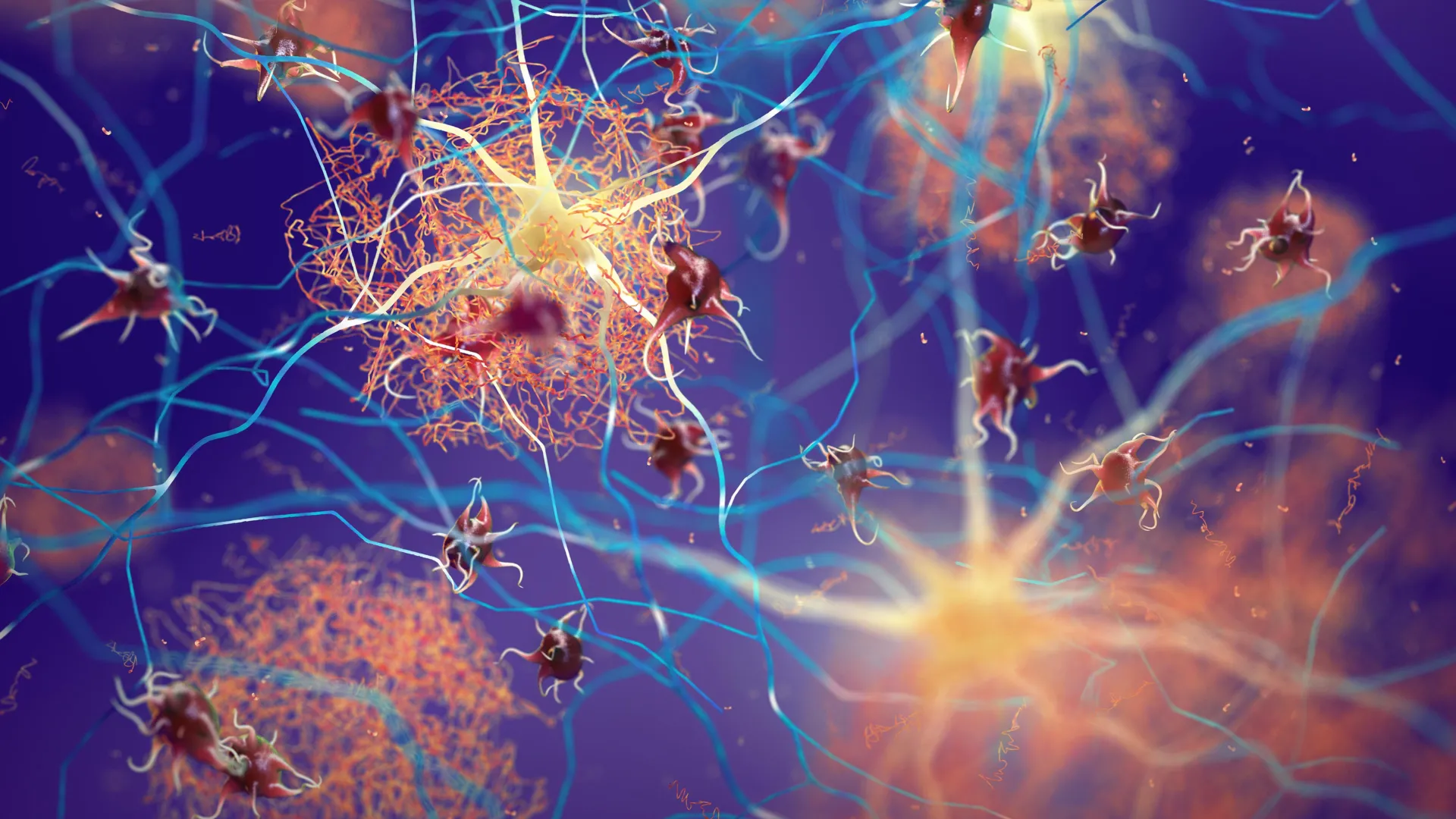
In a major breakthrough for neurodegenerative research, scientists at Baylor College of Medicine have identified a biological pathway that enables the brain’s own support cells to clear toxic amyloid plaques, a primary hallmark of Alzheimer’s disease. The study, published in the prestigious journal Nature Neuroscience, demonstrates that by manipulating a specific protein known as Sox9, researchers can essentially turn astrocytes—star-shaped non-neuronal cells—into highly efficient "vacuum cleaners" that remove existing debris and preserve cognitive function. This discovery marks a significant departure from traditional Alzheimer’s research, which has historically focused almost exclusively on neurons or the prevention of plaque formation, rather than the activation of the brain’s innate waste-management systems to remediate established damage.
The Role of Astrocytes in the Neurodegenerative Landscape
For decades, the scientific community viewed astrocytes primarily as "glue" (the literal translation of the Greek "glia") that held neurons together, providing structural support and nutrients. However, modern neuroscience has increasingly recognized these cells as sophisticated regulators of brain activity. Astrocytes are responsible for maintaining the blood-brain barrier, regulating blood flow, providing metabolic support to neurons, and modulating synaptic transmission.
In the context of aging and Alzheimer’s disease, however, these cells undergo a process known as reactive astrogliosis. While this response is intended to protect the brain from injury, it often becomes dysfunctional in chronic conditions. "Astrocytes perform diverse tasks that are essential for normal brain function, including facilitating brain communications and memory storage," explained Dr. Dong-Joo Choi, the study’s first author and an assistant professor at the University of Texas Health Science Center at Houston. "As the brain ages, astrocytes show profound functional alterations; however, the role these alterations play in aging and neurodegeneration is not yet understood."
The Baylor team, led by corresponding author Dr. Benjamin Deneen, focused on the transcription factor Sox9. As a master regulator of gene expression, Sox9 is known to play a critical role in the development of the nervous system. The researchers hypothesized that by modulating Sox9 levels in the adult brain, they could "reprogram" aging or diseased astrocytes to regain their youthful, protective capabilities, specifically their ability to ingest and degrade amyloid-beta (Aβ) proteins.
A Paradigm Shift in Experimental Design
One of the most compelling aspects of the Baylor study is the timing of the intervention. Many previous Alzheimer’s studies have focused on "pre-symptomatic" models, where treatments are administered before plaques have significantly accumulated. While valuable, these models do not accurately reflect the clinical reality of human patients, who typically seek medical intervention only after memory deficits and plaque buildup are already present.
"An important point of our experimental design is that we worked with mouse models of Alzheimer’s disease that had already developed cognitive impairment, such as memory deficits, and had amyloid plaques in the brain," said Dr. Choi. This "post-symptomatic" approach provides a more rigorous test of whether a therapy can actually reverse damage rather than just delay its onset.
The research team utilized transgenic mice that mimic the progression of human Alzheimer’s. Once the mice reached an age where cognitive decline was measurable and plaque density was high, the researchers used viral vectors to either increase or eliminate the expression of Sox9 within the astrocytes of the hippocampus and cortex—regions of the brain most heavily impacted by Alzheimer’s.
The "Vacuum Cleaner" Effect: Data and Observations
The results of the six-month study revealed a stark contrast between the experimental groups. In mice where Sox9 was eliminated, the progression of the disease accelerated. These mice showed a simplified astrocyte structure, with fewer branches and less territory covered by each cell. More importantly, their brains showed a marked increase in the accumulation of amyloid-beta plaques, and their performance on cognitive tests—such as recognizing familiar objects—declined rapidly.
Conversely, the mice treated with increased levels of Sox9 showed a dramatic reversal of these trends. The astrocytes in these mice became more structurally complex, extending their reach to better interact with surrounding neurons and plaques. Microscopic analysis revealed that these "boosted" astrocytes were actively engulfing amyloid-beta deposits.
"We found that increasing Sox9 expression triggered astrocytes to ingest more amyloid plaques, clearing them from the brain like a vacuum cleaner," noted Dr. Deneen, who holds the Dr. Russell J. and Marian K. Blattner Chair in the Department of Neurosurgery at Baylor. This process, known as phagocytosis, is usually the domain of microglia (the brain’s primary immune cells). However, the study suggests that when Sox9 is elevated, astrocytes become formidable partners in the cleanup effort.
The data indicated that the clearance of these plaques had a direct, positive impact on the animals’ behavior. Mice with higher Sox9 levels performed significantly better on memory-based tasks, demonstrating a retention of cognitive flexibility that was lost in the control group. This suggests that the brain’s "support system" can be leveraged not only to slow the disease but potentially to restore lost function.
Chronology of the Research and Scientific Implications
The journey toward this discovery began with the team’s investigation into the molecular signatures of aging. By comparing the gene expression profiles of astrocytes in young versus old mice, the researchers identified Sox9 as a key regulator that diminishes in efficiency as the brain ages.
- Phase I: Identification. The team mapped the transcription factors active in aging astrocytes, finding that Sox9 was a "hub" gene for maintaining glial health.
- Phase II: Manipulation. Using CRISPR and viral-mediated gene delivery, they tested the effects of removing Sox9 in healthy aging brains, finding that its absence mimicked neurodegenerative decline.
- Phase III: Therapeutic Testing. The team applied these findings to Alzheimer’s models, initiating Sox9 upregulation after the onset of symptoms.
- Phase IV: Cognitive and Histological Analysis. Over six months, the team performed longitudinal behavioral testing and end-stage brain tissue analysis to confirm plaque reduction.
This timeline highlights a systematic move from basic biology to potential therapeutic application. The discovery that astrocytes can be "reactivated" to clear plaques provides a new target for drug developers. Current FDA-approved treatments, such as monoclonal antibodies that target amyloid, are administered intravenously and often face challenges crossing the blood-brain barrier. A therapy that targets the brain’s internal cells directly could offer a more localized and potent solution.
Broader Context: The Evolution of Alzheimer’s Treatment
The Baylor study arrives at a time of cautious optimism in the field of Alzheimer’s research. For decades, the "amyloid hypothesis"—the idea that removing Aβ plaques would cure the disease—suffered from a string of high-profile clinical trial failures. However, the recent approvals of drugs like lecanemab have validated the idea that clearing amyloid can indeed slow cognitive decline, even if it is not a total cure.
The Baylor findings suggest that the reason some previous treatments failed might be because they didn’t account for the "cellular milieu" of the brain. If the brain’s own cleaning cells (astrocytes and microglia) are exhausted or dysfunctional due to aging, external drugs can only do so much. By targeting Sox9, researchers are essentially repairing the brain’s internal maintenance crew.
Industry experts suggest that this could lead to "combination therapies" in the future. A patient might receive a drug to break down plaques while simultaneously receiving a gene therapy or small molecule to boost Sox9 levels, ensuring the astrocytes are ready to clear away the loosened debris.
Institutional Support and Future Directions
The success of this research is the result of a multi-institutional effort involving Baylor College of Medicine, the Jan and Dan Duncan Neurological Research Institute at Texas Children’s Hospital, and the University of Texas Health Science Center at Houston. The diverse team included experts in neurosurgery, gene therapy, and cancer neuroscience, reflecting the multidisciplinary nature of modern medical breakthroughs.
While the results in mouse models are promising, the researchers emphasize that the transition to human clinical trials will require several more years of study. "We need to understand how Sox9 functions in the human brain over time and whether its activation could have unintended side effects," Dr. Deneen cautioned. Because Sox9 is also involved in other cellular processes, including certain types of cancer, any therapeutic intervention must be highly targeted to astrocytes in the brain to ensure safety.
The research was supported by substantial funding from the National Institutes of Health (NIH), including grants from the National Institute of Neurological Disorders and Stroke and the National Institute on Aging. Additional support from the David and Eula Wintermann Foundation and the Dan L Duncan Comprehensive Cancer Center underscores the perceived importance of this work across different fields of medicine.
As the global population ages, the prevalence of Alzheimer’s is expected to rise significantly, with estimates suggesting that over 150 million people worldwide could be living with dementia by 2050. The discovery of the Sox9-astrocyte pathway offers a beacon of hope, shifting the focus from simply managing symptoms to harnessing the brain’s own evolutionary defenses to fight back against the ravages of time and disease. By turning the brain’s "glue" into its most effective defense, the Baylor team has opened a new chapter in the quest to end Alzheimer’s.



















Leave a Reply