

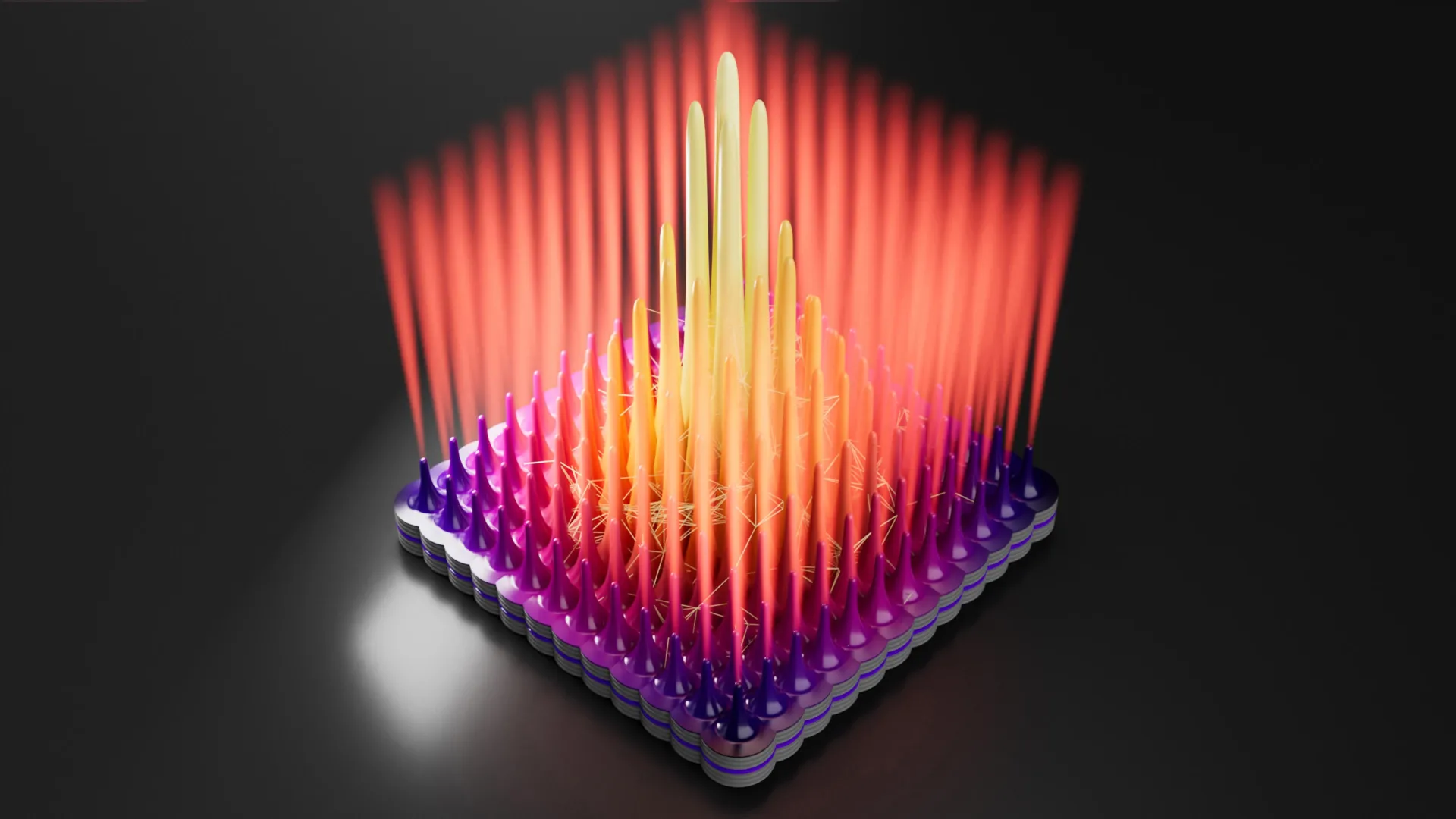
In a landmark achievement for the field of condensed matter physics, a research team at the University of Würzburg has provided the first experimental evidence that the Kardar-Parisi-Zhang (KPZ) equation accurately describes growth processes in two-dimensional systems. This discovery, facilitated through the use of an ultracold quantum experiment involving light-matter hybrids known as polaritons, bridges a nearly four-decade-old gap between theoretical mathematical physics and physical reality. By confirming that the KPZ model holds true in two dimensions, the researchers have demonstrated the profound "universality" of the theory, proving that the same underlying laws governing the jagged edge of a spreading forest fire or the accumulation of snow also dictate the behavior of quantum particles at the subatomic level.
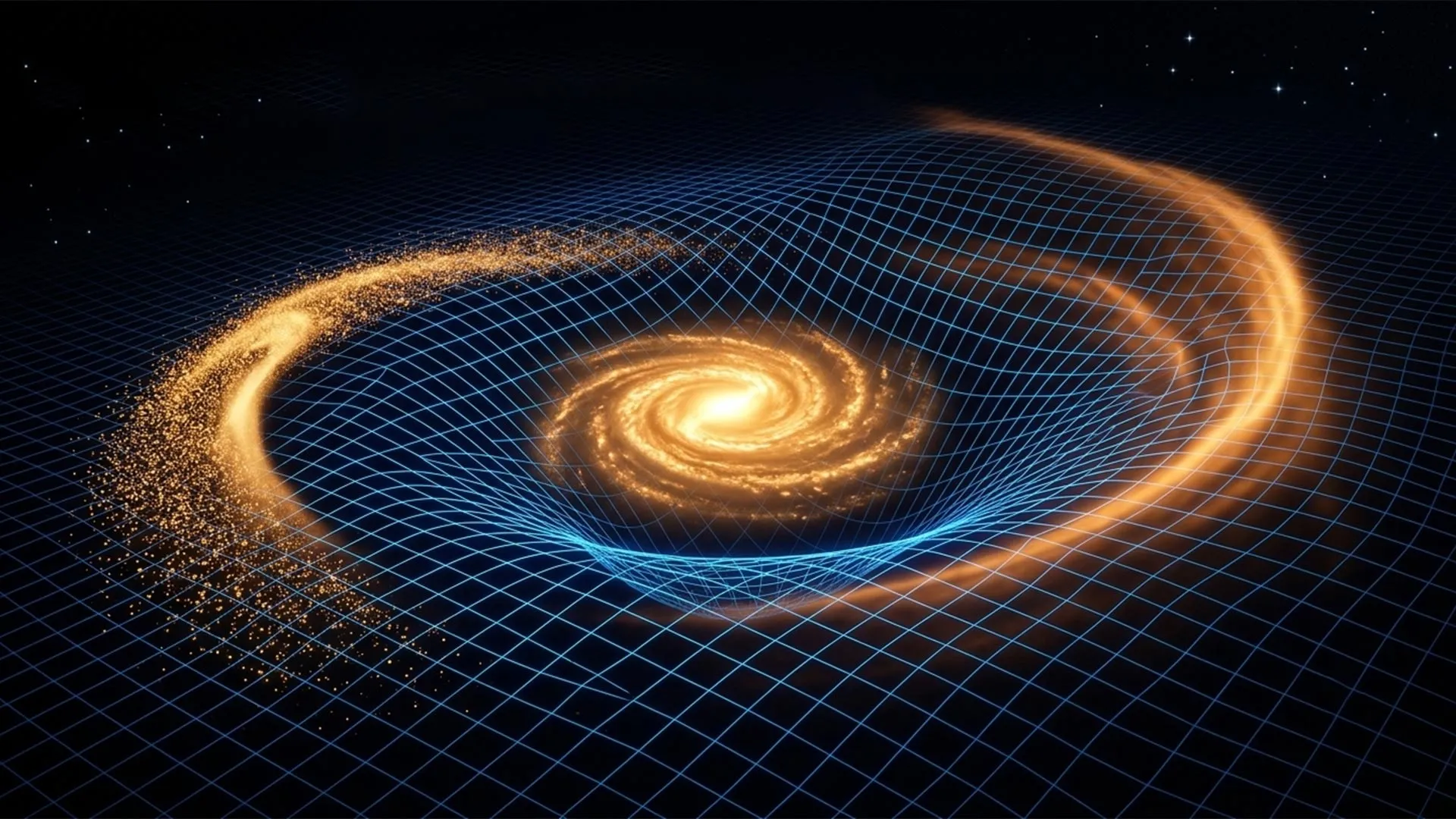
The Kardar-Parisi-Zhang equation was first formulated in 1986 by physicists Mehran Kardar, Giorgio Parisi, and Yi-Cheng Zhang. It was designed to provide a mathematical framework for understanding how interfaces and surfaces evolve over time in systems that are "out of equilibrium." In the realm of classical physics, equilibrium systems are those that have settled into a stable state, such as a glass of water at room temperature. However, most of the natural world is non-equilibrium—constantly shifting, growing, or decaying. Before the KPZ equation, predicting the exact patterns of stochastic (random) growth was considered nearly impossible due to the complex interplay of non-linearity and random fluctuations. The KPZ model suggested that despite the apparent chaos of growth, certain statistical properties remain constant across vastly different materials and scales.
The Challenge of Dimensionality in Non-Equilibrium Physics
For decades, the KPZ equation remained a cornerstone of theoretical physics, but experimental verification proved elusive, particularly as researchers attempted to move beyond simple one-dimensional models. In a one-dimensional (1D) context, growth is measured along a single line, such as the edge of a piece of burning paper. In 2022, a research group in Paris successfully confirmed KPZ behavior in a 1D system. However, the physical world is primarily three-dimensional, and most relevant technological and biological growth processes occur across two-dimensional (2D) surfaces.
The transition from 1D to 2D is not merely a matter of adding a coordinate; it exponentially increases the complexity of the fluctuations and the mathematical interactions within the system. "When surfaces grow—whether they are crystals, colonies of bacteria, or flame fronts—the process is always nonlinear and random," explains Siddhartha Dam, a postdoctoral researcher in the Würzburg-Dresden Cluster of Excellence ctd.qmat at the University of Würzburg’s Chair of Technical Physics. "Engineering a system capable of simultaneously measuring how a non-equilibrium process evolves in space and time is extremely challenging, especially because these processes unfold on ultrashort timescales. This is why verifying the KPZ model in two dimensions has taken so long."
A Chronology of Discovery: From 1986 to 2024
The journey toward the recent breakthrough in Würzburg followed a clear chronological path of theoretical advancement and incremental experimental successes:
- 1986: Kardar, Parisi, and Zhang publish their seminal paper, introducing the KPZ equation to describe the scaling behavior of growing interfaces.
- 2010s: Theoretical physicists begin to speculate that "exciton-polaritons"—particles created when light interacts with matter—could serve as a platform for testing non-equilibrium theories due to their short lifespan and driven nature.
- 2015: Professor Sebastian Diehl and his team at the University of Cologne develop the specific theoretical foundation required to test KPZ universality in polariton systems.
- 2022: Experimentalists in Paris provide the first concrete proof of KPZ scaling in a 1D polariton chain, confirming that the theory works in restricted dimensions.
- 2024: The Würzburg team, utilizing advanced molecular beam epitaxy and ultrafast laser spectroscopy, successfully scales the experiment to two dimensions, completing the verification of the theory’s universality.
Engineering the Quantum Growth Environment
To achieve this result, the Würzburg researchers had to create a "quantum film" with unprecedented precision. The experiment utilized a semiconductor material made from gallium arsenide (GaAs). To reach the necessary quantum state, the material was cooled in a cryostat to -269.15°C (approximately 4 Kelvin), just a few degrees above absolute zero.
At these extreme temperatures, the researchers bombarded the semiconductor with a laser. This stimulation creates "excitons"—pairs of electrons and holes within the semiconductor. When these excitons are trapped between highly reflective mirrors (an optical microcavity), they begin to interact strongly with photons (light particles). The resulting hybrid particles are called polaritons.
Polaritons are uniquely suited for studying growth because they are inherently "lossy" and "driven." They exist for only a few picoseconds (trillionths of a second) before the photons escape the cavity. To maintain a population of polaritons, the laser must continuously "pump" energy into the system. This creates a classic non-equilibrium scenario: energy is constantly being added and constantly being lost, much like a bathtub with the tap running and the drain open. The "surface" being measured in this experiment was the phase of the polariton field, which grows and fluctuates as the laser populates the material.
Technical Precision and Molecular Beam Epitaxy
The success of the experiment relied heavily on the ability to manufacture the semiconductor sample with atomic-level accuracy. This was achieved through a process known as molecular beam epitaxy (MBE). Simon Widmann, a doctoral researcher at the Chair of Engineering Physics, played a central role in fabricating the materials.
"By precisely controlling the thickness of individual material layers using molecular beam epitaxy, we were able to tune their optical properties and hence fabricate the necessary highly reflective mirrors under ultra-high vacuum conditions," Widmann stated. The mirrors consist of alternating layers of materials with different refractive indices, creating a "Bragg reflector" that can trap light with nearly 99.9% efficiency.
Within this central quantum film, the researchers could control how the material grew atom by atom. This level of control allowed them to fine-tune the experimental parameters, such as the laser’s intensity and the micrometer-scale precision of the excitation area. By using advanced imaging techniques, the team was able to quantify the spatial and temporal evolution of the polariton density, providing the data necessary to match the experimental results against the predictions of the KPZ equation.
Data and Findings: The Signature of KPZ Universality
The KPZ equation is defined by specific "scaling exponents"—mathematical values that describe how the roughness of a surface increases over time and how correlations spread across space. In a 2D system, these exponents are notoriously difficult to measure because the fluctuations are subtle and occur rapidly.
The Würzburg team’s data showed that the fluctuations in the polariton phase followed the exact statistical distributions predicted by the KPZ theory for two dimensions. This confirmed that the "universality class" of the KPZ equation extends to quantum fluids of light.
"The experimental demonstration of KPZ universality in two-dimensional material systems highlights just how fundamental this equation is for real non-equilibrium systems," noted Sebastian Diehl, the Professor at the University of Cologne whose 2015 theory laid the groundwork for the experiment. The data proved that even though the polariton system is governed by quantum mechanics, its large-scale growth patterns obey the same statistical laws as classical systems like coffee stains drying on a table or the spreading of a biological biofilm.
Implications for Future Technology and Science
The verification of 2D KPZ universality has implications that extend far beyond the laboratory. Understanding non-equilibrium growth is essential for the next generation of materials science and quantum technology.
- Semiconductor Manufacturing: As electronic components shrink to the atomic scale, understanding the random fluctuations in material growth becomes critical. The KPZ equation provides a roadmap for predicting and potentially controlling these fluctuations.
- Quantum Computing: Polariton systems are being explored as candidates for quantum simulators and computers. Knowing the fundamental laws that govern their stability and growth is a prerequisite for building reliable quantum devices.
- Cross-Disciplinary Applications: Because the KPZ equation is universal, the insights gained from this quantum experiment can be applied to other fields. For instance, the same mathematics can help biologists understand the expansion of invasive species or help meteorologists model the movement of weather fronts with higher precision.
- Advancing Statistical Mechanics: This achievement provides a new "gold standard" for experimental non-equilibrium physics. It proves that scientists can now engineer and observe quantum systems with enough control to test the most complex theories of statistical mechanics.
A Milestone for the ctd.qmat Cluster of Excellence
The research was conducted under the auspices of the Würzburg-Dresden Cluster of Excellence ctd.qmat (Complexity and Topology in Quantum Matter), one of Germany’s most prestigious research collaborations. The cluster’s goal is to discover and understand new states of matter that exhibit "topological" or "complex" behaviors, which could revolutionize information technology.
The success of Siddhartha Dam, Simon Widmann, and their colleagues underscores the importance of interdisciplinary collaboration between theoretical and experimental physicists. By combining the theoretical insights from Cologne with the engineering and experimental prowess in Würzburg, the team has solved a puzzle that had remained open since 1986.
As the scientific community continues to explore the boundaries of non-equilibrium physics, the Würzburg experiment stands as a definitive proof that the laws of growth are indeed universal. Whether in the macro-world of forest fires or the micro-world of quantum light, the Kardar-Parisi-Zhang equation remains the governing blueprint for a world in constant flux.
















Leave a Reply