

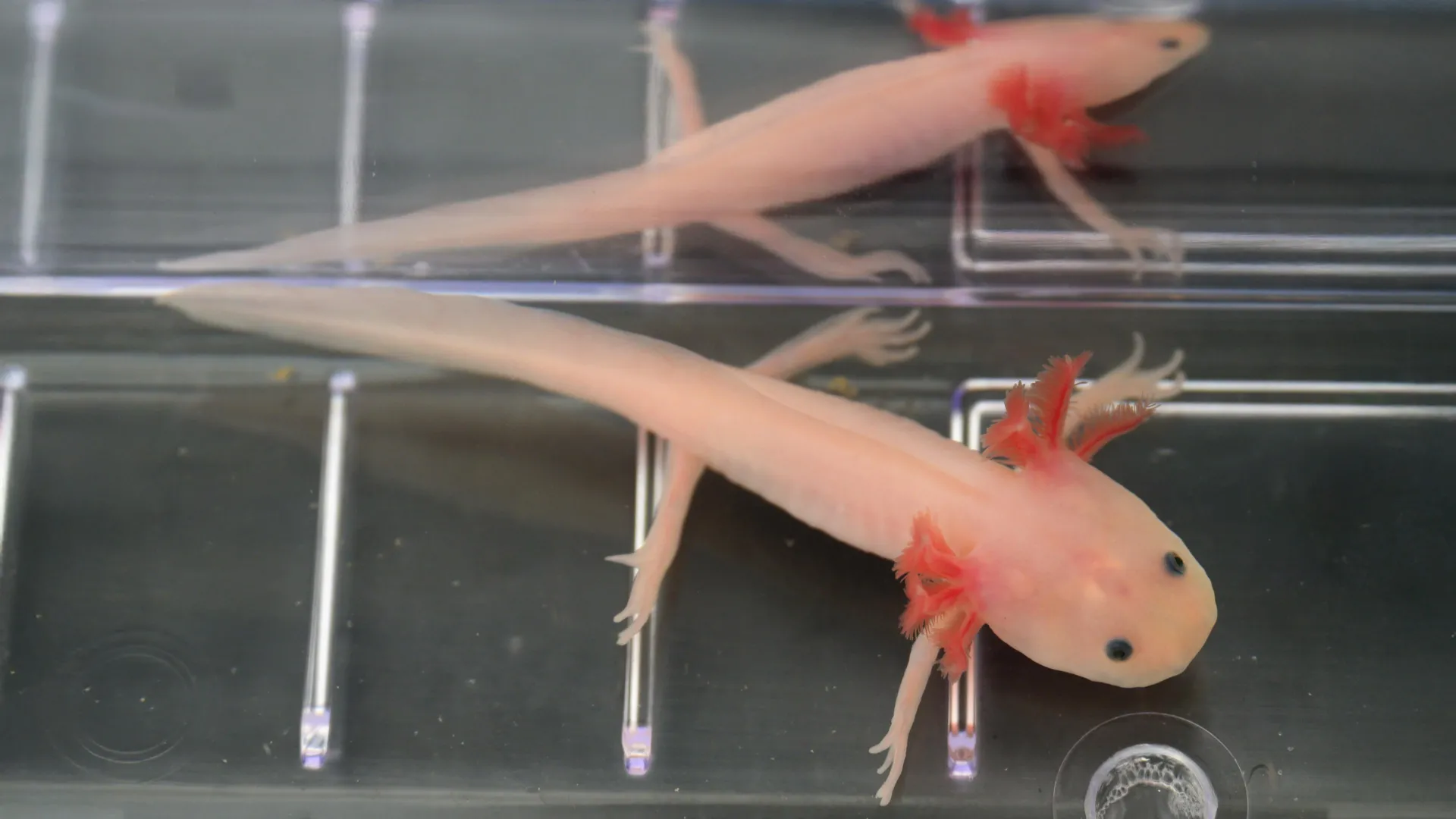
Scientists have identified a crucial set of shared genes across axolotls, zebrafish, and mice that could revolutionize regenerative medicine and pave the way for therapies to regrow human limbs. This groundbreaking research, published in the prestigious journal Proceedings of the National Academy of Sciences, represents a significant leap forward in understanding the fundamental biological mechanisms that govern regeneration. By meticulously comparing the regenerative capabilities of these three distinct species, researchers have pinpointed a common genetic language that underlies the remarkable ability to heal and rebuild.
A Collaborative Quest for Regenerative Solutions
The ambitious project brought together three leading research institutions, each with a unique focus on different regenerative models. Wake Forest University, represented by Assistant Professor of Biology Josh Currie, contributed expertise in the Mexican axolotl, an amphibian renowned for its extraordinary regenerative powers. Duke University, with plastic surgeon David A. Brown, brought its extensive knowledge of digit regeneration in mice, while the University of Wisconsin-Madison, under the guidance of Kenneth D. Poss, offered insights into fin regeneration in zebrafish. This interdisciplinary collaboration underscores the power of cross-species research in uncovering universal biological principles.
"This significant research brought together three labs, working across three organisms to compare regeneration," stated Dr. Currie. "It showed us that there are universal, unifying genetic programs that are driving regeneration in very different types of organisms: salamanders, zebrafish, and mice." The synergy of these distinct research programs has provided an unprecedented panoramic view of the genetic architecture of regeneration.
The Global Challenge of Limb Loss and the Promise of Regeneration
The need for effective limb regeneration therapies is starkly evident in global health statistics. According to the Global Burden of Disease initiative, over one million amputations occur annually worldwide. These life-altering procedures are primarily necessitated by a confluence of factors including diabetes-related vascular disease, severe traumatic injuries, aggressive infections, and cancer. Projections indicate a concerning rise in these numbers as global populations age and the prevalence of chronic conditions like diabetes continues to escalate.
For decades, the medical community and scientific researchers have strived to move beyond the limitations of prosthetic limbs. The ultimate goal is to restore not just physical presence, but also natural movement, sensation, and full functional capacity. This new study offers a tangible pathway toward achieving that aspiration, with a particular focus on a group of genes, tentatively referred to as "SP genes," that appear to play a pivotal role in the intricate process of limb regrowth.
Unveiling the Regenerative Powerhouses: Axolotls, Zebrafish, and Mice
The strategic selection of axolotls, zebrafish, and mice for this comparative study was driven by the unique and complementary insights each species offers into the phenomenon of regeneration.
The Axolotl: Nature’s Master Regenerator
The Mexican axolotl ( Ambystoma mexicanum) stands as a paragon of regenerative biology. Its unparalleled ability extends to regrowing not only entire limbs but also complex structures such as tails, spinal cord tissue, and even significant portions of vital organs, including the heart, brain, lungs, liver, and jaw. This remarkable resilience makes the axolotl an invaluable model for understanding the complete regenerative potential of complex vertebrate anatomy.
The Zebrafish: A Versatile Model for Tissue Repair
Zebrafish (Danio rerio) are equally compelling regenerative models, characterized by their capacity to repeatedly regrow damaged tail fins. Beyond fin regeneration, these small, hardy fish exhibit impressive abilities to repair damage to their hearts, brains, spinal cords, kidneys, retinas, and pancreases. Their adaptability and ease of study in laboratory settings have made them a cornerstone in various fields of biological research, including regeneration.
The Mouse: A Mammalian Link to Human Biology
The inclusion of mice (Mus musculus) in this study was crucial due to their status as mammals, sharing a closer evolutionary and physiological relationship with humans. While their regenerative capabilities are not as extensive as those of axolotls or zebrafish, mice possess the ability to regenerate the tips of their digits. This subtle yet significant regenerative capacity in mice mirrors the limited regenerative potential observed in human fingertips, where regrowth can occur if the nailbed remains intact, allowing for the regeneration of skin, flesh, and bone. This parallel offers a critical bridge for translating findings from animal models to potential human applications.
The Discovery of Key Regenerative Genes: SP6 and SP8
During their comparative analysis, the research team made a pivotal discovery: the regenerating epidermis, or skin tissue, in all three species consistently activated two specific genes: SP6 and SP8. This shared genetic signature immediately suggested their fundamental importance in the regenerative process across diverse organisms. The subsequent phase of the research focused on elucidating the precise mechanisms by which these SP genes contribute to regeneration.
The Wake Forest lab, under Dr. Currie’s supervision, involved dedicated researchers such as Biology Ph.D. student Tim Curtis Jr. and undergraduate Elena Singer-Freeman, a Goldwater Scholar and anticipated 2025 graduate in biochemistry and molecular biology. Their contributions were instrumental in dissecting the molecular pathways activated by these genes.
CRISPR Experiments Illuminate the Role of SP Genes in Limb Regrowth
To rigorously test the hypothesis that SP genes are essential for regeneration, the researchers employed cutting-edge CRISPR gene-editing technology. In the axolotl model, Dr. Currie’s team precisely removed the SP8 gene from the axolotl genome. The results were striking: axolotls lacking SP8 exhibited a significant impairment in their ability to regenerate limb bones, highlighting SP8’s critical role in skeletal regeneration.
Similar challenges were observed in the mouse model. When SP6 and SP8 were experimentally ablated in regenerating digits, the mice displayed analogous difficulties in the regrowth process. These findings provided compelling evidence that these SP genes are not merely indicators of regeneration but are active drivers of the process, particularly in skeletal development within regenerating appendages.
Gene Therapy: Harnessing SP Gene Function for Therapeutic Potential
Building upon these crucial insights, Dr. Brown’s lab at Duke University designed a novel viral gene therapy. This therapeutic approach was inspired by a tissue regeneration enhancer previously identified in zebrafish. The therapy’s core mechanism involved delivering a signaling molecule known as FGF8, a substance that is naturally activated by SP8.
In preclinical trials using mice, this FGF8-based gene therapy demonstrated promising results. It stimulated bone regrowth in damaged digits and partially restored some of the regenerative capabilities that were compromised when the SP genes were absent. This success offers a tangible demonstration of how manipulating the genetic pathways controlled by SP genes could potentially stimulate regenerative processes in mammals.
While human limbs do not possess the innate regenerative capacity of axolotl limbs, researchers are optimistic that future therapies can be developed to mimic or substitute for the biological functions orchestrated by these SP genes. "We can use this as a kind of proof of principle that we might be able to deliver therapies to substitute for this regenerative style of epidermis in regrowing tissue in humans," Dr. Currie explained. This suggests a future where targeted gene therapies could activate dormant regenerative pathways in human tissues.
Charting the Course for Future Human Limb Regeneration
Despite the remarkable progress, the researchers emphasize that this work remains in its nascent stages. Extensive further studies are imperative before the findings from mouse models can be directly translated into safe and effective therapies for human limb regeneration. Nevertheless, Dr. Currie views this research as laying a robust foundation for the development of future regenerative treatments.
"Scientists are pursuing many solutions for replacing limbs, including bioengineered scaffolds and stem cell therapies," Dr. Currie elaborated. "The gene-therapy approach in this study is a new avenue that can complement and potentially augment what will surely be a multi-disciplinary solution to one day regenerate human limbs." This perspective highlights the understanding that regenerative medicine will likely involve a multifaceted approach, integrating various therapeutic strategies.
Furthermore, Dr. Currie underscored the profound importance of interdisciplinary collaboration, particularly between scientists studying vastly different organisms and biological systems. "Many times, scientists work in their silos: we’re just working in axolotl, or we’re just working in mouse, or just working in fish," he noted. "A real standout feature of this research is that we work across all these different organisms. That is really powerful, and it’s something that I hope we’ll see more of in the field." This sentiment resonates with the growing recognition that significant scientific breakthroughs often arise from the integration of diverse perspectives and methodologies.
The discovery of shared genetic pathways for regeneration across species like axolotls, zebrafish, and mice marks a pivotal moment in regenerative medicine. While the journey to regrowing human limbs is long and complex, this research provides a beacon of hope, illuminating a path paved with genetic understanding and innovative therapeutic potential. The collaborative spirit and the focus on fundamental biological mechanisms offer a compelling glimpse into a future where the limitations of limb loss may one day be overcome.













Leave a Reply