

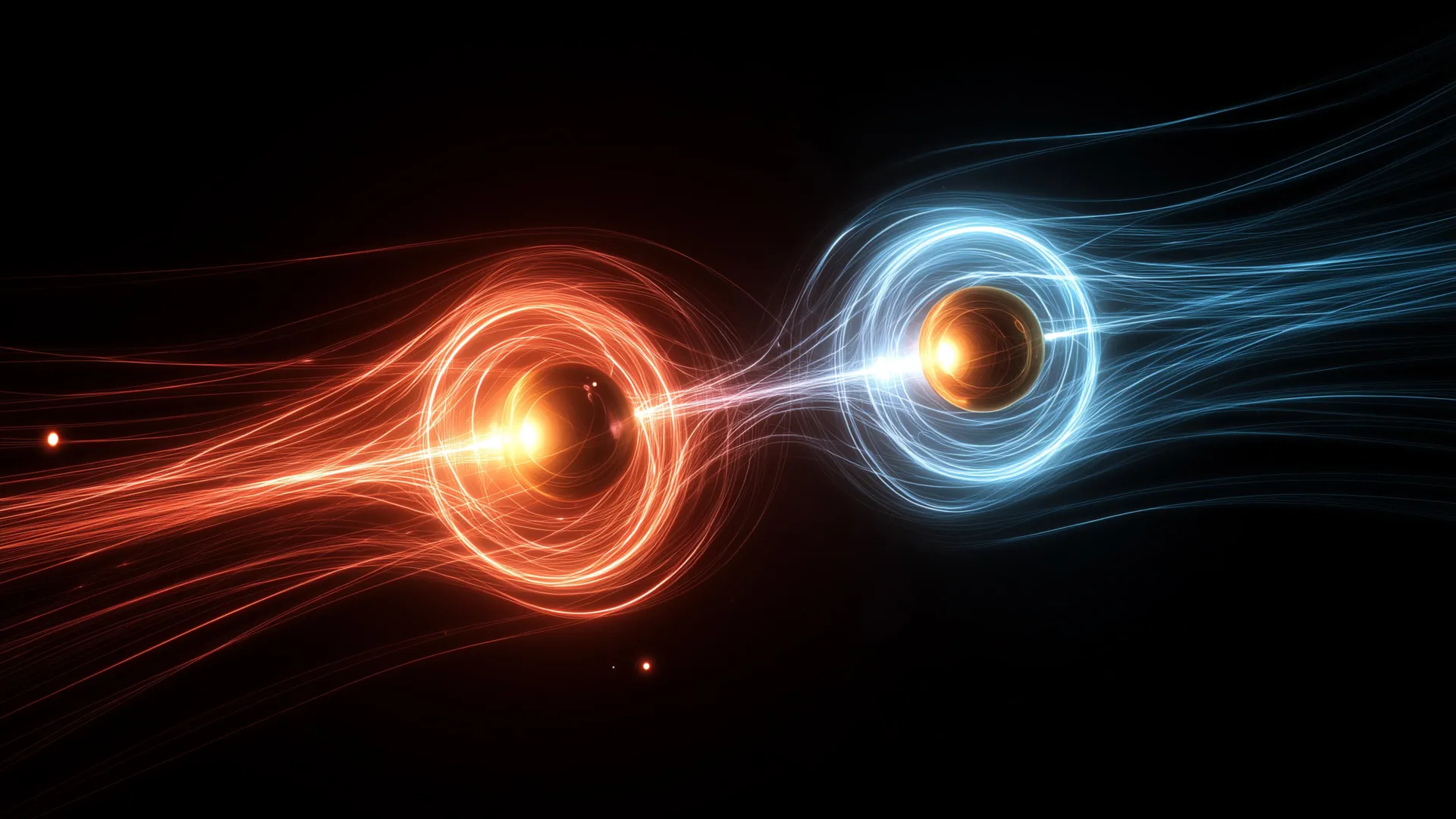
A landmark study published in the Proceedings of the National Academy of Sciences (PNAS) has demonstrated that artificial intelligence can transcend its traditional role as a data-crunching tool to become a primary driver of scientific discovery. Conducted by a multidisciplinary team of experimental and theoretical physicists at Emory University, the research utilized a specialized neural network to uncover the intricate mechanics governing non-reciprocal forces within dusty plasma. These forces, characterized by asymmetrical interactions where one particle influences another differently than it is influenced in return, have long remained one of the most elusive phenomena in many-body physics. By achieving an unprecedented 99% accuracy in modeling these interactions, the researchers have not only refined our understanding of the "fourth state of matter" but have also provided a universal framework for studying collective behavior in systems ranging from industrial fluids to metastatic cancer cells.
The Paradigm Shift in Scientific AI
For decades, the scientific community has viewed artificial intelligence with a mixture of optimism and skepticism. While AI excels at identifying patterns in massive datasets, it often operates as a "black box," providing answers without revealing the underlying logic or physical principles. The Emory University study represents a significant departure from this trend. By designing a "white box" neural network—one where the internal mechanics are transparent and grounded in physical constraints—the team proved that AI can be used to infer new physical laws directly from experimental observation.
Justin Burton, an Emory professor of experimental physics and senior co-author of the paper, emphasized that the breakthrough lies in the transparency of the method. The AI was not simply making predictions based on previous examples; it was extracting the fundamental rules of motion from a limited set of 3D particle trajectories. This approach allows scientists to understand the "how" and "why" behind the results, ensuring that the discoveries are rooted in reality rather than statistical artifacts.
Understanding the Fourth State of Matter: Dusty Plasma
To appreciate the significance of this discovery, one must first understand the medium of the study: dusty plasma. Often referred to as the fourth state of matter, plasma is a gas that has been energized to the point that its atoms lose their electrons, resulting in a mixture of positively charged ions and free-roaming electrons. While plasma accounts for more than 99.9% of the visible universe—comprising stars, the solar wind, and the Earth’s ionosphere—"dusty" plasma contains an additional component: microscopic solid particles that acquire a significant electric charge.
In natural environments, dusty plasma is ubiquitous. It forms the majestic rings of Saturn and hovers above the lunar surface due to the Moon’s weak gravity and electrostatic charging. On Earth, it has practical and often disruptive implications. During massive wildfires, soot particles can become suspended in the ionized air of the smoke plume, creating a dusty plasma that interferes with radio frequencies, thereby hindering communication for emergency responders. In industrial settings, the behavior of charged particles in fluids is critical to the manufacturing of paints, inks, and specialized coatings.
The Challenge of Non-Reciprocity
The primary focus of the Emory research was the measurement of non-reciprocal forces. In classical Newtonian physics, the third law states that for every action, there is an equal and opposite reaction. However, in complex "open" systems where energy is constantly being exchanged with the environment, this reciprocity can break down. In a dusty plasma, a leading particle might create a "wake" in the flow of ions, much like a boat moving through water. This wake exerts a force on a trailing particle. However, the trailing particle does not exert an identical or opposite force back on the leader because the flow of ions is directional.
These asymmetrical interactions are notoriously difficult to model because they depend on a multitude of variables, including particle size, charge, velocity, and the density of the surrounding plasma. Traditional theoretical models often relied on simplifying assumptions that, while mathematically convenient, failed to capture the true complexity of the system.
A Chronology of the Discovery
The journey toward this breakthrough began in the laboratory of Justin Burton, where researchers developed a sophisticated tomographic imaging system. To study the plasma, they suspended tiny plastic grains in a vacuum chamber filled with ionized gas. By utilizing a high-speed camera and a moving laser sheet, they were able to capture the three-dimensional positions of dozens of particles simultaneously.
The timeline of the project reflects a rigorous interdisciplinary effort:
- Experimental Phase (Year 1): The team perfected the 3D tracking of particles, generating high-precision data on how individual grains moved and interacted under varying gas pressures and electrical environments.
- Theoretical Conceptualization (Year 2): Ilya Nemenman, an Emory professor of theoretical physics, joined the project to explore how these interactions could be mapped using machine learning. The team recognized that standard AI models required too much data, which was not available from their niche experimental setup.
- Neural Network Development (Year 3): For over a year, the team held weekly meetings to refine the architecture of their AI. They needed a model that could respect basic physical symmetries while remaining flexible enough to discover unknown forces.
- Training and Validation (Year 4): Once the "physics-informed" structure was finalized, the AI was trained on the 3D trajectories. It successfully separated the motion into three distinct categories: drag forces, environmental forces (like gravity), and inter-particle interactions.
- Final Verification and Publication: The AI’s findings were verified through additional rounds of laboratory experiments, confirming that the "new physics" discovered by the machine held true under different conditions.
Technical Insights and Data Accuracy
The AI model achieved a stunning 99% accuracy in describing the forces between particles. This precision allowed the researchers to identify flaws in long-standing theoretical assumptions. For example, a common assumption in plasma physics was that a particle’s electric charge scales linearly with its size. The AI revealed a far more nuanced relationship, showing that the charge-to-size ratio is influenced by local plasma temperature and density in ways previously overlooked.
Furthermore, the model corrected theories regarding "force decay." It was previously believed that the electrostatic force between particles weakened exponentially with distance in a manner independent of the particles’ physical dimensions. The AI demonstrated that the size of the particles actually plays a significant role in how quickly these forces dissipate. By seeing these interactions in "exquisite detail," the researchers were able to provide a more accurate mathematical description of the plasma environment than any human-derived theory to date.
Cross-Disciplinary Implications: From Physics to Biology
While the study focused on dusty plasma, the implications extend far into the realm of biophysics and collective behavior. Ilya Nemenman, whose background is in theoretical biophysics, noted that the same principles of non-reciprocal interaction govern how living cells move within the human body.
In the study of cancer, for instance, understanding how cells interact as a collective is vital for predicting metastasis. If a group of cancer cells breaks away from a primary tumor, their movement is dictated by complex, asymmetrical forces. The Emory team’s AI framework could potentially be applied to biological datasets to uncover the rules governing how these cells communicate and navigate through the body’s tissues.
The utility of this method also reaches into the study of "active matter"—systems where individual components have their own source of energy, such as flocks of birds, schools of fish, or even human crowds. By using AI to infer the "physics" of these social and biological systems, scientists can better predict and potentially control their collective dynamics.
Institutional Support and Future Directions
The research was supported by the National Science Foundation (NSF) and the Simons Foundation. Vyacheslav (Slava) Lukin, program director for the NSF Plasma Physics program, lauded the study as a prime example of interdisciplinary success. He noted that the development of new knowledge in plasma physics and AI could lead to significant advances in the study of living systems, where collective interactions dominate.
As the project concludes, the researchers are looking toward the future. Wentao Yu, the study’s first author and a former Emory PhD student, is now continuing his work as a postdoctoral fellow at the California Institute of Technology. Co-author Eslam Abdelaleem has moved on to Georgia Tech. Meanwhile, Professor Nemenman is set to bring these AI techniques to the Konstanz School of Collective Behavior in Germany. There, he will teach students how to apply this physics-based machine learning to understand the "rules of life" in diverse biological populations.
Analysis: The Future of the Human-AI Partnership
The Emory study highlights a critical truth about the future of science: while AI can discover new laws, human expertise remains the indispensable foundation. The researchers spent over a year designing the structure of the neural network, ensuring it was "primed" to look for physical meaning rather than just statistical correlations.
This "Star Trek" approach to discovery—as Professor Burton described it—suggests that the next era of scientific advancement will not be defined by machines replacing scientists, but by scientists using increasingly sophisticated "white box" tools to explore realms of complexity that were previously unreachable. As AI continues to evolve, its ability to act as a partner in deriving the fundamental laws of the universe marks a new chapter in the history of human inquiry.









Leave a Reply