

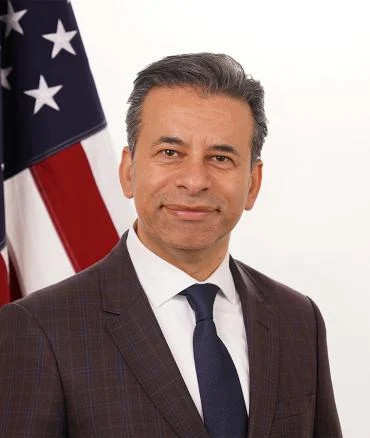
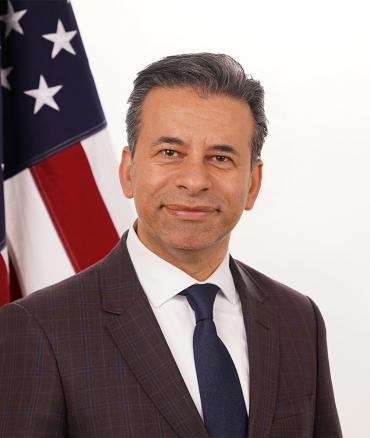
Marty Makary’s tenure as commissioner of the Food and Drug Administration (FDA) concluded abruptly on Tuesday with his resignation, a move that followed a period of intense pressure from the Trump administration and widespread speculation regarding his imminent dismissal. The departure of the nation’s top drug regulator casts a shadow of uncertainty over several critical public health initiatives and highlights ongoing tensions between scientific independence and political imperatives within federal agencies, signaling a challenging period ahead for an institution vital to public trust and well-being.
The Immediate Catalyst: A Conflict Over Flavored Vapes
Reports from multiple sources, including The Wall Street Journal, indicate that a primary driver behind Makary’s resignation was a significant disagreement with President Donald Trump regarding the authorization of certain fruit-flavored vaping products. According to these accounts, President Trump reportedly exerted direct pressure on Makary to approve flavored products manufactured by Glas Inc. This directive placed Makary in a precarious position, as he had publicly expressed reservations about such products due to their undeniable appeal to young people, a demographic particularly vulnerable to nicotine addiction. Public health organizations have long documented the alarming rise in youth vaping rates, with the Centers for Disease Control and Prevention (CDC) reporting that millions of middle and high school students use e-cigarettes, often citing flavors as a primary reason. These concerns underscore the public health community’s advocacy for stringent regulations on flavored vapes, arguing that their candy-like profiles mask the harshness of nicotine, making them more attractive to adolescents and potentially serving as a gateway to traditional tobacco use.
Despite Makary’s reported reservations and the broader public health consensus, two fruit-flavored vapes ultimately received FDA approval earlier this month. Furthermore, just last Friday, the FDA issued a new policy that appeared to pave the way for these and similar unauthorized electronic nicotine delivery systems (ENDS) and nicotine pouch products to be more widely marketed, effectively loosening restrictions that Makary had reportedly championed. This policy shift, coming just days before his resignation, strongly suggests the intensity of the administrative pressure he faced.
President Trump, in a brief comment to reporters on Tuesday afternoon, offered a somewhat enigmatic assessment of the situation, stating, “He’s a great doctor, and he was having some difficulty.” This remark, while seemingly complimentary, subtly acknowledged the underlying friction that characterized Makary’s final days in office, hinting at the intractable policy disputes and external pressures that ultimately led to his departure. The incident highlights the delicate balance an FDA commissioner must strike between scientific evidence, public health mandates, and political directives, especially when those directives contradict the agency’s established scientific and regulatory principles.
Broader Criticisms and Contentious Policy Fronts
Makary’s leadership was not only challenged by the White House but also drew significant criticism from diverse and often opposing advocacy groups, reflecting the highly polarized landscape of public health policy in the United States. This broad spectrum of dissent further complicated his ability to steer the agency effectively.
One prominent front of opposition came from anti-abortion organizations, notably Susan B. Anthony Pro-Life America. These groups had vigorously campaigned for Makary’s removal, accusing him of "slow-walking" the safety review process for mifepristone, the medication central to abortion care. Their concerns escalated as new generic versions of the drug began to enter the market under Makary’s watch. Mifepristone, approved by the FDA in 2000, has been a perennial target of anti-abortion activism, with ongoing legal battles challenging its availability and the FDA’s regulatory oversight. Critics argued that Makary’s actions, or perceived inaction, facilitated broader access to the drug, a stance directly at odds with their policy objectives. The FDA’s role in regulating access to reproductive health medications has become a significant political flashpoint, placing its commissioners squarely in the crosshairs of ideological conflicts and legal challenges, exemplified by numerous lawsuits seeking to overturn or restrict the drug’s approval.
Conversely, Makary faced an entirely different set of criticisms from the "Make America Healthy Again" (MAHA) movement. This coalition, often associated with vaccine skepticism and anti-establishment health views, lambasted Makary for what they perceived as his failure to remove mRNA vaccines from the market. This criticism emerged despite Makary’s own reported actions to restrict COVID-19 vaccine access in certain contexts and block the publication of specific safety manuscripts – actions that themselves drew scrutiny from mainstream public health experts. The MAHA movement’s stance reflects a broader distrust in established medical institutions and pharmaceutical companies, advocating for a significant overhaul of vaccine policy and a more skeptical approach to their approval and deployment. The tension between supporting rapid vaccine development during a pandemic and ensuring rigorous safety protocols created an almost impossible tightrope for the FDA commissioner to walk, satisfying neither side of the increasingly acrimonious debate over vaccine efficacy and safety, particularly in the post-pandemic landscape.
Adding to the complex web of dissent, former FDA commissioners publicly denounced Makary and his collaborator Vinay Prasad’s ambitious plan to overhaul the agency’s approach to approving vaccines. Such a public rebuke from predecessors, who understand the intricacies and sensitivities of FDA operations, underscores the depth of concern within the scientific and regulatory community regarding the proposed changes. Their objections suggested a potential erosion of established, evidence-based processes that have long underpinned vaccine approval and public confidence in those approvals. This confluence of internal and external criticism created an environment of constant scrutiny and pressure, making effective leadership exceptionally challenging and potentially undermining the agency’s scientific credibility.
A Pattern of Instability: Leadership Turmoil at the FDA
Makary’s resignation is not an isolated incident but rather the latest chapter in a turbulent period of leadership instability that has plagued the FDA, particularly during President Trump’s second term. During his relatively short tenure, a concerning number of senior career officials – the institutional memory and scientific backbone of the agency – either resigned or were reportedly forced out. This exodus of experienced personnel raises serious questions about the agency’s ability to maintain its scientific integrity, regulatory consistency, and operational effectiveness. The departure of seasoned experts can lead to a loss of specialized knowledge, delays in critical decision-making, and a weakening of the agency’s ability to navigate complex scientific and regulatory challenges.
The situation was further exacerbated by the Department of Government Efficiency (DOGE), an initiative whose mandate appeared to involve a significant reduction in the federal workforce. Thousands of positions across various agencies, including the FDA, were reportedly targeted for removal. Such widespread personnel cuts inevitably strain remaining staff, disrupt ongoing projects, and create a climate of uncertainty that can deter top talent from pursuing or remaining in public service. The loss of institutional knowledge and skilled professionals can have long-lasting repercussions on the FDA’s capacity to conduct rigorous reviews, monitor drug safety, and respond effectively to public health crises, potentially compromising its core mission.
Perhaps the most glaring example of this instability occurred within the Center for Drug Evaluation and Research (CDER), the crucial division responsible for reviewing and approving new drugs. CDER experienced an unprecedented six different leaders within a single year, a turnover rate that is virtually unheard of for such a vital regulatory body. Makary himself appointed George Tidmarsh to lead CDER, but Tidmarsh was soon forced to resign amidst allegations that he had used his position to pursue a personal vendetta, further eroding confidence in leadership appointments. His successor, Rick Pazdur, lasted an even shorter duration, resigning after just three weeks due to irreconcilable clashes with Makary. Such rapid changes at the helm of CDER disrupt continuity, delay critical drug approvals, and can lead to inconsistent regulatory guidance, ultimately impacting both pharmaceutical innovation and patient access to essential medicines. This high-level instability within a key operational arm of the FDA can have ripple effects throughout the drug development pipeline, affecting pharmaceutical companies, researchers, and ultimately, patients awaiting new therapies.
Broader Health Leadership Vacuum and Future Implications
Makary’s departure exacerbates an already significant leadership vacuum across key federal health agencies. The Centers for Disease Control and Prevention (CDC), another cornerstone of the nation’s public health infrastructure, currently lacks a permanent director. Similarly, the country is without a permanent surgeon general and a dedicated vaccine chief. This constellation of vacancies at the highest levels of health leadership creates a fragmented response capacity at a time when robust, coordinated federal guidance on public health issues is more critical than ever. The absence of confirmed, long-term leaders can hinder strategic planning, slow down policy implementation, and diminish public trust in federal health advisories, particularly in an environment where health information is often contested and politicized.
Into this turbulent environment steps Kyle Diamantas, an attorney reportedly with personal ties to Donald Trump Jr., who will serve as the acting FDA commissioner. His appointment, particularly given the perceived political connections, has raised eyebrows in circles concerned about the politicization of scientific agencies and the potential for political influence to supersede scientific expertise. Diamantas is immediately slated to testify in Makary’s place on May 13 at a crucial budget hearing, an early and significant test of his ability to navigate the complex scientific, political, and financial demands of the role. His performance in this high-profile setting will be closely watched by lawmakers, public health advocates, and the pharmaceutical industry alike.
The process for appointing a permanent replacement will be protracted, requiring a nomination by President Trump and subsequent confirmation by the Senate. This political vetting process often means that a permanent commissioner might not be in place for many months, leaving the agency under interim leadership during a critical period. This interim period can create a holding pattern for major policy decisions and long-term strategic initiatives.
The uncertainty surrounding Makary’s initiatives is another significant concern. During his tenure, he introduced several programs aimed at reforming the FDA’s operations and regulatory processes, potentially including efforts to streamline drug approvals or enhance post-market surveillance. However, many of these initiatives have not yet undergone the rigorous federal rulemaking process required to make them official and legally binding. Their fate now hangs in the balance, potentially subject to review, revision, or outright abandonment by the new leadership. This lack of continuity can disrupt long-term planning, waste resources invested in developing policies that may never come to fruition, and create a sense of instability for stakeholders reliant on consistent regulatory frameworks.
Ultimately, Makary’s resignation underscores the profound challenges facing the FDA and other scientific agencies in an era of heightened political scrutiny and public distrust. The agency’s dual mandate to protect public health while facilitating innovation requires a delicate balance, one that is increasingly difficult to maintain amidst intense political pressure, ideological battles, and rapid leadership turnover. The incoming acting commissioner, and eventually the permanent appointee, will face the daunting task of restoring stability, upholding scientific integrity, and navigating a complex landscape of public health challenges, all while striving to maintain the public’s confidence in one of its most vital regulatory bodies. The implications of this leadership change will reverberate through drug development, public health policy, and the perception of scientific independence for years to come, shaping the future of health regulation in the United States.















Leave a Reply