In a landmark experiment that challenges our fundamental understanding of the transition between the microscopic and macroscopic worlds, physicists have successfully demonstrated that relatively large chunks of metal can exist in states of quantum superposition. Researchers from the University of Vienna and the University of Duisburg-Essen have confirmed that metallic nanoparticles, comprised of thousands of sodium atoms, exhibit wave-like interference patterns despite being significantly larger and heavier than any particles previously observed in such a state. The study, published in the journal Nature, marks a historic milestone in quantum mechanics, providing one of the most rigorous tests to date of the theory’s validity at scales nearing the boundaries of everyday reality.
The core of the discovery lies in the observation that these nanoparticles do not occupy a single, fixed point in space while in transit. Instead, they behave as "Schrödinger’s metal lumps," existing in multiple locations simultaneously before being measured. This achievement suggests that the laws of quantum mechanics, which typically govern the behavior of subatomic particles like electrons and photons, remain robust even when applied to complex metallic clusters that mirror the components of modern technology.
The Quantum-Classical Divide: A Historical Context
Since the early 20th century, the field of physics has been bifurcated by two seemingly incompatible frameworks. Classical physics, governed by Newtonian mechanics and Einstein’s general relativity, describes the predictable behavior of macroscopic objects—the "world of the large" where stones, planets, and humans move along defined trajectories. Conversely, quantum mechanics describes the "world of the small," where particles behave as waves, exist in superpositions, and exhibit entanglement.
The transition point where the strange rules of the quantum world give way to the classical world has remained one of the greatest mysteries in science. For decades, the double-slit experiment served as the gold standard for proving quantum behavior. Originally performed with light, and later with electrons and single atoms, these experiments showed that matter could pass through two openings at once, creating an interference pattern.
As technology progressed, researchers successfully pushed these experiments toward larger molecules, such as "buckyballs" (C60) and complex organic chains. However, metallic nanoparticles represent a different order of complexity. Unlike simple molecules, metallic clusters possess a high density of free electrons and a massive internal structure, making them highly susceptible to "decoherence"—the process by which quantum states collapse due to interaction with the environment. The Vienna team’s success in maintaining coherence in a cluster of 10,000 sodium atoms is therefore a technical and theoretical triumph.
The Architecture of the Experiment: Creating Superposition
Led by Markus Arndt and Stefan Gerlich at the University of Vienna, the research team utilized a sophisticated apparatus known as a near-field interferometer. The experiment began with the creation of ultracold sodium clusters. These particles were generated in a vacuum, containing between 5,000 and 10,000 atoms each. With a diameter of approximately 8 nanometers, these clusters are comparable in size to the transistors found in state-of-the-art semiconductor chips.
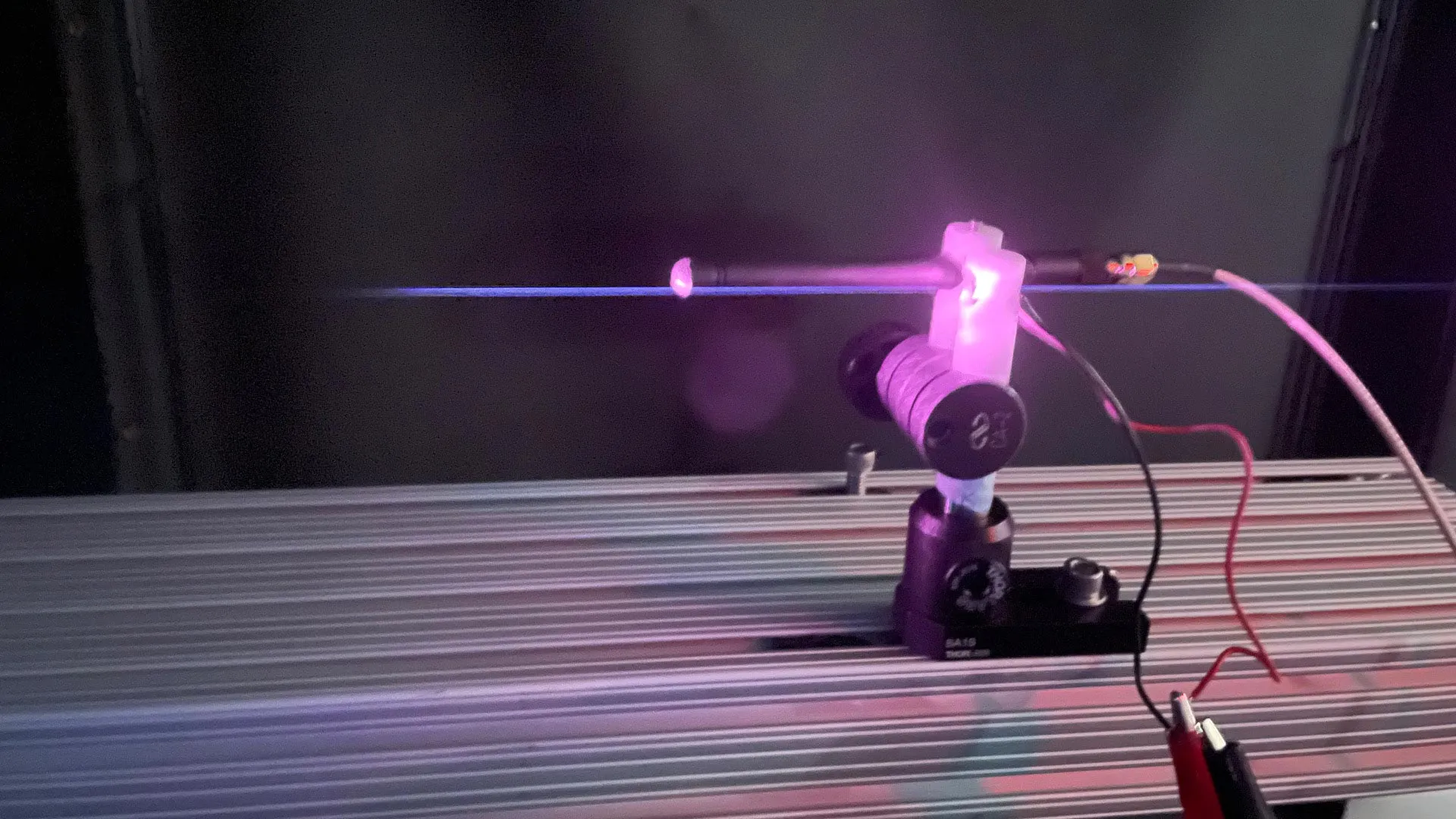
To observe quantum behavior, the team subjected these clusters to a series of three diffraction gratings created by high-intensity ultraviolet (UV) laser beams. This setup, developed in collaboration with theorist Klaus Hornberger of the University of Duisburg-Essen, functioned as follows:
- The First Grating: The first UV laser beam acted as a coherence-inducing gate. It established the initial position of each cluster with a precision of roughly 10 nanometers, effectively "preparing" the particle for its quantum journey.
- The Second Grating: This stage placed the particle into a state of spatial superposition. In quantum terms, the nanoparticle did not choose one path; it followed multiple potential paths simultaneously.
- The Third Grating: As the different paths of the nanoparticle overlapped, they created a "striped" interference pattern. This pattern is a mathematical signature of wave behavior, proving that the metallic lump had spread out over a region dozens of times larger than its own physical dimensions.
Lead author and doctoral student Sebastian Pedalino noted that the intuition of a "classical particle" suggests a lump of metal should travel like a tiny bullet. Instead, the experiment proved that even at a mass exceeding 170,000 atomic mass units, the metal behaves as a delocalized wave.
Measuring Macroscopicity: A New World Record
One of the most significant aspects of this study is the quantitative measurement of how "quantum" the experiment truly was. To compare experiments involving different types of matter—such as atoms, molecules, or mechanical oscillators—physicists use a metric called "macroscopicity," denoted by the symbol $mu$.
This logarithmic scale, co-developed by Klaus Hornberger and Stefan Nimmrichter, evaluates how effectively an experiment rules out deviations from standard quantum theory. A higher $mu$ value indicates a more "extreme" test of quantum mechanics on a macroscopic scale.
The Vienna experiment achieved a macroscopicity value of $mu = 15.5$. To put this into perspective, this is an order of magnitude higher than previous record-holding experiments. The researchers highlighted a striking comparison: to achieve the same level of testing precision using a single electron, a physicist would need to keep that electron in a state of superposition for nearly 100 million years. The metallic nanoparticles in this study reached that same benchmark of "quantumness" in just one-hundredth of a second.
This leap in macroscopicity is vital for testing "collapse models"—alternative theories which suggest that quantum mechanics eventually fails at a certain mass or size threshold. By reaching $mu = 15.5$, the team has narrowed the window where these alternative theories could potentially exist, confirming that standard quantum mechanics holds firm even as we approach the macroscopic limit.
Implications for Nano-Sensing and Future Technology
Beyond the philosophical and theoretical implications, the Vienna interferometer serves as an instrument of unprecedented precision. Because the interference pattern is highly sensitive to external influences, the apparatus functions as an ultra-sensitive force sensor.
The team demonstrated that the device can detect forces as minute as $10^-26$ Newtons. This level of sensitivity opens new doors in the field of nanotechnology. Future iterations of this experiment could be used to measure the electrical, magnetic, and optical properties of isolated nanoparticles with a degree of accuracy previously thought impossible. Such measurements are critical for the development of next-generation quantum sensors, which could eventually be used to detect gravitational anomalies, map subterranean structures, or improve the precision of atomic clocks.
Furthermore, the study provides a roadmap for understanding decoherence. By identifying the exact conditions under which the sodium clusters lose their quantum properties, researchers can better design quantum computers and communication networks that are more resilient to environmental "noise."
Chronology of the Research and Future Horizons
The success of the sodium cluster experiment is the culmination of over two decades of theoretical and experimental development. The timeline of this achievement reflects a steady progression in the field of matter-wave interferometry:
- Early 2000s: Theoretical foundations for near-field interferometry are established by Klaus Hornberger and colleagues.
- 2010s: The University of Vienna team successfully demonstrates interference with large organic molecules, gradually increasing the mass from 10,000 to 25,000 atomic mass units.
- 2019-2022: Development of the UV-laser grating system specifically designed to handle metallic clusters, which require different ionization and manipulation techniques compared to organic molecules.
- 2024: Publication of the sodium cluster results in Nature, setting the new macroscopicity record.
Looking forward, the researchers are not content with 10,000 atoms. The team plans to push the boundaries even further by testing larger particles and different materials. Plans are already in motion to upgrade the experimental infrastructure to allow for longer flight times and even colder temperatures, which would facilitate the observation of even more massive superpositions.
There is also growing interest in conducting such experiments in the microgravity environment of space. On Earth, the duration of an experiment is limited by the time it takes for a particle to fall due to gravity. In a space-based laboratory, particles could remain in free-fall for much longer periods, potentially allowing for macroscopicity values that are orders of magnitude higher than what can be achieved on the ground.
Conclusion: Redefining the Limits of Reality
The work of the University of Vienna and the University of Duisburg-Essen serves as a powerful reminder that the "weirdness" of quantum mechanics is not confined to a hidden subatomic realm. By demonstrating that a visible-scale nanoparticle can be "here and not here" at the same time, the researchers have bridged a gap that has existed since the days of Schrödinger and Einstein.
The experiment confirms that the size of an object is not an inherent barrier to quantum behavior; rather, the challenge lies in our ability to isolate these objects from the chaotic influences of the classical world. As our experimental techniques continue to refine, the line between the quantum and the classical will likely continue to blur, revealing a universe that is far more interconnected and mysterious than our daily senses suggest. For now, the "Schrödinger’s metal lump" stands as a testament to the enduring power of quantum theory and the limitless potential of precision physics.