Researchers have developed an innovative drug screening platform designed to identify compounds that precisely target the primary cause of numerous neurological and psychiatric diseases and disorders: aberrant protein expression amounts. This groundbreaking technological advancement promises to reshape the landscape of therapeutic development for conditions that collectively impact a staggering proportion of the global population, offering a more fundamental approach to intervention than previously available.
The Unmet Need: A Global Health Crisis Rooted in Cellular Dysfunction
Neurological and psychiatric conditions represent an immense global health challenge, affecting well over half of the world’s population across various age groups. These disorders encompass a broad spectrum, from neurodegenerative diseases like Alzheimer’s and Parkinson’s to psychiatric illnesses such as schizophrenia, bipolar disorder, and major depression, as well as neurodevelopmental disorders including autism spectrum disorder. The World Health Organization (WHO) estimates that neurological disorders alone are the leading cause of disability-adjusted life years (DALYs) and the second leading cause of death globally. Mental health conditions, according to various reports, affect nearly one in five adults in any given year, with significant societal and economic burdens. The direct and indirect costs associated with these diseases, including healthcare expenditures, lost productivity, and caregiver burden, run into trillions of dollars annually worldwide.
A significant commonality underlying many of these debilitating conditions is the malfunctioning of protein synthesis. Proteins are the workhorses of the cell, orchestrating virtually every cellular process, from structural support to enzymatic reactions and signaling pathways. Their precise production, folding, and degradation are critical for maintaining cellular homeostasis, especially within the delicate and complex environment of the brain. When protein synthesis goes awry – either through the overproduction of a specific protein (too much) or its insufficient production (too little) – it can lead to cellular harm, impair neuronal function, disrupt neural circuits, and ultimately manifest as disease. For instance, the accumulation of misfolded amyloid-beta and tau proteins is a hallmark of Alzheimer’s disease, while abnormal alpha-synuclein aggregation characterizes Parkinson’s disease. Conversely, deficits in certain neurotransmitter receptors or enzymes due to reduced protein expression can contribute to psychiatric symptoms. The ability to precisely modulate these protein expression levels represents a powerful, yet historically elusive, therapeutic strategy.
Introducing the Protein Quantitation Ratioing (PQR) Platform: A Technical Breakthrough
The newly developed platform addresses this fundamental challenge by focusing on the precise measurement and modulation of protein expression. At its core is the Protein Quantitation Ratioing (PQR) technique, a sophisticated cellular assay designed to monitor the protein expression of a target disease gene simultaneously with the expression of a control gene. This ratioing approach provides a robust and reliable internal reference, minimizing experimental variability and allowing for highly accurate quantification of changes in target protein levels.
The PQR technique leverages fluorescence to track protein concentration. Researchers ingeniously employed human cell lines, which offer a biologically relevant model for human diseases, and combined them with the revolutionary power of CRISPR-Cas9 genome editing. CRISPR-Cas9, often described as a "molecular scissor," allows for incredibly precise and efficient modifications to DNA. In this context, the team used CRISPR-Cas9 to insert a specialized "Protein Quantitation Reporter" directly into target genes within these human cell lines. This reporter gene is designed to express a fluorescent protein in conjunction with the target protein, meaning that the intensity of the fluorescence directly correlates with the amount of the target protein being produced.
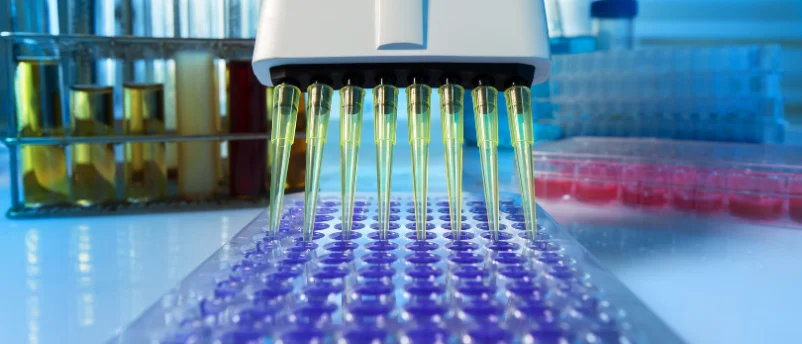
These engineered cell lines then become the cornerstone of a high-throughput drug screening system. High-throughput screening (HTS) is a methodology used in drug discovery that allows for the rapid testing of thousands, even millions, of chemical compounds for a specific biological activity. In this platform, the cells are exposed to various drug candidates, and the changes in fluorescence intensity are meticulously measured. A compound that effectively normalizes the aberrant protein expression (either increasing it if too low, or decreasing it if too high) would register as a "hit." The ratioing aspect of PQR ensures that these hits are genuinely affecting the target protein and not merely causing general cellular toxicity or non-specific fluorescent changes.
The Power of Precision: CRISPR-Cas9 in Disease Modeling
The integration of CRISPR-Cas9 technology is not merely an auxiliary feature; it is fundamental to the platform’s precision and scalability. Prior to CRISPR, creating specific cellular models of disease often involved less precise methods, such as random mutagenesis or the introduction of genetic material via viral vectors, which could lead to off-target effects or inconsistent expression. CRISPR-Cas9, by contrast, allows for the exact insertion of the Protein Quantitation Reporter at the native genomic locus of the target gene. This ensures that the reporter’s expression is under the control of the endogenous regulatory elements of the disease gene, mimicking its natural cellular context as closely as possible.
This level of genomic precision in cell line development is critical for several reasons:
- Biological Relevance: The engineered cells accurately reflect the human disease state in terms of gene regulation.
- Reproducibility: Consistent reporter insertion across cell lines enhances the reliability and comparability of screening results.
- Versatility: The approach can theoretically be applied to any gene implicated in neurological or psychiatric disorders where protein expression dysregulation is a factor.
The ability to generate such highly specific and stable cell lines greatly accelerates the initial phases of drug discovery, providing a robust and physiologically relevant environment for testing potential therapeutic compounds.
Validation and Beyond: Bridging the Gap to Clinical Application
Identifying promising drug candidates through high-throughput screening is only the first step. Rigorous validation is essential to confirm the efficacy and specificity of these "drug hits." The platform offers inherent validation capabilities: promising compounds can be re-tested using the same PQR technique in more controlled, smaller-scale experiments to confirm their effect on protein expression.

Beyond in vitro validation, the next crucial stage involves moving to more complex biological systems. Animal models of the disease remain indispensable for several reasons. They allow researchers to assess:
- Pharmacokinetics and Pharmacodynamics: How the drug is absorbed, distributed, metabolized, and excreted in a living organism, and how it interacts with its biological targets at a systemic level.
- Blood-Brain Barrier Penetration: A major hurdle for CNS drugs, as many compounds cannot effectively cross this protective barrier.
- Behavioral and Cognitive Outcomes: Whether the drug can alleviate the symptoms and functional deficits observed in the disease model.
- Toxicity and Side Effects: Evaluating the safety profile of the compound in a whole organism.
By combining the precision of the PQR platform with the comprehensive evaluation offered by animal models, researchers can significantly de-risk drug candidates before proceeding to human clinical trials. This multi-tiered validation strategy is critical for increasing the success rate of drug development, which historically has been very low for neurological and psychiatric drugs.
Expert Perspectives and Industry Reactions
The announcement of this platform has been met with considerable optimism within the scientific and biopharmaceutical communities. Dr. Elena Petrova, a leading neuroscientist specializing in proteinopathies, remarked, "This platform represents a pivotal shift from merely treating symptoms to addressing the core molecular pathology. By directly targeting protein expression levels, we’re opening up entirely new avenues for therapeutic intervention that were previously difficult to explore systematically."
Industry analysts are also quick to highlight the potential economic implications. Mr. David Chen, a senior analyst in biopharmaceutical R&D, commented, "The high failure rate and extended timelines in neurological drug development contribute significantly to escalating R&D costs. A platform like PQR, which can efficiently identify and validate targets and compounds early on, could dramatically reduce preclinical development costs and accelerate time-to-market for effective new therapies. This could incentivize greater investment in a field that desperately needs innovation."
Patient advocacy groups have also expressed cautious yet profound hope. Sarah Jenkins, spokesperson for the Global Alliance for Brain Health, stated, "Families affected by neurological and psychiatric disorders have long awaited breakthroughs that offer more than symptomatic relief. The promise of therapies that address the underlying causes, rather than just the manifestations, offers a beacon of hope for a future where these conditions are not only managed but potentially cured or prevented."
Regulatory bodies, while emphasizing the rigorous path to clinical translation, acknowledge the scientific merit. Dr. Michael O’Connell from a major health regulatory agency noted, "Innovations in drug screening platforms are crucial for advancing medical science. While every new compound will still undergo stringent preclinical and clinical evaluation for safety and efficacy, technologies that enhance the efficiency and biological relevance of early-stage discovery are invaluable. We look forward to seeing the promising candidates emerge from this sophisticated approach."
Broader Implications and Future Outlook
The development of this PQR-based drug screening platform carries profound implications for the future of medicine, particularly in the challenging domain of brain disorders.
A Paradigm Shift in Therapeutic Strategy: The platform encourages a shift from broad, often non-specific interventions to highly targeted molecular therapies. By focusing on the precise quantities of specific proteins, researchers can develop drugs that correct the fundamental imbalance, potentially offering more effective treatments with fewer side effects. This move towards ‘precision medicine’ in neurology and psychiatry could revolutionize patient care.
Accelerated Drug Discovery and Reduced Costs: The high-throughput nature of the platform, coupled with its precision, means that thousands of compounds can be screened efficiently. This stands in stark contrast to traditional, slower, and often less specific methods. By quickly winnowing down potential drug candidates, the platform can significantly shorten the initial discovery phase, leading to faster development cycles and potentially reducing the enormous costs associated with drug R&D.
Uncovering Novel Therapeutic Targets: Beyond identifying new drugs, the platform could also facilitate a deeper understanding of disease mechanisms. By observing which protein expression modulators are effective, researchers can gain new insights into the pathways and proteins that are critical for disease pathogenesis. This could lead to the identification of entirely novel drug targets previously overlooked.
Potential for Drug Repurposing: The platform is not limited to screening entirely new chemical entities. It could also be used to screen libraries of existing FDA-approved drugs. Identifying existing drugs that, perhaps serendipitously, modulate protein expression in a beneficial way could significantly shorten the path to clinical trials, as their safety profiles are already largely established.
Challenges and Considerations: Despite its immense promise, the path from platform innovation to approved therapy is fraught with challenges.
- Translational Hurdles: While human cell lines are highly relevant, the complexity of the intact brain and its intricate network of cells, circuits, and systems cannot be fully replicated in vitro. Translating findings from cell lines and even animal models to humans remains a significant hurdle.
- Off-Target Effects: Drugs designed to modulate protein expression must do so with high specificity. Non-specific modulation of other proteins could lead to unintended side effects.
- Polygenic Disorders: Many neurological and psychiatric conditions are polygenic, meaning they involve multiple genes and environmental factors. A single protein expression modulator might not be sufficient to address the full complexity of such disorders.
- Blood-Brain Barrier: Delivering compounds to the brain effectively remains a major pharmacokinetic challenge. Any identified drug candidate must be able to cross this barrier in sufficient concentrations.
In conclusion, this advanced drug screening platform, leveraging the power of PQR and CRISPR-Cas9, marks a significant leap forward in the quest to conquer neurological and psychiatric diseases. By enabling the precise identification of compounds that correct fundamental protein expression imbalances, it offers a new paradigm for therapeutic development. While significant challenges remain in translating these laboratory findings into clinical realities, the platform provides a robust foundation for a future where debilitating brain disorders are met with targeted, effective, and potentially curative treatments, ushering in an era of more hopeful outcomes for millions worldwide.