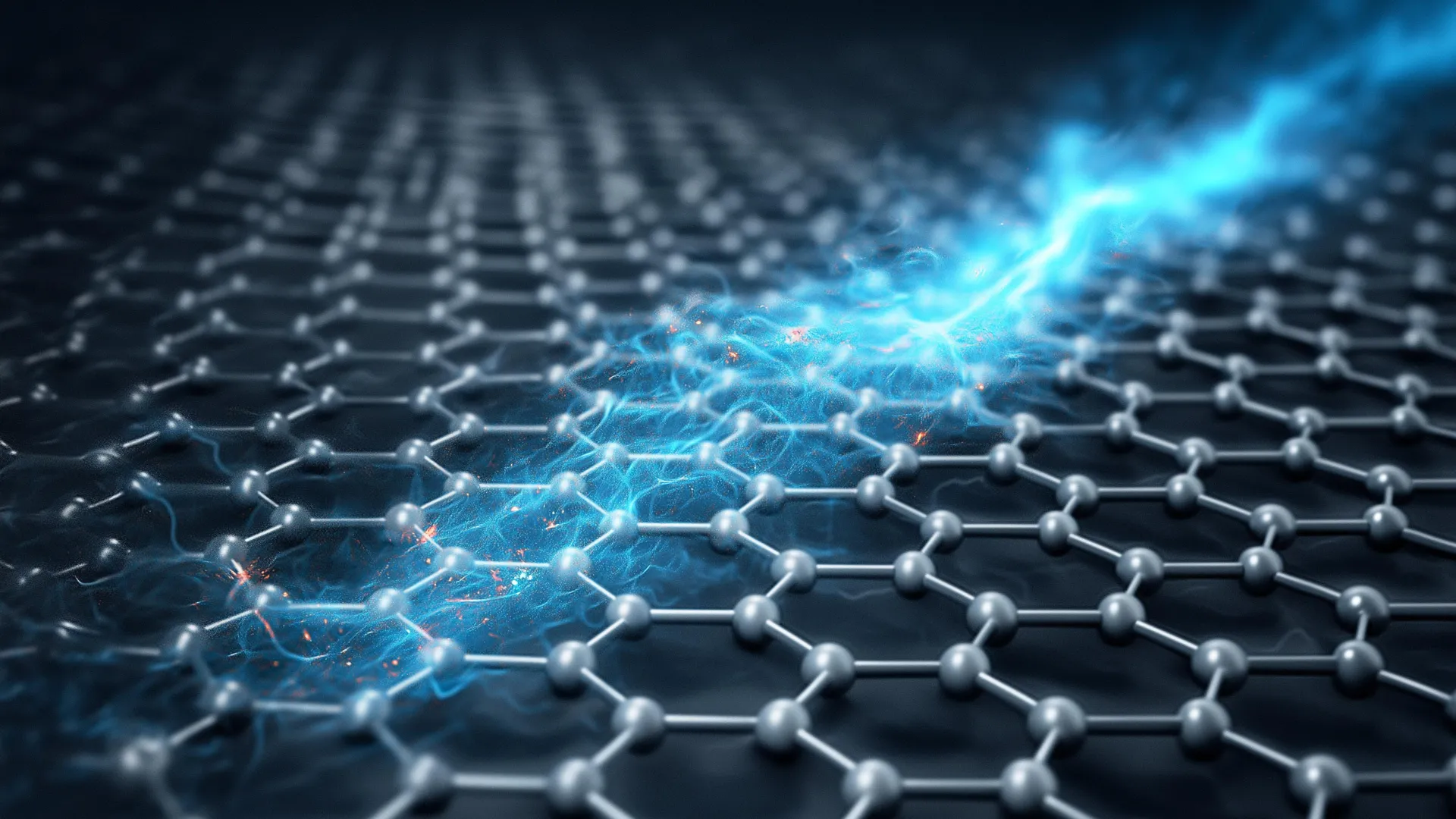
A collaborative team of international researchers, led by physicists at The Ohio State University, has demonstrated a groundbreaking method for manipulating superconductivity by altering the immediate physical environment surrounding a material. This discovery, centered on the exotic properties of twisted bilayer graphene, provides a new "tuning knob" for quantum states and challenges long-held assumptions regarding how electrons pair up to conduct electricity without resistance. The findings, recently published in the journal Nature Physics, represent a significant leap forward in the field of "twistronics" and offer a potential roadmap for the development of room-temperature superconductors and next-generation quantum computing architectures.
Superconductivity is a quantum mechanical phenomenon where a material exhibits zero electrical resistance and the expulsion of magnetic fields when cooled below a specific critical temperature. Since its discovery in 1911 by Heike Kamerlingh Onnes, the phenomenon has been the subject of intense study due to its potential to revolutionize power grids, medical imaging, and transportation. However, the requirement for extreme cryogenic cooling has historically limited its practical application. The new research suggests that by meticulously engineering the substrate and surrounding layers of a superconductor, scientists can influence the internal electron dynamics, potentially leading to more robust superconducting states at higher temperatures.
The Evolution of Twistronics and Graphene Research
To understand the significance of this breakthrough, it is necessary to examine the timeline of carbon-based materials research. For decades, carbon was known primarily in its bulk forms, such as graphite and diamond. This changed in 2004 when researchers at the University of Manchester isolated graphene—a single layer of carbon atoms arranged in a hexagonal honeycomb lattice. Graphene proved to be an exceptional conductor of heat and electricity, but it was not naturally superconducting.
A pivotal shift occurred in 2018 when a team at the Massachusetts Institute of Technology (MIT) discovered that if two layers of graphene are stacked and rotated to a specific "magic angle" of approximately 1.1 degrees, the system suddenly exhibits superconducting properties. This gave birth to the field of "twistronics," where the physical orientation of atomic layers determines the electronic behavior of the material. When these layers are twisted, they create a moiré pattern—a complex geometric interference pattern—that slows down electrons and forces them to interact more strongly with one another.
The Ohio State University study, led by Dr. Chun Ning (Jeanie) Lau, a professor of physics, builds upon this foundation by moving beyond the internal structure of the graphene itself and focusing on the external influences. The team sought to answer a fundamental question: Can the environment surrounding the twisted bilayer graphene (TBG) dictate its ability to superconduct?
Methodology and Experimental Design
The experimental setup involved a sophisticated fabrication process where the researchers combined the twisted graphene structure with a substrate of strontium titanate (SrTiO3), a synthetic oxide known for its high dielectric constant. In condensed matter physics, a dielectric material is an insulator that can be polarized by an applied electric field. Strontium titanate is particularly effective at "screening" the repulsive forces between electrons.
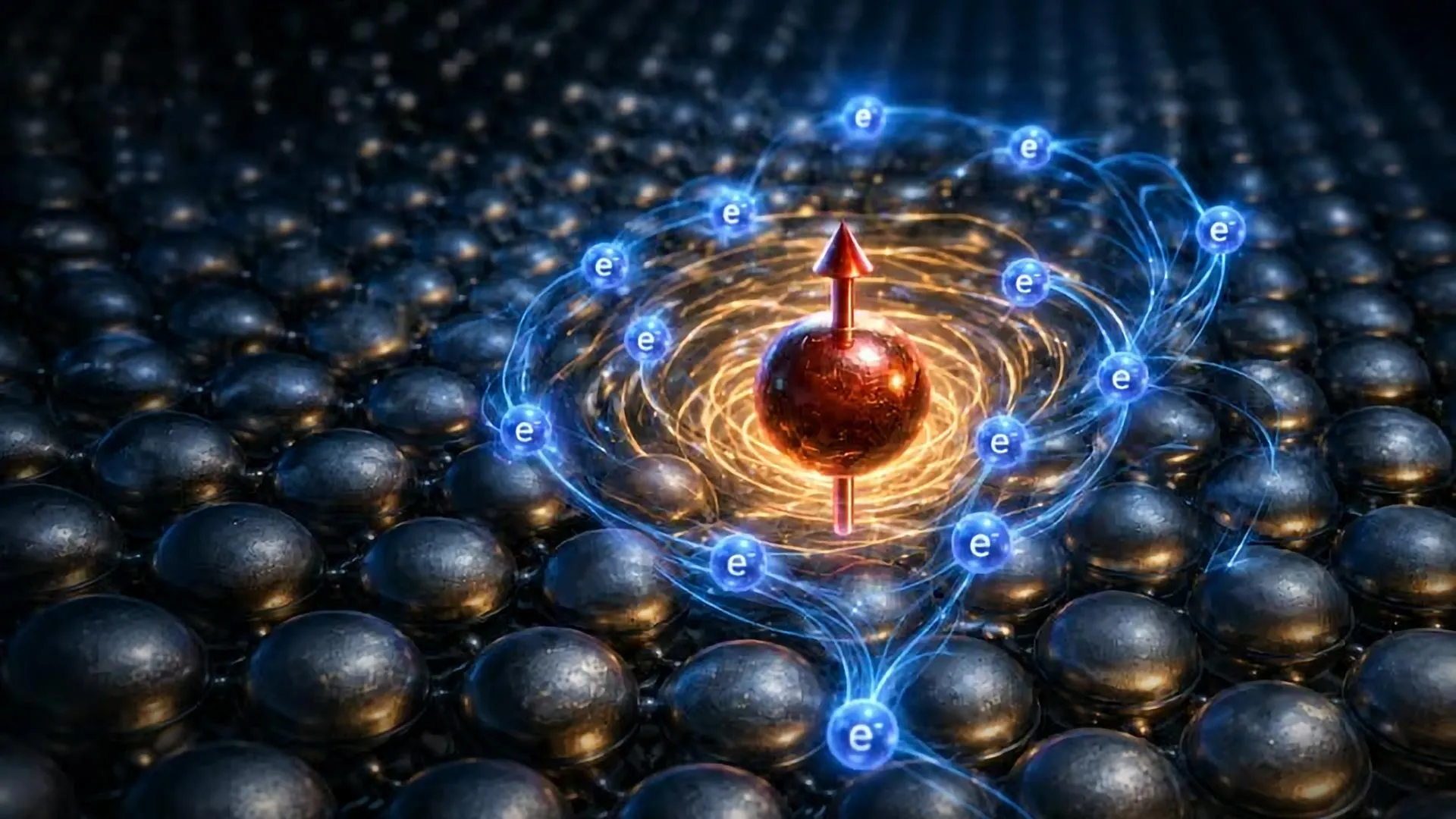
In a vacuum or a standard environment, electrons naturally repel each other due to their like negative charges, a phenomenon known as Coulomb repulsion. For superconductivity to occur, this repulsion must be overcome so that electrons can form "Cooper pairs." In conventional superconductors, this pairing is usually mediated by phonons—vibrations in the material’s crystal lattice that act as a sort of glue. In unconventional superconductors, like twisted graphene, the mechanism is far more complex and remains a subject of intense debate.
By placing the TBG in close proximity to the strontium titanate, the Ohio State team was able to tune the strength of the Coulomb interactions. They utilized the high-K dielectric properties of the substrate to dampen the repulsion between electrons. The expectation, based on classical BCS (Bardeen-Cooper-Schrieffer) theory, was that reducing the repulsive force would make it easier for electrons to pair, thereby strengthening the superconductivity.
A Surprising Departure from Traditional Theory
The results of the experiment provided a significant surprise that has reverberated through the physics community. Rather than strengthening the superconducting state, the reduction of electron-electron repulsion actually weakened it. In some configurations, the researchers were able to switch the superconductivity off entirely by adjusting the environmental influence.
"Electrons normally repel each other, but in superconductors they form pairs; this pair formation is the key to a superconductor’s ability to conduct electricity without dissipation," explained Dr. Lau. "Our evidence suggests that electrons themselves, depending on their sensitivity to their nearby environment, are unexpectedly important for material changes."
This observation is critical because it suggests that the superconductivity in twisted bilayer graphene is not driven by the traditional lattice-vibration mechanism found in metals like aluminum or tin. Instead, it points toward a purely electronic mechanism where the very repulsion between electrons—and how they navigate that repulsion—is central to the formation of the superconducting state. This finding classifies TBG as a "strongly correlated" system, where the behavior of one electron is inextricably linked to the behavior of all others in the system.
Data Analysis and Quantitative Findings
The research team meticulously measured the critical temperature ($T_c$) and the critical current density of the devices under varying environmental conditions. Their data indicated that as the distance between the graphene layers and the screening substrate was decreased, the $T_c$ dropped significantly. This inverse relationship provides quantitative evidence that the Coulomb interaction is a primary driver of the superconductivity in these moiré systems.
Lead author Xueshi Gao, a PhD student in physics at Ohio State, noted that the team’s ability to control these interactions with such precision is what sets this study apart. By using the strontium titanate as a "dielectric remote control," they could observe the transition from a superconducting state to a resistive state in real-time. The data suggests that the "electronic glue" holding the Cooper pairs together in graphene is far more sensitive to external screening than previously theorized.
Collaborative Effort and International Support
The complexity of the study required a multi-disciplinary and international approach. While the core experimental work was conducted at The Ohio State University, the project involved key contributions from several other institutions:
- Ohio State University: Provided the primary research leadership, device fabrication, and low-temperature measurements. Co-authors included Aatmaj Rajesh, Emilio Codecido, Daria Sharifi, Zheneng Zhang, Youwei Liu, and Marc Bockrath.
- Imdea Nanoscience (Spain): Collaborators Alejandro Jimeno-Pozo, Pierre Pantaleon, and Paco Guinea provided the theoretical framework and computational modeling necessary to interpret the unusual electron behaviors observed.
- National Institute for Materials Science (Japan): Kenji Watanabe and Takashi Taniguchi provided the high-purity hexagonal boron nitride (hBN) crystals used to encapsulate and protect the graphene layers, ensuring the samples remained free of contaminants.
The research was funded by the U.S. Department of Energy (DOE) and the National Science Foundation (NSF), highlighting the strategic importance of quantum material research to national interests in energy and technology.
Broader Implications for Technology and Industry
The ability to control superconductivity through environmental engineering has profound implications for the future of electronics. If the mechanism of superconductivity can be fully decoded and manipulated, it could lead to several transformative technologies:
1. Energy Infrastructure: Currently, approximately 5% to 10% of electricity is lost as heat during transmission across the power grid. Superconducting cables that operate at or near room temperature could eliminate these losses, drastically reducing carbon emissions and energy costs.
2. Quantum Computing: Quantum computers rely on qubits, which are often made from superconducting circuits. However, these qubits are highly sensitive to environmental noise. Understanding how the environment influences superconductivity could lead to more stable, "error-protected" qubits, accelerating the development of functional quantum computers.
3. Transportation: High-speed Maglev (magnetic levitation) trains utilize superconducting magnets to hover above tracks, eliminating friction. Current systems require liquid helium cooling. Environmental tuning could lead to materials that require less cooling, making Maglev technology more economically viable for global transport networks.
4. Medical Diagnostics: MRI machines are the most common current use of superconductors. Reducing the cooling requirements for these machines would make them smaller, cheaper, and more accessible to clinics in developing regions.
Conclusion and Future Directions
The Ohio State study marks a paradigm shift in how physicists approach the study of quantum materials. By demonstrating that the "surroundings" are just as important as the material itself, the researchers have opened a new dimension in material science. The discovery that reducing electron repulsion can actually hinder superconductivity in certain systems provides a vital clue in the decades-long search for the "holy grail" of physics: a room-temperature superconductor.
Looking forward, Dr. Lau and her team plan to investigate how other types of environmental factors, such as magnetic fields and mechanical strain, interact with the screening effects of the substrate. They also intend to explore other two-dimensional materials beyond graphene to see if this "environmental control" is a universal property of moiré systems.
"We’re showing capabilities that we haven’t shown before, so many people in the field are getting really excited about this result," Lau concluded. As the scientific community continues to digest these findings, the path toward a new type of physics mechanism—one where the environment is an active participant in the quantum dance of electrons—appears clearer than ever before. The work stands as a testament to the unpredictable nature of quantum research, where even a "weakening" of a property can lead to a stronger understanding of the universe.