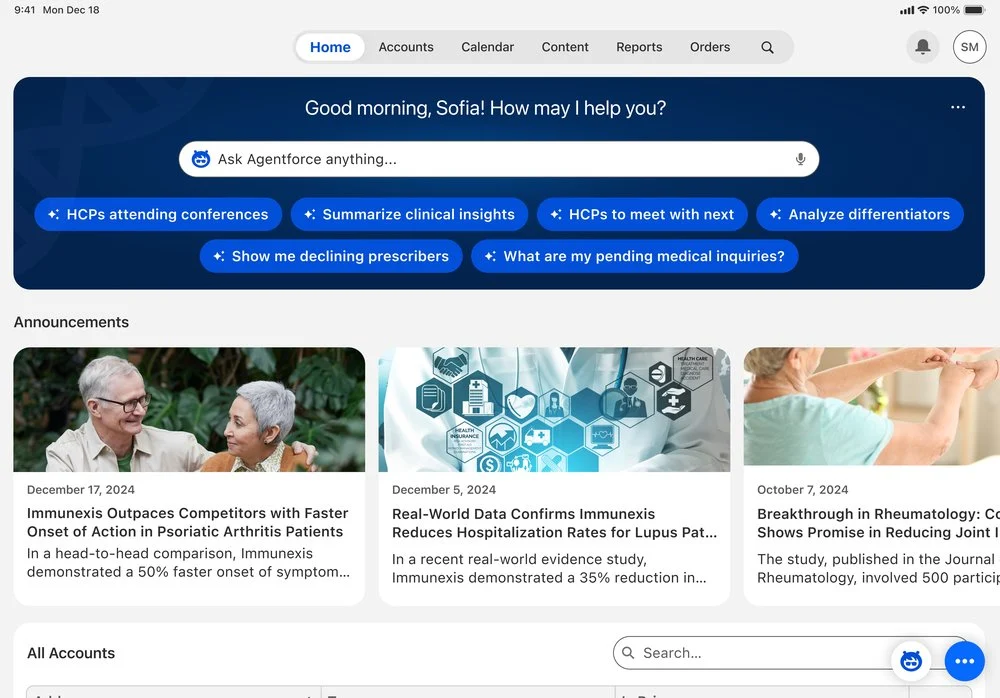
In a strategic maneuver that underscores the intensifying competition in the life sciences technology sector, Salesforce has announced that over 140 life sciences organizations have adopted its Agentforce Life Sciences platform. This disclosure, made as Peter Gassner, CEO of Salesforce’s formidable rival Veeva Systems, addressed attendees at the Veeva Commercial Summit in Boston, signals Salesforce’s assertive push into a market historically dominated by Veeva. Among Salesforce’s new clientele are marquee industry players, including pharmaceutical giants like Novartis, AstraZeneca, and Moderna, alongside Merck Animal Health, indicating a significant penetration into a highly specialized and regulated industry.
Joe Ferraro, SVP and GM of life sciences at Salesforce, emphasized the breadth of their platform’s utility across its diverse client base. "The 140 represents customers across our entire portfolio," Ferraro stated, clarifying that these organizations are leveraging Agentforce Life Sciences for a spectrum of critical functions, ranging from patient and clinical engagement to commercial and medical interactions. This comprehensive application highlights Salesforce’s ambition to position Agentforce as an all-encompassing, AI-native solution designed to streamline and enhance operations across the entire life sciences value chain.
The announcement sets a clear battle line between Salesforce and Veeva, both of whom are now championing "agentic AI" as the future of commercial and operational models within life sciences. Veeva’s Peter Gassner, at the Commercial Summit, articulated a similar vision, proclaiming that the "Agentic Commercial model changes everything about how we approach commercialization." Gassner elaborated on the transformative potential, citing impacts across digital and non-personal promotion, field team operations, and content approval and creation workflows. This parallel strategic emphasis underscores a pivotal moment for the industry, where AI-driven automation is poised to redefine how pharmaceutical and biotech companies interact with healthcare professionals, patients, and internal stakeholders.
The Deep Roots of Salesforce’s AI Ambition
While the recent surge in AI interest, particularly following the launch of ChatGPT, has undeniably amplified Salesforce’s focus on artificial intelligence, the company’s commitment to AI predates this phenomenon by a considerable margin. Joe Ferraro, when asked about the comparative strategies between Salesforce and Veeva, asserted Salesforce’s long-standing leadership in AI innovation. "Everybody is using agents now," Ferraro remarked, adding, "Salesforce has been pioneering AI for the last decade, whereas many legacy systems have been slow to innovate." He further suggested that Salesforce’s product vision, initiated two years prior to this announcement with the development of Agentforce Life Sciences, combined with increasing customer demand, effectively compelled Veeva to accelerate its own agentic AI initiatives.
Salesforce’s journey into artificial intelligence traces back to 2014, when CEO Marc Benioff declared the company an "AI-first company" during an internal all-hands meeting. This declaration was swiftly followed by the acquisition of machine-learning startup RelateIQ for an estimated $390 million, laying an early foundation for AI integration within its CRM offerings. The tangible manifestation of this vision arrived in 2016 with the launch of Salesforce Einstein at Dreamforce, marking the company’s first significant foray into CRM AI.
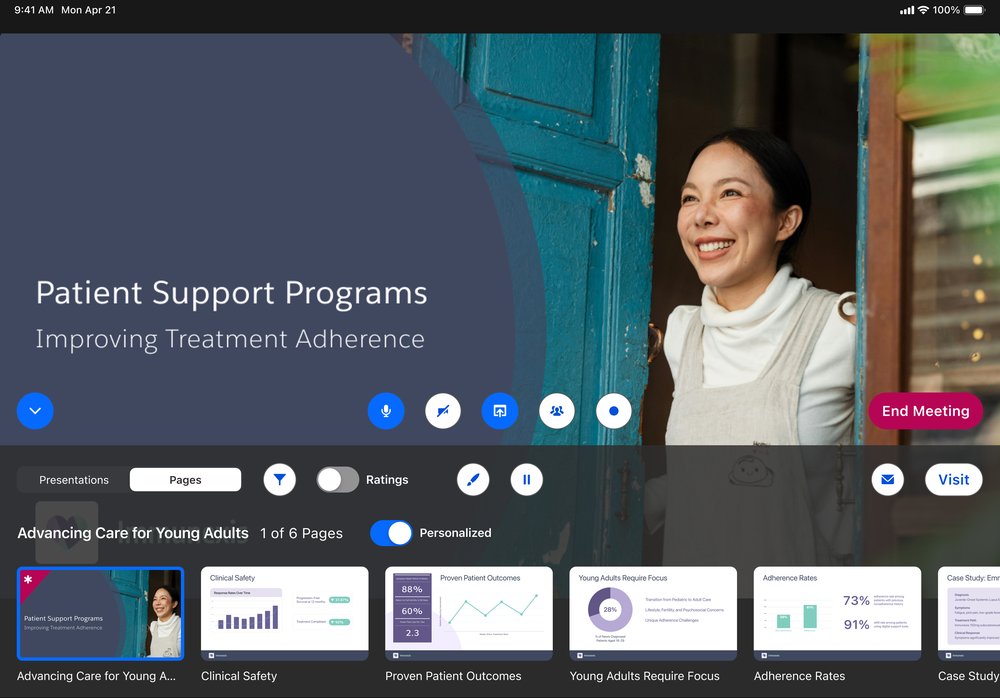
In the years that followed, Benioff consistently elevated AI’s strategic importance, culminating in the formal unveiling of the Agentforce platform at Dreamforce in September 2024. Branding it as "digital labor," Salesforce set an ambitious goal to empower one billion agents by the close of 2025. This aggressive pursuit of agentic AI capabilities is not merely a marketing endeavor; it is deeply embedded in the company’s financial performance and future growth projections. During Salesforce’s first-quarter fiscal 2027 earnings call on May 27, Benioff informed investors that the company had processed a staggering 28.6 trillion AI tokens, representing a monumental 152% quarter-over-quarter increase. He identified agentic AI as "the biggest growth opportunity" for Salesforce since its pioneering move to bring CRM to the cloud, highlighting that Agentforce’s annual recurring revenue had already reached an impressive $1.2 billion.
Ferraro underscored the sheer scale of Salesforce’s investment in AI development. "We have thousands of engineers working on AI at Salesforce right now," he stated, drawing a stark contrast with competitors. "There is nowhere near that scale for Veeva, so we are able to move a lot faster from an agentic standpoint." This emphasis on engineering might and accelerated development reflects Salesforce’s conviction that its deep, long-term investment in AI provides a distinct competitive advantage.
Veeva’s Strategic Response and Integrated Approach
Veeva Systems, recognizing the paradigm shift brought about by agentic AI, has not remained idle. On May 27, 2026, the same day as Salesforce’s earnings call, Veeva announced "Falcon," an agentic platform designed specifically for drug development. Falcon includes a suite of standard agents intended to deliver "agentic labor" within the Veeva Development Cloud, spanning its clinical, regulatory, and safety applications, with early-adopter availability projected for November 2026. Gassner characterized Falcon as the company’s "first offering in agentic labor," signaling its entry into this transformative domain.
Prior to Falcon, Veeva had already begun integrating AI agents into its core offerings. Vault CRM’s Free Text, Voice, and Pre-call agents went live in December 2025, aimed at boosting productivity and customer-centricity. The company’s public roadmap for 2026 included Safety and Quality agents slated for April, with its 26R1 release introducing a Narrative Agent for Veeva Safety. Beyond internal development, Veeva has also pursued strategic acquisitions to bolster its AI capabilities. In March 2026, it acquired Ostro, an AI brand-engagement platform tailored for life sciences, for approximately $100 million. This acquisition notably enhanced Veeva’s conversational AI capabilities, enabling it to answer patient and HCP queries using only Medical, Legal, and Regulatory (MLR)-approved content, thereby mitigating the risks associated with generative AI producing unverified or non-compliant responses.
During its Commercial Summit, Gassner provided a preview of an upcoming Vault AI Tab, scheduled for August. This conversational layer will allow users to query their Vault data directly within existing security permissions, offering in-context insights and information retrieval without leaving the Veeva environment. These moves collectively illustrate Veeva’s commitment to integrating AI deeply within its established ecosystem, leveraging its comprehensive suite of applications and extensive data holdings within the life sciences sector.
Architectural Philosophies: "Headless" vs. In-App Integration
The competitive strategies of Salesforce and Veeva diverge significantly in their fundamental architectural philosophies for deploying agentic AI. Salesforce is heavily betting on what it terms a "headless" strategy. Ferraro elucidated this approach as "popping the top off the platform, exposing all the APIs, and exposing all the data models and workflows as MCP tools." MCP, or Model Context Protocol, is an open standard introduced by Anthropic in 2024 and subsequently donated to the Agentic AI Foundation, a Linux Foundation directed fund, in December 2025.
Salesforce’s "headless" vision means that rather than compelling users to operate strictly within Salesforce’s proprietary interfaces, the company exposes its productized workflows as MCP servers. These servers can then surface and execute within any AI tool a customer might already be using. Ferraro offered a compelling example: "I was with a customer yesterday who has made a significant investment in Anthropic, and they are going to use our MCP service for Agentforce Life Sciences to bring all of those compliant workflows directly inside Claude." This approach emphasizes interoperability and customer choice, allowing life sciences companies to leverage their existing AI investments while still benefiting from Salesforce’s specialized workflows and compliance safeguards.
In stark contrast, Veeva’s Vault AI Agents are designed to operate intrinsically within Veeva’s own applications. This "depth-inside-the-app" posture means agents work in-context, directly interacting with Veeva’s proprietary data, documents, and workflows. While third-party connectors like CData exist to expose Veeva data to external models, Veeva’s primary strategy is an integrated, in-app experience.
The companies also differ on the model layer. Salesforce’s Agentforce supports a flexible range of models, including both Salesforce-managed and customer-supplied options. Veeva, on the other hand, maintains a more controlled approach for its standard agents, including Vault CRM’s, running them on Anthropic and Amazon models hosted on Amazon Bedrock. Veeva offers model choice only for custom agents, where customers can opt for Veeva-hosted models or bring their own on Bedrock or Microsoft Azure AI Foundry, providing some flexibility but within a more defined framework. These architectural distinctions represent fundamentally different visions for how AI will be integrated into enterprise workflows within regulated industries.
Accelerating Adoption and Operational Efficiency
One of the tangible benefits Salesforce highlights for its agentic AI platform is the accelerated client onboarding process. The company has observed that some of its smaller life science customers have completed onboarding in approximately one month, a significantly reduced timeline compared to traditional enterprise software deployments. This efficiency is partly attributed to the intelligent agents embedded within the platform. Companies like Chiesi Group and CSL are already leveraging Agentforce Life Sciences to unify customer data and coordinate engagement across commercial and medical operations, streamlining complex internal processes.
Ferraro explained that AI agents dramatically reduce the need for extensive teams of human consultants during the onboarding phase. "You get one forward-deployed engineer, and they can do the work of five or 10 previously, because they have Claude Code, or they have Codex, and they can point those tools at the Salesforce platform," he elaborated. For instance, Salesforce has developed an MCP server within Agentforce Life Sciences that can configure the product itself. A task that would typically require a human to navigate through multiple nested configuration screens – such as adding a quick action to an iPad app that launches a specific prompt in the UI – can now be executed automatically by an agent. This level of automation not only speeds up deployment but also minimizes human error and reduces operational costs for both Salesforce and its clients.
Navigating the Regulatory Maze: Determinism and Compliance
The life sciences industry operates under stringent regulatory frameworks, where predictability and compliance are paramount. Large language models (LLMs) are inherently probabilistic, designed to predict the most likely next tokens based on context. While this capability is excellent for tasks like summarizing lengthy PDFs, it poses a significant challenge for workflows demanding absolute determinism – such as how often a sales representative can contact a physician, the precise wording of a message, or the verification of patient consent. In this highly regulated environment, "going off script" is not an option.
Both Salesforce and Veeva acknowledge this critical need for determinism in agentic software for regulated industries and have developed mechanisms to address it. Salesforce employs a feature called "Agent Script" within Agentforce. This script is designed to weave deterministic checks, approved templates, and consent status directly into the probabilistic layer of the AI. This means the AI model can synthesize information and surface recommendations, but any regulated action or communication must pass through a fixed set of tools backed by predefined, deterministic workflows and confined actions. "The model cannot go off script, because those tools are unavailable," Ferraro affirmed. "The tools are outside its toolbox." This architectural safeguard ensures that while the AI can assist and augment, human oversight and regulatory compliance remain firmly in control.
Similarly, Veeva’s strategy for compliance hinges on running its standard agents in-context within its own applications, directly against its proprietary data and established workflows. This integrated approach ensures that the agents operate within the confines of Veeva’s compliance-centric architecture, which is built to adhere to industry regulations from the ground up. By embedding agents within systems already designed for regulatory rigor, Veeva aims to provide the benefits of AI automation without compromising on the non-negotiable demands of safety, efficacy, and legal adherence.
Broader Implications for Life Sciences Technology
The burgeoning competition between Salesforce and Veeva in agentic AI represents a significant inflection point for the life sciences technology landscape. Salesforce’s aggressive expansion, backed by its deep AI investments and "headless" architecture, challenges Veeva’s long-standing dominance and integrated ecosystem. This rivalry is poised to accelerate innovation, offering life sciences companies more diverse and powerful tools to enhance drug discovery, clinical development, commercialization, and patient engagement.
The adoption of agentic AI promises to revolutionize various facets of the industry. In commercial operations, agents can personalize interactions with healthcare professionals, optimize sales strategies, and ensure compliant content delivery. For clinical trials, AI can streamline patient recruitment, monitor data, and accelerate regulatory submissions. In patient engagement, personalized support programs and educational content can be delivered more effectively and compliantly. The efficiency gains in onboarding and operational workflows, as demonstrated by Salesforce’s early client successes, suggest a future where technology deployments are faster, less resource-intensive, and more adaptable.
Ultimately, the competition between Salesforce and Veeva is a microcosm of a larger trend: the profound integration of advanced AI into every layer of enterprise operations. For the life sciences sector, this means a future where complex, regulated tasks are increasingly augmented and automated by intelligent agents, provided these technologies can reliably navigate the critical balance between innovation, efficiency, and unwavering regulatory compliance. The next few years will undoubtedly reveal which architectural approach – Salesforce’s flexible, "headless" integration or Veeva’s deeply embedded, in-app strategy – will gain greater traction as the industry embraces this new era of digital labor.