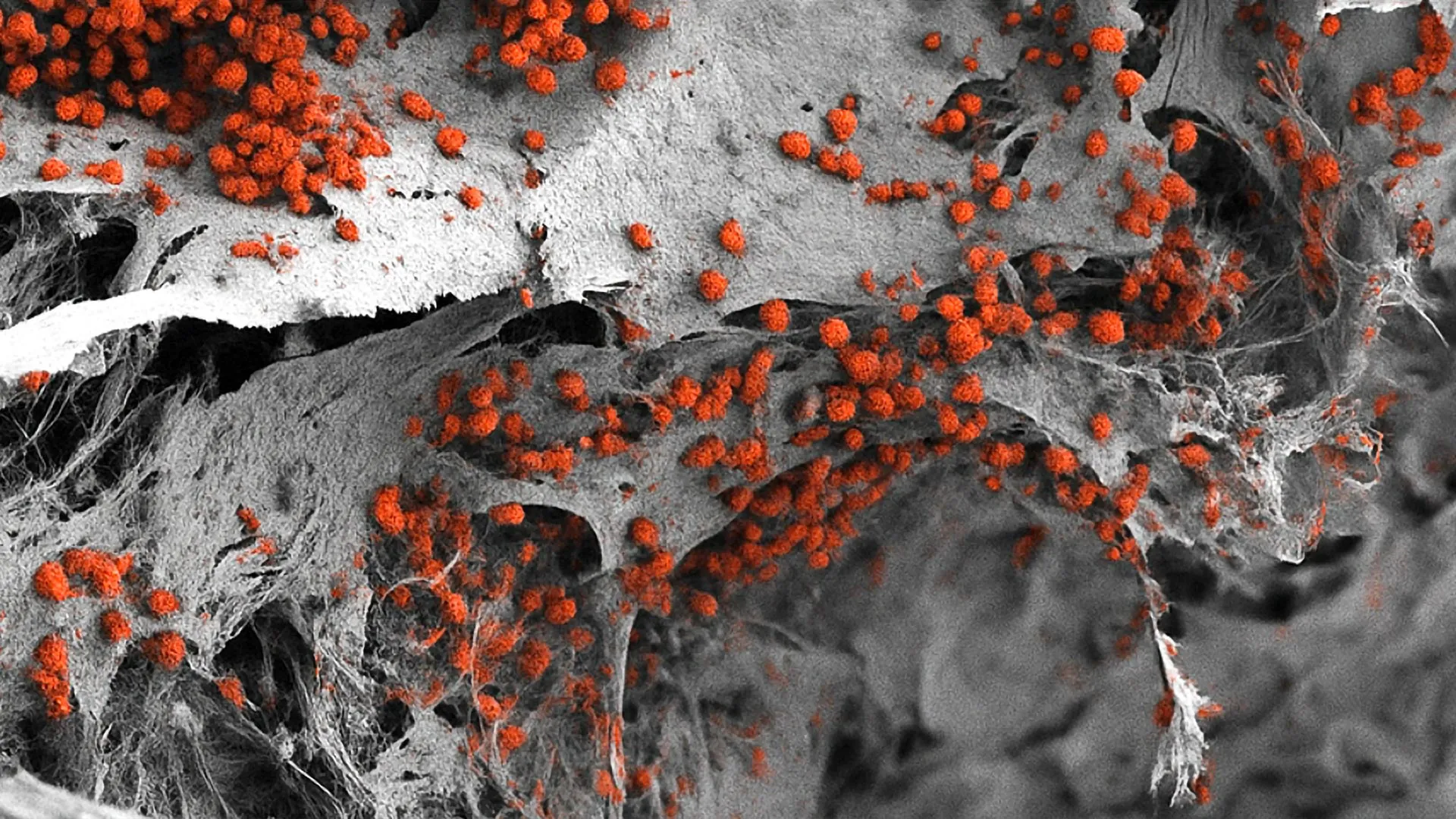
A groundbreaking study co-led by a physician-scientist at the University of Arizona College of Medicine – Tucson’s Sarver Heart Center has identified that a specific subset of patients equipped with artificial heart pumps can actually regenerate heart muscle tissue. This discovery, published in the prestigious journal Circulation, provides the first irrefutable evidence of human cardiac regeneration in adults and suggests a paradigm shift in how the medical community approaches heart failure, a condition long considered irreversible. The research team, led by Dr. Hesham Sadek, found that the mechanical "unloading" of the heart—allowing the organ to rest—triggers a biological response that mimics the regenerative capabilities found in neonatal hearts and skeletal muscle.
The Growing Crisis of Heart Failure in Modern Medicine
Heart failure remains one of the most significant challenges to global public health. According to data from the Centers for Disease Control and Prevention (CDC), nearly 7 million adults in the United States currently live with the condition. It is a progressive disease where the heart muscle becomes too weak or stiff to pump blood effectively throughout the body. The statistics are sobering: heart failure is responsible for approximately 14% of all deaths in the U.S. annually.
For decades, the medical consensus has been that while the human body can repair many of its tissues, the heart is a notable exception. Skeletal muscles, such as those in the legs or arms, possess a robust capacity for regeneration. If an athlete suffers a muscle tear, the body initiates a cellular repair process that restores the tissue’s integrity. In contrast, when the heart muscle (myocardium) is damaged due to a heart attack or chronic hypertension, it typically heals by forming non-functional scar tissue rather than new muscle cells. This lack of regenerative capacity is why heart failure is currently managed rather than cured. Existing medications, such as ACE inhibitors and beta-blockers, are effective at slowing the disease’s progression and managing symptoms, but they cannot replace the lost muscle cells that lead to the eventual failure of the organ.
The Role of Mechanical Assist Devices
For patients with advanced, end-stage heart failure, the options are severely limited. When medications no longer suffice, the gold standard of treatment is a heart transplant. However, the scarcity of donor organs means that only a fraction of eligible patients receive one. This has led to the widespread use of the Left Ventricular Assist Device (LVAD), commonly referred to as an artificial heart pump.
An LVAD is a mechanical pump that is surgically implanted to help the left ventricle—the heart’s main pumping chamber—deliver blood to the rest of the body. While originally designed as a "bridge to transplant," intended to keep patients alive until a donor heart becomes available, LVADs are increasingly used as "destination therapy" for those who are not candidates for transplantation. The device works by pulling blood from the left ventricle and pushing it into the aorta, effectively bypassing the workload of the heart muscle.
A Decadelong Chronology of Discovery
The recent findings published in Circulation are the culmination of over a decade of research led by Dr. Hesham Sadek, who serves as the director of the Sarver Heart Center and chief of the Division of Cardiology at the University of Arizona College of Medicine – Tucson.
The journey began in 2011, when Dr. Sadek published a landmark paper in the journal Science. That study demonstrated that while heart muscle cells (cardiomyocytes) actively divide and regenerate in utero and during the earliest stages of life, this ability is lost shortly after birth. Dr. Sadek hypothesized that the reason for this cessation is the heart’s transition to a high-pressure environment where it must pump blood continuously. To meet this demand, the cells stop dividing and focus their energy on contraction.
In 2014, Dr. Sadek’s team observed early hints of cell division in patients who had been fitted with LVADs. This led to the hypothesis that if the heart were allowed to "rest" by offloading its pumping duties to a machine, it might revert to a more primitive, regenerative state. This concept of "cardiac unloading" suggested that the mechanical environment of the heart is a primary regulator of its regenerative potential.
To prove this definitively, Dr. Sadek secured a grant from the Leducq Foundation Transatlantic Networks of Excellence Program. This international collaboration brought together some of the world’s leading experts in cardiology and cellular biology, including Dr. Stavros Drakos of the University of Utah Health and School of Medicine, a pioneer in LVAD-mediated recovery, and Dr. Jonas Frisén and Dr. Olaf Bergmann of the Karolinska Institute in Stockholm.
Innovative Methodology: Carbon Dating the Human Heart
One of the greatest hurdles in studying heart regeneration is the difficulty of distinguishing between old cells and newly formed ones. To solve this, the research team utilized a sophisticated and innovative method of carbon dating human tissue.
The Karolinska Institute teams in Sweden and Germany applied a technique that measures levels of Carbon-14 (C14) in the DNA of heart cells. Because atmospheric levels of C14 changed significantly following the nuclear testing of the mid-20th century, scientists can use these levels as a biological "time stamp" to determine exactly when a cell was born. By analyzing tissue samples from LVAD patients provided by the University of Utah, the researchers were able to track whether the hearts contained newly generated cardiomyocytes that had formed after the device was implanted.
The data revealed a startling result: patients with artificial hearts regenerated muscle cells at a rate more than six times higher than that of healthy hearts. This provided the "irrefutable evidence" Dr. Sadek had been seeking for years.
Analysis of the "Responder" Phenomenon
While the study proves that regeneration is possible, it also highlighted a significant variation in patient outcomes. Only about 25% of the LVAD patients studied were classified as "responders"—individuals whose heart muscle regenerated to a degree that could potentially lead to a reversal of heart failure symptoms.
"It’s not clear why some patients respond and some don’t, but it’s very clear that the ones who respond have the ability to regenerate heart muscle," Dr. Sadek noted. This 25% subset represents a critical focus for future research. If scientists can identify the genetic or molecular markers that distinguish responders from non-responders, they may be able to develop therapies that trigger this regenerative response in all patients.
The phenomenon of the "responder" has been observed clinically for years. In a minority of cases, patients with LVADs have seen such significant improvement in their heart function that the devices were eventually removed—a process known as "explantation." Until now, the mechanism behind this recovery was poorly understood, often attributed to the "shrinking" of an enlarged heart rather than the creation of new muscle. Dr. Sadek’s study provides the biological explanation for these clinical success stories.
Statements and Implications for the Future of Cardiology
The implications of this research are profound. If the human heart possesses an intrinsic, albeit dormant, capacity to regenerate, the goal of cardiology may shift from managing heart failure to curing it.
"This is the strongest evidence we have, so far, that human heart muscle cells can actually regenerate, which really is exciting, because it solidifies the notion that there is an intrinsic capacity of the human heart to regenerate," said Dr. Sadek. He further explained that the study supports the idea that the heart’s constant workload is what prevents it from healing. By providing the cardiac equivalent of "bedrest," the LVAD creates a window of opportunity for cellular repair.
Medical professionals not involved in the study have reacted with cautious optimism. The discovery suggests that future treatments might not require a permanent mechanical pump. Instead, a patient might receive a temporary LVAD or a pharmacological treatment designed to "silence" the molecular pathways that prevent cell division.
The next phase of research for the Sarver Heart Center involves identifying these specific molecular pathways. Dr. Sadek and his colleagues are looking for the "switches" that control cardiomyocyte division. If these can be targeted with precision medicine, it may be possible to stimulate heart growth without the need for major surgery or mechanical assist devices.
Broader Impact and Conclusion
The discovery that the human heart can regenerate under mechanical unloading is a milestone in cardiovascular science. It bridges the gap between basic laboratory research and clinical application, utilizing a technology (the LVAD) that has been in use for decades to uncover a fundamental biological truth.
For the millions of people worldwide suffering from heart failure, this research offers a new sense of hope. The current treatment model, which relies on heart transplants and lifelong medication, is unsustainable given the scale of the epidemic. The move toward "regenerative medicine"—where the body is prompted to heal itself—represents the next frontier in healthcare.
The beauty of this discovery, as Dr. Sadek points out, is that it utilizes existing, "tried and true" technology to reveal new therapeutic possibilities. The mechanical heart, once viewed solely as a life-support system, has now become a tool for biological discovery. As researchers continue to unravel why some hearts respond to rest while others do not, the medical community moves one step closer to a world where heart failure is no longer a terminal diagnosis, but a treatable condition with the potential for a full recovery.