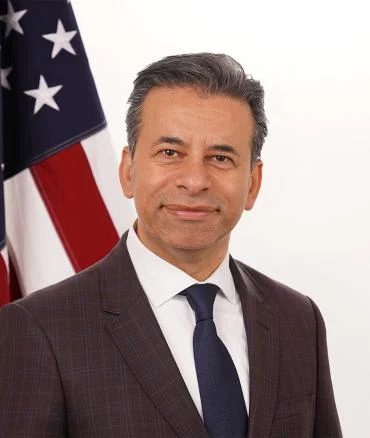
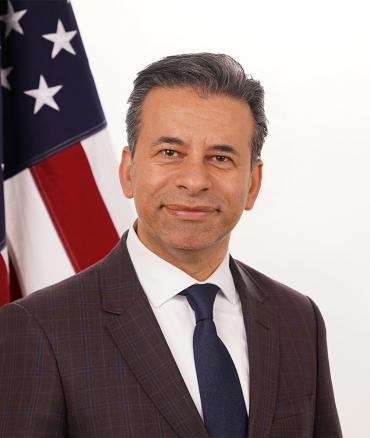
Marty Makary resigned on Tuesday as commissioner of the Food and Drug Administration, effective immediately, amidst a period of intense scrutiny and mounting pressure from the White House and various advocacy groups. His departure, which follows persistent rumors of President Donald Trump’s intent to remove him, plunges the nation’s premier public health regulatory agency further into a state of leadership flux, raising significant concerns about its independence and the continuity of critical health programs. The resignation underscores a contentious tenure marked by high-profile policy clashes, particularly concerning the regulation of flavored vaping products, the accessibility of abortion medication, and the agency’s stance on mRNA vaccines.
The announcement came after what sources describe as escalating tensions between Makary and the Trump administration, primarily revolving around the FDA’s regulatory authority and scientific autonomy. President Trump, speaking to reporters on Tuesday afternoon, acknowledged Makary’s exit, stating, "He’s a great doctor, and he was having some difficulty." This concise remark hinted at the deep-seated disagreements that ultimately led to Makary’s decision to step down from the helm of the powerful agency.
The Flavored Vape Controversy: A Direct Confrontation with the White House
A primary flashpoint in Makary’s relationship with the administration was the contentious issue of fruit-flavored vapes. Reports indicate that President Trump directly pressured Makary to authorize flavored products from Glas Inc., a move Makary staunchly opposed due to overwhelming public health evidence highlighting their significant appeal to young people. The FDA, under Makary’s leadership, had previously expressed reservations about such products, citing their role in fueling the youth vaping epidemic that has seen millions of adolescents become addicted to nicotine.
The conflict reached a critical juncture earlier this month when, despite Makary’s known objections, two fruit-flavored vape products were approved by the agency. This was followed last Friday by the FDA issuing a revised policy that significantly broadened the scope for these products to be more widely marketed, a decision widely interpreted as a direct capitulation to political pressure. Public health advocates and pediatricians have consistently warned that flavored e-cigarettes act as a gateway to nicotine addiction for minors, undermining decades of progress in tobacco control. According to data from the Centers for Disease Control and Prevention (CDC), youth e-cigarette use, though showing some recent declines, remains a significant public health concern, with millions of middle and high school students reporting current use. The e-cigarette market, valued at over $15 billion annually, represents a substantial economic interest for manufacturers, further complicating regulatory decisions.
This episode exposed a fundamental tension between the FDA’s mandate to protect public health and the economic and political interests sometimes championed by the executive branch. Critics argue that such interventions undermine the scientific integrity and independence of the FDA, setting a dangerous precedent for future regulatory decisions concerning pharmaceuticals, medical devices, and food safety. The FDA’s Center for Tobacco Products (CTP) is tasked with reviewing premarket tobacco product applications (PMTAs) to determine if new tobacco products are "appropriate for the protection of the public health." The approval of flavored vapes, despite their known youth appeal, suggests a deviation from this standard, potentially prioritizing commercial interests over public health concerns.
Broad-Spectrum Criticism: Abortion Access, Vaccines, and Agency Overhaul
Beyond the vape controversy, Makary’s tenure was characterized by a barrage of criticism from various ideological and professional groups, reflecting the highly politicized landscape of public health in the current administration.
Mifepristone and Abortion Rights: Anti-abortion groups, notably Susan B. Anthony Pro-Life America, were vocal in their demands for Makary’s removal. They accused him of "slow-walking" a safety review of mifepristone, the medication commonly known as the abortion pill, and of allowing new generic versions to enter the market. Mifepristone, used in combination with misoprostol for medication abortion, has been under intense scrutiny from anti-abortion advocates who seek to restrict its availability. The FDA’s existing regulatory framework for mifepristone, under a Risk Evaluation and Mitigation Strategy (REMS) program, already imposed specific requirements on its distribution. The introduction of generic versions, however, expanded access and competition, a development seen as detrimental by groups advocating for stricter abortion regulations. For these groups, Makary’s perceived inaction or facilitation of broader access to mifepristone directly contradicted their policy objectives, making him a target for their extensive lobbying and public campaigns. The debate around mifepristone is not merely scientific but deeply entangled in the broader political and legal battles over abortion access in the United States, especially following the overturning of Roe v. Wade.
mRNA Vaccines and the "Make America Healthy Again" Movement: Concurrently, Makary faced significant pressure from the "Make America Healthy Again" (MAHA) movement, a coalition often associated with vaccine skepticism and a broader distrust of established medical authorities. This group criticized Makary for his perceived failure to withdraw mRNA vaccines from the market, even while acknowledging his actions to restrict COVID-19 vaccines and block certain "safety manuscripts." The MAHA movement, a potent force in the political landscape, has consistently called for more stringent scrutiny of vaccine safety and efficacy, particularly concerning the rapid development and deployment of COVID-19 vaccines. Their demands for Makary to "pull" mRNA vaccines, which have undergone rigorous testing and continuous monitoring, reflect a fundamental disagreement with the scientific consensus on vaccine safety. Makary’s approach, described as "restricting COVID-19 vaccines" and "blocking safety manuscripts," suggests an attempt to navigate these pressures by potentially implementing more cautious guidelines or seeking additional data, perhaps in an effort to address public concerns without fully capitulating to anti-vaccine sentiments. This delicate balancing act seemingly failed to satisfy either side of the deeply polarized vaccine debate, leaving him vulnerable to criticism from both camps.
Proposed Overhaul of Vaccine Approval: Adding to the internal and external strife, Makary, alongside senior advisor Vinay Prasad, proposed a sweeping overhaul of the FDA’s approach to approving vaccines. This initiative, reportedly aimed at streamlining the review process and potentially incorporating new methodologies, drew sharp condemnation from a cohort of former FDA commissioners. These experienced leaders expressed profound concerns that such an overhaul could compromise the agency’s rigorous scientific standards, potentially eroding public trust in vaccine safety and efficacy. Their collective denunciation highlighted worries about the potential politicization of vaccine approval and the long-term impact on the FDA’s reputation as a gold standard regulatory body globally. The specific details of the proposed overhaul remain somewhat opaque, but the backlash from within the agency’s historical leadership underscores the gravity of perceived threats to its foundational principles.
A Culture of Instability: High Turnover and Eroding Expertise
Makary’s resignation is not an isolated incident but rather the latest symptom of a pervasive culture of instability that has gripped the FDA during the first year of President Trump’s second term. The agency has witnessed an unprecedented exodus of its most experienced professionals, with nearly all of the FDA’s senior career officials either resigning voluntarily or being forced out. This loss of institutional knowledge and regulatory expertise at the highest levels of the agency creates significant operational challenges and raises questions about the FDA’s capacity to fulfill its complex mission effectively.
Compounding this internal brain drain, the Department of Government Efficiency (DOGE), an initiative championed by the Trump administration, has reportedly eliminated thousands of positions across various federal agencies, including the FDA. While framed as efforts to streamline bureaucracy and reduce government spending, these cuts have undoubtedly stretched the remaining workforce thin, impacted morale, and potentially hindered the agency’s ability to conduct thorough reviews and oversight. The FDA’s annual budget, typically in the range of $6-7 billion, supports a workforce of over 18,000 employees responsible for regulating products accounting for approximately 25 cents of every consumer dollar spent in the U.S. Such significant staffing reductions, particularly targeting experienced personnel, can severely impair its core functions.
The Center for Drug Evaluation and Research (CDER), one of the FDA’s most critical divisions responsible for reviewing new drug applications, exemplifies this chronic instability. CDER reportedly cycled through six different leaders in a single year under Makary’s stewardship. This revolving door of leadership is highly disruptive, preventing the consistent application of policy and the establishment of long-term strategic goals. Among these short-lived appointments was George Tidmarsh, whom Makary appointed but was subsequently forced to resign following serious allegations that he used his position for a personal vendetta. His successor, Rick Pazdur, a respected veteran in oncology drug review, lasted a mere three weeks before resigning due to unspecified clashes with Makary. Such rapid turnover at critical leadership positions within CDER can delay drug approvals, create uncertainty for pharmaceutical companies, and ultimately impact patient access to new therapies. The constant churn at the top levels signals a dysfunctional environment, where scientific expertise and established protocols appear to be frequently overridden or disregarded.
Broader Leadership Vacuum in Public Health
Makary’s departure further exacerbates a broader leadership vacuum across critical federal health agencies. The Centers for Disease Control and Prevention (CDC), the nation’s leading public health agency, currently lacks a permanent director, a surgeon general, and a vaccine chief. This absence of stable, confirmed leadership at multiple key agencies creates a fragmented and potentially compromised public health infrastructure at a time when the nation faces persistent health challenges, from emerging infectious diseases to chronic conditions.
A robust and coordinated federal health leadership is essential for developing and implementing effective public health policies, responding to crises, and maintaining public trust. The lack of permanent appointments can lead to delayed decision-making, inconsistent messaging, and a diminished capacity for long-term strategic planning. This situation not only affects domestic health initiatives but also impacts the U.S. role in global health security, where consistent leadership and scientific credibility are paramount.
The Road Ahead: Interim Leadership and Future Uncertainties
In the immediate aftermath of Makary’s resignation, Kyle Diamantas has been appointed as the acting FDA commissioner. Diamantas, an attorney with reported personal ties to Donald Trump Jr., steps into this challenging role with an immediate task: he is expected to testify in Makary’s place at the upcoming May 13 budget hearing. His appointment, bypassing traditional scientific or medical backgrounds typically associated with the commissioner role, signals a potential shift in the agency’s priorities under interim leadership.
The fate of several programs introduced by Makary during his tenure now hangs in the balance. Many of these initiatives have not yet undergone the rigorous federal rulemaking process required to codify them into law, leaving them vulnerable to reversal or abandonment by the new leadership. This uncertainty creates further instability for the agency and stakeholders who had invested in or planned around these proposed changes.
A permanent replacement for Makary will need to be nominated by President Trump and subsequently confirmed by the Senate. The selection of the next FDA commissioner will be a highly scrutinized process, viewed through the lens of recent controversies and the broader political climate. The nominee will face intense questioning regarding their commitment to scientific independence, their stance on contentious regulatory issues, and their vision for restoring stability and public trust in the agency. The next commissioner will inherit an agency grappling with low morale, significant staffing gaps, and a mandate that is increasingly challenged by political interventions.
The resignation of Marty Makary from the FDA marks a pivotal moment, highlighting the growing tension between scientific expertise and political expediency within federal regulatory bodies. It underscores the critical importance of an independent FDA, free from undue influence, to safeguard public health. The challenges facing the agency, and indeed the broader federal health infrastructure, are profound, requiring not only new leadership but also a renewed commitment to the principles of science, transparency, and public service. The decisions made in the coming months regarding the FDA’s leadership and policy direction will have lasting implications for the health and well-being of the nation.