For more than half a century, the trajectory of modern technology has been defined by the relentless miniaturization of electronic components, a phenomenon famously codified as Moore’s Law. However, as the world moves toward an era of high-speed optical computing and ultra-precise sensing, a fundamental physical barrier has prevented photonic devices from keeping pace with their electronic counterparts. While transistors have shrunk to the scale of a few nanometers, photonic components have remained stubbornly large, often limited by the very nature of light itself. In a landmark series of developments culminating in 2024, a research team led by Ren-Min Ma at Peking University has introduced a transformative theoretical and experimental framework that overcomes these historical limitations. By utilizing "narwhal-shaped" wavefunctions and a new "singular dispersion equation," the team has demonstrated the ability to confine light to scales previously thought impossible using lossless dielectric materials, effectively launching a new field of study dubbed "singulonics."
The Fundamental Challenge: Light and the Diffraction Limit
The primary obstacle in shrinking photonic devices is rooted in the Heisenberg uncertainty principle and the wave nature of light. In classical optics, the diffraction limit—first characterized by Ernst Abbe in 1873—stipulates that light cannot be focused or confined to a spot much smaller than half of its wavelength. For visible and near-infrared light, which have wavelengths ranging from 400 to 1,500 nanometers, this creates a significant footprint. In contrast, the de Broglie wavelength of electrons in a semiconductor circuit is orders of magnitude smaller, allowing electronic components to be packed with incredible density.
Because light cannot be easily compressed, photonic integrated circuits (PICs) have historically been much bulkier than electronic integrated circuits. This size mismatch complicates the integration of optics and electronics on a single chip, leading to inefficiencies in data transfer and high power consumption. For decades, the photonics community has sought a way to "squeeze" light into sub-wavelength spaces without losing the information or energy the light carries.
The Rise and Fall of Plasmonics
Before the Peking University breakthrough, the most promising candidate for extreme light confinement was plasmonics. This field relies on surface plasmon polaritons—coherent oscillations of electrons at the interface between a metal and a dielectric. By using metallic nanostructures, researchers found they could concentrate electromagnetic fields into volumes far smaller than the diffraction limit.
However, plasmonics carries a fatal flaw: metallic absorption. Metals are inherently "lossy" at optical frequencies, meaning they convert a significant portion of the light energy into heat through energy dissipation. This thermal issue creates a ceiling for the scalability of plasmonic devices. In high-density architectures, the heat generated by metallic components can damage the circuit or require elaborate cooling systems, rendering the technology impractical for the next generation of energy-efficient, ultra-compact photonic chips.
A New Theoretical Framework: The Singular Dispersion Equation
In 2024, the research landscape shifted when Ren-Min Ma and his colleagues published a seminal paper in the journal Nature. They proposed a move away from metals entirely, focusing instead on lossless dielectric materials. Dielectrics, such as silicon or specialized oxides, do not suffer from the same heat-generating absorption as metals. The challenge, however, was finding a way to make dielectrics confine light as tightly as metals do.
The team’s solution was the "singular dispersion equation." This new theoretical framework demonstrates that under specific geometric and physical conditions, light can be trapped at extraordinarily small scales within a dielectric structure. Unlike traditional resonators that rely on gentle reflections or refractive index gradients, the singular dispersion equation describes a state where the electromagnetic field interacts with a geometric singularity—a point or edge where the mathematical description of the field becomes "singular" or extreme. This allows for a level of confinement that bypasses the standard diffraction limit without the penalty of metallic heat loss.
The Discovery of Narwhal-Shaped Wavefunctions
Following their initial discovery, the Peking University team published a subsequent detailed analysis in the journal eLight, providing a deeper look into the physics of this confinement. They identified a previously unknown class of electromagnetic eigenmodes which they named "narwhal-shaped wavefunctions."
The name is derived from the unique spatial profile of the electromagnetic field. These wavefunctions exhibit two distinct mathematical behaviors simultaneously:
- Local Power-Law Enhancement: Near the central singularity of the dielectric structure, the electromagnetic field strength grows following a power-law distribution. This creates an incredibly intense "tusk" of light concentrated at a single point.
- Global Exponential Decay: As one moves away from the singularity, the field does not bleed out into the surrounding environment; instead, it fades away rapidly through exponential decay.
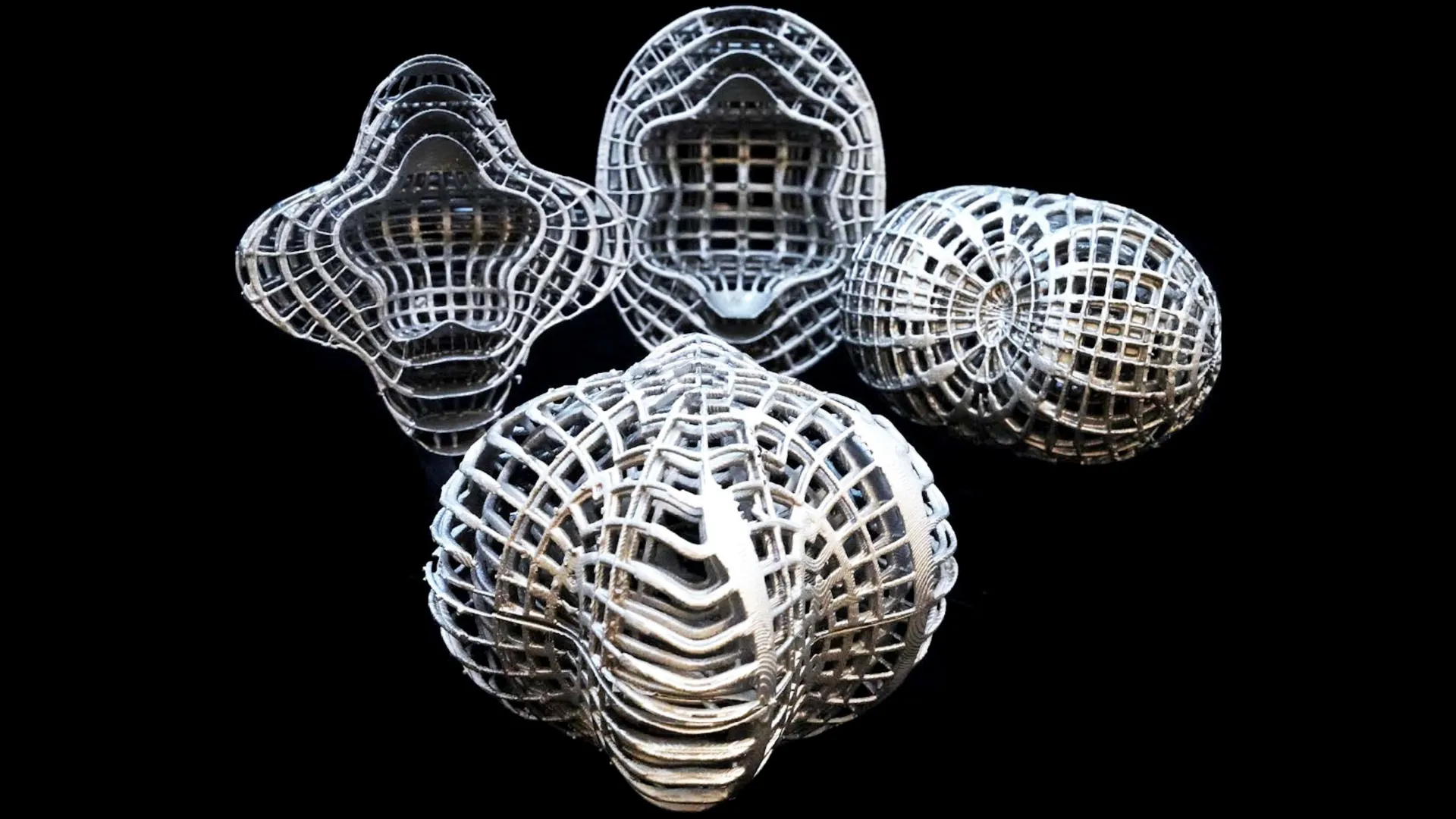
This combination ensures that the light is not only intensely concentrated at the center but also strictly "contained" within a microscopic volume. To prove this concept, the researchers engineered a three-dimensional singular dielectric resonator. This device was specifically designed to manifest these narwhal-shaped modes, successfully confining light in all three spatial dimensions simultaneously.
Experimental Validation and Record-Breaking Data
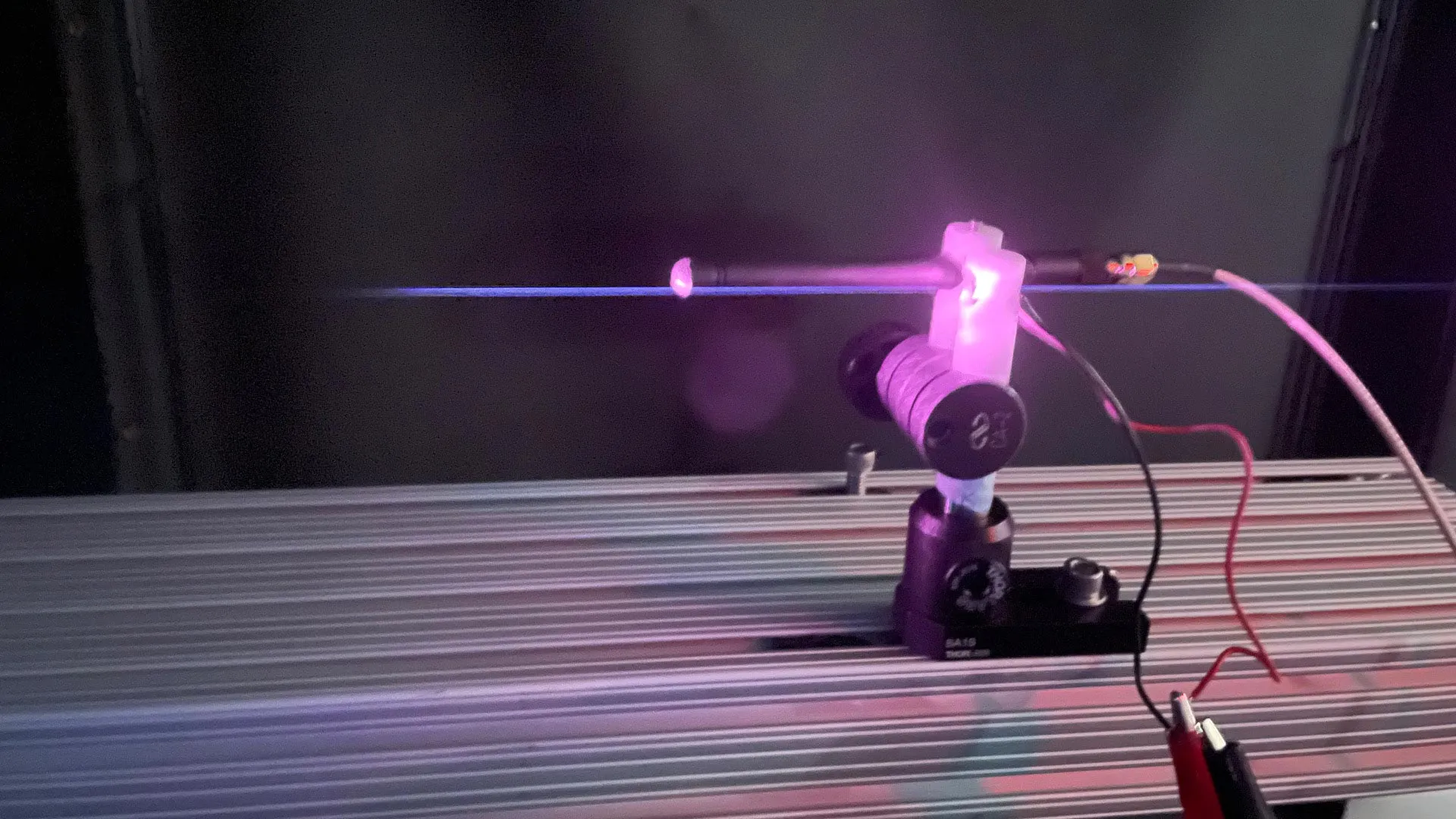
To verify their theoretical models, the team employed near-field scanning optical microscopy (NSOM). This technique allows researchers to map electromagnetic fields at the sub-wavelength scale by moving a tiny probe just nanometers above the surface of a sample.
The experimental results were staggering. The researchers observed the predicted power-law growth and the subsequent exponential decay with high precision. The most significant metric recorded was the "mode volume"—a measure of how much space the light occupies. The Peking University team achieved an ultrasmall mode volume of just $5 times 10^-7 lambda^3$ (where $lambda$ is the wavelength of the light).
To put this in perspective, traditional optical resonators rarely achieve mode volumes smaller than $1 lambda^3$ without significant losses. The Peking University resonator compressed light into a space millions of times smaller than a standard cubic wavelength. This represents a world-record level of confinement for lossless dielectric materials, effectively proving that the "heat-loss barrier" of plasmonics can be bypassed.
The Singular Optical Microscope: A New Frontier in Imaging
The practical applications of narwhal-shaped wavefunctions were immediately evident in the field of microscopy. The team utilized the extreme localization of these fields to develop what they call the "Singular Optical Microscope."
Traditional optical microscopes are limited by the same diffraction laws that hinder photonic chips, typically reaching a resolution limit of about 200 nanometers. While advanced techniques like STED (Stimulated Emission Depletion) or PALM (Photoactivated Localization Microscopy) have surpassed this, they often require complex fluorescent tagging or high-power lasers that can damage biological samples.
The Singular Optical Microscope works by exciting the eigenmodes of singular dielectric cavities. Because the resulting electromagnetic field is so tightly confined, any tiny object that enters the field causes a massive, measurable shift in the cavity’s resonance. This allows the microscope to "see" features that are far smaller than the wavelength of the light being used.
The researchers demonstrated an unprecedented spatial resolution of $lambda/1000$. In experimental trials, they successfully imaged deep-subwavelength patterns, including the letters "PKU" (Peking University) and "SFM," with clarity that was previously unattainable with standard dielectric optical systems.
Chronology of the Breakthrough
The development of singulonics did not happen in a vacuum but is the result of years of iterative research in nanophotonics:
- Late 20th Century: The dominance of the Abbe diffraction limit leads to the belief that optical devices will always be larger than electronic ones.
- Early 2000s: The "Plasmonic Boom" occurs. Researchers use gold and silver to squeeze light, but the "thermal wall" is identified as a major roadblock for practical computing.
- 2015-2022: Ren-Min Ma’s group at Peking University begins investigating dielectric resonators, looking for ways to mimic plasmonic confinement without the metal.
- Early 2024: The team publishes their findings on the singular dispersion equation in Nature, establishing the theoretical groundwork for lossless extreme confinement.
- Mid-2024: The discovery of "narwhal-shaped wavefunctions" is detailed in eLight, providing the physical explanation for how these fields are structured.
- Late 2024: Experimental demonstration of the $lambda/1000$ resolution microscope and the $5 times 10^-7 lambda^3$ mode volume confirms the theory’s viability.
Industry and Academic Response
The scientific community has reacted with significant interest to the Peking University findings. While official statements from industrial chipmakers like TSMC or Intel are pending further peer-reviewed integration studies, academic peers have noted the "elegant simplicity" of moving from lossy metals to singular dielectrics.
Dr. Ren-Min Ma, the lead researcher, noted in the study’s conclusion that the discovery of narwhal-shaped wavefunctions provides a "fundamental building block" for future nanophotonics. Analysts suggest that if these dielectric resonators can be integrated into standard CMOS (Complementary Metal-Oxide-Semiconductor) manufacturing processes, it could lead to a revolution in "on-chip" optical communications, where light replaces electricity for moving data between processor cores.
The Birth of "Singulonics" and Future Implications
The researchers have termed this new field "singulonics," a portmanteau of "singularity" and "photonics." The emergence of singulonics could have profound implications across several high-tech sectors:
1. Ultra-Efficient Information Processing
As traditional electronic circuits approach their physical limits regarding heat and speed, singulonics offers a path forward. By confining light into spaces as small as electronic transistors without generating excess heat, engineers could create hybrid electro-optical chips that are significantly faster and more energy-efficient than current silicon-only designs.
2. Quantum Optics and Computing
Quantum computing relies on the interaction between light and matter at the level of single photons and atoms. The ability to confine light into an ultrasmall mode volume ($5 times 10^-7 lambda^3$) dramatically increases the "coupling strength" between a photon and a quantum emitter (like a quantum dot). This could lead to more stable quantum gates and more efficient quantum memory storage.
3. Super-Resolution Imaging and Bio-Sensing
The Singular Optical Microscope represents a major step forward for non-invasive biological imaging. Because it does not require metallic tips or high-power lasers that generate heat, it could be used to image live viruses, proteins, and DNA strands in their natural state with $lambda/1000$ resolution, providing insights into molecular biology that were previously hidden.
4. Sensing and Environmental Monitoring
The sensitivity of singular dielectric resonators to their environment makes them ideal for chemical sensing. Even a single molecule landing on a "singular" resonator could trigger a detectable change in light frequency, allowing for the creation of sensors capable of detecting pollutants or pathogens at the single-molecule level.
Conclusion
The work of Ren-Min Ma and his team at Peking University represents a pivot point in the history of optics. By moving past the limitations of plasmonics and the constraints of the diffraction limit, they have provided the mathematical and experimental tools necessary to shrink photonic devices to the nanoscale. The discovery of narwhal-shaped wavefunctions and the establishment of the singulonics framework suggest that the future of technology may not just be electronic, but a seamless, high-speed integration of light and matter at the smallest possible scales. As the industry looks toward the post-Moore’s Law era, singulonics stands as a primary candidate for the next great leap in computing and imaging.