Water is the most abundant and essential liquid on Earth, yet from a thermodynamic and structural perspective, it remains one of the most enigmatic substances in the known universe. While most liquids become denser as they cool and eventually solidify, water reaches its maximum density at approximately 4 degrees Celsius (39.2 degrees Fahrenheit) before beginning to expand as it approaches its freezing point. This counterintuitive expansion is why ice floats on the surface of lakes and why pipes burst in the winter, yet for decades, the precise molecular mechanism driving these anomalies has been the subject of intense scientific debate. Recently, a team of researchers at Osaka University has achieved a significant breakthrough by applying artificial intelligence to the study of "supercooled" water—liquid water that remains in a fluid state even below its standard freezing point. Their findings, published in the journal Communications Chemistry, provide a new, unified framework for understanding the microscopic structural changes that govern water’s behavior under extreme conditions.
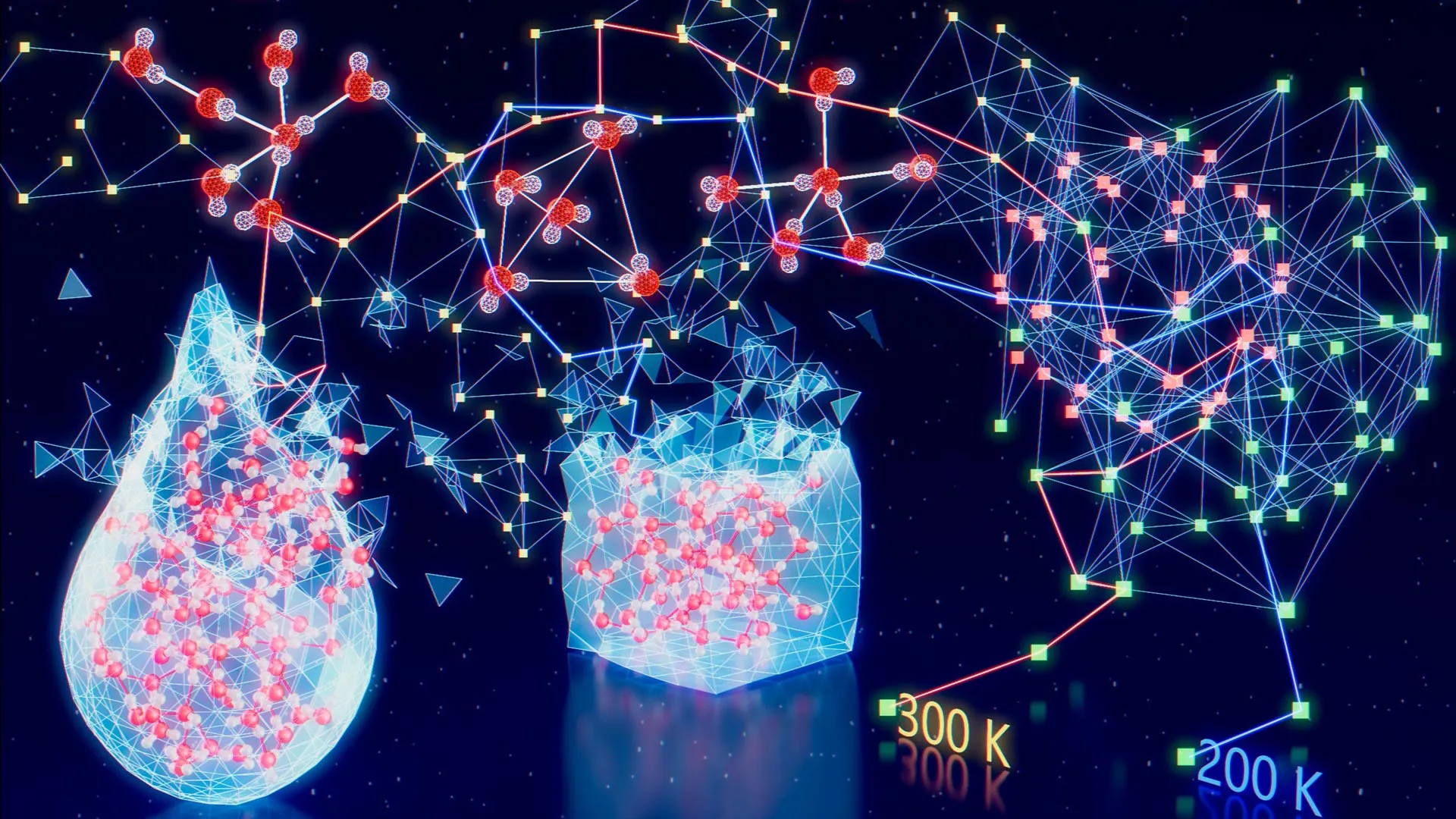
The research focuses on the transition between two hypothesized states of liquid water: High-Density Liquid (HDL) and Low-Density Liquid (LDL). By employing sophisticated neural networks to analyze molecular dynamics simulations, the Osaka team has identified the most effective "descriptors" or mathematical ways to measure how water molecules arrange themselves. This AI-driven approach has finally allowed scientists to compare various competing models of water structure on an even playing field, potentially resolving long-standing contradictions in the field of physical chemistry.
The Thermodynamic Mystery of the "Two-State" Model
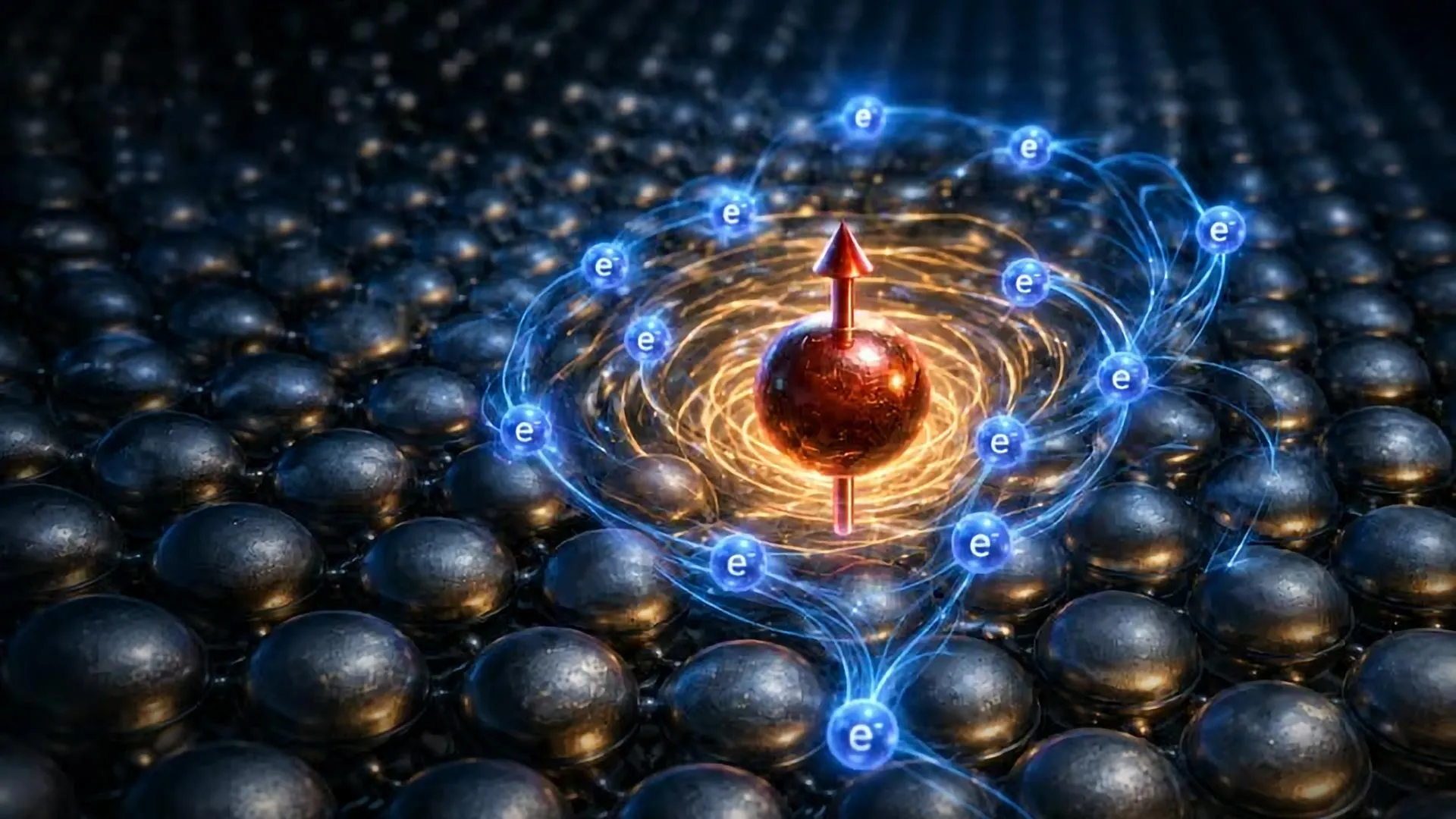
To understand the significance of the Osaka University study, one must first consider the unique nature of the water molecule. Composed of two hydrogen atoms and one oxygen atom, water is a polar molecule capable of forming a complex network of hydrogen bonds. These bonds are highly directional and relatively strong, leading to the formation of a tetrahedral arrangement where each water molecule seeks to connect with four neighbors.
In most liquids, thermal energy keeps molecules moving randomly, and as temperature drops, gravity and intermolecular forces pull them closer together, increasing density. Water, however, is caught in a tug-of-war between two structural tendencies. The "Two-State Model," a theory that has gained significant traction since the late 20th century, suggests that liquid water is actually a fluctuating mixture of two distinct local structures. The High-Density Liquid (HDL) state is characterized by a more disordered, compact arrangement where molecules are pushed closer together, often compromising the ideal tetrahedral shape. Conversely, the Low-Density Liquid (LDL) state features a highly ordered, open, and "roomy" tetrahedral lattice.
As water cools toward its freezing point, and especially as it enters the supercooled regime, the LDL structure becomes increasingly dominant. Because the LDL arrangement takes up more space than the disordered HDL state, the water expands. While this theory explains many of water’s "weird" properties—such as its high heat capacity and unusual viscosity—verifying it has proven difficult because the transition between these states happens on a picosecond timescale and at microscopic dimensions that are difficult to observe directly.
The Challenge of Supercooling and Nucleation
Supercooling occurs when water is purified of all "nucleation sites"—the microscopic impurities, dust particles, or surface irregularities that typically trigger the formation of ice crystals. In the absence of these sites, water can remain liquid at temperatures far below 0 degrees Celsius. In laboratory settings, scientists have managed to keep water liquid at temperatures as low as -40 degrees Celsius at atmospheric pressure.
This supercooled state is where water’s anomalies become most extreme. As the temperature drops, the fluctuations between HDL and LDL become more pronounced, and the physical properties of the liquid begin to diverge sharply from those of "normal" liquids. However, studying these structures requires complex computer simulations known as molecular dynamics (MD). These simulations produce massive amounts of data regarding the positions and trajectories of thousands of molecules.
For years, researchers have developed various "structural descriptors"—mathematical formulas used to quantify the local arrangement of molecules—to distinguish between LDL and HDL. Some focus on the "bond order" (the angles between molecules), while others look at the "local density" (the distance to the nearest neighbors). Because these 16 or more different descriptors were developed independently, scientists had no objective way to determine which one most accurately reflected the true physical reality of the water. This is where the Osaka University team intervened with artificial intelligence.
AI as a Tool for Molecular Cognition
The researchers, led by corresponding author Kang Kim and senior author Nobuyuki Matubayasi, recognized that the problem of identifying water structures was essentially a pattern recognition task—one perfectly suited for machine learning. They developed a neural network model designed to ingest the raw data from molecular dynamics simulations and "learn" to classify the structures.
"Past studies have shown that using machine learning to classify and understand structural data is effective," explained Professor Kang Kim. "We specifically wanted to incorporate a neural network model into this study to evaluate how accurate the descriptors were at capturing key structural information, in a way that is like human cognition."
The AI was trained on data representing water at various temperatures and pressures. By processing the 16 most commonly used structural descriptors, the neural network could determine which measurements were the most "informative." In essence, the AI acted as an impartial judge, evaluating which mathematical models were best at identifying the "fingerprints" of HDL and LDL structures.
Through a process of iterative trial and error, the system identified that certain descriptors, particularly those that account for the second coordination shell (the molecules surrounding the immediate neighbors of a central water molecule), were far more effective at distinguishing the two states than simpler, first-shell measurements. This suggests that the "memory" or influence of a water molecule’s orientation extends further into the liquid than previously understood.
A Chronology of Water Research Breakthroughs
The Osaka University study represents the latest chapter in a century-long quest to understand the liquid that covers 71% of our planet. The journey to this AI-driven discovery can be traced through several key milestones:
- 1892: Wilhelm Röntgen, the discoverer of X-rays, proposes the first "two-state" hypothesis, suggesting that liquid water is a mixture of "ice-like" and "liquid-like" molecules.
- 1970s: The development of the first computer simulations of water, such as the Stillinger-Rahman potential, allows scientists to begin modeling molecular interactions.
- 1992: Researchers at Boston University, led by H. Eugene Stanley, propose the "Liquid-Liquid Critical Point" hypothesis, suggesting that at very low temperatures and high pressures, water undergoes a phase transition between two different liquid densities.
- 2010s: Advanced X-ray lasers and spectroscopic techniques allow for the first femtosecond-scale observations of supercooled water, providing experimental evidence for the HDL and LDL fluctuations.
- 2024: The Osaka University team utilizes deep learning to unify the various structural models, providing a definitive toolset for future research.
Data Analysis: The Performance of Structural Descriptors
In the study published in Communications Chemistry, the researchers provided detailed data on the performance of the 16 descriptors. The AI evaluated these models based on their "classification accuracy"—the ability to correctly assign a local molecular arrangement to either the HDL or LDL category.
The data revealed that "tetrahedral bond order" (denoted as q), a measure of how closely four neighboring molecules resemble a perfect tetrahedron, remains a strong indicator but is insufficient on its own at higher temperatures. The AI found that "local density" descriptors were highly effective at high pressures, whereas "interstitialcy" descriptors—which track molecules that are caught between the standard shells of the network—were crucial for understanding the transition zones.
By ranking these descriptors, the Osaka team has provided a roadmap for other scientists. Instead of choosing a descriptor based on tradition or ease of calculation, researchers can now select the most "information-rich" tool for their specific temperature and pressure range.
Official Responses and Scientific Impact
The publication of this research has been met with significant interest from the international physical chemistry community. While the authors themselves emphasize the foundational nature of the work, external analysts suggest the implications could be far-reaching.
"The use of neural networks to bypass the ‘human bias’ in choosing structural descriptors is a major step forward," says a theoretical chemist not involved in the study. "It moves us closer to a universal theory of liquids, not just for water, but for other substances that exhibit anomalous behavior, such as silicon and germanium."
The Osaka team believes their framework is not limited to water. "The network used what it had learned to compare how 16 descriptors differentiated between LDL and HDL structures at different temperatures," reported Nobuyuki Matubayasi. "In this way, we determined the most efficient descriptors." This methodology can now be applied to other complex fluids, including ionic liquids and molten salts used in next-generation battery technology.
Broader Implications: From Climate Science to Cryopreservation
The ability to accurately model and understand supercooled water is not merely an academic exercise; it has profound implications for several practical fields:
- Meteorology and Climate Change: Supercooled water droplets are a primary component of high-altitude clouds. Understanding how these droplets freeze or remain liquid is essential for accurate climate modeling and for predicting the formation of hail and aircraft icing.
- Cryopreservation: In medicine, the preservation of organs and tissues requires cooling them to extremely low temperatures. The formation of ice crystals can destroy cell membranes. By understanding the LDL/HDL transition, scientists may develop better "cryoprotectants" that encourage water to remain in a "glassy" or supercooled liquid state, preventing cellular damage.
- Nanotechnology: When water is confined in carbon nanotubes or other microscopic spaces, its "supercooled" properties can manifest even at room temperature. The Osaka study provides the tools to design better nanofluidic devices.
- Astrobiology: Many of the moons in our solar system, such as Jupiter’s Europa, are thought to harbor vast oceans of liquid water beneath icy crusts. These environments are often under extreme pressure and at temperatures that would typically cause freezing. Understanding the structural stability of supercooled water helps scientists assess the habitability of these distant worlds.
Conclusion
The research conducted at Osaka University marks a pivotal moment in the study of condensed matter physics. By bridging the gap between raw molecular data and human-understandable structural models, the AI system has provided a "decoder ring" for the secret language of water molecules. As scientists continue to explore the "no-man’s land" of supercooled water, they now have a verified set of tools to guide their way. The mystery of why water behaves so differently from every other liquid is finally being unraveled, one neural network layer at a time, promising a future where we can predict and manipulate the properties of the world’s most vital substance with unprecedented precision.