A team of researchers from Carnegie Mellon University, in collaboration with experts from Stanford University and Purdue University, has published a landmark study in the journal Nature detailing a transformative method for controlling heat at the nanoscale. By utilizing specifically engineered metamaterials, the researchers have provided the first robust experimental evidence that radiative heat transfer can be manipulated and significantly amplified across microscopic gaps, achieving efficiencies up to four times greater than previously observed in similar systems. This discovery marks a pivotal shift in the field of thermal science, moving from the passive observation of heat dissipation to the active engineering of thermal energy with a precision once reserved only for electricity and light.
The Evolution of Thermal Physics: From Macro to Nano
To appreciate the significance of this breakthrough, one must understand the traditional limitations of thermal physics. For over a century, the study of radiative heat transfer—the movement of energy via electromagnetic waves—has been governed by Max Planck’s law of blackbody radiation. Formulated in 1900, Planck’s law provides a theoretical limit on how much energy an object can radiate based on its temperature. While this law holds true for objects separated by macroscopic distances, it begins to break down when the gap between objects is smaller than the wavelength of the thermal radiation itself.
In these "near-field" environments, where distances are measured in hundreds of nanometers—far thinner than a human hair—heat does not merely radiate; it tunnels. This phenomenon, known as near-field radiative heat transfer (NFRHT), allows energy to bypass the traditional limits of blackbody radiation. While scientists have theorized about the potential to harness this effect for decades, the practical challenge of maintaining stable, nanoscale gaps between two surfaces while measuring heat flow has historically hindered experimental progress. The research led by Carnegie Mellon University represents a successful bridge between these long-standing theoretical predictions and tangible, reproducible experimental results.
Engineering the Near-Field: The Role of Metamaterials
The core innovation of the study lies in the use of metamaterials—artificial structures designed to have properties not found in naturally occurring materials. Unlike standard metals or insulators, metamaterials are defined by their geometric patterns. In this experiment, the research team, led by Sheng Shen, a professor of mechanical engineering at Carnegie Mellon University, fabricated microscopic gold structures in repeating patterns onto ultra-thin membranes.
These gold-patterned surfaces were positioned face-to-face, separated by a gap of only a few hundred nanometers. The results were immediate and profound. The presence of the engineered patterns allowed heat to flow between the membranes at a rate four times higher than what is possible with non-patterned materials. This enhancement is not a result of simply increasing the surface area or adding more physical pathways for heat. Instead, it is the result of a sophisticated interaction between the metamaterial’s geometry and the material’s internal energy states.
"Unlike conventional materials, metamaterials are built with tiny, repeating patterns that interact with energy in precise ways," explained Professor Sheng Shen. "We patterned microscopic gold structures onto thin membranes and positioned them face-to-face across a nanoscale gap. This increased heat transfer by as much as four times compared to similar setups without metamaterials, which is far beyond what traditional physics would predict at larger distances."
The Mechanism of Resonance: Surface Phonon Polaritons
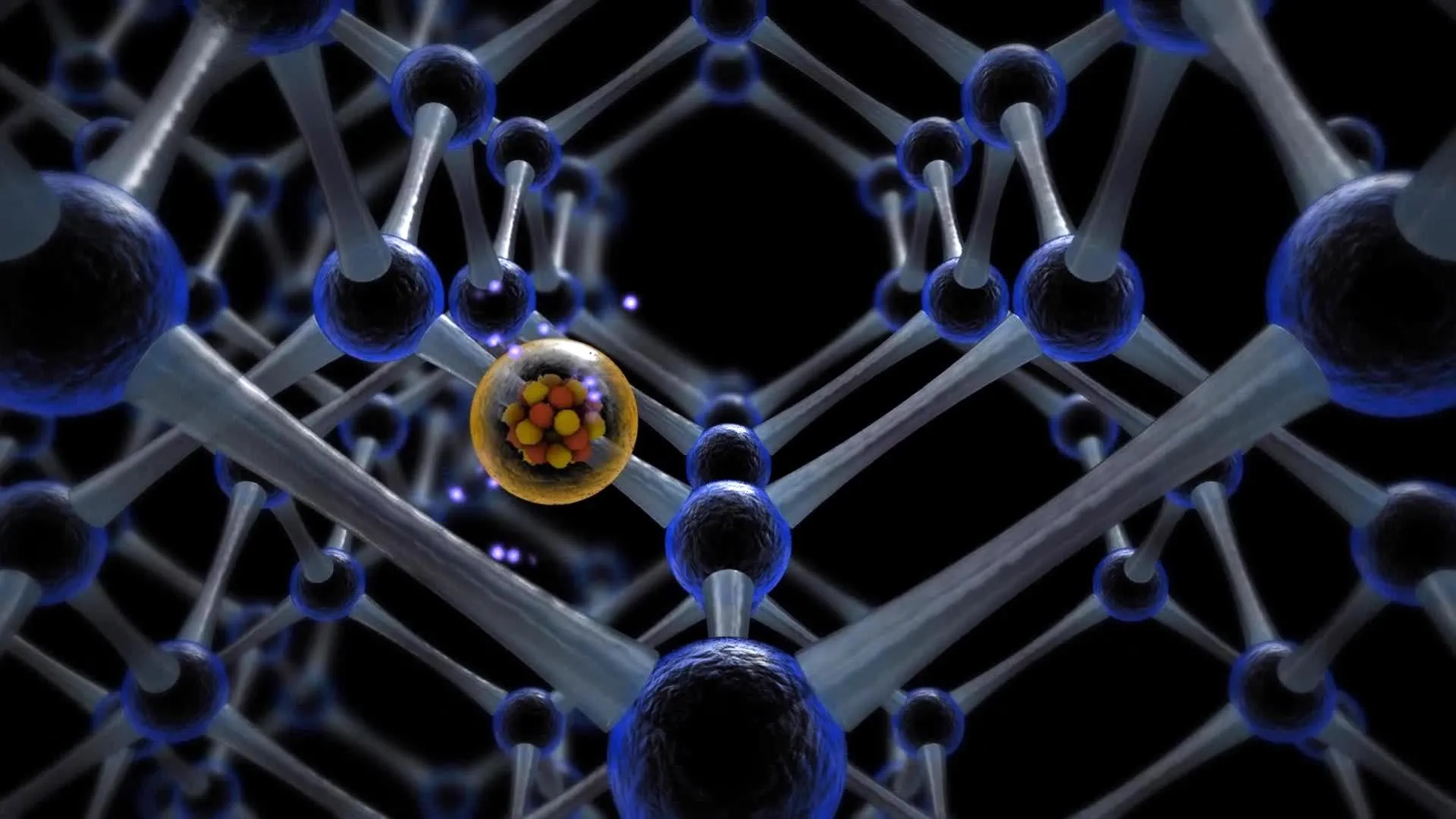
The scientific complexity of the study centers on a phenomenon known as surface phonon polaritons (SPhPs). These are quasi-particles resulting from the strong coupling of electromagnetic waves with the lattice vibrations (phonons) of a material. In natural materials, these vibrations occur at specific, fixed frequencies. However, by introducing gold metamaterial patterns, the researchers were able to "tune" these vibrations.
When the two patterned membranes are brought close together, their respective surface phonon polaritons begin to interact, creating a resonance effect. This resonance acts as a bridge, allowing thermal energy to transition from one surface to the other with minimal resistance. Zexiao Wang, a PhD student in Professor Shen’s group and co-first author of the study, noted that the gold structures do not just facilitate heat movement; they actively amplify it.
"Rather than simply adding more pathways for heat, the gold structures interact with naturally occurring energy waves in the material, known as surface phonon polaritons, creating a resonance effect," Wang said. "These coupled vibrations allow energy to move more freely and efficiently across the gap."
This "cooperative effect," as described by the team, means that the physical structure of the metamaterial and the inherent properties of the substrate work in a symbiotic relationship to push heat transfer rates to record-breaking levels.
A Chronology of Discovery: Overcoming Experimental Hurdles
The journey to this discovery has been a multi-decade endeavor for the scientific community.
- 1900: Max Planck establishes the laws of blackbody radiation, setting the "speed limit" for radiative heat transfer in the far-field.
- 1971: Physicists Polder and Van Hove theoretically predict that heat transfer could exceed the Planck limit if objects are brought within a distance smaller than the thermal wavelength.
- 2000s: Early experiments begin to confirm the existence of near-field enhancement, but controlling the effect remains difficult due to the fragility of nanoscale gaps.
- 2010s: Researchers begin exploring "metasurfaces" to manipulate light, leading to the hypothesis that similar structures could manipulate heat.
- 2024: The Carnegie Mellon-led team successfully integrates gold metamaterials with near-field measurements, proving that heat transfer can be intentionally boosted by 400% through structural engineering.
The experimental setup required extreme precision. Maintaining a consistent gap of a few hundred nanometers across a relatively large surface area is a significant engineering feat, as even the slightest tilt or vibration could cause the surfaces to touch, resulting in conductive heat transfer rather than the radiative transfer the team sought to measure.
Supporting Data and Quantitative Impact
The data produced by the study highlights a dramatic shift in thermal efficiency. In standard "far-field" conditions (distances greater than several microns), the heat transfer between two surfaces is limited by the Stefan-Boltzmann law. However, as the gap narrows below 500 nanometers, the team observed an exponential rise in energy exchange.
Key data points from the research include:
- Enhancement Factor: A 4x (400%) increase in heat transfer compared to non-patterned surfaces at the same distance.
- Gap Distance: The experiments focused on gaps ranging from 100 to 500 nanometers.
- Material Composition: The use of gold (Au) on silicon nitride (SiN) membranes provided the necessary electrical and thermal properties to sustain resonance.
- Comparison: The observed heat flux was several orders of magnitude higher than the theoretical blackbody limit for far-field radiation.
These figures suggest that for industries where heat is a limiting factor, such as high-speed computing, the ability to increase heat removal by 400% could represent a generational leap in performance capability.
Broader Implications for the Electronics Industry
As the semiconductor industry pushes toward smaller and denser transistor layouts, thermal management has become the primary obstacle to further miniaturization. When electronic components are packed tightly, they generate "hot spots" that can degrade performance or lead to hardware failure. Current cooling methods—such as heat sinks, fans, and liquid cooling—rely on macro-scale conduction and convection.
The ability to engineer heat transfer at the nanoscale offers a new toolkit for chip designers. By integrating metamaterial structures directly into the architecture of computer chips, engineers could potentially "wick" heat away from sensitive components through the near-field effect, even when there is no physical contact between layers. This could extend the life of Moore’s Law by allowing for 3D-stacked chips that remain cool despite their density.
Revolutionizing Renewable Energy: Thermophotovoltaics
Beyond electronics, the findings have profound implications for the energy sector, specifically in the development of thermophotovoltaic (TPV) systems. TPVs are a class of heat engines that convert thermal radiation directly into electricity using photovoltaic cells, similar to how solar panels convert sunlight.
The efficiency of TPV systems is currently limited by the amount of radiation that can be transferred from the heat source to the cell. By applying the metamaterial resonance discovered by the CMU team, TPV systems could achieve much higher power densities. This would make it possible to capture waste heat from industrial furnaces or concentrated solar power plants and convert it into usable electricity with unprecedented efficiency, contributing significantly to global decarbonization efforts.
Sensing and National Security Applications
The study also notes the potential for advanced infrared (IR) sensing. Because the metamaterials allow for such precise control over thermal signals, they could be used to create ultra-sensitive IR detectors. These sensors would have applications in:
- Environmental Monitoring: Detecting trace gases or subtle temperature changes in the atmosphere.
- Medical Imaging: Non-invasive thermal mapping of biological tissues at higher resolutions.
- Defense and Security: Enhanced night vision and thermal signatures for identifying objects in low-visibility environments.
Future Outlook: Engineering Heat Like Light
The research, supported by the Defense Threat Reduction Agency, the National Science Foundation, and the Air Force Office of Scientific Research, represents a shift in how scientists view thermal energy. For most of human history, heat has been seen as a byproduct to be managed or a waste to be discarded. This study suggests a future where heat is a resource to be directed.
"If heat can be engineered with the same precision as electricity or light, it may open the door to a new class of technologies built not just to withstand heat, but to harness it," Professor Shen concluded.
While the current experiments are confined to laboratory settings and nanoscale systems, the proof of concept is undeniable. The next phase of research will likely focus on scaling these metamaterial structures for industrial use and exploring different material combinations to further enhance the resonance effect. As the world moves toward more energy-intensive computing and greener power generation, the ability to control the "tunneling" of heat may become as fundamental to 21st-century engineering as the transistor was to the 20th.