


The global landscape of data processing is currently on the precipice of a paradigm shift, driven by the rapid evolution of quantum technology. While the field has historically been confined to the highly controlled environments of academic laboratories and advanced research facilities, a new study led by the California Polytechnic State University (Cal Poly) Physics Department signals a significant step toward making quantum systems more robust and applicable to real-world industrial challenges. The research, which explores the fundamental behavior of matter at the subatomic level, focuses on the innovative use of time-dependent magnetic fields to manipulate atoms, electrons, and photons in ways previously thought impossible.
The study, titled "Flux-Switching Floquet Engineering," was spearheaded by Cal Poly Physics Department Lecturer Ian Powell and student researcher Louis Buchalter. Their findings, recently published in the prestigious journal Physical Review B, provide a theoretical and mathematical framework for creating quantum states that do not exist in nature under static conditions. By periodically varying magnetic fields—a process known as Floquet engineering—the researchers have demonstrated that matter can be "driven" into new phases, potentially solving one of the most significant hurdles in quantum computing: system instability.
The Mechanics of Floquet Engineering and Quantum Matter
At the heart of the Cal Poly research is the concept of Floquet engineering, a method named after the 19th-century mathematician Gaston Floquet. In the context of modern physics, this technique involves taking a quantum system and subjecting it to a periodic "drive," such as a rapidly oscillating laser or, in the case of Powell and Buchalter’s work, a fluctuating magnetic field.
Traditionally, scientists have studied quantum materials in their ground states or equilibrium states—conditions where the material remains unchanged over time. However, Powell’s research shifts the focus to how materials behave when they are constantly in motion. "On a big-picture level, I would describe this as an advance in our understanding of how time-dependent control can create and organize new forms of quantum matter," Powell stated. He emphasized that the utility of a quantum material is not solely defined by its chemical composition, but by the temporal rhythm of the forces applied to it.
The research demonstrates that by carefully timing the application of magnetic fields, scientists can induce "driven quantum phases." These phases have no static counterpart, meaning they are entirely unique to the environment of the drive. This discovery is significant because it expands the "menu" of available quantum states that engineers can use to build the next generation of technology.
Addressing the Challenge of Quantum Noise and Stability
One of the primary obstacles preventing the widespread adoption of quantum computers is the delicacy of quantum bits, or qubits. Unlike classical bits, which represent information as either a 0 or a 1, qubits exist in a state of superposition, representing both simultaneously. This allows quantum computers to perform complex calculations at speeds that dwarf the capabilities of modern supercomputers. However, qubits are notoriously sensitive to their environment.
Minor fluctuations in temperature, electromagnetic interference, or physical vibrations—collectively referred to as "noise"—can cause a qubit to lose its quantum state, a process known as decoherence. When decoherence occurs, the calculation fails, leading to errors that are difficult to correct.
The findings from Powell and Buchalter suggest that Floquet engineering can be used to design quantum systems that are inherently more stable. By creating states with specific topological properties, the researchers believe they can shield quantum information from environmental disruptions. In these "topologically protected" states, the information is stored in the global structure of the system rather than in individual particles, making it much harder for localized noise to cause a total system failure.
Chronology of the Research and Academic Collaboration
The development of "Flux-Switching Floquet Engineering" represents a multi-year effort that highlights the "Learn by Doing" philosophy central to the Cal Poly curriculum. The project began with theoretical modeling led by Ian Powell, who sought to bridge the gap between abstract quantum mechanics and practical material science.
In 2024, Louis Buchalter joined the project as an undergraduate researcher. Over the course of the following year, Buchalter worked closely with Powell to map out the mathematical patterns and topological phase diagrams that define these new quantum states. The collaboration culminated in the 2025 publication of their findings in Physical Review B, a milestone that coincided with Buchalter earning his bachelor’s degree in physics.
Reflecting on the timeline of the project, Buchalter noted that the journey was far from linear. "I learned that research is rarely a straightforward process, often requiring persistence and creative problem solving," he said. The project not only contributed to the field of condensed matter physics but also served as a transformative educational experience for Buchalter, who is now transitioning to a Master of Science program in materials science and engineering at the University of Washington.
Mathematical Innovation: Mapping Higher-Dimensional Patterns
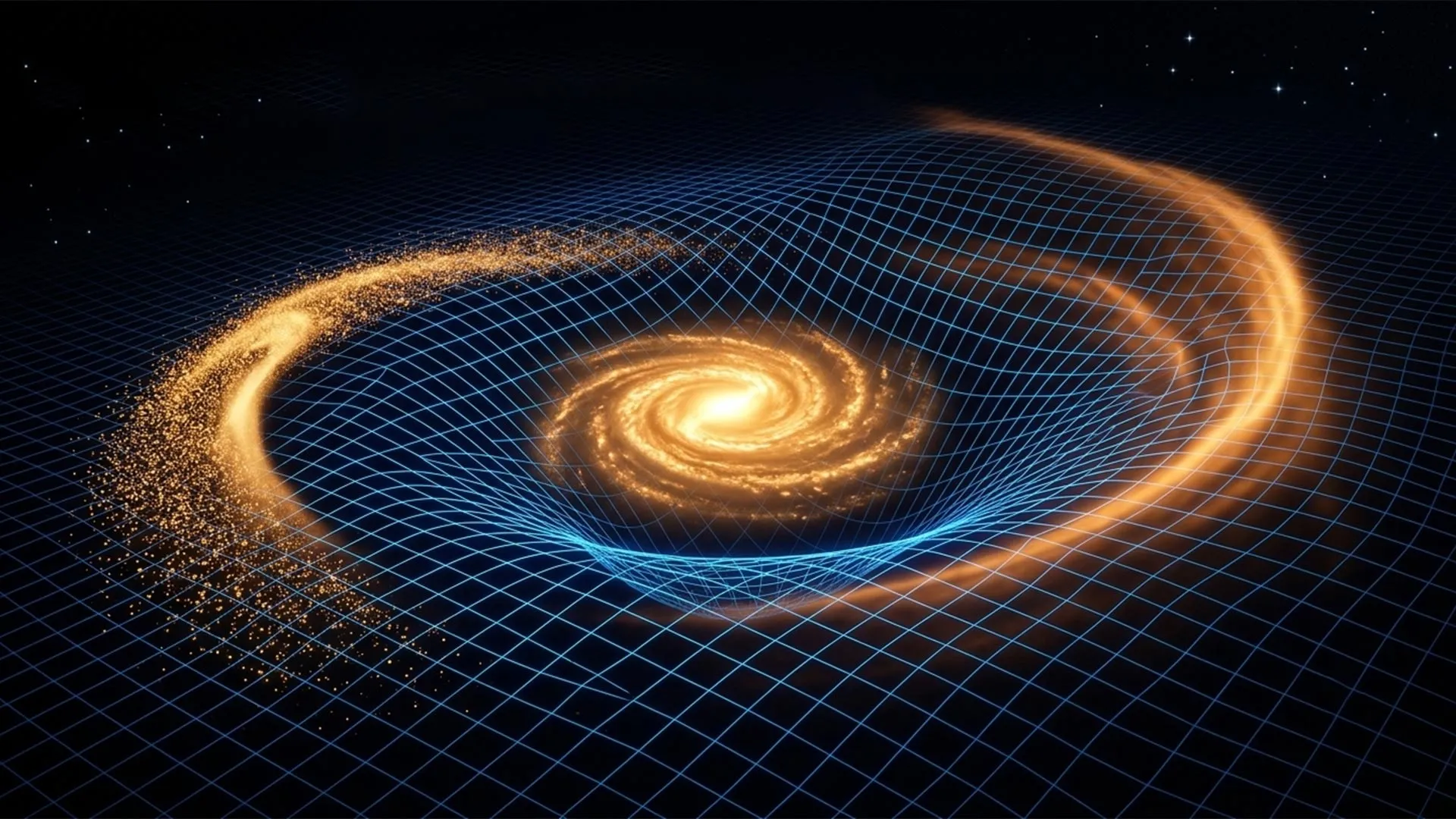
A particularly striking aspect of the Cal Poly study is the identification of a mathematical organizing principle that mirrors patterns usually found in higher-dimensional quantum systems. In physics, "dimensions" often refer to the number of coordinates needed to describe a system. While we live in a three-dimensional world, quantum systems can mathematically behave as if they exist in four, five, or more dimensions.
Powell and Buchalter found that by driving a relatively simple system with changing magnetic fields, they could replicate the complex physics of these higher-dimensional environments. This suggests that researchers do not necessarily need incredibly complex hardware to study advanced quantum phenomena; instead, they can use time as a "synthetic dimension."
The team utilized topological phase diagrams to visualize these findings. These diagrams act as a roadmap for scientists, showing which conditions of a magnetic field will produce a stable, "protected" quantum phase. By following this map, future experimentalists can navigate the complex landscape of quantum matter with greater precision.
Potential Industry Implications and Long-term Outlook
While the immediate impact of the research is theoretical, the long-term implications for industry are profound. Quantum technology is expected to revolutionize several high-stakes sectors:
- Pharmaceuticals: Quantum simulations could allow drug companies to model molecular interactions at an atomic level, drastically reducing the time and cost of drug discovery.
- Finance: The ability to process vast datasets could lead to more accurate risk assessments and the optimization of global trading portfolios.
- Aerospace and Manufacturing: Advanced quantum sensors could improve navigation systems and material stress testing in ways that classical sensors cannot match.
- Cryptography: Quantum computers will eventually have the power to break current encryption methods, necessitating the development of quantum-resistant security protocols.
Despite these possibilities, Powell remains grounded regarding the current stage of the technology. "The most direct industry relevance of our study is to quantum computing and quantum simulation, rather than to a specific end-use sector at this stage," he explained. He noted that any impact on finance or aerospace would likely be an indirect result of the long-term development of more reliable quantum hardware.
The next steps for this research involve experimental validation. While Powell and Buchalter have provided the mathematical proof, the concepts must now be tested in physical environments, such as ultracold-atom experiments. In these setups, atoms are cooled to temperatures near absolute zero, allowing scientists to observe quantum effects without the interference of heat.
The Future of Quantum Research and Education
The success of the Cal Poly study also underscores the importance of involving students in high-level scientific inquiry. For Louis Buchalter, the experience has shaped his career trajectory toward national laboratories and the development of quantum devices. "I became fascinated with the field of quantum materials through my experience," Buchalter said, expressing his intent to continue studying how quantum matter can be integrated into electronic and photonic devices.
As the scientific community continues to explore the boundaries of Floquet engineering, the work of Powell and Buchalter serves as a critical building block. By demonstrating that time-dependent control can organize matter into new, useful forms, they have opened a new door in the quest for a stable and powerful quantum computer.
The transition from "static" to "driven" quantum systems may very well be the key to unlocking the full potential of the quantum age. As research moves from the theoretical pages of Physical Review B into the experimental labs of the University of Washington and beyond, the patterns identified at Cal Poly will likely play a central role in the architecture of future technologies. For now, the study stands as a testament to the power of temporal control in the microscopic world, proving that in the realm of quantum physics, how a material moves through time is just as important as what the material is made of.













Leave a Reply