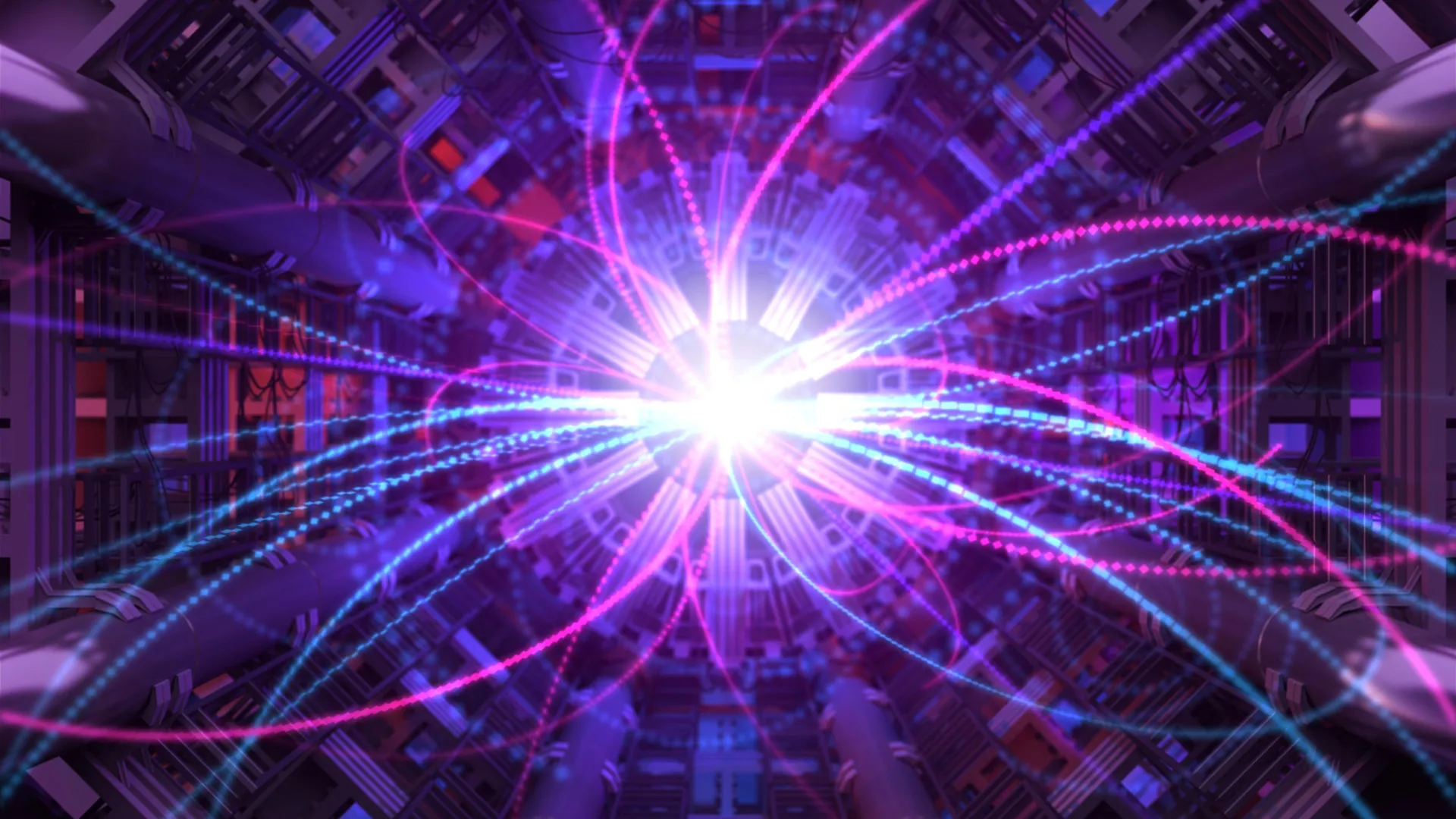
Recent findings from high-energy particle physics research conducted at the European Organization for Nuclear Research (CERN) in Geneva suggest that the scientific community may be approaching a historic breakthrough in our understanding of the universe. Data emerged from the Large Hadron Collider (LHC), specifically from the LHCb experiment, indicating that the behavior of certain sub-atomic particles deviates from the predictions of the Standard Model. If these results are confirmed through further testing and peer review, they could necessitate the most significant revision of theoretical physics in over half a century, potentially opening the door to a "new physics" that explains mysteries currently beyond our reach, such as dark matter and the nature of gravity.
The Standard Model of particle physics has served as the definitive framework for understanding the fundamental building blocks of matter and the forces that govern them since the 1970s. It classifies all known elementary particles—such as quarks, which make up protons and neutrons, and leptons, such as the electron—and describes three of the four fundamental forces: electromagnetism, the weak nuclear force, and the strong nuclear force. However, despite its predictive success, physicists have long acknowledged that the Standard Model is incomplete. It notably excludes gravity, which is described by General Relativity, and provides no explanation for dark matter or dark energy, which together constitute approximately 95% of the energy-matter content of the universe. The quest to find "cracks" in this model is the primary mission of the LHC, a massive scientific instrument housed in a 27-kilometer circular tunnel beneath the Franco-Swiss border.
The Mechanics of the LHCb Discovery
The recent anomaly centers on the behavior of B mesons, which are unstable sub-atomic particles composed of a bottom (or "beauty") quark and an antiquark. In the high-energy environment of the LHC, protons are accelerated to near the speed of light and collided, creating a shower of secondary particles, including B mesons. These particles are short-lived and quickly decay into other, more stable particles. The LHCb experiment, one of the four major detectors at the facility, is specifically designed to study these decays with extreme precision.
The specific process under scrutiny is known as an "electroweak penguin decay." In particle physics, a "penguin diagram" is a visual representation of a complex quantum process where a quark changes its flavor—in this case, a beauty quark transforming into a strange quark. This specific decay is exceptionally rare; according to the Standard Model, it should occur only once for every million B meson decays. The process results in the emission of a kaon, a pion, and a pair of muons. By meticulously analyzing the angles, energies, and frequencies of these decay products from a dataset of 650 billion B meson decays recorded between 2011 and 2018, researchers found a persistent discrepancy. The rate and characteristics of the decay do not align with the mathematical expectations of the Standard Model.
Statistical Significance and the Five-Sigma Threshold
In the realm of particle physics, discoveries are measured by "standard deviations," or sigma ($sigma$), which represent the statistical confidence of a result. The recent findings from the LHCb experiment show a tension of four standard deviations ($4sigma$) from the Standard Model. To put this in perspective, a $4sigma$ result implies that there is only a 1 in 16,000 chance that the observed data is a mere statistical fluke or a random fluctuation.
While a 1 in 16,000 chance may seem definitive to a layperson, the scientific community maintains a much more rigorous "gold standard" for declaring a formal discovery: five standard deviations ($5sigma$). A $5sigma$ result represents a 1 in 1.7 million chance of the data being a fluke. The current $4sigma$ result is considered "compelling evidence" but falls just short of a definitive claim. However, the case for new physics is bolstered by independent corroboration. Earlier in 2025, the Compact Muon Solenoid (CMS) experiment—another major detector at the LHC—published results that, while less precise than those of LHCb, showed a similar trend. The alignment of data from two independent experiments significantly increases the likelihood that the anomaly is a real physical phenomenon rather than an experimental error.
A Chronology of the Standard Model and the LHC
To understand the weight of this potential discovery, one must look at the timeline of modern physics. The Standard Model was formalized in the mid-1970s, successfully predicting the existence of several particles before they were experimentally observed, including the top quark (1995), the tau neutrino (2000), and most famously, the Higgs boson, which was discovered at the LHC in 2012.
The LHCb experiment itself has a long history, with its conceptual origins dating back to 1994. Since the LHC began operations in 2008, it has undergone several "runs" at increasing energy levels. The data currently causing a stir was collected during "Run 1" and "Run 2" of the collider. Throughout these decades of testing, the Standard Model has survived every challenge, withstanding increasingly rigorous measurements. The emergence of a $4sigma$ tension is the first time in fifty years that the model has shown a consistent and significant point of failure that cannot be easily explained away by experimental uncertainty.
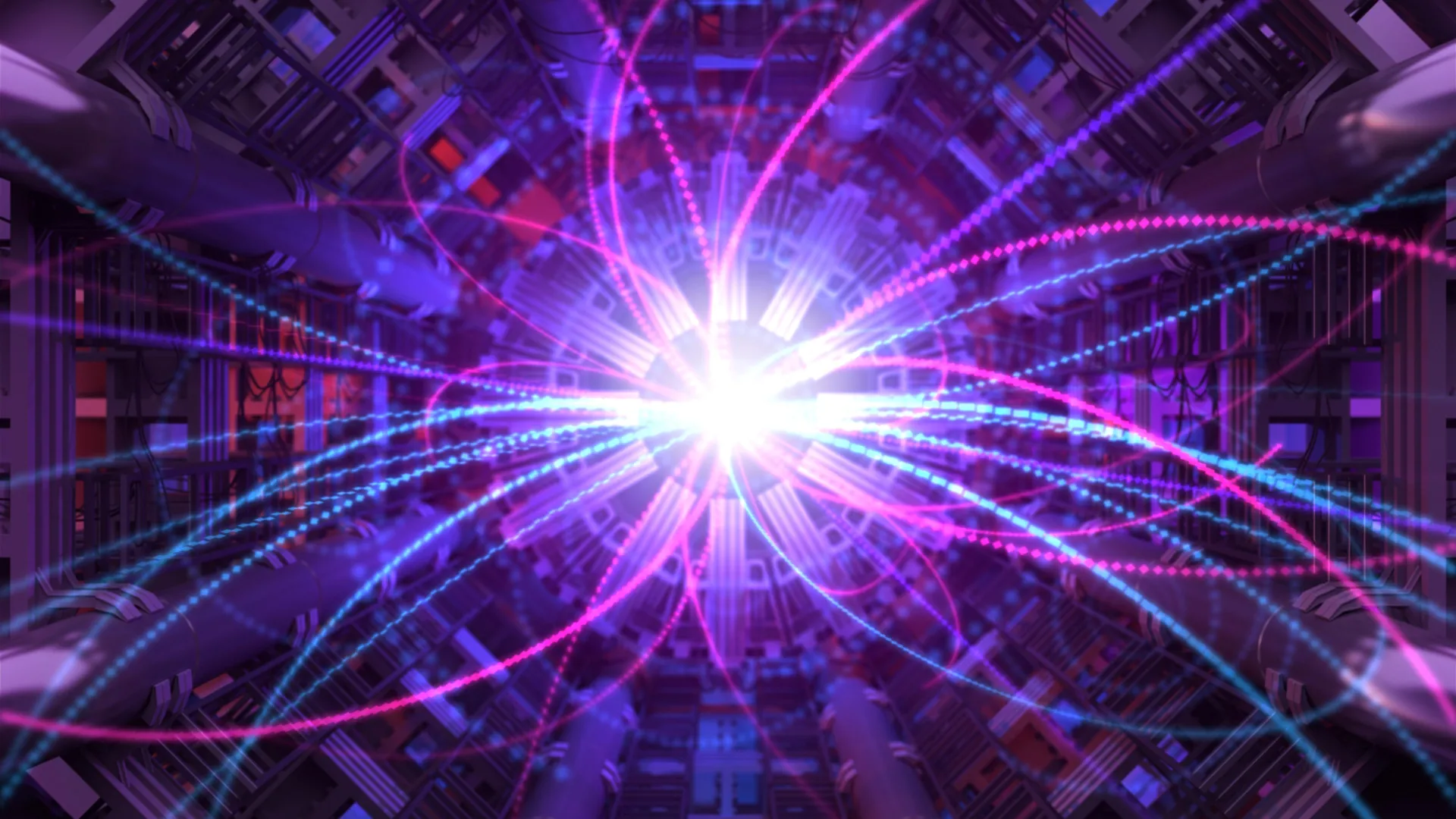
Theoretical Implications: Leptoquarks and New Forces
If the Standard Model is indeed breaking down at the scale of B meson decays, physicists must look toward new theoretical frameworks to explain the data. One leading hypothesis involves the existence of "leptoquarks." These are theoretical particles that would act as a bridge between quarks (the constituents of nuclear matter) and leptons (such as electrons and muons). In the current Standard Model, quarks and leptons are distinct families that do not interact directly in this manner. The existence of leptoquarks would unify these two types of matter and could explain why B mesons are decaying in an unexpected fashion.
Another possibility is the existence of a new fundamental force, mediated by a particle tentatively called the $Z’$ (Z-prime) boson. This would be a heavier analogue to the $Z$ boson, which carries the weak nuclear force. Such a force would interact with beauty quarks and muons in ways that the known forces do not, providing a mechanism for the observed anomalies. These theories are not just academic exercises; they represent a potential "Theory of Everything" that could finally integrate gravity into the quantum world and identify the particles that constitute dark matter.
Challenges to the New Physics Narrative
Despite the excitement within the scientific community, several hurdles remain before the Standard Model is officially overturned. One of the primary concerns involves "charming penguins." These are Standard Model processes involving "charm" quarks that can mimic the signals of new physics. Predicting the exact influence of these charming penguins is mathematically arduous and involves significant theoretical uncertainty.
Some theorists argue that if the effects of these charm quarks are larger than previously estimated, they might account for the $4sigma$ discrepancy without the need for new particles or forces. However, recent calculations and integrated models using both LHCb data and theoretical simulations suggest that charming penguins are unlikely to be the sole cause of the anomaly. The scientific consensus is leaning toward the idea that the Standard Model is struggling to account for the data, but "extraordinary claims require extraordinary evidence."
The Road Ahead: 2030 and the High-Luminosity LHC
The path to a definitive $5sigma$ discovery lies in the accumulation of more data. Since the 2011-2018 data set was finalized, the LHCb experiment has already recorded three times as much data during subsequent runs. This new information is currently being processed and analyzed. Furthermore, the LHC is slated for a major upgrade in the late 2020s, known as the High-Luminosity LHC (HL-LHC). This upgrade will increase the "luminosity"—the number of particle collisions per second—allowing the detector to accrue a dataset 15 times larger than what is currently available.
By the early 2030s, the statistical precision of these measurements will likely reach the point where a definitive claim can be made. If the anomaly persists as the dataset grows, it will confirm that we have moved beyond the Standard Model. This would trigger a global shift in physics research, potentially leading to the construction of even larger colliders, such as the proposed Future Circular Collider (FCC), which would be 100 kilometers long and capable of reaching energies far beyond the current LHC.
Conclusion and Global Impact
The implications of discovering physics beyond the Standard Model are profound. Much like how quantum mechanics and relativity revolutionized technology in the 20th century—leading to the development of transistors, lasers, and GPS—a new understanding of the fundamental forces could eventually lead to technological breakthroughs that are currently the stuff of science fiction.
For now, the international physics community remains in a state of "cautious optimism." The results from the LHCb and CMS experiments represent the most significant challenge to the status quo in decades. As Dr. Patrick Koppenburg, a lead researcher at LHCb, has noted in various forums, the goal of the LHC was never just to confirm what we already knew, but to find the limits of our knowledge. With the detection of these rare penguin decays, we may have finally found the edge of the map, signaling the beginning of a new era in our quest to understand the fabric of reality. The coming years of data analysis will determine whether we are looking at a revolutionary new chapter in science or a persistent mystery that requires even deeper investigation into the heart of matter.