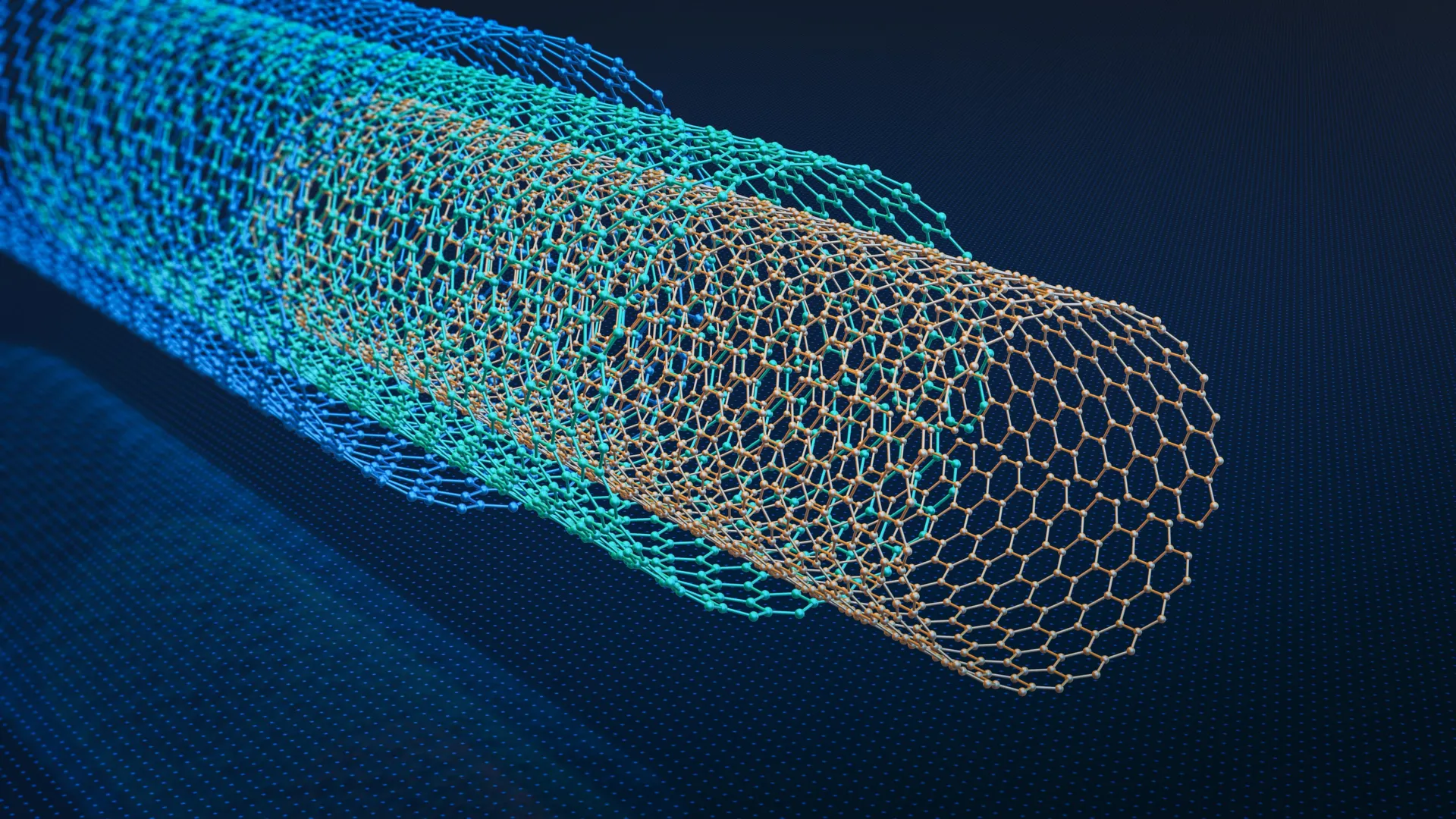
Nearly fifteen years after the initial discovery of MXenes—a prolific class of two-dimensional (2D) transition metal carbides and nitrides—the researchers who first unveiled these materials have achieved a significant morphological breakthrough. A team at Drexel University’s College of Engineering has developed a scalable, precise method for transforming flat MXene nanosheets into one-dimensional (1D) nanoscrolls. These ultra-thin, tubular structures, which are approximately 100 times thinner than a human hair, exhibit electrical conductivity that exceeds their 2D predecessors. This development is poised to redefine the capabilities of energy storage systems, biosensors, wearable electronics, and quantum computing interfaces.
The research, recently published in the prestigious journal Advanced Materials, details a chemical engineering process that allows for the controlled curling of MXene flakes. By manipulating the surface chemistry and internal strain of the materials, the team has successfully produced "nanoscrolls" that retain the high metallic conductivity of MXenes while introducing a hollow, open geometry. This structural evolution addresses one of the primary limitations of 2D materials: the "nano-confinement" effect, which often restricts the movement of ions and molecules within stacked layers.
The Evolution of MXene Research: From Sheets to Tubes
Since their discovery at Drexel University in 2011, MXenes have been celebrated as a "wonder material" of the nanotechnology world. Comprising transition metal carbides, nitrides, or carbonitride layers, MXenes combine the metallic conductivity of transition metals with the hydrophilic (water-loving) nature of oxygen- or fluorine-terminated surfaces. While graphene—the most famous 2D material—is highly conductive, it is chemically inert and difficult to process in aqueous solutions. MXenes, by contrast, are easily dispersible in water, making them ideal for spray-coating, printing, and large-scale manufacturing.
However, for over a decade, the primary focus of the scientific community has been on the 2D morphology. "Two-dimensional morphology is very important in many applications. However, there are applications where 1D morphology is superior," explained Dr. Yury Gogotsi, Distinguished University and Bach Professor at Drexel University and a leading figure in the study. Gogotsi, the corresponding author of the paper, noted that the shift from 2D to 1D is analogous to the difference between structural steel sheets and rebar. While sheets are necessary for surface-heavy applications like car bodies, 1D rods or tubes are required for reinforcement and the efficient transport of fluids or electricity over specific paths.
The transition to 1D nanoscrolls represents a natural progression in material science, seeking to bridge the gap between the surface-area benefits of 2D sheets and the directional efficiency of 1D nanowires or tubes.
The Chemistry of the Janus Reaction: A Scalable Manufacturing Breakthrough
The creation of nanoscrolls is not a simple mechanical folding process; rather, it is a sophisticated chemical manipulation known as a Janus reaction. The term "Janus" refers to the two-faced Roman god, signifying a material that has two different chemical properties on its opposing surfaces.
To initiate the scrolling, the Drexel researchers start with multilayered MXene flakes. By carefully adjusting the chemical environment, they introduce water molecules between the layers to alter the surface chemistry of one side of the flake relative to the other. This chemical asymmetry creates a structural imbalance, inducing internal lattice strain. As the material seeks to reach its lowest energy state, the strain is released by the layer peeling away and curling into a tight, uniform scroll.
A critical aspect of this research is its scalability. In the past, creating 1D nanostructures from 2D materials like graphene (creating carbon nanotubes) or transition metal dichalcogenides often resulted in uneven yields or required extreme temperatures and vacuum conditions. The Drexel team’s method operates at room temperature and has already demonstrated the ability to consistently produce 10 grams of nanoscrolls in a single batch. This quantity is significant in the world of nanotechnology, where many breakthroughs are limited to milligram-scale laboratory samples.
The team successfully applied this scrolling technique to six distinct MXene compositions:
- Two variations of titanium carbide (Ti3C2Tx and Ti2CTx)
- Niobium carbide (Nb2CTx)
- Vanadium carbide (V2CTx)
- Tantalum carbide (Ta4C3Tx)
- Titanium carbonitride (Ti3CNTx)
This variety demonstrates the versatility of the "Janus reaction" method, suggesting it can be applied across the entire family of over 50 known MXene materials.
Overcoming the Nano-Confinement Effect
The move from 2D sheets to 1D scrolls is not merely an aesthetic change; it fundamentally alters how the material interacts with its environment. In traditional 2D MXene applications, the flakes are typically stacked on top of each other to form films or electrodes. While this creates a high surface area, it also creates a "tortuous path" for ions.
"With standard 2D MXenes, the flakes lay flat on top of each other, which creates a confined space and a difficult path for ions or molecules to navigate," said Dr. Teng Zhang, a postdoctoral researcher at Drexel and co-author of the study. This "nano-confinement" can slow down the charging of batteries or the filtration process in desalination membranes.
By converting these sheets into 1D scrolls, the researchers have created "ion highways." The open, tubular geometry allows ions to move through the center of the scroll and along its exterior with far less resistance. This structural advantage could lead to the development of "super-batteries" that charge in seconds rather than hours, and desalination systems that can strip salt from water with significantly lower energy consumption.
High-Precision Sensing and Biosensing Potential
One of the most immediate applications for MXene nanoscrolls is in the field of biosensing. For a sensor to be effective, it must have a high density of "active sites"—locations where molecules can attach and trigger an electrical signal. In 2D stacked structures, many of these active sites are buried between layers, making them inaccessible to large biomolecules like proteins or DNA sequences.
The hollow, accessible structure of the nanoscroll ensures that both the interior and exterior surfaces are available for molecular adsorption. Dr. Gogotsi highlighted that this accessibility, combined with the material’s high metallic conductivity, ensures a strong and stable signal even when detecting trace amounts of an analyte.
This makes MXene nanoscrolls ideal candidates for:
- Wearable Glucose Monitors: Providing real-time, high-sensitivity tracking.
- Gas Sensors: Detecting environmental pollutants or hazardous leaks at the parts-per-billion level.
- Electrochemical Capacitors: Enhancing the energy density of power-delivery devices.
Wearable Electronics and Smart Textiles
The mechanical properties of nanoscrolls also offer advantages for the burgeoning field of "ionotronics" and smart textiles. Unlike flat flakes, which can slide against each other or delaminate when bent, the 1D nanoscrolls possess a degree of structural rigidity that allows them to anchor firmly within polymer matrices.
When incorporated into synthetic fibers, these nanoscrolls act as both a reinforcement agent and a conductive network. The researchers found that they could use an electric field to control the orientation of the nanoscrolls while they are in solution. This means that during the manufacturing of smart fabrics, the scrolls can be aligned to stand vertically or lie in specific directions to create conductive pathways or "micro-brushes."
Dr. Zhang described this as "real nanotechnology," where matter can be manipulated at the nanoscale to build macroscopic structures like conductive wires or functional coatings. This could lead to a new generation of "smart clothes" that can monitor heart rates, track movement, or even provide haptic feedback, all while maintaining the comfort and durability of standard athletic wear.
Quantum Frontiers: Superconductivity in Flexible Films
Perhaps the most scientifically provocative finding in the Drexel study is the observation of superconductivity in niobium carbide (Nb2C) nanoscrolls. Superconductivity—the ability of a material to conduct electricity with zero resistance—usually requires extremely low temperatures and has traditionally been observed in rigid, brittle materials.
Previously, superconductivity in MXenes was limited to pressed pellets of powders, which are not practical for modern electronics. The scrolling process, however, introduces specific lattice strain and curvature that appears to stabilize the superconducting state in a new way. For the first time, the Drexel team observed superconductivity in free-standing, flexible films processed at room temperature.
"By using niobium carbide scrolls, we observed the change of the material enough to enable superconductivity in free-standing, macroscopic films for the first time," said Gogotsi. This discovery has profound implications for quantum computing and high-speed data storage. As the tech industry seeks materials that can improve computing power while reducing heat generation, flexible superconducting interconnectors made from MXene nanoscrolls could provide a scalable solution.
Analysis of Global Implications
The achievement by the Drexel team represents a significant milestone in the "materials by design" movement. By demonstrating that a 2D material can be reliably re-engineered into a 1D format without losing its core benefits, the researchers have opened a new chapter in the study of nanomaterials.
The economic implications are equally noteworthy. The scalability of the Janus reaction method suggests that industrial production of MXene nanoscrolls is feasible within the next few years. This could disrupt several markets:
- Energy Storage: Reducing the "bottleneck" of ion transport in lithium-ion and sodium-ion batteries.
- Aerospace and Defense: Creating ultra-lightweight, conductive composites for EMI shielding and structural reinforcement.
- Healthcare: Paving the way for non-invasive, highly accurate diagnostic tools.
As researchers continue to explore the quantum phenomena associated with the strain and curvature of these scrolls, the scientific community expects to uncover even more "interesting phenomena," as Dr. Zhang noted. The transition from 2D sheets to 1D nanoscrolls is not just a change in shape; it is an expansion of what is possible at the intersection of chemistry, physics, and engineering.
With 10 grams already achievable in a lab setting, the path toward commercial-scale integration seems shorter than ever. The Drexel team’s work ensures that MXenes will remain at the forefront of the materials science revolution for the next fifteen years and beyond.