Invisible to the naked eye and entirely imperceptible to human senses, a constant, silent rain of subatomic particles passes through the Earth every second. These travelers, originating from deep space and violent cosmic cataclysms billions of light-years away, hold the keys to understanding some of the most extreme phenomena in the universe. For decades, the study of these cosmic rays and their secondary particles, known as muons, was restricted to well-funded laboratories utilizing bulky, expensive, and stationary equipment. However, a revolutionary invention developed by University of Delaware physicist Spencer Axani is fundamentally changing how scientists, students, and citizen researchers interact with the cosmos.
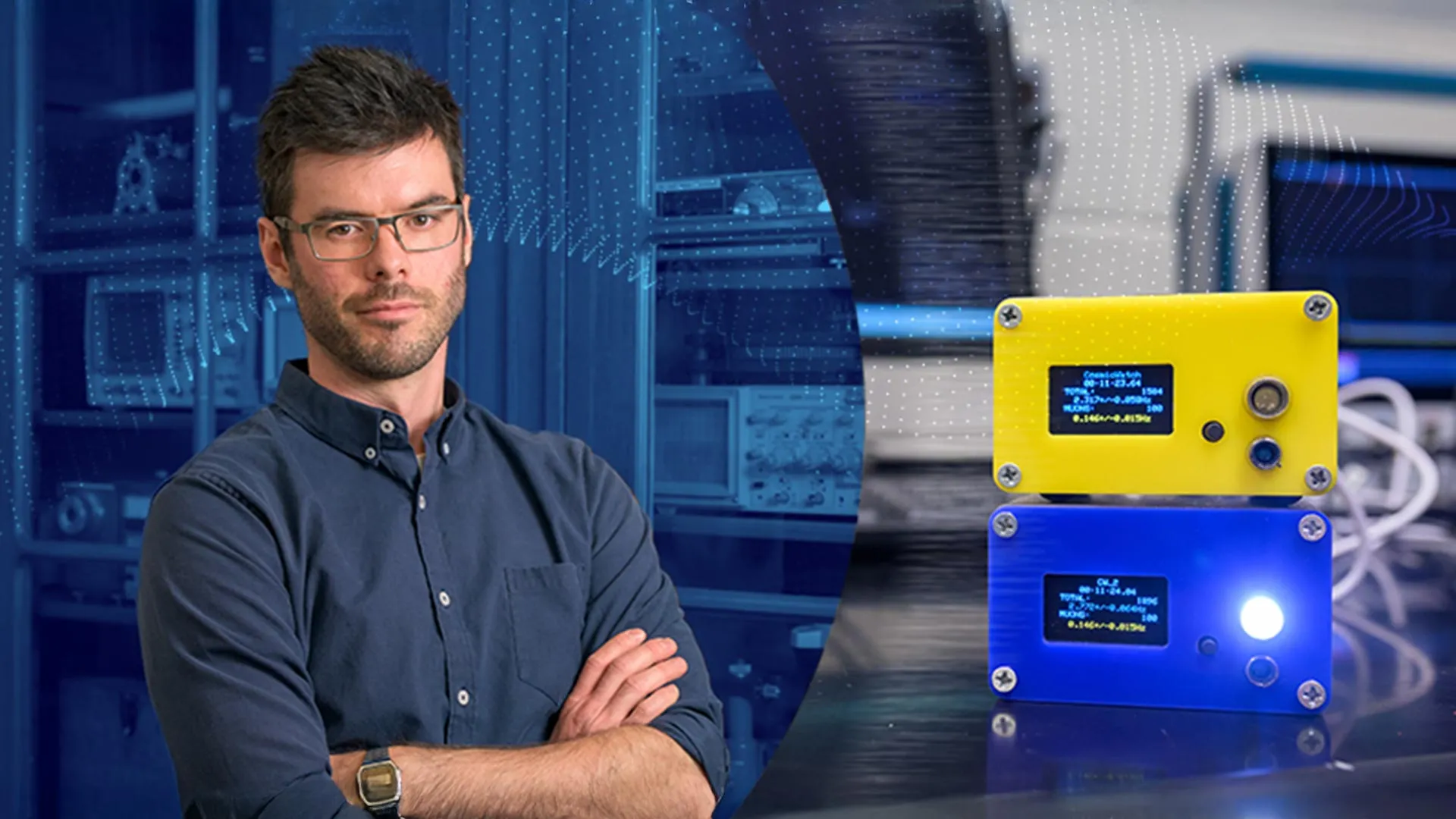
Measuring roughly the size of a standard box of animal crackers and costing approximately $100 in basic electronic components, a device called CosmicWatch has transformed the landscape of modern physics. By making the invisible visible, this portable detector is democratizing particle physics, bridging the gap between theoretical astrophysics and hands-on experimentation, and expanding our understanding of both the Earth’s atmosphere and the farthest reaches of the universe.
The Science of Cosmic Rays and Muons
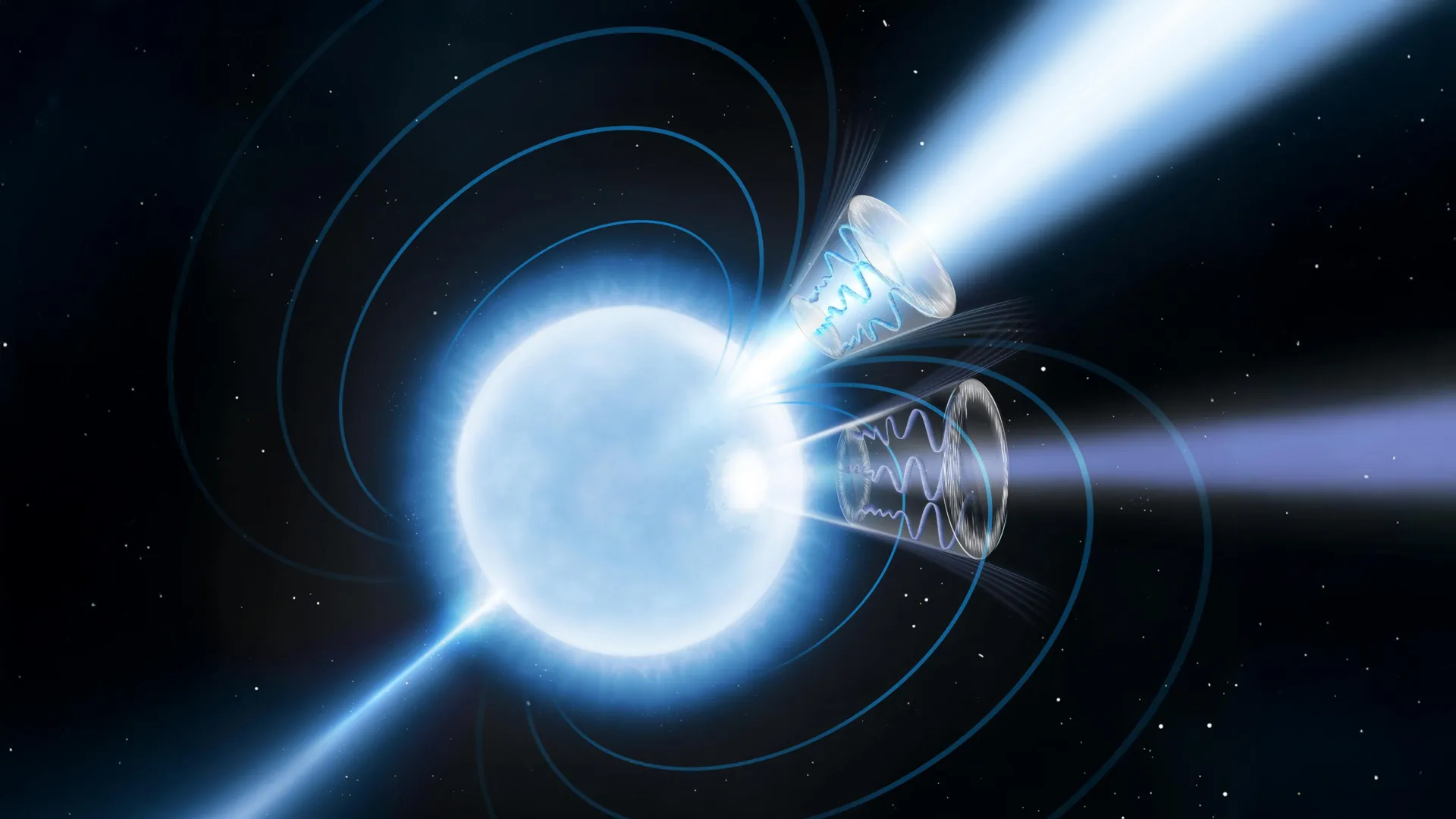
To understand the significance of the CosmicWatch device, one must first look to the outer edges of our solar system and beyond. Cosmic rays are extremely energetic atomic nuclei and subatomic particles—primarily protons—that travel through space at nearly the speed of light. They are born in some of the most violent environments known to science, including exploding stars (supernovae), active galactic nuclei, gamma-ray bursts, and powerful blazars powered by supermassive black holes.
When these high-energy cosmic rays collide with atoms and molecules high in Earth’s upper atmosphere, they trigger a cascade of secondary particle production known as an air shower. Among the myriad particles generated in these collisions are muons. Similar to heavier, unstable cousins of the electron, muons possess a remarkable ability to travel vast distances through the atmosphere and even penetrate deep underground before decaying.
Scientists study muons because they serve as direct messengers from deep space. By measuring a muon’s energy, mass, and trajectory, researchers can reconstruct properties of the original cosmic ray that generated it. Furthermore, muons have played a critical role in the history of modern physics. In the early 1940s, precise measurements of atmospheric muons provided some of the earliest experimental confirmations of Albert Einstein’s theory of special relativity, specifically demonstrating the phenomenon of time dilation as fast-moving particles travel through the atmosphere.
Beyond astrophysics, muons offer immense practical utility for imaging objects on Earth. Because they can pass through solid materials—such as dense rock, concrete, and human tissue—without causing structural damage, scientists utilize them much like a naturally occurring X-ray machine. This technique, known as muon tomography, allows researchers to peer inside dense structures. A prominent real-world application occurred in 2016, when an international team of researchers used muon imaging technology to discover a previously unknown, hidden corridor inside the Great Pyramid of Giza in Egypt, proving the immense archaeological value of tracking these cosmic particles.
Chronology of an Innovation: From Antarctica to Academia
The origins of CosmicWatch trace back to 2017, when Spencer Axani was working as a graduate student at the Massachusetts Institute of Technology (MIT). His initial objective was pragmatic and grounded in extreme engineering: to design a compact, highly energy-efficient muon detector capable of operating reliably at the IceCube Neutrino Observatory, a massive particle detector buried deep beneath the ice at the South Pole.
At IceCube, researchers search for elusive subatomic particles called neutrinos. However, identifying neutrinos is complicated by the overwhelming noise generated by atmospheric muons raining down continuously. A reliable, small-scale muon detector was essential to help researchers distinguish between the two phenomena.
As Axani developed the hardware, he recognized a broader application for the technology. Traditional undergraduate physics laboratories typically relied on complex electronics racks the size of small bookshelves to measure muons—equipment that was prohibitively expensive for most high schools and undergraduate programs. By scaling down the design and utilizing inexpensive, commercially available electronic components, Axani realized he could create a portable, rugged, and affordable educational tool.
By 2022, following his transition to the faculty at the University of Delaware, Axani continued refining the hardware. In October of that year, key improvements to the device were detailed in an article published in the Journal of Instrumentation. Authored alongside doctoral student Masooma Sarfraz, the study highlighted enhancements in the third generation of CosmicWatch detectors, including superior environmental monitoring, high-radiation tolerance, and significantly faster data-gathering capabilities.
Technical Specifications and Operational Mechanics
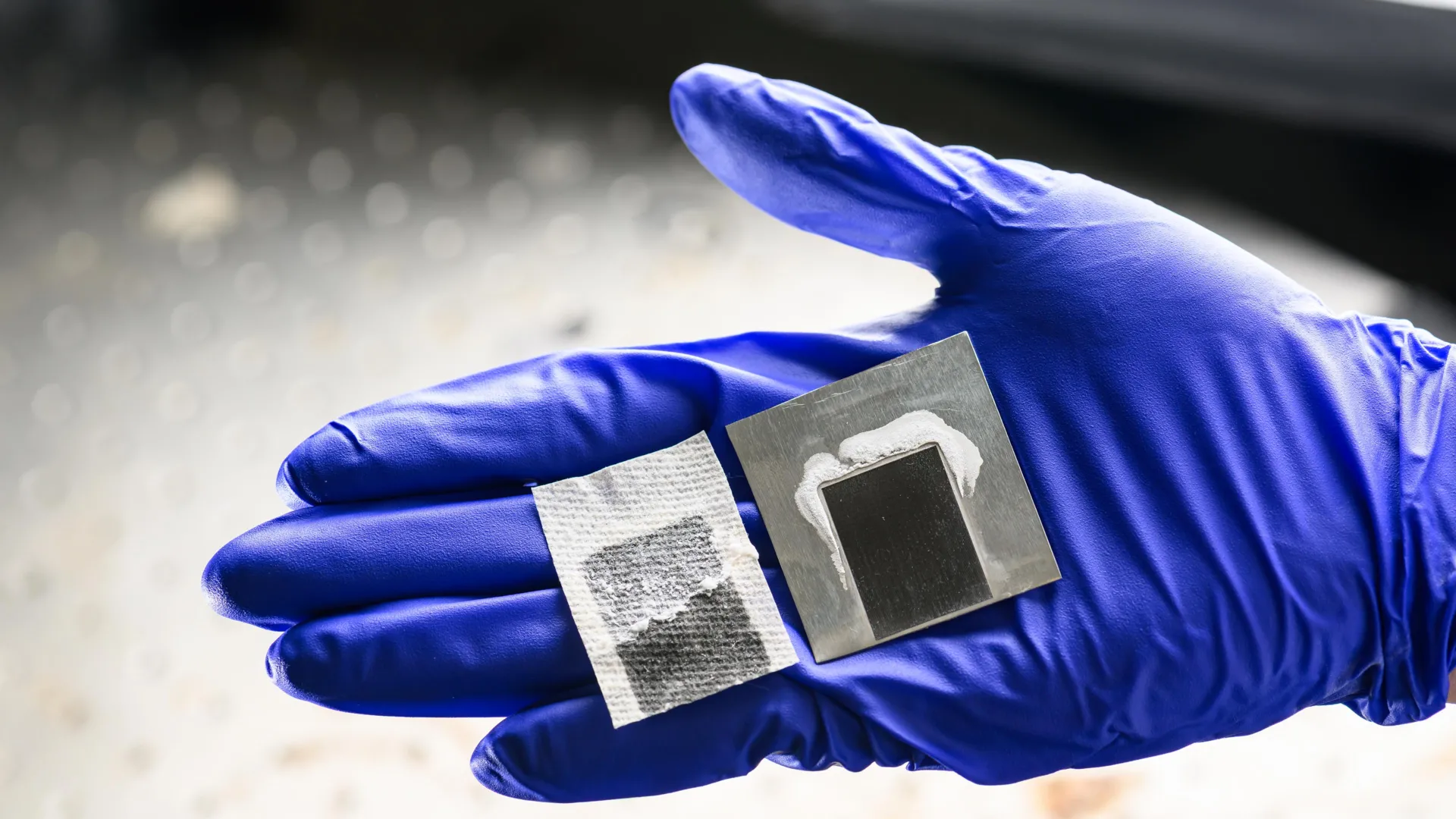
The core functionality of the CosmicWatch detector is both elegant and robust. Built around a small plastic scintillator material coupled to a silicon photomultiplier, the device emits a flash of light whenever a charged particle, such as a muon, passes through it. This optical flash is converted into an electrical signal, recorded as a single count, and stored digitally for later extraction and analysis.
The device’s low cost and diminutive footprint enable configurations that were previously impossible with traditional laboratory gear. Users can download the recorded data via USB, allowing for detailed quantitative analysis of muon flux variations over time.
Masooma Sarfraz, the primary author of the Journal of Instrumentation paper, noted the profound educational and research value of the hardware. "Even though I had studied cosmic rays, I didn’t fully appreciate the rich physics behind the working of these detectors to actually ‘see’ the world and atmospheric particle production," Sarfraz stated. "For a student like me who has been working on theoretical ideas, this was a perfect opportunity to dive into the experimental side. It also connects beautifully to my current broader research work with particle physics."
Expanding Horizons: Dark Matter Research and Spaceflight
While CosmicWatch originated as an educational outreach tool, its utility has rapidly expanded into cutting-edge, professional-grade research environments. The latest iterations of the detector are currently utilized to calibrate large-scale physics experiments.
At the University of Delaware, the technology is deployed in the NuDot experiment, which investigates fundamental neutrino properties. Simultaneously, CosmicWatch detectors are utilized at the Coherent CAPTAIN-Mills (CCM) dark matter detector located at the Los Alamos National Laboratory in New Mexico. In these advanced facilities, the compact detectors assist researchers in background calibration and particle tracking.
Looking ahead, aerospace engineers and physicists are developing specialized variants of the detector intended for deployment aboard sounding rockets and spacecraft. These spaceborne units aim to measure primary cosmic rays directly outside the protective shield of Earth’s magnetic field and atmosphere.
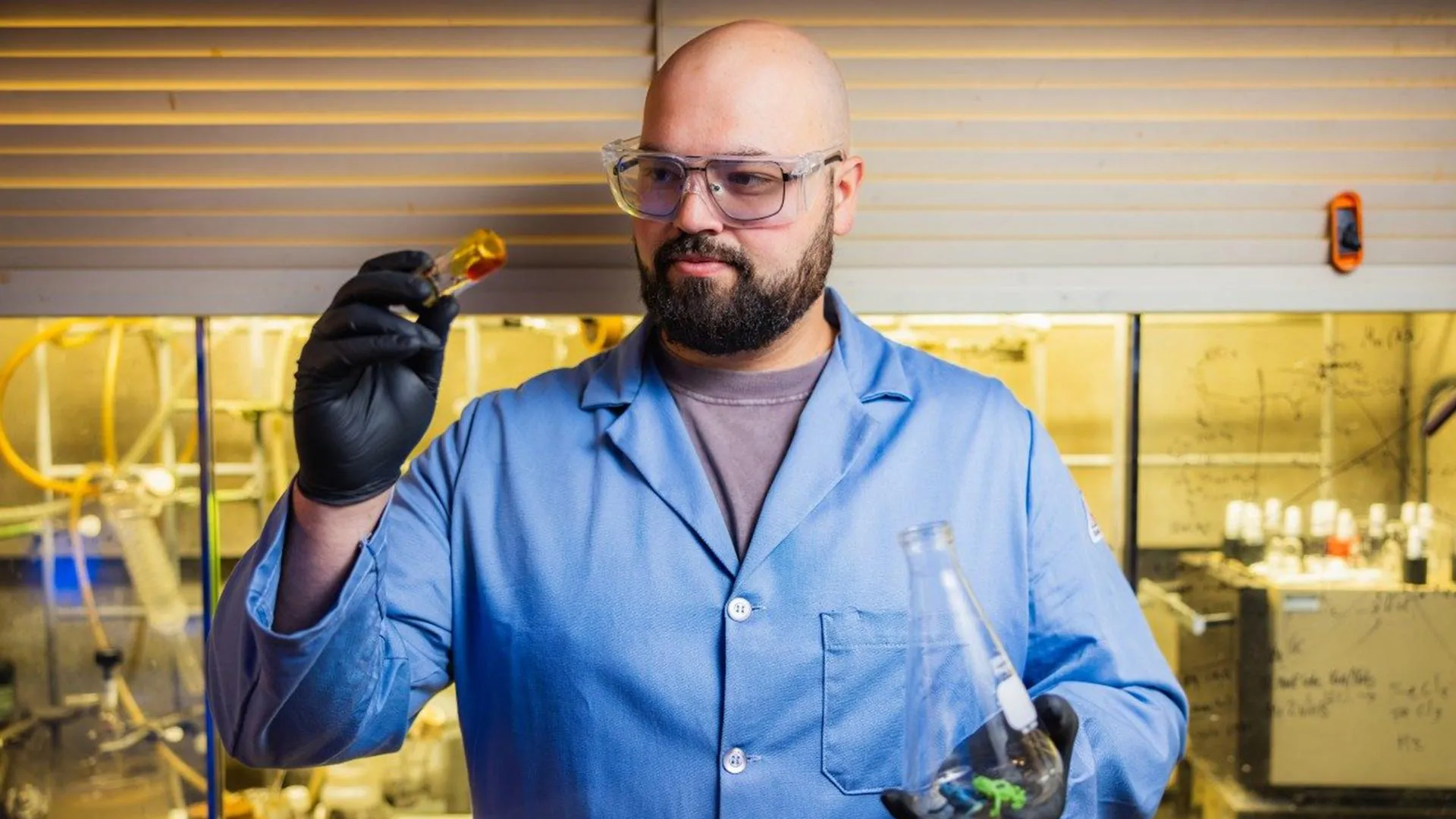
At the University of Delaware, education remains deeply intertwined with ongoing research. Axani integrates the devices directly into his undergraduate and graduate coursework in particle, nuclear, and astrophysics. Students do not simply read about detectors; they assemble the hardware themselves, learning high-speed circuit integration, soldering, and coding before designing their own independent experiments.
One such student, Musarate Shams, a doctoral candidate in the quantum science and engineering program, pushed the boundaries of the technology by integrating custom temperature and pressure sensors into his CosmicWatch unit. In May, Shams’ modified detector was launched aboard a high-altitude scientific balloon, ascending to an altitude of 100,000 feet near the edge of space. By analyzing the telemetry data collected during the flight, Shams successfully mapped how cosmic ray flux scales dramatically with altitude as the atmospheric shield thins out.
"It’s a very cool thing to build something in the lab in a couple of days that’s able to detect these cool particles from hundreds of light-years away," Shams remarked.
Bridging the Gap in Higher Education
The impact of CosmicWatch extends well beyond Delaware. At Cornell University, Natasha Holmes, the Ann S. Bowers Associate Professor of Physics, has incorporated the detectors into introductory physics courses. Under her guidance, undergraduate students build, program, and experiment with the units, gaining exposure to authentic experimental workflows early in their academic careers.
According to Holmes, the hands-on nature of the assignment shifts the educational paradigm away from rigid, pre-scripted laboratory exercises toward genuine scientific inquiry.
"The students seem really excited about doing this thing that is more like what particle physicists and experimental physicists actually do," Holmes noted. "They get to learn some coding with it, and sometimes they break the devices, and then we have to talk to them about being careful with your equipment. It’s very different from a typical physics lab. We’ve had students say they’re doing ‘real science’ after using it."
By allowing students to troubleshoot hardware failures, write custom analysis scripts, and interpret raw physical data, the curriculum mirrors the trials and triumphs of professional research laboratories.
Broader Impact, Citizen Science, and the Future
Since its inception eight years ago, an estimated thousands of CosmicWatch detectors have been manufactured and deployed worldwide. This widespread adoption has set the stage for a much more ambitious vision: the creation of a global, crowdsourced network of cosmic ray detectors.
Axani envisions a future where citizen scientists, amateur astronomers, and educational institutions across the globe operate networked CosmicWatch units, continuously measuring local muon rates and uploading their findings to a centralized online database. Such a global array could provide researchers with a high-resolution, planet-wide dataset regarding atmospheric particle activity, space weather fluctuations, and solar proton events.
In addition to terrestrial and atmospheric networks, Axani and his collaborators are exploring satellite-based applications. By outfitting small satellites with advanced variations of the technology, constellations of spacecraft could communicate autonomously regarding localized space radiation hazards. For instance, if one satellite detects an influx of energetic particles from a sudden solar flare, it could instantly relay a warning to neighboring satellites, allowing vulnerable systems to enter safe modes and protect sensitive onboard electronics.
Reflecting on the unexpected trajectory of his invention—which evolved from a niche engineering solution for a South Pole observatory into a global educational phenomenon and professional research tool—Axani remains enthusiastic about its potential.
"Although it started as an educational program, it’s found a use in a lot of different areas of physics," Axani said. "It’s pretty cool."
As the boundaries between amateur experimentation and professional astrophysics continue to blur, affordable and accessible innovations like CosmicWatch demonstrate that profound scientific discovery no longer requires million-dollar budgets—sometimes, all it takes is a $100 box, a curious mind, and the invisible rain falling from the stars.