The landscape of quantum optics has been fundamentally altered following a landmark discovery by an international team of physicists who have identified previously unrecognized topological structures within the most common method of generating entangled photons. Researchers from the University of the Witwatersrand (Wits) in South Africa, in collaboration with theorists from Huzhou University in China, have demonstrated that the spatial entanglement produced through standard laboratory procedures contains a sophisticated "hidden" topology. This discovery, published in the prestigious journal Nature Communications, reveals that these structures can reach a staggering 48 dimensions and encompass more than 17,000 distinct topological signatures. This vast complexity provides a robust new "alphabet" for the encoding and protection of quantum information, potentially solving one of the most persistent challenges in the field: the fragility of quantum states against environmental noise.
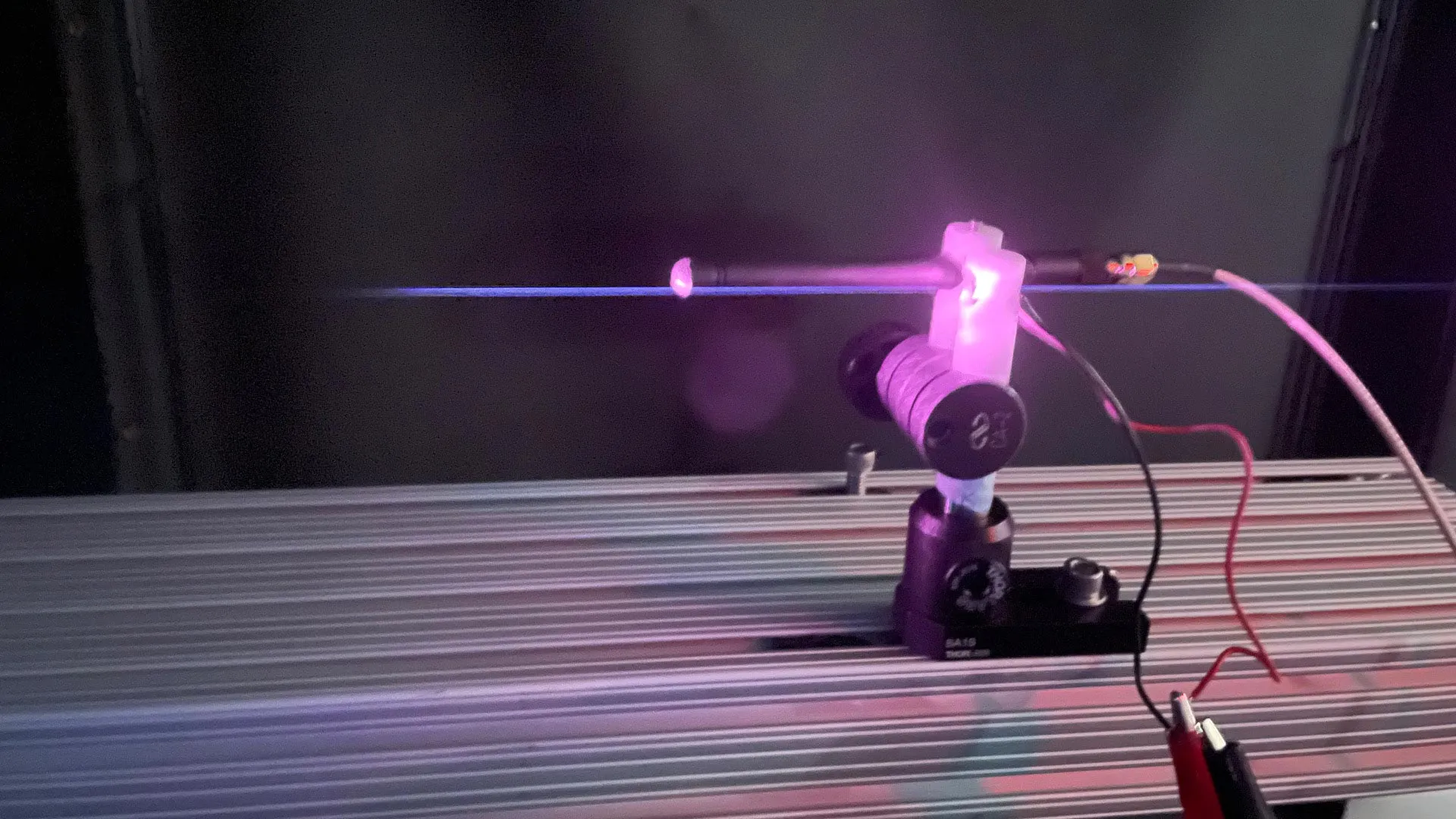
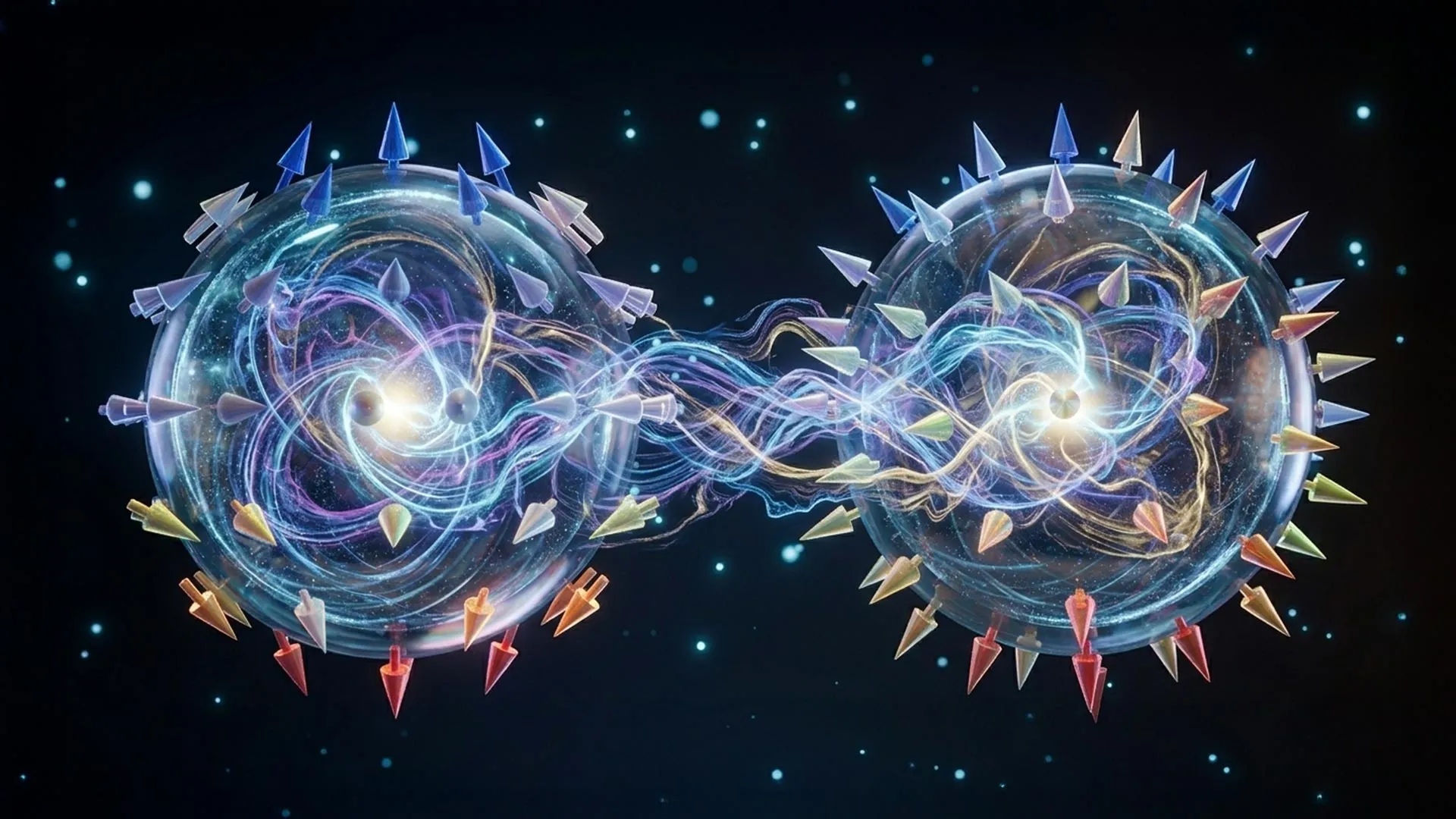
For decades, quantum optics laboratories around the world have utilized a process known as Spontaneous Parametric Downconversion (SPDC) to create pairs of entangled photons. In this process, a high-energy laser beam is directed through a nonlinear crystal, which occasionally splits a single pump photon into two lower-energy "daughter" photons. These photons are born entangled, meaning their physical properties are intrinsically linked regardless of the distance between them. While the spatial properties of these photons have been studied extensively, the underlying topological nature of this entanglement remained obscured until now. The research team has shown that by examining the Orbital Angular Momentum (OAM) of these photons—a property that describes the twisting of a light wave’s wavefront—they could uncover a rich tapestry of topological states that were previously thought to require far more complex experimental setups to achieve.
The Science of Orbital Angular Momentum and Topology
To understand the magnitude of this discovery, it is necessary to distinguish between traditional quantum properties and the concept of topology. Most quantum systems rely on properties like polarization, which is inherently two-dimensional (horizontal or vertical). This limits the amount of information a single photon can carry to a "qubit," the quantum equivalent of a binary bit. However, light also possesses Orbital Angular Momentum (OAM), which relates to the spatial distribution of the light’s phase. Unlike polarization, OAM is theoretically infinite; a photon can be twisted once, twice, or hundreds of times, with each "twist" representing a different dimension or state.
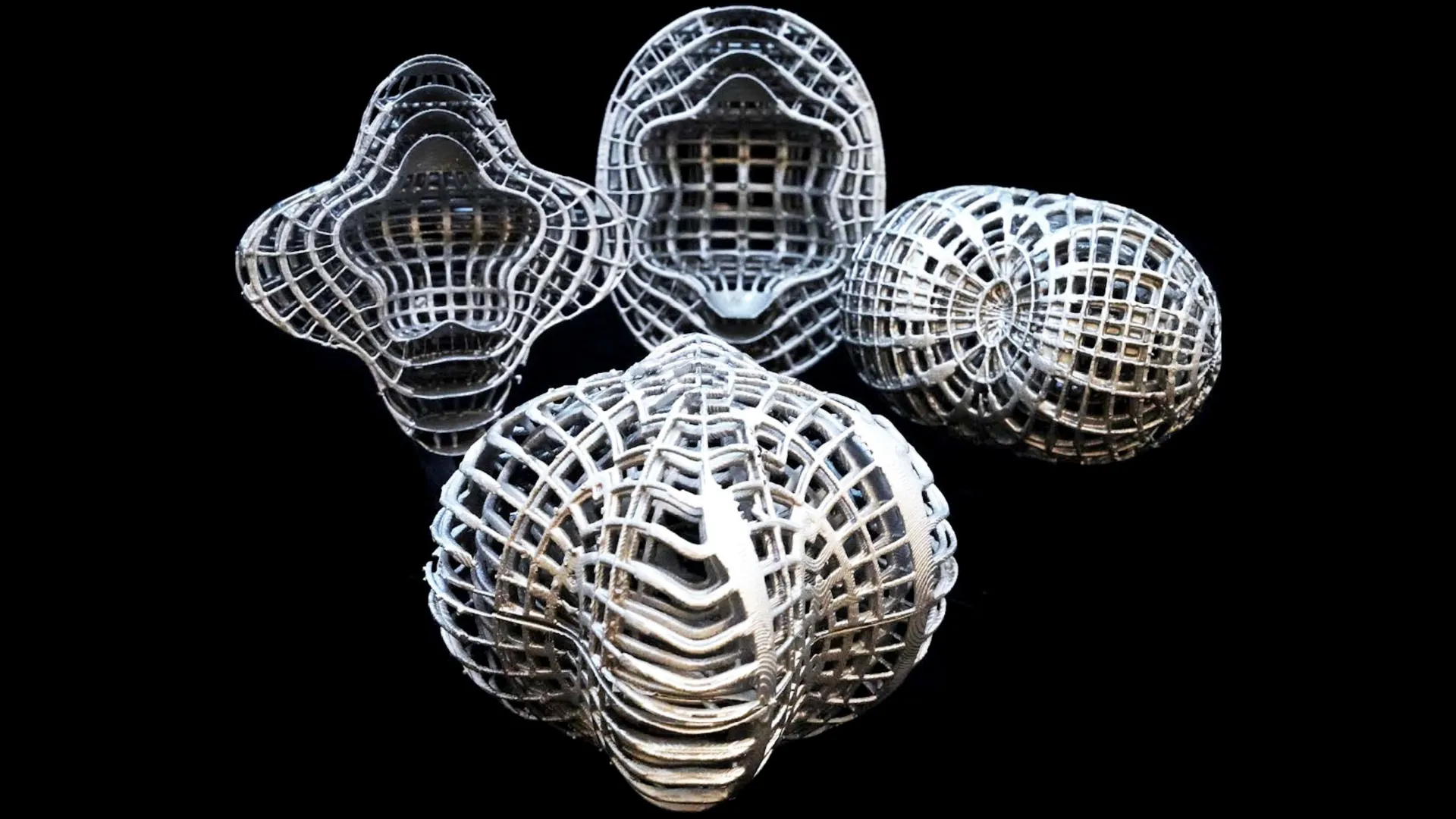
Topology is a branch of mathematics concerned with the properties of a geometric object that are preserved under continuous deformations, such as stretching or twisting, but not tearing. A classic example is a doughnut and a coffee mug, which are topologically equivalent because one can be reshaped into the other without breaking the surface. In the context of quantum physics, topological states are highly sought after because they are "protected." Small perturbations or "noise" in the environment might stretch or distort the quantum state, but as long as the underlying topology remains intact, the information encoded within that state is preserved.
Previously, the scientific community believed that creating such topological structures in light required the manipulation of at least two independent properties, such as combining OAM with the polarization of the light. The breakthrough from the Wits and Huzhou team demonstrates that the entanglement inherent in the OAM property alone is sufficient to generate these complex topologies. This simplification is profound, as it suggests that high-dimensional topological protection is a "free" byproduct of standard entanglement processes already occurring in labs worldwide.
A Chronology of the Discovery: From Theory to Laboratory
The path to this discovery was not a linear one, requiring a synthesis of high-level theoretical physics and precision experimental optics. The project began when Professor Robert de Mello Koch and his team at Huzhou University applied abstract notions from quantum field theory—a framework usually reserved for high-energy particle physics—to the behavior of entangled light. They predicted that within the high-dimensional space of OAM-entangled photons, there should exist specific "singularities" or points of topological interest that had never been mapped.
"In high dimensions, it is not so obvious where to look for the topology," noted Professor de Mello Koch. "We used abstract notions from quantum field theory to predict where to look and what to look for, and then we turned to our colleagues at Wits to see if it could be found in the laboratory."
The experimental verification took place at the Wits School of Physics under the direction of Professor Andrew Forbes. The team used a standard SPDC setup but applied a new lens of analysis to the data. By measuring the OAM of two entangled photons simultaneously, they were able to reconstruct the joint state of the system in a way that revealed the predicted topological signatures.
Throughout 2023 and early 2024, the researchers refined their measurements, eventually confirming that the system was not merely showing a few topological variations, but a massive library of them. They identified a record-breaking 48 dimensions of entanglement. Within this 48-dimensional space, they cataloged over 17,000 unique topological signatures. This represents an exponential increase over previous records, which typically dealt with only a handful of dimensions or a few dozen topological variations.
Supporting Data: Dimensions, Signatures, and Stability
The data presented in the Nature Communications paper highlights the sheer scale of the information-carrying capacity discovered. In a standard 2D system, information is limited. In the 48-dimensional system identified by the Wits-Huzhou team, the state space is vastly larger. The 17,000 distinct topological signatures act as a massive "alphabet." In traditional communications, we use an alphabet of 26 letters to form complex words and sentences. In the quantum realm, having an alphabet of 17,000 "letters" allows for the encoding of incredibly dense information in a single pair of photons.
Furthermore, the researchers found that as the dimensionality of the system increases, the topology can no longer be described by a single "topological charge" or number. Instead, it requires a complex set of values to fully characterize the state. This complexity is actually a benefit; it means the information is "braided" into the light in a way that is incredibly difficult for external noise to unravel.
Experimental data showed that these topological structures remained stable even when subjected to simulated atmospheric turbulence and other forms of environmental interference that typically degrade quantum entanglement. This "topological protection" is the key to moving quantum technologies out of the laboratory and into the real world.
Reactions from the Scientific Community and Industry
While the paper has only recently been released, it has already sparked significant interest among quantum physicists and telecommunications engineers. Professor Andrew Forbes emphasized the accessibility of the discovery. "One of the most notable aspects of this breakthrough is how accessible it is," Forbes stated. "The required resources are already present in most quantum optics laboratories, meaning no specialized equipment or ‘quantum engineer’ is needed to take advantage of the effect."
Pedro Ornelas, a researcher involved in the experimental phase at Wits, added that the discovery felt like finding a treasure that had been "hiding in plain sight." He noted, "You get the topology for free, from the entanglement in space. It was always there; it just had to be found."
Independent analysts in the field of quantum computing suggest that this discovery could bridge the gap between theoretical quantum error correction and practical hardware. Currently, quantum computers require massive amounts of "overhead"—extra qubits used solely to correct errors. If information can be encoded into topologically protected OAM states, the need for such extensive error correction could be significantly reduced, leading to more efficient and scalable quantum processors.
Broader Impact and Implications for the Future
The implications of this discovery extend far beyond the confines of basic research. As the world moves toward a "quantum internet," the ability to transmit stable, high-dimensional information over long distances is paramount.
- Quantum Key Distribution (QKD): Current QKD systems, used for ultra-secure communication, are often limited by the rate at which they can generate secret keys. A 17,000-signature alphabet could allow for the generation of keys that are thousands of times more complex and secure, transmitted at much higher speeds.
- Robust Quantum Computing: By using these topological structures as the basis for quantum bits (or "qudits" in higher dimensions), researchers can create logic gates that are naturally resistant to the decoherence that plagues current superconducting and ion-trap quantum computers.
- Deep Space Communication: Because the OAM of light can be maintained over vast distances, these topological signatures could be used for high-bandwidth communication between Earth and deep-space probes, where signal degradation is a major hurdle.
- Simplification of Quantum Hardware: The realization that high-dimensional topology can be achieved using only one property of light (OAM) means that the next generation of quantum sensors and communicators can be made smaller, cheaper, and more robust than previously imagined.
The collaborative effort between South African and Chinese institutions also highlights the increasingly global nature of quantum research. It demonstrates that breakthroughs in the most advanced fields of physics are no longer the sole province of a few Western institutions but are the result of a diverse, international scientific community.
As the team continues to explore this "vast new alphabet," the next steps involve developing standardized protocols for "reading" and "writing" these topological signatures in real-time. If successful, the "hidden" structures found in the spatial entanglement of light may become the backbone of the 21st century’s most secure and powerful communication networks. The discovery serves as a reminder that even in well-trodden areas of science, there are still profound mysteries waiting to be uncovered by those who know where—and how—to look.