Researchers at Northwestern Medicine (IL, USA) have announced the successful development of novel synthetic biomolecular condensates capable of degrading intracellular oncogenic KRAS protein, marking a significant advancement in the pursuit of targeted cancer therapeutics. This innovative platform represents a modular and adaptable approach to delivering targeted antibodies, effectively addressing the long-standing challenge of variations in protein structure across diverse cell types. The study not only demonstrates the profound potential of biomolecular condensates as programmable biomaterials but also opens new avenues for future therapeutic development, particularly for cancers driven by notoriously difficult-to-target KRAS mutations.
The Enduring Challenge of KRAS: A Historical Perspective
For decades, the Kirsten rat sarcoma virus (KRAS) gene has stood as a formidable adversary in the oncology landscape. Mutated KRAS proteins are among the most frequently observed oncogenic drivers in human cancers, implicated in approximately 90% of pancreatic adenocarcinomas, 45% of colorectal cancers, and 25% of non-small cell lung adenocarcinomas. These mutations lock the KRAS protein in an always-on, activated state, relentlessly signaling cell growth and proliferation, leading to aggressive tumor formation and resistance to conventional therapies.
The historical difficulty in targeting KRAS mutations earned them the moniker "undruggable." Unlike many other oncogenes with well-defined binding pockets amenable to small-molecule inhibition, KRAS mutations often result in proteins lacking such features, making direct pharmacological intervention exceedingly challenging. Early attempts to develop inhibitors were largely unsuccessful, leading to a period of therapeutic stagnation for KRAS-driven cancers. This landscape began to shift only recently with the advent of allele-specific inhibitors like sotorasib (targeting KRAS G12C) and adagrasib (also for KRAS G12C), which represented monumental breakthroughs. However, these therapies are highly specific to particular KRAS variants, leaving a vast majority of KRAS-mutated cancers, including the prevalent KRAS G12V, without effective targeted options. The urgent need for therapeutics that can address a broader spectrum of KRAS mutations, particularly those beyond G12C, remained a critical unmet clinical need.
The Promise of Targeted Protein Degradation (TPD)
The emergence of Targeted Protein Degradation (TPD) as a therapeutic strategy has revolutionized drug discovery, offering a powerful new paradigm for addressing previously undruggable targets. Unlike traditional inhibitors that merely block protein function, TPD leverages the cell’s own natural degradation machinery—specifically the ubiquitin-proteasome system (UPS)—to completely eliminate disease-causing proteins. This approach often involves small molecules known as Proteolysis Targeting Chimeras (PROTACs), which are bifunctional molecules designed to simultaneously bind to a target protein and an E3 ubiquitin ligase. This proximity induces ubiquitination of the target protein, marking it for destruction by the proteasome.
The advantages of TPD are multifaceted. By completely removing the protein, TPD can overcome issues of drug resistance that arise from target protein overexpression or conformational changes that render inhibitors ineffective. Furthermore, TPD molecules can act catalytically, meaning a single degrader molecule can facilitate the degradation of multiple target proteins, potentially leading to lower dosing and reduced off-target effects. Despite its successes, TPD strategies, particularly those involving small molecules, still face challenges related to cell permeability, specificity, and the requirement for specific binding pockets on the target protein and E3 ligase, limiting their applicability to a subset of intracellular proteins. The Northwestern team’s work sought to overcome some of these limitations by exploring a novel delivery and targeting mechanism.
Biomolecular Condensates: Nature’s Intracellular Hubs
To address the limitations of existing TPD strategies and the broad challenge of targeting diverse intracellular proteins, the Northwestern researchers turned their attention to biomolecular condensates. These dynamic, membrane-less structures are ubiquitous within eukaryotic cells, playing crucial roles in a myriad of cellular functions, including RNA metabolism, DNA damage response, signal transduction, and chromatin organization. They form spontaneously through a process known as liquid-liquid phase separation (LLPS), where specific proteins and nucleic acids self-assemble into dense, droplet-like compartments within the cytoplasm or nucleus, separate from the surrounding cellular milieu.
The natural ability of biomolecular condensates to concentrate specific molecules and create localized biochemical reaction environments makes them incredibly attractive as a platform for therapeutic delivery and intervention. Their inherent adaptability and the fact that they are not encased by membranes offer a unique advantage for interacting with intracellular components. Scientists have increasingly recognized that harnessing or mimicking these natural processes could provide a powerful tool for designing advanced biomaterials with precise functions inside cells. This understanding laid the groundwork for the Northwestern team’s innovative approach: to engineer synthetic condensates capable of guided therapeutic action.
Northwestern Medicine’s Innovative Approach: Engineering Programmable Condensates
The core of Northwestern Medicine’s breakthrough lies in their development of peptidic IgG condensates. This novel platform combines the natural specificity of antibodies with the unique properties of biomolecular condensates. The research team, led by investigators at the Feinberg School of Medicine, meticulously designed these synthetic structures to overcome the inherent challenges of intracellular delivery and targeted degradation.
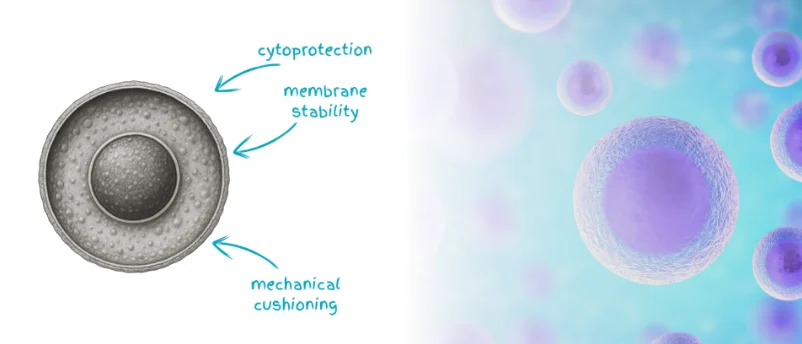
The condensates are assembled using liquid-liquid phase separation, mimicking the natural process by which cellular condensates form. A critical innovation was the incorporation of a short proteasome-targeting motif directly into the condensate structure. This motif acts as a molecular beacon, recruiting the cell’s own proteasomes—the protein degradation machinery—to the site of the condensate. Furthermore, these peptidic IgG condensates are stabilized with metal-phenolic network shells. This stabilization mechanism is crucial for maintaining the structural integrity of the condensates within the complex intracellular environment, ensuring their longevity and function while allowing for controlled release of their therapeutic cargo or activity.
The modular nature of this platform is a key differentiator. By leveraging the vast and diverse library of existing antibodies (IgGs), the researchers can theoretically adapt these condensates to target a wide array of intracellular disease-causing proteins. This adaptability represents a significant leap forward, as it offers a versatile "plug-and-play" system where different antibodies can be incorporated to guide the condensate to specific protein targets, overcoming the limitations of previous TPD strategies that often require bespoke small-molecule designs for each target.
Mechanism of Action: How the Synthetic Condensate Works
The elegant mechanism of the synthetic biomolecular condensate involves a multi-step process within the cell. Upon cellular internalization, the peptidic IgG condensate, guided by its incorporated antibody, selectively binds to its target protein—in this case, a specific KRAS mutation. The proteasome-targeting motif embedded within the condensate then acts as a recruiter, drawing the cell’s proteasomes to the immediate vicinity of the target protein. This localized recruitment effectively creates a "hotspot" for degradation.
Unlike PROTACs that require a direct interaction between an E3 ligase and the target protein, this condensate-based approach provides a localized scaffold. By concentrating both the target protein (via antibody binding) and the degradation machinery (via the proteasome-targeting motif) within the same phase-separated compartment, the efficiency and specificity of degradation are significantly enhanced. The metal-phenolic network shells play a vital role in maintaining the integrity of this catalytic hub, ensuring that the degradation process is sustained until the target protein is sufficiently diminished. This antibody-guided, variant-selective degradation mechanism represents a sophisticated way to hijack and repurpose endogenous cellular processes for therapeutic benefit, offering a potent tool against previously intractable intracellular targets.
Targeting KRAS G12V: A Critical Step Forward
A cornerstone of this research was the successful application of the synthetic condensate platform to target the KRAS G12V variant. This particular mutation is highly prevalent across multiple cancer types, including pancreatic cancer, and has historically lacked selective targeted therapies. The KRAS G12V protein possesses a distinct structural conformation that has made it exceptionally challenging to inhibit or degrade using conventional small-molecule approaches.
Partnering their condensate therapeutic platform with a KRAS G12V mutation-specific antibody, the researchers demonstrated impressive specificity and efficacy in heterozygous cells. The condensate selectively degraded the oncogenic KRAS G12V variant without affecting wild-type KRAS proteins. This selective targeting is paramount in cancer therapy, as off-target degradation of healthy proteins can lead to severe side effects. The ability to distinguish and eliminate the mutated form while preserving the normal physiological function of wild-type KRAS is a critical safety and efficacy benchmark for any new cancer therapeutic. This achievement directly addresses a significant unmet need in oncology and offers a beacon of hope for patients with KRAS G12V-driven cancers.

Pre-Clinical Validation and Promising Results
Beyond in vitro cellular studies, the Northwestern team further validated their condensate therapeutic platform in a robust pre-clinical setting. When tested in a KRAS G12V mutation mouse model, the synthetic biomolecule demonstrated its therapeutic potential by effectively suppressing tumor growth. This in vivo proof-of-concept is a crucial step, indicating that the condensates can be delivered, internalized by tumor cells, and execute their degradative function within a living organism, leading to a tangible anti-tumor response.
The success in the mouse model provides compelling evidence for the platform’s translational potential. It suggests that this novel approach is not merely a laboratory curiosity but a viable strategy that could eventually be developed into human therapeutics. The authors of the study emphasized this broad applicability, stating: "Given the widespread availability and diversity of antibodies, we believe IgG-biomolecular condensate holds strong potential as a broadly applicable targeted protein degradation modality for targeting a wide array of intracellular disease-related proteins." This statement underscores the vision for the platform extending far beyond KRAS, to potentially address a multitude of diseases driven by intracellular protein dysfunction.
Expert Perspectives and Broader Implications
The development of these novel synthetic biomolecular condensates represents a paradigm shift in targeted protein degradation and drug delivery. Experts in the field of oncology and biomaterials are likely to view this as a significant milestone. The modularity and adaptability of the platform, particularly its ability to leverage existing antibody technologies, could accelerate the development pipeline for new therapeutics. Instead of starting from scratch for each new target, researchers might be able to ‘plug in’ a different antibody to an established condensate framework, significantly reducing development time and cost.
This breakthrough could also have profound implications for overcoming drug resistance mechanisms. Many cancers develop resistance to therapies by altering the expression or conformation of target proteins. A degradative approach, especially one that can be readily modified with different antibodies, offers a more robust solution compared to inhibitors. Furthermore, the ability to target proteins that lack traditional drug binding pockets opens up a vast new chemical space for therapeutic intervention.
Future Directions and the Dawn of Programmable Biomaterials
Beyond the immediate therapeutic potential for KRAS-driven cancers, the Northwestern team is keenly interested in exploring the fundamental relationship between cells and artificial condensates. Their vision extends beyond mere drug delivery, aiming to engineer biomolecules that can perform complex, cell-like tasks after internalization.
Lead author Yi Li articulated this ambitious future: "Our upcoming work is trying to understand the principles governing condensate–cell interactions and to leverage these insights to engineer therapeutic condensates that function beyond drug delivery; they can perform cell-like tasks after internalization, such as targeted protein disposal, molecular sequestration and intracellular cargo reallocation. Biomolecular condensates may represent a new class of programmable biomaterials."
This forward-looking perspective suggests a future where synthetic condensates are not just passive carriers or degraders but active participants in cellular regulation. Imagine condensates that can intelligently sense pathological conditions, sequester harmful molecules, reallocate essential cellular components, or even repair damaged cellular machinery. This would transform therapeutic modalities from simple pharmacological interventions to sophisticated bio-engineered cellular modules, offering unprecedented levels of control and precision in treating complex diseases.
Potential Hurdles and the Path to Clinical Translation
While the preclinical results are highly promising, the journey from laboratory breakthrough to approved clinical therapy is often long and fraught with challenges. Several critical hurdles must be addressed before these synthetic biomolecular condensates can benefit patients.
Firstly, delivery and pharmacokinetics in humans need to be meticulously optimized. Ensuring that the condensates reach tumor cells effectively and safely, without significant off-target accumulation or systemic toxicity, will be crucial. The stability of the metal-phenolic network shells in the complex physiological environment will also require extensive testing.
Secondly, immunogenicity is a significant concern. Introducing synthetic peptidic structures and antibodies into the human body always carries the risk of eliciting an immune response, which could neutralize the therapeutic effect or cause adverse reactions. Careful engineering and testing will be required to minimize this risk.
Thirdly, manufacturing scalability and cost will be important considerations for widespread clinical adoption. Producing these complex biomolecular structures consistently and at a reasonable cost will be essential.
Finally, long-term safety and efficacy studies in larger animal models and eventually human clinical trials will be necessary to fully understand the therapeutic window, potential side effects, and sustained benefits. Regulatory approval will require rigorous demonstration of both safety and efficacy, adhering to the highest scientific and ethical standards.
Despite these challenges, the foundational research by Northwestern Medicine offers a compelling vision for the future of medicine. By harnessing the principles of biomolecular phase separation and combining them with the specificity of antibody-guided targeting and the power of proteasome-mediated degradation, this novel platform represents a significant leap forward in the fight against cancer and other protein-misfolding diseases. It underscores the ongoing evolution of therapeutic strategies, moving towards increasingly sophisticated and programmable biomaterials that can precisely interact with and rectify cellular pathologies. The path ahead is clear, albeit demanding, and the potential rewards for patients are immense.
Click here to view the press release