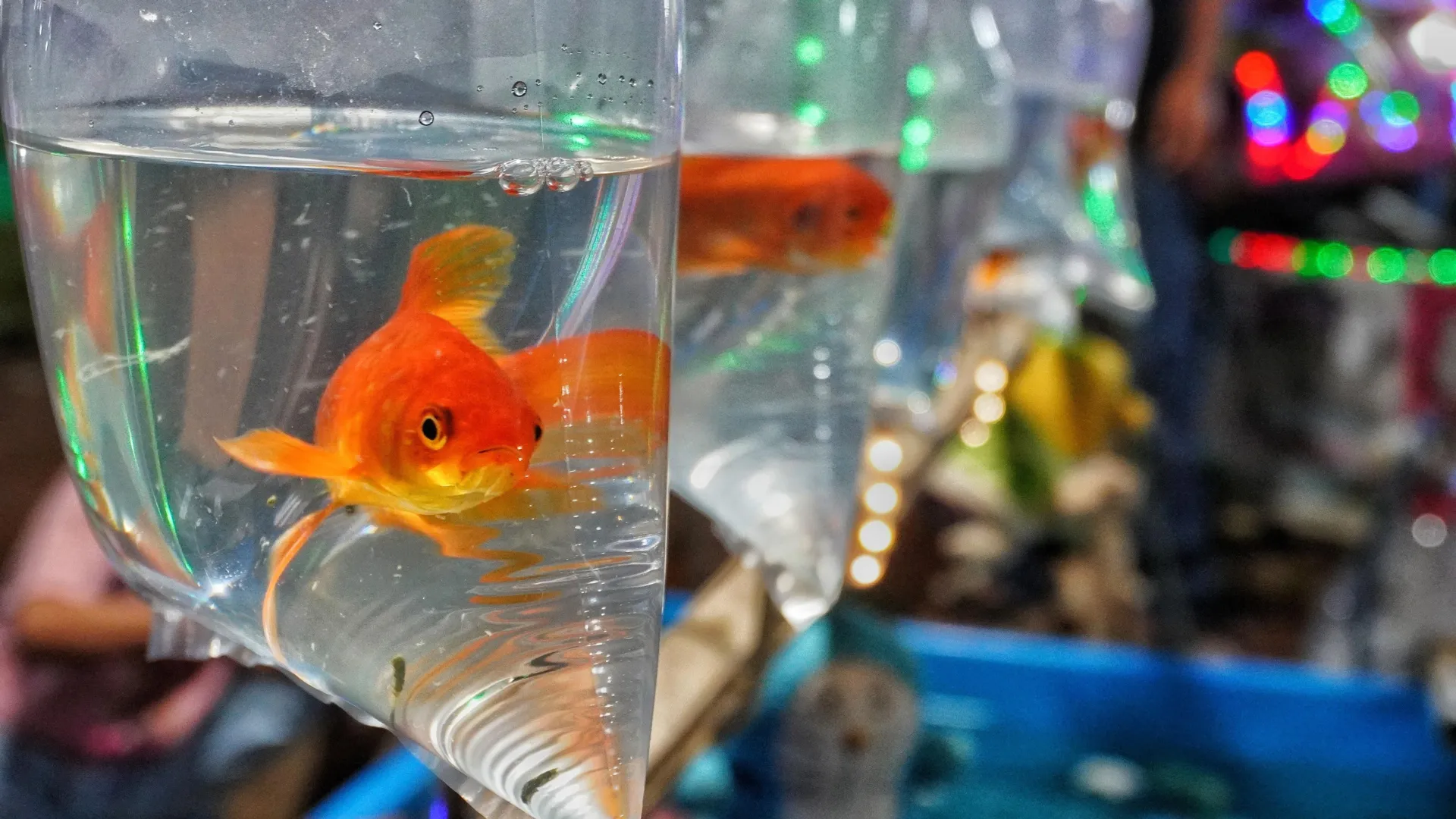
A groundbreaking peer-reviewed study, conducted by researchers from The University of Toledo and the University of Missouri, has unveiled the substantial and often detrimental impact that common goldfish can have when they escape or are intentionally released into freshwater ecosystems. The findings, published in the prestigious Journal of Animal Ecology, offer some of the most compelling experimental evidence to date demonstrating how these seemingly innocuous pet fish can drastically alter the delicate balance of lake environments. This research serves as a critical wake-up call for pet owners, natural resource managers, and policymakers, highlighting that the goldfish, a staple in aquariums worldwide, can transform into a significant ecological menace outside its confined habitat.
Dr. William Hintz, associate professor in UToledo’s Department of Environmental Sciences and Lake Erie Center and lead investigator of the study, emphasized the urgency of public awareness. "It is critically important to inform the public that their pets can become pests that will harm freshwater ecosystems," Dr. Hintz stated. "The evidence is now clear — releasing a goldfish into the wild might be seen as an act of kindness, but it can turn into a major ecological threat." The study’s implications extend beyond individual actions, pointing towards a broader need for preventative measures and informed stewardship of aquatic resources.
Goldfish: A Ticking Time Bomb in Freshwater Environments
The research, meticulously designed to simulate real-world lake conditions, employed large outdoor freshwater mesocosms. These controlled environments allowed scientists to introduce goldfish (Carassius auratus) and meticulously observe their cascading effects on different types of lakes over a defined period. The team focused on two prevalent freshwater conditions: nutrient-poor (oligotrophic) waters and nutrient-rich (eutrophic) waters, environments that support vastly different aquatic communities. In both scenarios, the presence of goldfish induced significant ecological disruption, underscoring their adaptability and aggressive impact.
Among the most alarming findings, the study documented how goldfish fundamentally alter the structure and function of aquatic ecosystems. Their feeding habits, particularly their tendency to forage on the lakebed, lead to the resuspension of sediments. This stirred-up sediment clouds the water, reducing light penetration, which in turn inhibits the growth of submerged aquatic vegetation – a crucial habitat and food source for many native species. Furthermore, goldfish are voracious consumers of zooplankton and benthic invertebrates, directly competing with and depleting the food sources available to native fish populations. This disruption at the base of the food web can have ripple effects throughout the entire ecosystem.
Unraveling the Goldfish Effect: Rigorous Experimental Design
To isolate the specific impacts of goldfish from general increases in fish biomass, the researchers employed sophisticated experimental designs, including both additive and substitutive approaches. This methodology allowed them to differentiate between the effects caused by the sheer number of fish present and the unique ecological footprint of goldfish themselves. The analysis conclusively showed that while increased fish abundance could lead to some changes in aquatic vegetation, the most severe and widespread ecological damage was directly attributable to the presence of goldfish.
A particularly concerning observation was the documented occurrence of what scientists term a "regime shift." This critical threshold is crossed when an ecosystem undergoes a rapid and fundamental reorganization into a drastically different, and often degraded, state. Once such a shift is initiated, the ecosystem can become locked into this new, less diverse and less functional condition, making restoration efforts exceptionally difficult and financially burdensome. The study provides strong experimental backing for the hypothesis that invasive goldfish are a potent driver of these undesirable regime shifts in freshwater lakes.
The Global Spread and Ecological Persistence of Goldfish
Goldfish are among the most widely distributed ornamental fish globally, a testament to their popularity as pets and the vast scale of the international pet trade. The movement of aquatic species across continents, facilitated by this trade and by accidental introductions, has reached unprecedented levels, creating fertile ground for invasive species to establish themselves.
When goldfish are released into natural waterways, whether intentionally, through accidental escape during flooding events, or via connections between aquarium systems and the environment, they can rapidly establish thriving invasive populations. Their prolific breeding habits and generalist diet allow them to outcompete native species and exploit available resources effectively.
Rick Relyea, professor in the University of Missouri College of Agriculture, Food and Natural Resources, director of Mizzou’s Johnny Morris Institute of Fisheries, Wetlands and Aquatic Systems, and a co-author of the study, elaborated on the mechanisms of this ecological invasion. "If goldfish are released into the wild, they rapidly grow into very large fish that stir up lake sediments, consume large numbers of prey and compete with native fish," Professor Relyea explained. This growth into large, dominant individuals amplifies their disruptive capabilities, allowing them to exert a disproportionately large influence on the ecosystem.
Supporting Data and Scientific Consensus
The study’s findings align with anecdotal evidence and observations from various regions experiencing goldfish invasions. For instance, in some parts of North America, escaped goldfish have been reported to grow to lengths exceeding 12 inches, a stark contrast to the typical size of pet goldfish. These larger individuals possess greater foraging power and can cause more significant disturbance to sediment and vegetation.
While specific quantitative data on the economic costs of goldfish invasions are still emerging, the ecological damage translates into significant indirect costs. These include the loss of biodiversity, the degradation of water quality impacting recreational activities like fishing and swimming, and the expense of management and restoration efforts. For example, studies on other invasive aquatic species, such as zebra mussels, have demonstrated billions of dollars in economic damages over time, highlighting the potential long-term financial burden associated with unchecked invasions. The regime shifts induced by goldfish can lead to a decline in commercially and recreationally important fish species, further impacting local economies.
Proactive Measures and Public Education: A Crucial Imperative
In light of these findings, the researchers advocate for a proactive approach to managing the threat posed by goldfish. They recommend that natural resource agencies classify goldfish as a high-priority invasive species and intensify efforts focused on prevention, early detection, and rapid control before wild populations become firmly established.
The authors also underscore the critical need for enhanced public education initiatives. Pet owners must be made fully aware of the environmental consequences of releasing aquarium animals into natural waterways. The misconception that releasing a pet goldfish is a humane act needs to be dispelled, replaced with an understanding of its potential for ecological harm.
Several responsible alternatives exist for individuals who can no longer care for their goldfish. These include returning the fish to a reputable pet store, rehoming them with another aquarium enthusiast, or contacting local wildlife authorities for guidance on proper disposal or management. These simple actions can prevent the introduction of a significant ecological threat into vulnerable freshwater systems.
Chronology of Research and Future Directions
The research leading to this pivotal study likely involved years of planning, data collection, and analysis. The experimental mesocosms would have been established, allowing for controlled introductions of goldfish. Over months, or even years, researchers would have meticulously monitored key ecological indicators, including water clarity, nutrient levels, phytoplankton and zooplankton populations, invertebrate diversity, and the health and abundance of native fish species. The integration of data from both nutrient-poor and nutrient-rich environments would have been a key phase, requiring careful statistical analysis to identify consistent patterns of impact.
The publication in the Journal of Animal Ecology, a leading peer-reviewed scientific journal, signifies that the study has undergone rigorous scrutiny by other experts in the field, lending significant weight to its conclusions.
Looking ahead, this research opens avenues for further investigation. Future studies could focus on the long-term recovery rates of ecosystems following goldfish removal, the efficacy of various control methods for established goldfish populations, and the genetic adaptability of invasive goldfish to different environmental conditions. Understanding the specific vulnerabilities of native species to goldfish competition and predation is also a crucial area for ongoing research. The study’s methodology, particularly the use of mesocosms to simulate complex ecological interactions, provides a robust framework for future experimental ecology research.
Broader Implications for Aquatic Stewardship
The findings regarding goldfish serve as a potent reminder of the interconnectedness of human activities and ecological health. The global trade in exotic pets, while economically significant, carries inherent ecological risks that demand careful consideration and regulation. This study emphasizes the need for a holistic approach to aquatic stewardship, one that acknowledges the potential for even common, seemingly harmless species to become agents of ecological change when introduced into new environments.
Policymakers and environmental agencies may consider reviewing existing regulations regarding the importation and sale of ornamental fish, as well as enhancing educational campaigns to promote responsible pet ownership. The concept of "early detection and rapid response" (EDRR) for invasive species, which this study implicitly supports, is a cornerstone of modern invasive species management.
In conclusion, the research from The University of Toledo and the University of Missouri provides irrefutable evidence of the significant ecological threat posed by invasive goldfish. It is a call to action for individuals, communities, and governments to recognize the profound impact of seemingly small actions on the health of our planet’s vital freshwater ecosystems. By fostering greater public awareness and implementing proactive management strategies, we can work towards preventing these beloved aquarium pets from becoming ecological destroyers.
About the Study:
The study, titled "Invasive goldfish trigger a regime shift in experimental lake ecosystems of varying trophic state," was authored by Dr. William Hintz of The University of Toledo, Hannah Barrett, and Dr. Rick Relyea of the University of Missouri. Researchers conducted the work using outdoor freshwater mesocosms designed to replicate realistic lake conditions. The study combined additive and substitutive experimental approaches across oligotrophic (nutrient-poor) and eutrophic (nutrient-rich) trophic states to evaluate the effects of goldfish (Carassius auratus) on water quality, phytoplankton, invertebrate communities, filamentous algae, and native fish condition.