An international team of physicists has unveiled a groundbreaking discovery in quantum mechanics, documenting an anomalous form of quantum oscillation within a three-dimensional topological insulator. Published in the peer-reviewed journal Nature Communications, the study demonstrates that electrons within zirconium pentatelluride (ZrTe5) exhibit counterintuitive behaviors when subjected to ultra-low temperatures near absolute zero and staggering magnetic fields reaching up to 60 tesla. This phenomenon challenges established paradigms of solid-state physics, offering fresh insight into relativistic quasiparticles and the interplay between orbital motion and electron spin.
The research was spearheaded by an academic alliance that bridges the Global South and North, prominently featuring scientists from the University of São Paulo (USP) in Brazil alongside researchers from the Los Alamos National Laboratory, the University of Washington, and several other premier United States scientific institutions. By fusing high-precision electrical transport experiments conducted in extreme high-magnetic-field facilities with advanced theoretical modeling, the research consortium has successfully resolved long-standing contradictions in quantum material research.
Background Context: The Dual Personality of Topological Insulators
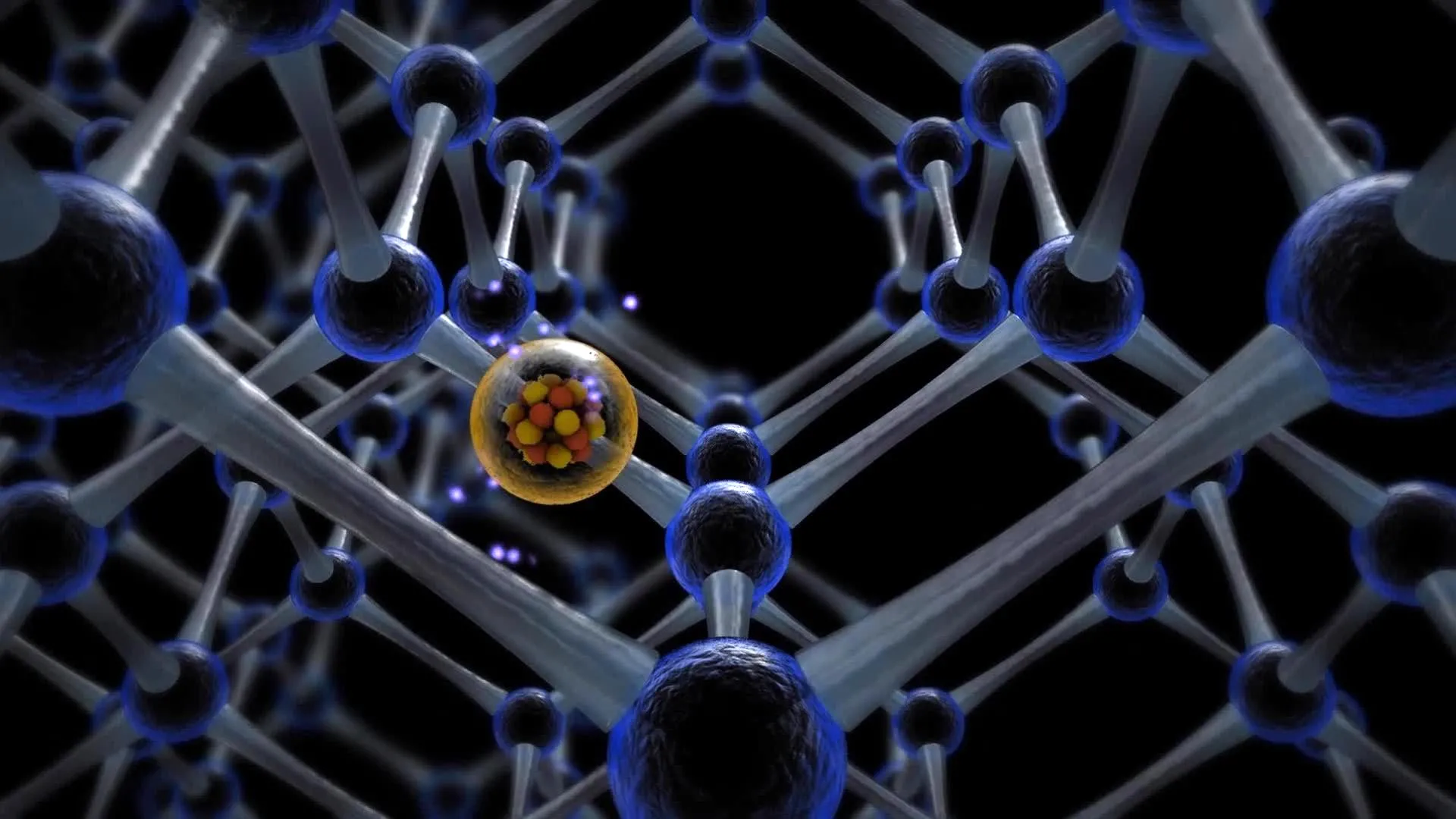
To appreciate the gravity of the recent findings in Nature Communications, one must first examine the peculiar nature of topological insulators. These advanced materials occupy a unique category in condensed matter physics because of their dual electronic personalities. Under normal conditions, their interiors act as robust electrical insulators, halting the flow of current through the bulk of the material. However, their outer boundaries or surfaces remain highly conductive, facilitating efficient electronic transport.
This dual behavior is not accidental; it is deeply rooted in the topology of the material’s electronic band structure. Protected by underlying crystal symmetries, these electronic states remain remarkably resilient against external perturbations or impurities. Among the catalog of known topological insulators, zirconium pentatelluride (ZrTe5) occupies a remarkably delicate position. It sits precisely at the precipice—the boundary separating distinct topological phases.
Because of this precarious balance, minute alterations in its environment can radically transform its electronic profile. Variables such as temperature shifts, mechanical strain, chemical doping modifications, or the application of an external magnetic field can trigger dramatic phase transitions. Consequently, materials scientists have increasingly turned to ZrTe5 as a primary laboratory for investigating relativistic quasiparticles—excitations that mimic the behavior of high-energy subatomic particles described by Dirac equations, but operating inside a solid-state lattice at speeds far slower than the speed of light.
Chronology and Experimental Milestones
The path to this discovery represents a multi-year collaborative effort spanning international borders and heavy experimental infrastructure. The investigative timeline culminated through a strategic partnership forged between Brazilian theoretical and experimental groups and U.S. national laboratories.
The foundational groundwork began at the University of São Paulo’s Physics Institute (IF), where Professor Julio Larrea Jiménez established the Laboratory for Quantum Matter under Extreme Conditions (LQMEC). Larrea, who serves as a co-founder and director of the facility, took on the role of doctoral advisor for Cauê Kaufmann Ribeiro, the primary author of the study.
The experimental phase of the project required access to rare, highly specialized environments capable of producing extreme physical conditions. Ribeiro traveled to the United States under a FAPESP Research Internship Abroad fellowship to conduct extensive experimental work at the National High Magnetic Field Laboratory (MagLab) housed within Los Alamos National Laboratory. Working alongside co-advisors Johanna Palmstrom and Sean Thomas, Ribeiro executed high-precision electrical transport trials.
During these experiments, the research team exposed crystal samples of ZrTe5 to magnetic fields as intense as 60 tesla—roughly a million times stronger than a standard refrigerator magnet—while cooling the sample down to approximately 0.7 kelvin, or -272.45 degrees Celsius, bringing it within a fraction of a degree of absolute zero. By combining these extreme data points with rigorous theoretical calculations developed back in Brazil, the team unlocked the hidden mechanics governing the material’s electrons.
Defying Conventional Physics: Quantum Oscillations That Refuse to Fade
When charge carriers, such as electrons, navigate a magnetic field, their trajectories are bent into closed cyclotron orbits by the Lorentz force. Quantum mechanics dictates that within this confined motion, electron energies cannot form a continuous spectrum; instead, they are restricted to discrete, quantized energy tiers known as Landau levels, named in honor of the legendary Soviet physicist Lev Landau.
In exceptionally pure crystalline metals, these Landau levels sweep steadily across the Fermi level—the energetic border that separates occupied electron states from unoccupied ones—as the strength of the magnetic field varies. Each time a Landau level crosses the Fermi surface, it triggers a periodic oscillation in the electrical resistance of the material. Known as Shubnikov-de Haas oscillations, these signals traditionally follow a strict, predictable periodicity when plotted against the reciprocal of the magnetic field (1/B).
Standard physical theory dictates that once a magnetic field surpasses a certain threshold known as the quantum limit, all electrons are compressed into the lowest possible Landau level. As the field increases further, these levels recede away from the Fermi energy, causing the resistance oscillations to rapidly dampen and disappear.
However, when the team subjected ZrTe5 to these conditions, the expected outcome did not materialize. Instead of fading into silence, the magnetoresistance oscillations persisted vigorously far beyond the quantum limit, displaying an anomalous periodicity that broke conventional rules.
The Mechanism of Back-Bending and Reentrant Landau Levels
To decode this unexpected anomaly, the researchers looked closely at how the electronic band structure responds under extreme stress. They proposed a theoretical mechanism termed the "back-bending" of Landau levels.
Rather than shifting uniformly in a linear progression as the magnetic field intensifies, certain Landau levels exhibit a non-linear trajectory. Under the influence of intense fields, these energy levels bend backward, reversing their course to approach and cross the Fermi level a second time. These secondary crossings generate fresh quantum oscillations within a regime where classical theory predicts absolute dormancy.
The team dubbed these recurring trajectories "reentrant Landau levels." According to Kaufmann, this behavior is a direct consequence of relativistic-like quasiparticles whose spin properties dictate their response to external forces. When immense magnetic fields are applied, the interaction between the electron’s intrinsic spin and the magnetic field reshapes the energy landscape, pulling the Landau levels back into active circulation.
The Crucial Role of Electron Spin and Spin-Orbit Coupling
A central objective of the investigation was identifying the microscopic origin behind these anomalous oscillations. Historically, physicists debate whether such unusual quantum phenomena stem from complex many-body interactions—where collective, cooperative behaviors among vast numbers of interacting electrons generate emergent phenomena—or whether they arise strictly from the single-particle topological properties of the material’s electronic bands.
Through meticulous data analysis and theoretical modeling, the research team determined that collective many-body interactions were not required to account for the observed signals. Instead, a single-particle Hamiltonian framework incorporating a three-dimensional Dirac equation and robust spin-orbit coupling successfully replicated the experimental regimes.
This behavior highlights the profound consequence of coupling two fundamental physical forces: cyclotron energy, generated by the orbital motion of electrons looping through a magnetic field, and the Zeeman effect, which governs how an electron’s spin aligns with that same field. In materials characterized by strong spin-orbit coupling, such as ZrTe5, these two contributions cannot be analyzed independently. The orbital motion and the spin degree of freedom become inextricably entangled, forcing the Landau levels to evolve in non-linear ways.
"What we saw is that the effect doesn’t stem from many-body interactions, but rather from a nontrivial topology of the electronic bands," explained Professor Larrea.
Resolving Long-Standing Contradictions in ZrTe5 Research
For years, the scientific community studying zirconium pentatelluride experienced a persistent puzzle: different research laboratories analyzing seemingly identical batches of ZrTe5 produced conflicting and irreconcilable results regarding their quantum oscillations. Some studies documented standard periodic oscillations governed by 1/B rules, while others reported irregular patterns, and some even detected logarithmic periodicities in B.
The new findings published in Nature Communications offer a unifying resolution to this scientific debate. The researchers demonstrated that these disparate experimental outcomes do not require separate, exotic physical explanations for each sample. Rather, all these varying manifestations spring from the identical underlying Dirac electronic structure.
The determining factor in what kind of oscillation a specific sample displays is its carrier density and the precise dimensions of its Fermi surface. In samples characterized by extremely low carrier densities—such as the pristine crystals utilized in this study—the Zeeman effect and the cyclotron energy scale become comparable within experimentally accessible magnetic field ranges. This balance favors the re-entry of Landau levels, bringing the anomalous oscillations into clear view. Conversely, in samples with higher carrier densities, the conventional orbital term dominates, forcing the oscillations to revert to standard 1/B periodicity.
Furthermore, the team identified dual contributions to the quantum oscillations originating from spin-separated states. These distinct channels possess different effective masses and actively interfere with one another. This interference successfully explains another anomaly observed during the thermal sweeps: instead of oscillation amplitudes steadily decaying as temperature rises—as predicted by the classic Lifshitz-Kosevich model—the researchers recorded local minimums in amplitude across specific thermal windows, confirming quantum mechanical wave interference between spin channels.
Official Responses and Academic Perspectives
The publication of this study has drawn positive attention from the broader condensed matter physics community, underscoring the collaborative nature of modern scientific breakthroughs.
Reflecting on the milestone, the authors emphasized the rarity and prestige of the experimental conditions required to achieve these results. Access to pulsed magnetic fields reaching 60 tesla combined with sub-kelvin cryogenic cooling is restricted to a very small handful of highly specialized facilities across the globe.
"This type of experiment can only be performed in a few places around the world, and access to those facilities is highly competitive," noted Larrea, acknowledging the logistical challenges overcome by the multinational team.
Funding and institutional support played an essential role in sustaining the multi-year investigative effort. In addition to the foundational backing provided by the São Paulo Research Foundation (FAPESP) through a Young Investigator Grant awarded to Larrea and the international research internships supporting Ribeiro, the project received significant financial sponsorship from United States federal agencies. Key contributors included the National Science Foundation, the U.S. Department of Energy, and operational support from the National High Magnetic Field Laboratory in Los Alamos.
Broader Impact and Future Implications
The implications of mapping reentrant Landau levels and spin-coupled transport in topological insulators extend far beyond resolving academic debates over ZrTe5. As technology edges closer to the realization of advanced quantum computing architectures and ultra-efficient electronics, understanding how topological states manipulate electron spin becomes paramount.
By demonstrating that topological insulators can effectively mediate the transport of electron spin alongside electric charge under extreme conditions, the research opens a new frontier for spintronics—a field aiming to build electronic devices that exploit the quantum spin of electrons rather than merely their charge, potentially offering vastly superior processing speeds and negligible energy dissipation.
Moreover, the team’s findings cement ZrTe5 as an exceptionally versatile testing ground for exploring an even wider spectrum of exotic states of matter. The researchers hypothesize that by fine-tuning external parameters—such as crystalline symmetry, mechanical strain, carrier doping, and magnetic fields—physicists may soon unlock further elusive phases, including topological states governed by Weyl quasiparticles.
As the scientific community digests these insights, the work stands as a testament to the power of international scientific cooperation, pairing the theoretical rigor of South American institutions with the monumental experimental infrastructure of United States national laboratories to shed light on the deepest mysteries of quantum matter.