The global health crisis of antibiotic-resistant infections, which currently claims more than one million lives annually, may find an unlikely solution in the pages of a 1,000-year-old manuscript. New research published September 3 in the journal mSphere reveals that a medicinal concoction derived from the 10th-century Anglo-Saxon medical text Bald’s Leechbook possesses a unique ability to stymie bacterial growth. Unlike conventional antibiotics that typically target a single pathway, this ancient “eyesalve” utilizes a multi-faceted assault that makes it significantly more difficult for pathogens to develop resistance.
A Historical Blueprint for Modern Medicine
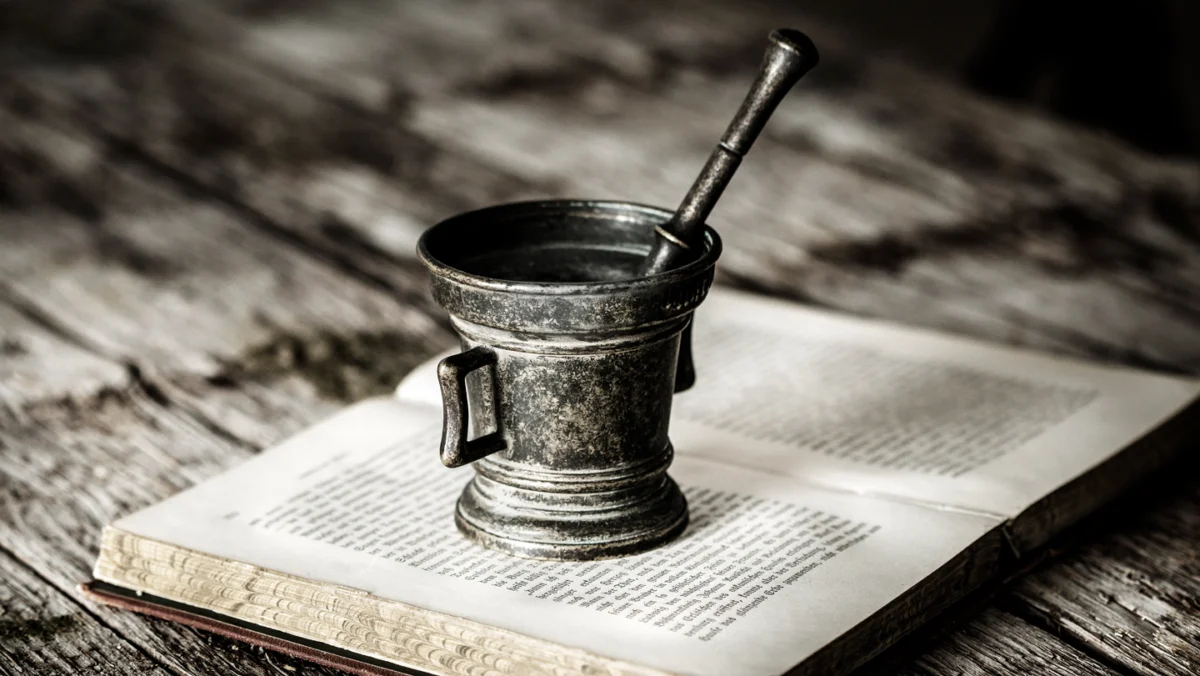
Bald’s Leechbook, an artifact of the early medieval period, contains an assortment of remedies and salves designed to treat various ailments common to the era. While many such historical texts are dismissed as superstition or folklore, the modern scientific inquiry into these recipes began in earnest around 2015. A multidisciplinary team of microbiologists and historians, led by Dr. Freya Harrison of the University of Warwick, sought to determine if the clinical efficacy described in the texts had any basis in modern microbiology.
The recipe, which requires a precise combination of garlic, onion, bovine bile, and wine, must be brewed in a brass vessel and allowed to sit for nine days. When researchers first tested this mixture, they were surprised to find potent antimicrobial activity against Staphylococcus aureus and its drug-resistant variant, MRSA. The recent study builds upon these findings, shifting the focus from whether the remedy works to the underlying mechanisms of why it remains effective where modern pharmaceuticals often fail.
Mechanisms of Action: How the Potion Disrupts Pathogens
The research team utilized transcriptomic analysis to observe how the eyesalve alters the gene expression of S. aureus cultures. The results indicated that the mixture triggers a widespread systemic response within the bacteria. Specifically, the brew damages bacterial cell membranes—a vital structure that, when compromised, often leads to cellular death.
Beyond physical destruction, the concoction interferes with the "quorum sensing" capabilities of bacteria. Quorum sensing is a chemical communication method that allows bacterial colonies to coordinate their behavior, such as forming biofilms. Biofilms are notoriously difficult to treat because they act as a protective shield, shielding the pathogen from both the host’s immune system and traditional antibiotic penetration. By disrupting this communication, the eyesalve effectively leaves the bacteria vulnerable and unable to mount a coordinated defense.
The Problem of Resistance and the "Multi-Target" Advantage
The most significant finding of the study lies in the speed at which pathogens evolve resistance. In a comparative laboratory trial, the researchers exposed cultures of S. aureus and two other pathogens to both the medieval eyesalve and standard single-molecule antibiotics.
The results were stark. Within a two-week period, the bacteria frequently flourished when exposed to eight to sixteen times the initial concentration of traditional antibiotics. In contrast, the microbes showed a minimal capacity to adapt to the eyesalve, requiring only slight increases in concentration to maintain a suppressive effect.
Dr. Freya Harrison explains that this difference is likely due to the "multi-pronged" nature of the mixture. "The difference is remarkable," notes Omar El-Halfawy, a microbiologist at the University of Regina, who monitored the study’s implications. Harrison posits that for a bacterial colony to survive the eyesalve, it would need to undergo multiple simultaneous mutations to counteract every active ingredient in the brew. "For bacterial colonies to survive, they’ve potentially got to mutate multiple targets, and that’s difficult," she added. This high barrier to adaptation serves as a natural deterrent to the rapid evolution of "superbugs."

Chronology of Discovery
- 10th Century: Anglo-Saxon scribes compile Bald’s Leechbook, documenting various remedies including the eyesalve.
- 2015: Dr. Freya Harrison’s team recreates the eyesalve in a laboratory setting for the first time, identifying its antimicrobial properties against S. aureus.
- 2023–2025: Researchers conduct deep-dive transcriptomic studies to identify the biological pathways affected by the potion.
- September 2026: Findings are formally published in mSphere, detailing how the mixture disrupts cell membranes, gene expression, and bacterial communication.
Clinical Implications and Future Directions
Despite the success of the eyesalve in laboratory environments, researchers are quick to clarify that it is not a direct replacement for clinical medicine. The nature of the ingredients—natural, variable, and prepared in a brass vessel—presents significant challenges for mass production and standardization.
"It would be really impractical to do that, and also potentially really unreliable and dangerous because it’s going to be so variable," Harrison stated. The goal of the research is not to encourage the home-brewing of medieval medicines, but rather to identify the specific bioactive compounds within the recipe that provide its potency.
The pharmaceutical industry has long struggled with the "innovation gap" in antibiotic development, where the cost and time of bringing a new, effective drug to market often outweigh the return on investment, particularly as resistance develops quickly. By analyzing the "cocktail approach" of the eyesalve, scientists hope to develop a modern, synthetic, and standardized version of the remedy. If researchers can isolate the handful of molecules responsible for the potion’s efficacy, they may be able to synthesize a drug that mimics this ancient multi-target strategy.
Broader Impact on Global Health
The threat posed by antimicrobial resistance (AMR) is one of the most pressing challenges in modern medicine. The World Health Organization has declared AMR one of the top ten global public health threats facing humanity. The ability of bacteria to evolve rapidly against our current arsenal of antibiotics has led to a "post-antibiotic era" where routine surgeries and minor infections could once again become life-threatening.
The discovery that a medieval manuscript might hold the key to overcoming this evolutionary advantage highlights the importance of historical data in scientific research. It suggests that our ancestors, through trial and error, discovered combinations of natural chemicals that hit multiple physiological targets simultaneously.
Expert Perspectives and Conclusion
The scientific community has reacted with cautious optimism. While the study is grounded in rigorous laboratory observation, the transition from an experimental brew to a viable pharmaceutical product remains a long-term goal.
"The study represents a pivot in how we view ancient medicine," says one independent expert in clinical pharmacology. "We are moving away from looking for a single ‘magic bullet’—a one-molecule, one-target drug—and moving toward the realization that complexity, in the form of multi-compound cocktails, might be the secret to stalling bacterial resistance."
As researchers continue to analyze the active ingredients of the Leechbook recipe, the potential for a new class of antibiotics—inspired by the past but refined by the future—is becoming a reality. By effectively creating a "moving target" for bacteria, this ancient remedy offers a promising blueprint for modern medicine to reclaim the upper hand in the long-standing war against infectious disease. The path forward will involve isolating the specific molecular interactions identified in the mSphere report, testing their safety in clinical trials, and eventually integrating them into the modern medical toolkit. For now, the humble garlic and wine mixture stands as a testament to the fact that the future of medicine may well be found in the wisdom of the past.