The field of condensed matter physics has reached a significant milestone as researchers at New York University (NYU) successfully engineered a macroscopic time crystal using acoustic levitation. This development, detailed in a recent publication in the journal Physical Review Letters, marks a departure from traditional quantum-scale experiments by demonstrating time-crystalline behavior in a system visible to the naked eye. By utilizing sound waves to suspend and manipulate matter, the team has created a platform that not only confirms the existence of these exotic states in soft matter but also challenges fundamental perceptions of Newtonian mechanics in driven systems.
Time crystals represent a phase of matter that breaks time-translation symmetry. While a standard crystal, such as a diamond or a grain of salt, possesses atoms arranged in a repeating pattern across space, a time crystal possesses a structure that repeats in time. This means the particles within the system undergo a perpetual motion—a "ticking" or oscillation—even when in their lowest energy state, provided they are being driven by an external periodic force. Since their theoretical prediction just over a decade ago, time crystals have mostly been the province of ultra-cold quantum laboratories. The NYU experiment changes this paradigm by bringing the phenomenon into the realm of classical, room-temperature physics.
The Evolution of Time Crystal Research: A Decade of Discovery
The concept of the time crystal was first proposed in 2012 by Nobel laureate Frank Wilczek. His initial hypothesis suggested that certain systems could exhibit spontaneous symmetry breaking in the time dimension, much like how liquids crystallize into solids by breaking spatial symmetry. While his original formulation faced mathematical challenges regarding equilibrium states, the scientific community quickly adapted the theory to "floquet" systems—systems that are periodically driven by an external energy source.
In 2016 and 2017, the first experimental validations occurred. Researchers at the University of Maryland used a chain of trapped ytterbium ions, while a team at Harvard University utilized nitrogen-vacancy centers in diamonds. These early versions were microscopic and required extreme conditions, such as near-absolute zero temperatures or high-vacuum environments. In 2021, Google’s Sycamore quantum processor was used to observe a time crystal, further cementing the technology’s link to quantum computing.
The NYU breakthrough, led by Professor David Grier, Director of the Center for Soft Matter Research, represents the latest chapter in this chronology. By moving the study of time crystals from the subatomic to the macroscopic scale, the research team has made the phenomenon accessible for industrial and technological applications that do not require specialized quantum hardware.
Experimental Framework: Acoustic Levitation and Styrofoam Beads
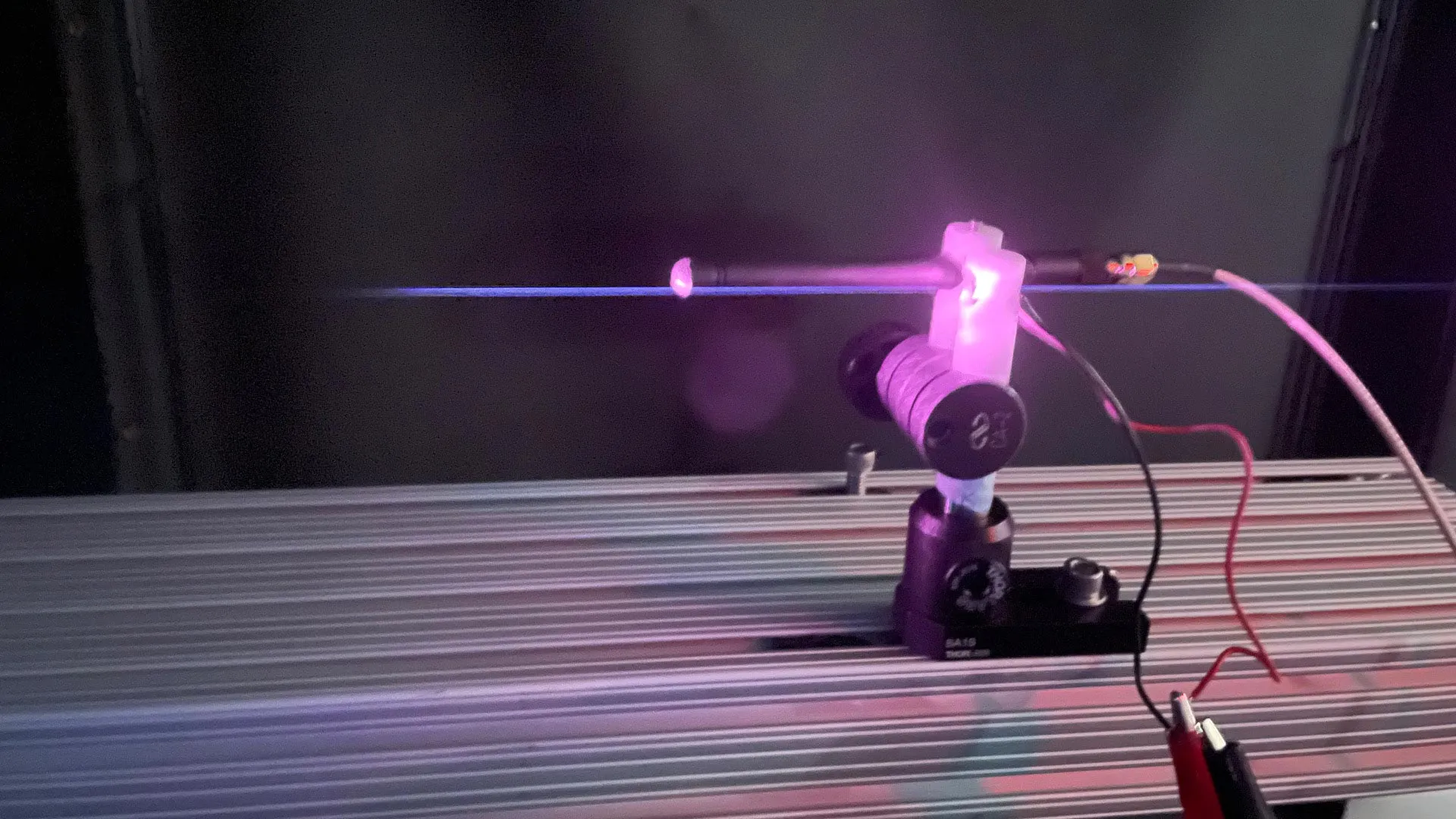
The physical apparatus used in the NYU experiment is remarkably compact, standing approximately one foot tall. The device functions as an acoustic levitator, a machine that uses high-frequency sound waves to create a standing wave in the air. A standing wave consists of nodes—points where the air pressure remains constant—and antinodes—where the pressure fluctuates significantly.
To create the time crystal, the researchers introduced small styrofoam beads, similar to the expanded polystyrene used in protective packaging, into this sound field. The acoustic radiation pressure exerted by the sound waves is sufficient to counteract the force of gravity, allowing the beads to remain suspended in mid-air.
"Sound waves exert forces on particles—just like waves on the surface of a pond can exert forces on a floating leaf," explained Mia Morrell, an NYU graduate student and lead researcher on the project. "We can levitate objects against gravity by immersing them in a sound field called a standing wave."
The innovation lies in how these beads interact once they are suspended. Unlike previous experiments that relied on magnetic fields or laser traps, the NYU system relies on the scattering of sound waves between the particles. As the sound waves hit one bead, they are deflected toward the next, creating a complex web of "acoustic shadows" and secondary forces that dictate the movement of the entire group.
Challenging Newton’s Third Law through Nonreciprocity
One of the most profound aspects of the NYU study is the observation of nonreciprocal interactions. In classical physics, Newton’s Third Law of Motion states that for every action, there is an equal and opposite reaction. This means if Object A exerts a force on Object B, Object B must exert an equivalent force back on Object A in the opposite direction.
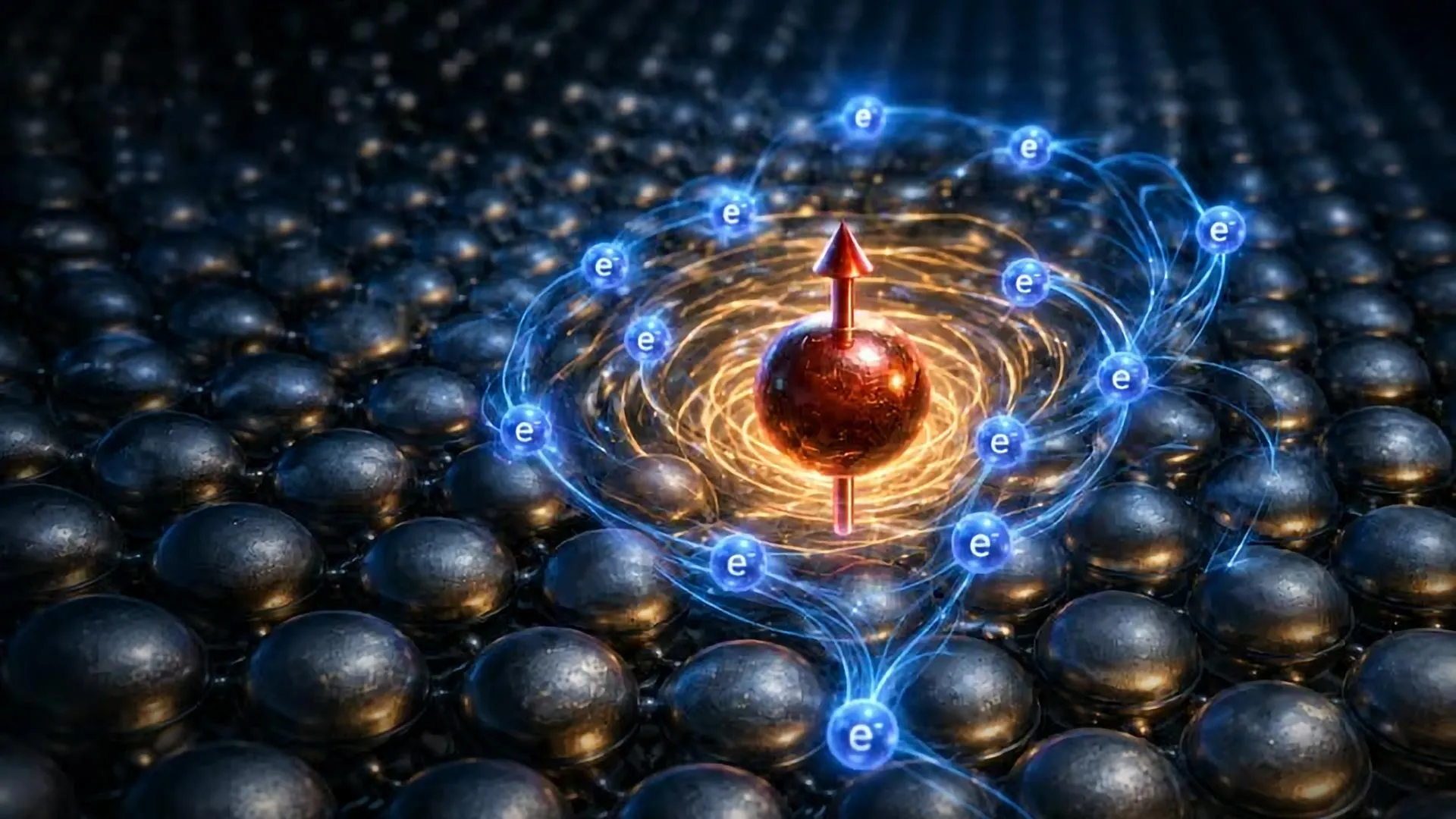
However, the NYU team discovered that in their acoustic system, this symmetry is broken. Because the styrofoam beads vary slightly in size and shape, they scatter sound waves differently. A larger bead, having a greater surface area, scatters more sound energy toward a smaller bead than the smaller bead can scatter back. This results in an uneven exchange of force.
Professor Grier noted the significance of this imbalance: "Our system is remarkable because it’s incredibly simple, yet it demonstrates how nonreciprocal forces can lead to complex, self-organized behavior."
To illustrate this, the researchers used the analogy of two ferries of different sizes approaching a dock. Both vessels create wakes (waves) that push against the other. The larger ferry creates a massive displacement that significantly alters the path of the smaller boat, whereas the smaller boat’s wake has a negligible effect on the larger vessel. In the acoustic levitator, this "unevenness" causes the beads to begin oscillating in a rhythmic, repeating pattern. This self-sustained "ticking" is the hallmark of a time crystal, occurring because the system is constantly being fed energy by the sound field, making it a "non-equilibrium" system.
Data and Observations: The Mechanics of the "Tick"
The data collected during the experiment showed that the beads did not merely float; they synchronized. When multiple beads were introduced into the levitator, the nonreciprocal forces forced them into a collective motion. The frequency of this motion was found to be a sub-harmonic of the driving frequency of the sound waves, a classic indicator of time-crystalline behavior.
Key data points from the study include:
- Device Scale: Approximately 30 centimeters (1 foot) in height.
- Medium: Air at standard room temperature and pressure.
- Materials: Polystyrene beads (styrofoam) ranging from 1 to 3 millimeters in diameter.
- Force Mechanism: Acoustic radiation pressure and secondary Bjerknes forces (forces between pulsating objects in a sound field).
- Oscillation Stability: The "ticking" remained steady over extended periods, proving that the time crystal was stable and not a transient effect.
The researchers observed that the distance between the beads and the intensity of the sound field were critical variables. If the beads were too far apart, the scattered sound waves were too weak to induce synchronization. If they were too close, the forces became chaotic. There was a "Goldilocks zone" where the nonreciprocal interactions perfectly balanced to create the time crystal.
Biological Implications and Circadian Rhythms
The NYU study extends beyond the realm of pure physics and into the biological sciences. The researchers suggest that the nonreciprocal interactions observed in their acoustic system may mirror the biochemical processes that govern internal "clocks" in living organisms.
Circadian rhythms—the 24-hour cycles that tell our bodies when to sleep, eat, and wake—are driven by complex feedback loops within cells. These loops often involve proteins and enzymes that interact in a nonreciprocal manner. For instance, the production of one protein might stimulate the production of another, but the second protein might inhibit the first at a different rate or through a different pathway.
By studying how the styrofoam beads synchronize through uneven forces, scientists may gain a better understanding of how metabolic processes maintain a steady rhythm despite the chaotic environment of a living cell. The NYU experiment provides a physical model for "active matter," a category of matter that includes everything from schools of fish to the internal components of a biological cell.
Potential Applications in Technology and Industry
While time crystals are still in the early stages of development, the NYU experiment points toward several practical applications. Because this specific system is macroscopic and operates at room temperature, it avoids the high costs and technical hurdles associated with cryogenic quantum systems.
- Quantum Computing and Data Storage: Time crystals are inherently stable against perturbations. This robustness makes them ideal candidates for protecting information in quantum computers, where "noise" or environmental interference often leads to data loss.
- Advanced Sensing: The sensitivity of the beads to sound wave scattering suggests that similar systems could be used to create highly precise acoustic sensors. These could be used in medical imaging or industrial non-destructive testing to detect minute changes in material density or structure.
- Acoustic Metamaterials: The ability to organize matter using sound could lead to the creation of new materials with "tunable" properties. Engineers could potentially change the physical characteristics of a material (such as its stiffness or sound-absorption) in real-time by adjusting the acoustic field.
- Micro-Robotics: The principles of nonreciprocal motion could be applied to the development of micro-robots that move through fluids or air using self-generated oscillations, mimicking the swimming patterns of bacteria.
Expert Reactions and the Road Ahead
The scientific community has reacted with cautious optimism to the NYU findings. Dr. Leela Elliott, an NYU researcher involved in the study, emphasized the accessibility of the setup. "The fact that we can see this happening with our own eyes, without needing a microscope or a dilution refrigerator, makes it a powerful tool for education and further experimentation," she said.
Independent analysts suggest that the NYU team’s work bridges the gap between theoretical physics and mechanical engineering. By demonstrating that time crystals do not require "exotic" conditions, the research may trigger a surge in interest from the private sector, particularly in industries focused on signal processing and frequency standards.
The research was supported by grants from the National Science Foundation (NSF), specifically under awards DMR-21043837 and DMR-2428983. These grants are part of a broader federal push to explore "Soft Matter" and "Active Matter," fields that are expected to define the next generation of materials science.
As Professor Grier’s team continues to refine the experiment, the next steps involve increasing the number of particles to see how the complexity of the time crystal grows. They also aim to explore whether different shapes of particles—such as rods or disks—could produce even more complex temporal patterns. For now, the sound-levitated beads at NYU serve as a clear, audible, and visible reminder that the laws of physics still have many surprises in store, even within the confines of a handheld device.