


Researchers from the University of Pennsylvania’s School of Engineering and Applied Science, the Perelman School of Medicine, and the Children’s Hospital of Philadelphia (CHOP) have announced the development of a sophisticated "organ-on-a-chip" platform that successfully replicates the complex environment of human bone marrow. This bioengineered system, described in a recent publication in the journal Cell Stem Cell, represents a significant leap forward in the ability to study human hematopoiesis—the process by which the body produces blood cells—outside of a living host. By mimicking the marrow’s native architecture, the platform provides a controlled environment for testing the effects of radiation, chemotherapy, and infectious diseases, offering a more accurate alternative to traditional animal models that frequently fail to capture the nuances of human biology.
The human bone marrow is one of the body’s most active and essential organs, producing approximately 500 billion blood cells every day. These include oxygen-carrying erythrocytes (red blood cells) and a diverse array of leukocytes (white blood cells) that form the backbone of the innate and adaptive immune systems. For patients undergoing intensive cancer treatments, this vital production line is often compromised. Chemotherapy and radiotherapy, while targeting malignant cells, frequently cause collateral damage to the marrow’s delicate niche, leading to severe neutropenia—a dangerous drop in white blood cell counts that leaves patients highly susceptible to life-threatening infections. Until now, studying these interactions has been hampered by the anatomical inaccessibility of the marrow and the limitations of 2D cell cultures.
Replicating the Architecture of Life
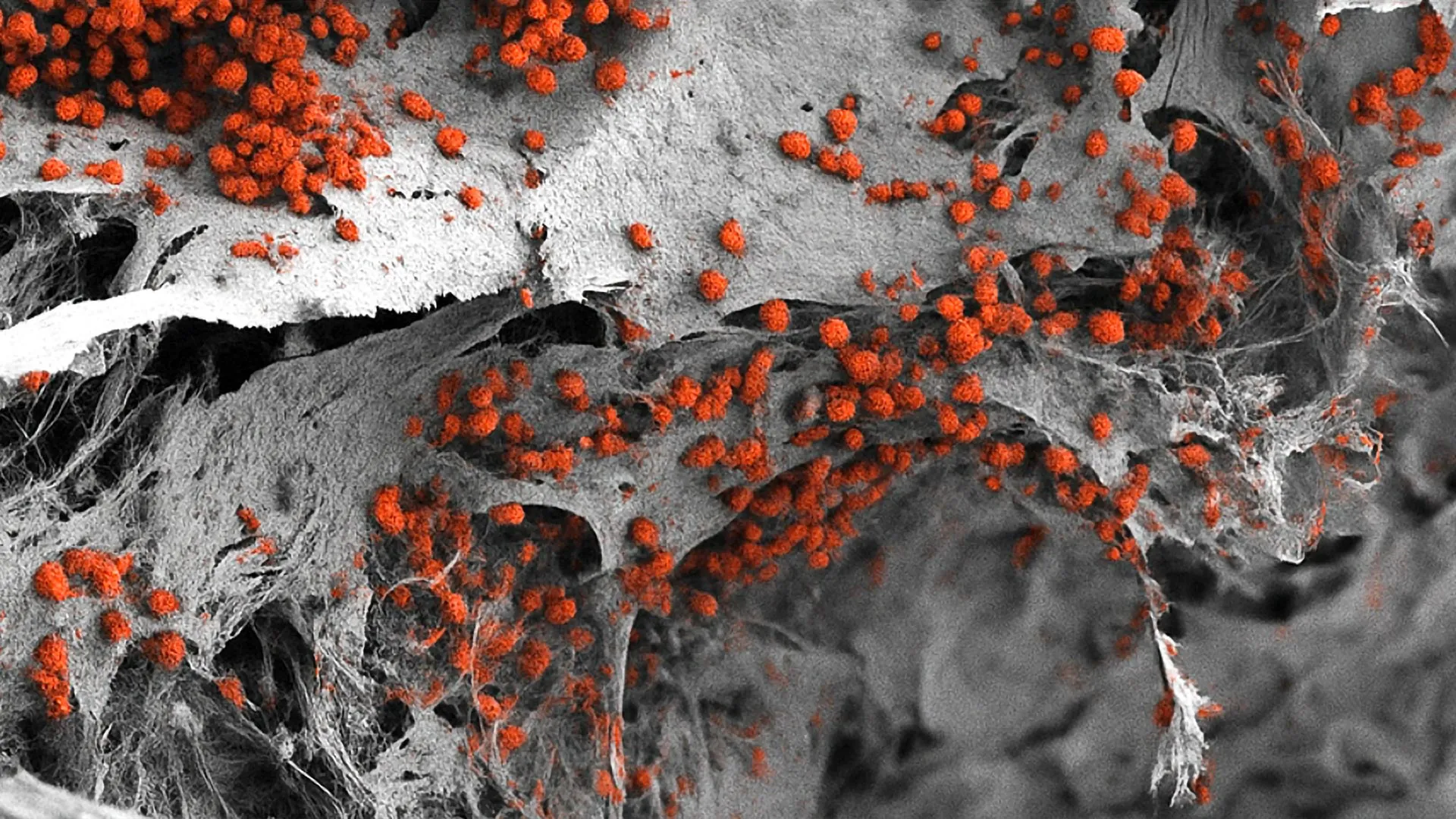
The engineering of the bone marrow-on-a-chip was guided by the principle of "self-organization," a biological phenomenon where cells arrange themselves into functional structures when provided with the correct environmental cues. The device itself is a specialized plastic chip containing microfluidic chambers. These chambers are filled with a combination of human hematopoietic stem cells (HSCs) and the surrounding support cells, including endothelial cells that form blood vessel walls and mesenchymal cells that create the connective tissue matrix.
To simulate the marrow’s three-dimensional environment, the researchers utilized a synthetic hydrogel that acts as a scaffold. Unlike previous attempts to model marrow, which often involved simply mixing cell types in a dish, the Penn team focused on replicating the developmental conditions found in the human embryo. This "biologically inspired" approach allows the cells to interact and mature into a living tissue that generates functional human blood cells. These cells are then released into culture media that flows through engineered capillary blood vessels, mimicking the way new blood cells enter the circulatory system in the human body.
This breakthrough addresses a long-standing "holy grail" in bioengineering: the creation of a sustainable environment for hematopoietic stem cells. In many clinical settings, HSCs are difficult to maintain outside the body, often losing their "stemness" and differentiating too quickly. The Penn platform has demonstrated the ability to maintain these progenitor cells for extended periods, a feat that could eventually revolutionize how stem cell transplants are managed for patients with leukemia and other blood disorders.
A Decadelong Journey from Earth to Orbit
The trajectory of this research began nearly ten years ago with an ambitious goal: understanding how the rigors of space travel affect the human immune system. Dan Huh, a Professor in Bioengineering at Penn, and G. Scott Worthen, an attending physician at CHOP and Professor Emeritus at the Perelman School of Medicine, originally proposed sending a bone marrow model to the International Space Station (ISS). The project was motivated by observations that astronauts on long-duration missions often suffer from immune system dysregulation, making them more vulnerable to viruses and slowing the healing process.
The researchers hypothesized that microgravity and prolonged exposure to cosmic radiation might disrupt the marrow’s ability to produce healthy immune cells. However, the path to the stars was fraught with technical hurdles. A 2019 attempt to launch the experiment ended in disappointment when a flow controller in the "cubelab" system short-circuited during the ascent to the ISS. A subsequent launch scheduled for 2020 was canceled due to the global disruptions caused by the COVID-19 pandemic.
Despite these setbacks, the project transitioned back to terrestrial applications with renewed vigor. The failure of the space missions forced the team to refine the automation and robustness of the system, ultimately leading to a platform that is more stable and scalable than its predecessors. This evolution from a niche space experiment to a versatile medical tool highlights the unpredictable and often rewarding nature of scientific inquiry.
Simulating Clinical Toxicity and Organ Crosstalk
One of the most immediate applications of the bone marrow-on-a-chip is in the realm of preclinical drug testing. Currently, the pharmaceutical industry relies heavily on animal testing to determine whether a new drug will be toxic to the bone marrow. However, significant physiological differences between species mean that drugs that appear safe in mice can still cause unexpected "marrow suppression" in humans.
The Penn team demonstrated that their chip can accurately simulate the side effects of radiotherapy and chemotherapy. By exposing the engineered marrow to these treatments, researchers can observe the decline in cell production and the subsequent recovery process in real-time. This high-throughput capability is being commercialized by Vivodyne, a startup co-founded by Dan Huh and the paper’s first author, Andrei Georgescu. The goal is to provide pharmaceutical companies with an automated platform for screening thousands of drug candidates for marrow toxicity before they ever reach human trials.
Furthermore, the research showcases the potential of "interconnected organ-on-a-chip" models. In a landmark demonstration, the team connected the bone marrow chip to a model of a bacteria-infected lung. This setup allowed them to observe "biochemical crosstalk"—the complex signaling that occurs when the lungs are under attack. The researchers were able to track the entire innate immune response: the marrow chip detected the infection signals from the lung, triggered a rapid release of white blood cells into the bloodstream, and the cells then navigated to the infected lung tissue to engulf the bacteria. This level of systemic modeling is unprecedented in bioengineered systems and offers a new way to study sepsis and other systemic inflammatory responses.
Future Implications for Cell Therapy and Beyond
The ability of the chip to maintain hematopoietic stem and progenitor cells (HSPCs) opens new doors for the field of regenerative medicine. Stem cell transplants are currently the standard of care for many hematologic malignancies, but the procedure is invasive, and the supply of donor cells is often limited. If the bone marrow-on-a-chip can be used to expand the population of a donor’s stem cells in a laboratory setting, it could significantly increase the availability and success rates of these life-saving therapies.
Beyond clinical medicine, the platform remains a vital tool for the future of space exploration. As NASA and private companies like SpaceX plan for multi-year missions to Mars, understanding the long-term effects of microgravity and deep-space radiation on the immune system is a critical safety requirement. The bone marrow-on-a-chip provides a compact, automated laboratory that can travel where humans go, monitoring the health of the "blood-forming factory" in real-time.
The study received support from a wide array of prestigious institutions, including the National Institutes of Health (NIH), the National Science Foundation (NSF), the Paul G. Allen Foundation, and the National Research Foundation of Korea. Additional collaboration from industry partners like GlaxoSmithKline (GSK) underscores the commercial and clinical interest in this technology.
As the team moves forward, they plan to refine the model further by incorporating more cell types and increasing the complexity of the vascular networks. The ultimate goal is to create a fully integrated "human-on-a-chip" that can simulate the interconnectedness of all major organ systems. For now, the bone marrow-on-a-chip stands as a testament to the power of bioengineering to unlock the secrets of our most hidden and vital tissues, providing a new lens through which to view human health, disease, and our potential for survival beyond Earth.

















Leave a Reply