A research team at Imperial College London has successfully demonstrated a pivotal concept in quantum sensing, proving that next-generation detectors can function effectively outside the sterile confines of a laboratory environment. The study, published in the journal Nature, details the first real-world validation of a noise-cancellation technique essential for long-baseline atom interferometry. By successfully filtering out overwhelming experimental noise, the researchers have cleared a significant technical hurdle in the global pursuit of dark matter and the observation of gravitational waves from the early universe.
The experiment was conducted under the auspices of the Atom Interferometer Observatory and Network (AION), a flagship UK collaboration. The findings confirm that by comparing data from two synchronized quantum sensors, scientists can extract incredibly faint signals that were previously thought to be irrecoverable. This milestone transforms a theoretical framework into a viable roadmap for constructing massive, kilometer-scale quantum observatories at international facilities such as CERN in Switzerland and Fermilab in the United States.
The Mechanics of Quantum Atom Interferometry
At the heart of this breakthrough is the technology of atom interferometry. Unlike traditional optical interferometers, such as those used by the Laser Interferometer Gravitational-Wave Observatory (LIGO), which measure the interference patterns of light, atom interferometers exploit the wave-particle duality of matter. In these systems, clouds of ultracold atoms—specifically strontium-87 in the Imperial study—are manipulated using precision lasers.
The lasers act as "optical gratings," splitting the atom clouds into two paths. These paths are later recombined to create an interference pattern. Because atoms have mass and are affected by gravity and other fundamental fields, they are exquisitely sensitive to minute perturbations in spacetime or local gravitational gradients. However, this extreme sensitivity is a double-edged sword. The same precision that allows these sensors to detect cosmic phenomena also makes them susceptible to "phase noise" generated by the very lasers used to control them.
In a long-baseline configuration, two or more atom interferometers are separated by a significant distance but are linked by a common laser system. The theory posits that because both sensors are struck by the same laser beam, the noise introduced by the laser will be identical for both. By "subtracting" the data of one sensor from the other—a process known as differential measurement—the common noise is cancelled out, leaving behind only the unique signals affecting one sensor or the other, such as the passage of a gravitational wave or an interaction with a dark matter field.
Overcoming the Laser Phase Noise Barrier
The primary obstacle to scaling quantum sensors has long been the "noise floor." In practical applications, the phase noise produced by even the most stable "clock lasers" is several orders of magnitude stronger than the signals researchers are attempting to find. For years, the scientific community has relied on the assumption that differential measurement would solve this, but demonstrating this in a physical system subject to real-world fluctuations remained elusive until now.
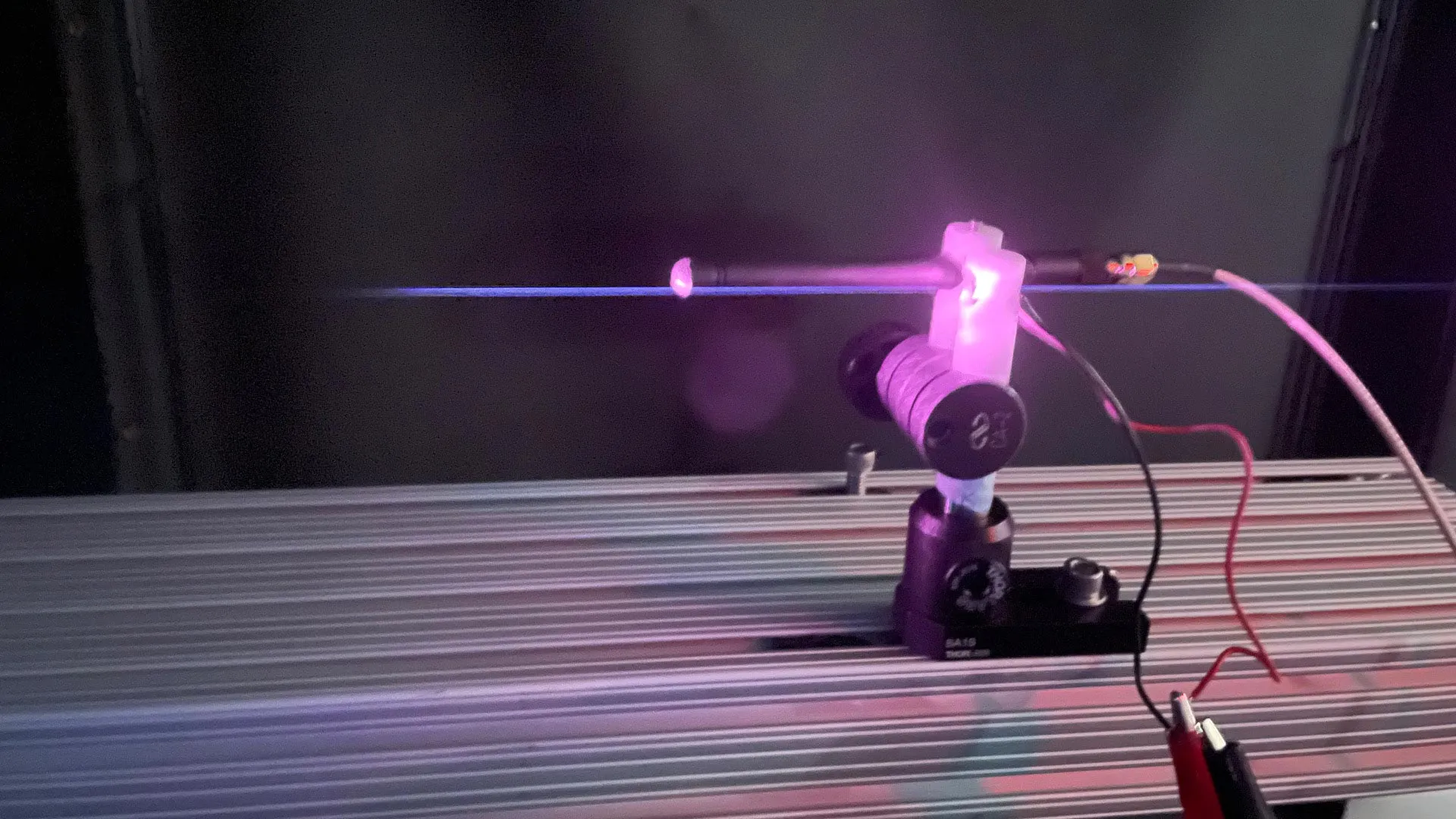
To test this, the Imperial team, led by researchers at the Ultracold Strontium Laboratory, constructed a tabletop prototype designed to mimic the stresses of a large-scale observatory. To ensure the test was rigorous, the team intentionally injected artificial noise into the system, creating a "worst-case scenario" environment where the signal-to-noise ratio was catastrophically low.
Under these conditions, the individual interference patterns from the two strontium atom clouds appeared as incoherent "noise" that provided no usable data. However, when the researchers applied the correlation analysis between the two datasets, the underlying quantum signal emerged with startling clarity. The results reached the fundamental "shot-noise limit" dictated by the laws of quantum mechanics, proving that the noise-canceling architecture is robust enough to handle the demands of future deep-space exploration.
AION and the International Quantum Landscape
The success of this prototype is a major victory for the Atom Interferometer Observatory and Network (AION). Led by Imperial College London, AION is a multi-institutional partnership involving the Universities of Birmingham, Cambridge, Liverpool, Oxford, and King’s College London, alongside the Science and Technology Facilities Council (STFC) Rutherford Appleton Laboratory.
The AION program is structured in stages, beginning with small-scale laboratory experiments and moving toward a 10-meter atom interferometer. The ultimate goal is a 100-meter-tall detector, which would serve as a precursor to even larger terrestrial and space-based systems. The project is closely aligned with the MAGIS (Matter-wave Atomic Gradiometer Interferometric Sensor) project at Fermilab in the U.S., which is currently constructing a 100-meter baseline in an existing access shaft.
"We have taken some of the most precise instruments ever built—atomic clocks and atom interferometers—and shown that they can be repurposed to open entirely new windows onto the invisible parts of our Universe," said Dr. Richard Hobson, co-lead of the Ultracold Strontium Laboratory at Imperial. He noted that while the current experiment is a prototype, its success provides the green light for scaling these technologies to full-scale facilities.
Implications for Dark Matter and Gravitational Wave Astronomy
The validation of this noise-cancellation technique has profound implications for fundamental physics. Currently, our understanding of the universe is limited by the fact that approximately 85% of its matter is "dark"—it does not emit or reflect light and can only be detected through its gravitational effects.
Traditional dark matter searches have focused on Weakly Interacting Massive Particles (WIMPs). However, as those searches have yet to yield a definitive detection, interest has shifted toward "ultra-light" dark matter, such as axions. These particles would behave more like a classical field, causing tiny, oscillating changes in the mass of atoms or the local gravitational field. A long-baseline atom interferometer is uniquely suited to detect these oscillations, provided it can filter out the laser noise that the Imperial team has now successfully managed.
Furthermore, these sensors aim to fill a critical "gap" in gravitational wave astronomy. While LIGO and Virgo detect high-frequency waves from merging stellar-mass black holes, and pulsar timing arrays detect very low-frequency waves from supermassive black hole binaries, there is a "mid-band" frequency range (0.1 Hz to 10 Hz) that remains largely unobserved. This mid-band is expected to contain signals from the mergers of intermediate-mass black holes and potentially "primordial" gravitational waves generated shortly after the Big Bang.
The Path to CERN and Beyond
The research also bolsters the case for the proposed Atom Interferometry CERN Experiment (AICE). If approved, AICE would involve installing a large-scale quantum sensor at the CERN complex, utilizing the site’s world-class infrastructure and vacuum systems. This would represent one of the most ambitious quantum experiments ever conceived, bridging the gap between particle physics and quantum sensing.
Professor Oliver Buchmueller, Principal Investigator of the AION collaboration, emphasized the milestone’s importance for international facilities. "This work demonstrates, under realistic experimental conditions, a key technique relevant for next-generation atom interferometer facilities currently under development internationally, including MAGIS at Fermilab and the proposed AICE facility at CERN," Buchmueller stated.
The timeline for these larger projects is ambitious. With the technical feasibility of noise cancellation now proven, the focus shifts to engineering challenges, such as maintaining ultra-high vacuums over hundreds of meters and cooling larger clouds of atoms to temperatures just fractions of a degree above absolute zero.
Analysis of Scientific Impact
The Imperial College London study represents a shift from "proof-of-principle" to "readiness-for-deployment." By intentionally sabotaging their own laser stability and then successfully recovering the signal, the researchers have addressed the skepticism regarding the scalability of quantum sensors in non-ideal environments.
From a data-science perspective, the experiment confirms that the correlation between two spatially separated quantum systems can be used as a powerful filter. This approach is expected to be integrated into the software and hardware stacks of all future AION and MAGIS detectors. It also suggests that future observatories may not need to rely solely on increasingly expensive, ultrastable lasers, as the differential measurement technique can compensate for some degree of hardware instability.
As the global scientific community moves toward the "Quantum 2.0" era—where quantum effects are not just observed but actively harnessed for measurement and computation—this research stands as a foundational achievement. It moves the field of "quantum-enhanced" astronomy from a theoretical possibility to a practical reality, promising a future where the darkest and most silent parts of the cosmos can finally be mapped.
The project was supported by the Quantum Technologies for Fundamental Physics (QTFP) program, a joint initiative by the STFC and the Engineering and Physical Sciences Research Council (EPSRC), part of UK Research and Innovation (UKRI). With this experimental confirmation in hand, the AION collaboration is now proceeding with the next phase of development, bringing the world one step closer to hearing the faint echoes of the early universe.