In a significant leap for the field of photonics, an international team of researchers has successfully demonstrated the creation of "optical tornadoes"—complex, swirling vortices of light—within microscopic structures. This breakthrough, achieved through a collaborative effort between the Faculty of Physics at the University of Warsaw, the Military University of Technology in Poland, and the Institut Pascal CNRS at Université Clermont Auvergne in France, introduces a novel method for generating structured light. By utilizing the self-organizing properties of liquid crystals and the principles of synthetic magnetism, the team has managed to stabilize these light states in their lowest energy configuration, a feat previously considered a major technical hurdle. The discovery, published in recent scientific literature, provides a scalable and simplified framework for developing next-generation light sources essential for quantum computing, high-capacity optical communications, and the precision manipulation of microscopic matter.
The Evolution of Structured Light and the Quest for Stability
The concept of "structured light" refers to electromagnetic waves that possess tailored spatial distributions of intensity, phase, and polarization. Among the most sought-after forms of structured light is the optical vortex, characterized by a phase that twists like a corkscrew around the direction of propagation. This twisting motion imparts the light with orbital angular momentum (OAM). Traditionally, generating such states has required large-scale optical components—such as spatial light modulators or spiral phase plates—or highly complex, nanostructured semiconductor devices fabricated through expensive lithographic processes.
While these traditional methods are effective, they often suffer from issues of scalability and stability. In most systems, light carrying OAM naturally exists in "excited states," which are higher-energy levels that are inherently unstable and prone to decaying into lower-energy, non-vortex states. The primary challenge for the Warsaw-led team was to find a way to trap light in a vortex state that represents the "ground state"—the state of minimum energy. Achieving stability in the ground state ensures that the light remains in its structured form indefinitely, making it a reliable tool for technological applications.
A Multidisciplinary Approach: Merging Quantum Mechanics and Materials Science
The research was led by Professor Jacek Szczytko from the University of Warsaw, whose team sought inspiration from the behavior of electrons in atomic physics. In atoms, electrons occupy specific energy states determined by the potential wells created by the nucleus. The researchers aimed to replicate this behavior using photons, which are massless and do not naturally interact with one another or respond to traditional magnetic fields.
To overcome these limitations, the team turned to liquid crystals—materials that exhibit a unique phase of matter between conventional liquids and solid crystals. Liquid crystals are composed of elongated molecules that can flow like a fluid but maintain a high degree of orientational order. By carefully manipulating these molecules, the researchers could create specific "defects" or topological structures known as torons.
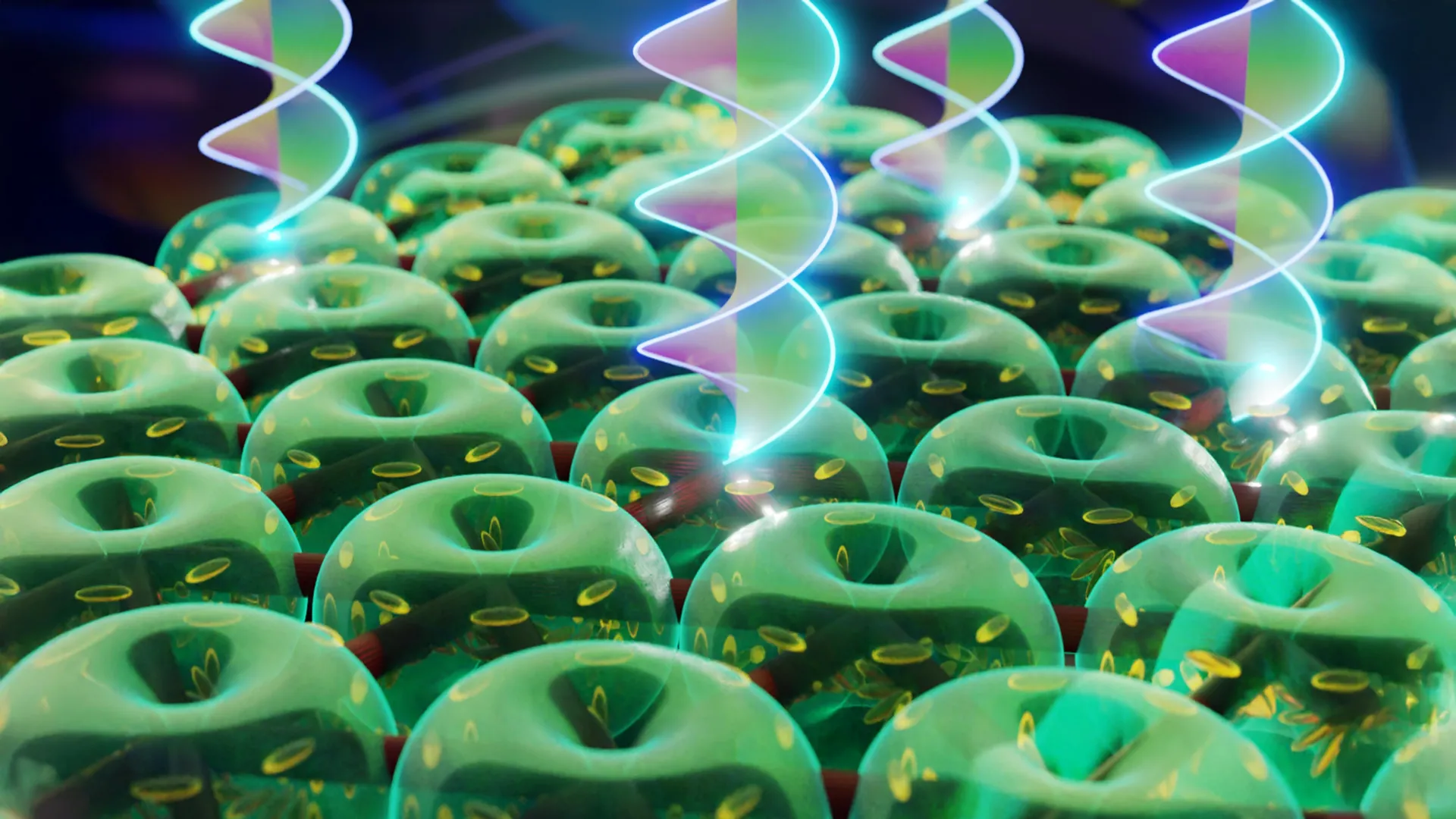
Joanna Mędrzycka, a nanotechnology student at the University of Warsaw, and Dr. Eva Oton from the Military University of Technology, were instrumental in preparing these liquid crystal samples. They described the torons as microscopic, doughnut-shaped rings formed by tightly twisted spirals of molecules, similar in geometry to the double helix of DNA. These torons act as natural "optical traps," confining light within a volume of only a few micrometers.
Engineering a Synthetic Magnetic Field for Photons
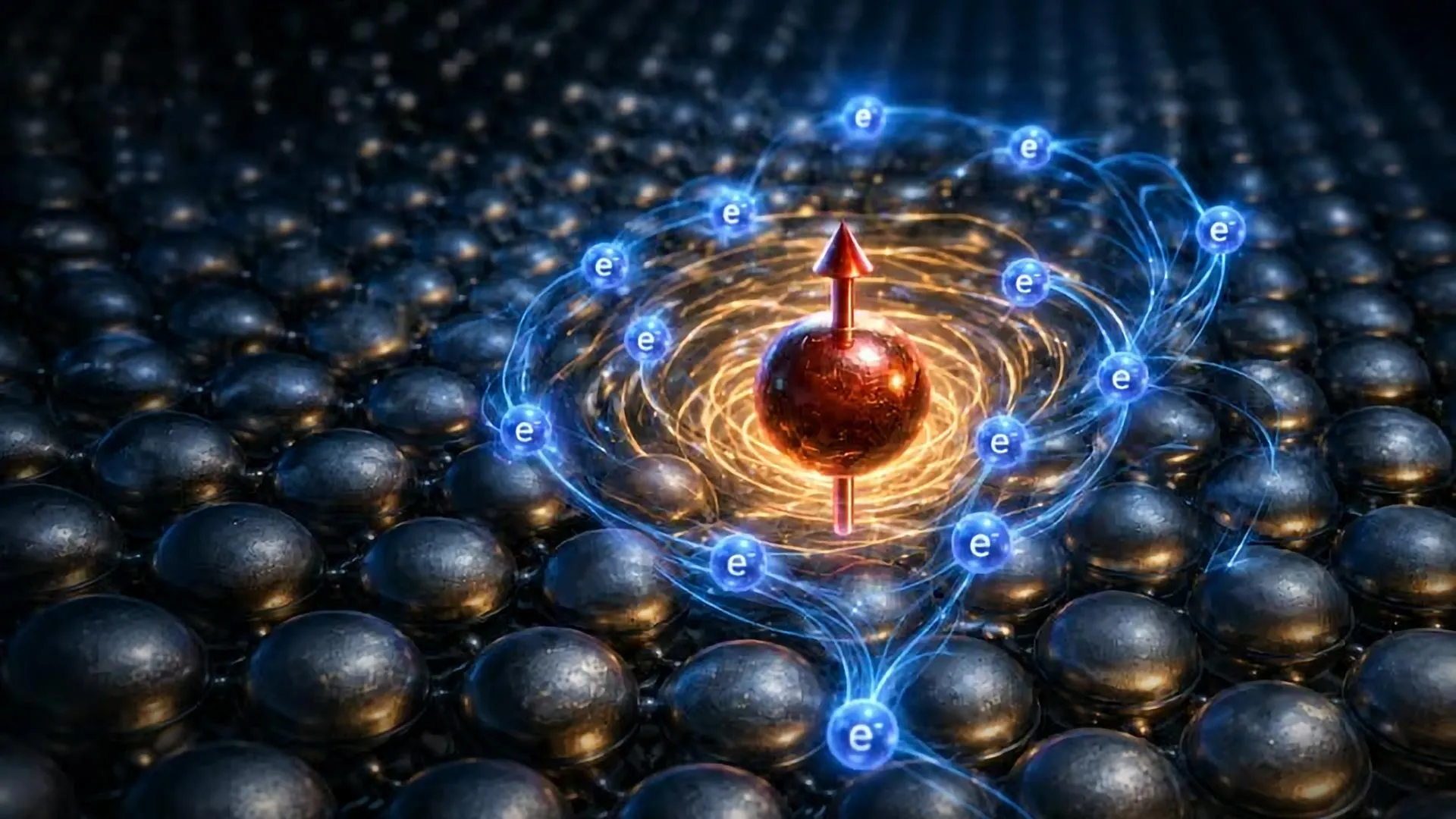
The most innovative aspect of the study involves the creation of a "synthetic magnetic field." In classical physics, a magnetic field exerts a force on moving charged particles, such as electrons, causing them to move in circular or spiral orbits. Because photons carry no electric charge, they are immune to real magnetic fields. However, the researchers discovered that they could simulate the effects of a magnetic field by exploiting a property called birefringence.
Birefringence occurs when a material has a refractive index that depends on the polarization and direction of light propagation. In the liquid crystal torons, the molecular orientation varies spatially, creating a complex landscape of birefringence. As Dr. Piotr Kapuściński of the University of Warsaw explained, this spatial variation acts as a mathematical equivalent to a magnetic field. When light enters the toron, it "bends" and twists in response to this synthetic field, mimicking the cyclotron motion of an electron.
To amplify this effect, the researchers placed the toron-infused liquid crystal inside an optical microcavity. This cavity consists of two highly reflective mirrors placed parallel to one another at a distance of just a few hundred nanometers. Light trapped between these mirrors reflects back and forth thousands of times, significantly increasing the interaction time between the light and the liquid crystal structure. This confinement, combined with an external electric voltage used to tune the liquid crystal, allowed the researchers to precisely control the properties of the resulting optical vortex.
Breaking New Ground: The Stability of the Ground State
The experimental results, validated by a theoretical model developed by Professor Guillaume Malpuech, Professor Dmitry Solnyshkov, and Daniil Bobylev from CNRS, revealed a phenomenon never before observed in such systems. For the first time, the team observed that the light vortex was not an excited state, but the ground state of the system.
In typical physical systems, the ground state is usually a simple, non-twisting "blob" of energy. However, the unique geometry of the toron and the influence of the synthetic magnetic field forced the light to adopt a vortex structure as its most stable, lowest-energy configuration. This is a critical discovery because, in any physical system, energy naturally tends to accumulate in the ground state. By making the vortex the ground state, the researchers ensured that the "optical tornado" would be the most persistent and easiest state to maintain.
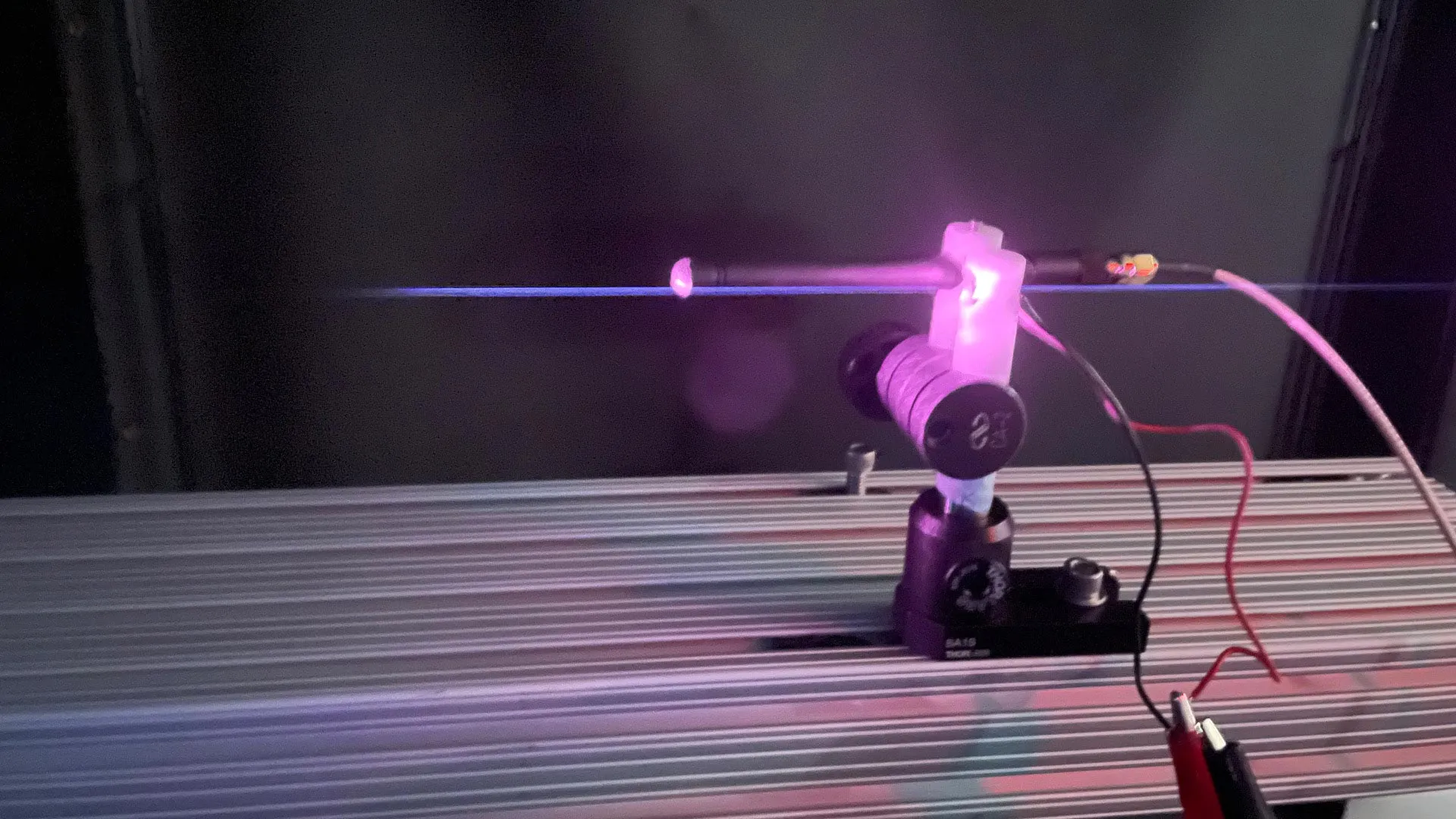
This stability was further demonstrated by introducing a laser dye into the microcavity. When the system was "pumped" with external energy, it began to lase. The resulting emission was not just ordinary light, but coherent laser light that maintained the vortex structure. Dr. Marcin Muszyński, the study’s first author, noted that the light exhibited well-defined energy and a clear emission direction, proving that the ground-state vortex could serve as a functional, miniature laser source.
Theoretical Implications: From Photons to Quarks
The implications of this research extend into the realm of fundamental particle physics. Professor Dmitry Solnyshkov pointed out that the mathematical description of the photons in this system draws on advanced theories involving "vectorial charge." This suggests that the photons in the liquid crystal microcavity are behaving in ways that mirror the behavior of quarks—the fundamental particles that combine to form protons and neutrons.
By creating a system where light mimics the behavior of subatomic particles, the researchers have opened a new "laboratory on a chip" for studying high-energy physics through the lens of optics. This cross-disciplinary connection highlights the versatility of photonics as a tool for exploring the fundamental laws of the universe.
Future Applications in Quantum Tech and Communication
The successful creation of stable, ground-state optical vortices has immediate practical implications for several high-tech industries.
- Optical Communication: Current fiber-optic networks primarily use the frequency and amplitude of light to transmit data. By using the orbital angular momentum of light (the "twist" of the vortex), engineers could multiplex signals, allowing multiple data streams to travel through the same fiber simultaneously. This could exponentially increase the bandwidth of global communication networks.
- Quantum Technologies: In quantum computing, the phase and polarization of light can be used to encode information in "qubits." The stability of the ground-state vortex makes it an ideal candidate for a quantum bit that is resistant to environmental noise and decoherence.
- Optical Tweezers and Micromanipulation: Optical vortices are already used to rotate and move microscopic objects, such as biological cells or nanoparticles, without physical contact. The ability to generate these vortices from a miniature, solid-state device would make these "optical tweezers" more portable and accessible for medical diagnostics and lab-on-a-chip applications.
- Miniature Lasing: The ability to create self-organizing, miniature laser sources with complex shapes reduces the reliance on expensive and difficult-to-scale nanotechnology. As Professor Wiktor Piecek from the Military University of Technology concluded, this paves the way for the mass production of photonic devices that are both simpler to manufacture and more robust in operation.
Conclusion
The collaboration between Polish and French scientists has effectively turned a complex theoretical concept into a tangible experimental reality. By moving away from rigid nanostructures and embracing the self-organizing potential of liquid crystals, the team has demonstrated that "optical tornadoes" can be tamed and stabilized. This research not only advances our understanding of light-matter interactions but also provides a practical blueprint for the future of integrated photonics. As the world moves toward a future defined by quantum information and ultra-high-speed data, the ability to spin light like a whirlwind may become one of the most vital tools in the technological arsenal.