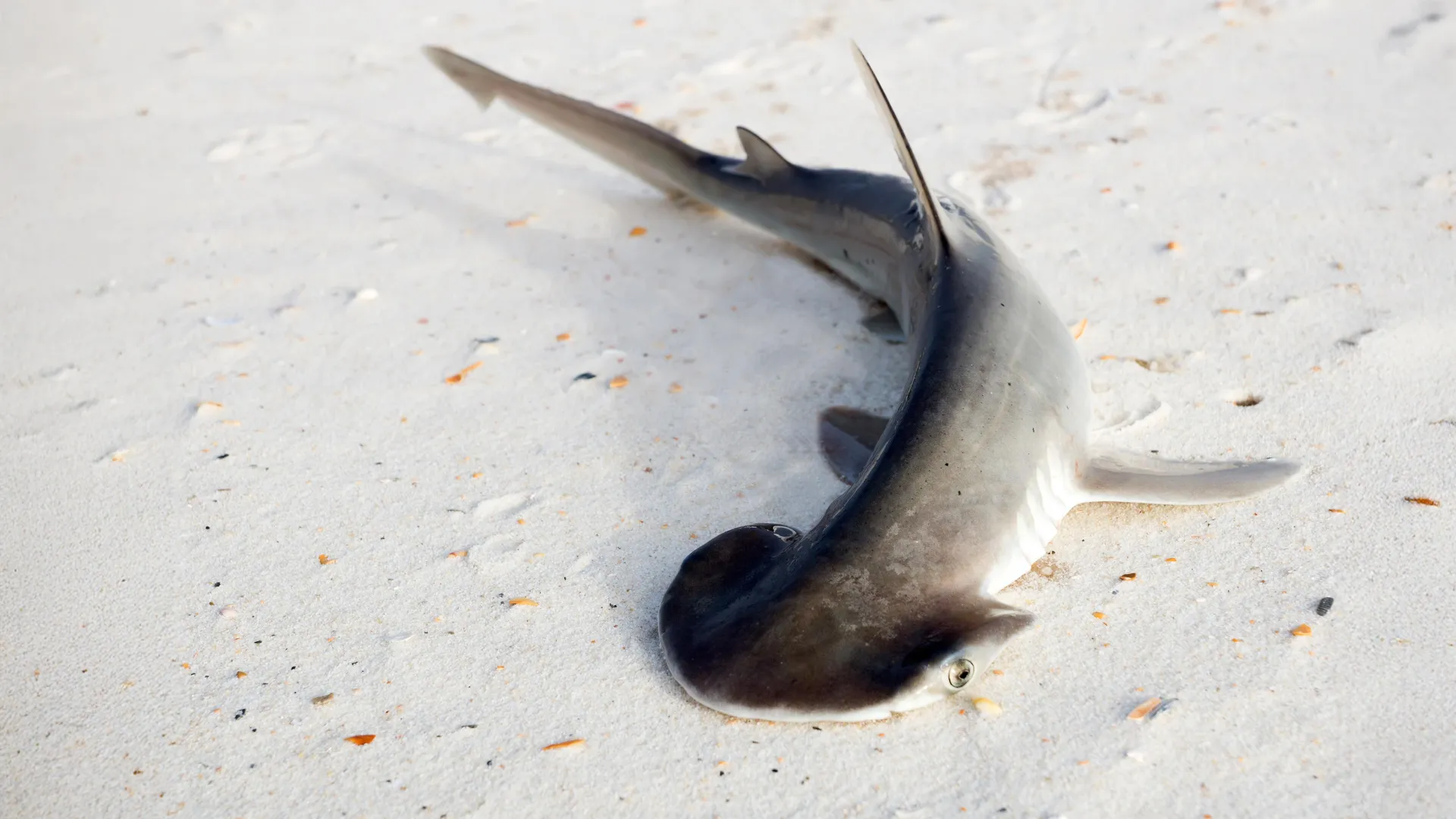
A groundbreaking study led by researchers at the University of Miami Rosenstiel School of Marine, Atmospheric, and Earth Science has effectively dismantled long-standing theories regarding the physical maturation of the bonnethead shark (Sphyrna tiburo). For years, the scientific consensus suggested that the bonnethead’s hallmark sexual dimorphism—the noticeable difference in head shape between males and females—was a development triggered specifically by the onset of sexual maturity in males. However, new findings published in the journal Integrative Organismal Biology indicate that the biological reality is far more complex, suggesting that both sexes begin life with similar head structures that diverge significantly as the animals age.
Challenging the Maturity Paradigm
The bonnethead, a smaller, more streamlined relative of the iconic great hammerhead, is the only member of the Sphyrnidae family known to exhibit such pronounced sexual dimorphism in its cephalofoil, the shovel-shaped head structure characteristic of these sharks. Historically, researchers hypothesized that male bonnetheads developed their characteristically pointed snouts as a byproduct of reaching reproductive age. The rationale was that this specialized morphology might offer some advantage in mate selection or intra-species competition.
The recent study, led by Kathy Liu, challenges this narrative. By conducting a comparative analysis of bonnetheads across different age brackets, the research team discovered that the pointed head shape is, in fact, a juvenile trait. "Our findings show that the pointed head shape is not a feature that develops in males when they reach maturity," Liu explained. "Younger males and females both had more pointed heads, but the head became rounder as the sharks matured. That change was much greater in females." This evidence suggests that the female snout undergoes a more radical transformation toward a rounded profile, rather than the male snout undergoing a dramatic shift toward a point.
A Geographic and Temporal Scope
To ensure the accuracy of their findings, the research team conducted a comprehensive sampling initiative between May 2022 and May 2023. The study spanned two distinct Florida ecosystems: Biscayne Bay and the Tampa Bay region. By capturing 105 sharks in Biscayne Bay and 39 in the Tampa Bay area, the team was able to account for potential environmental variables that might influence morphological development.
The field methodology employed a rigorous, non-invasive approach. In Biscayne Bay, researchers utilized research longlines to secure samples, while the Tampa Bay population was sampled primarily through scientific gillnets. Each shark was processed with speed to minimize stress: they were measured, photographed against a specialized grid board for geometric morphometric analysis, and fitted for a small muscle biopsy before being released back into the wild.
The use of ImageJ software allowed the researchers to move beyond qualitative observation. By digitizing the curvature of the cephalofoil, the team created a precise, mathematical map of head shape changes. This quantitative approach provided the empirical backbone necessary to prove that the "rounding" of the head is a consistent developmental trajectory, particularly in females, rather than an abrupt phenotypic shift tied to reproductive readiness.
Trophic Ecology and the Dietary Hypothesis
A critical component of the study involved investigating whether ecological pressures—specifically diet—were driving the morphological divergence. It is a common biological principle that differences in feeding strategies can lead to adaptive physical changes, a concept known as ecomorphology. If males and females were hunting different prey or utilizing different foraging zones, it would be logical to assume their head shapes might evolve to better suit those specific mechanical needs.
To test this, the scientists analyzed the carbon and nitrogen isotope signatures in the muscle tissue of 137 sharks. These chemical markers act as a biological diary, reflecting the long-term dietary habits of an organism rather than just their most recent meal.
The results were revealing: while the sharks in Biscayne Bay and Tampa Bay occupied distinct food webs—indicated by the lack of overlap in their isotope signatures—the males and females within the same bay displayed remarkably similar dietary profiles. "Our findings provided no evidence that differences in diet or foraging were driving the development of the sharks’ sex-specific head shapes," noted Liu. This suggests that the cephalofoil’s shape is likely dictated by internal genetic or developmental factors rather than external environmental pressures related to hunting efficiency.
Implications for Shark Biology and Conservation
The study’s findings resonate across the field of marine biology, specifically regarding how researchers interpret "unusual" biological traits. Catherine Macdonald, a co-author and director of the Shark Research and Conservation Program at the Rosenstiel School, emphasized the significance of this holistic approach. "By examining body shape and diet in the same animals, we were able to assess whether diet and morphological changes co-occur. Our results suggest there is another cause behind the differences in head shape between male and female bonnetheads."
One emerging theory is that the pointed cephalofoil may serve a hydrodynamic purpose for younger, smaller sharks, potentially increasing swimming efficiency during the early stages of life. As females grow larger to accommodate the biological rigors of gestation—bonnetheads are viviparous, meaning they give birth to live young—the metabolic or hydrodynamic trade-offs of a pointed head may no longer be favorable, leading to the observed rounding.
The implications for conservation are also noteworthy. Understanding the baseline biological development of a species is essential for effective management. If populations in different regions exhibit different developmental timelines or morphological variations, conservationists must account for these nuances when drafting management strategies. The standardized photographic technique developed during this study provides a template that can be applied to bonnethead populations throughout their range, from the Gulf of Mexico to the Atlantic coast, potentially uncovering regional adaptations that were previously unrecognized.
Future Directions for Research
While this study successfully clears up the mystery surrounding the timing of the bonnethead’s head-shape development, it opens the door to new, more specific inquiries. Future research is expected to focus on the energetic costs of swimming and the physiological demands of pregnancy in female bonnetheads.
Furthermore, the team hopes to pinpoint exactly when these morphological trajectories diverge during the juvenile phase. Investigating embryonic development and early-stage growth could provide the missing links in the evolutionary story of the bonnethead. The collaborative nature of the project—involving experts from institutions such as the University of California, Merced, and Minorities in Shark Science—highlights the growing trend toward interdisciplinary, multi-institutional research in marine conservation.
As the scientific community continues to piece together the life history of these elusive predators, the bonnethead remains a fascinating subject of study. Its unique cephalofoil, once a source of confusion, is now a window into the complex developmental biology of sharks. The work of Liu and her colleagues ensures that the "head of the curve" is now clearly defined, providing a solid foundation for future generations of shark researchers to build upon.
The study, titled "A Head of the Curve: Bonnethead Shark (Sphyrna tiburo) Cephalofoil Morphology and Trophic Ecology," represents a significant step forward in our understanding of how species evolve to survive in the changing coastal environments of Florida. With the support of the Field School, the University of Miami, and various conservation funds, this research serves as a reminder of the critical importance of long-term, data-driven ecological studies in protecting the biodiversity of our oceans.