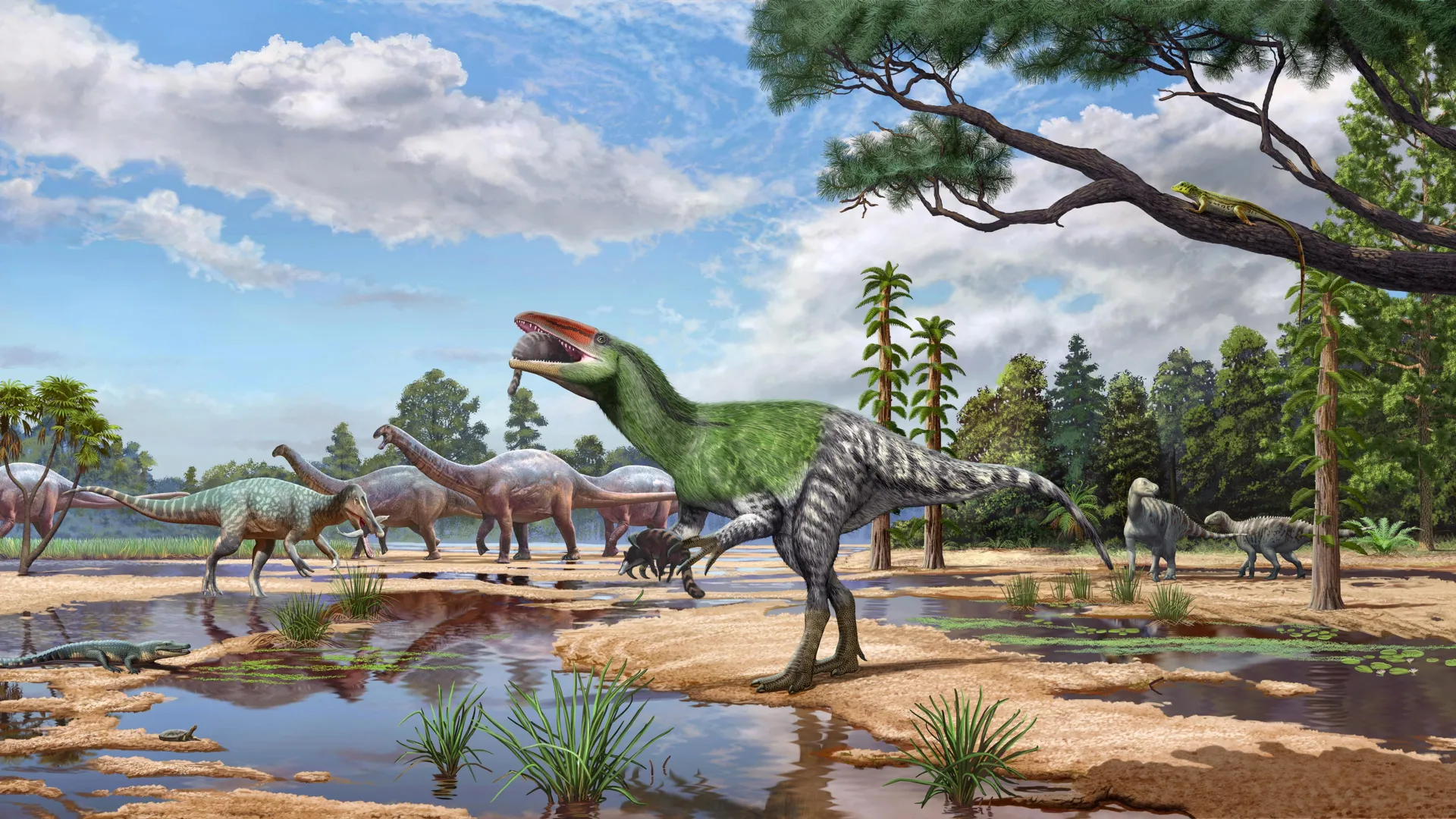
Three hundred million years ago, Earth was a vastly different world. Continents were fused into the colossal supercontinent Pangaea, and near the equator, sprawling coal-swamp forests dominated the landscape. The atmosphere was a potent brew, boasting oxygen levels approximately 45% higher than today, a condition that fueled frequent and intense wildfires. This primordial Earth teemed with life across all environments. The oceans were a vibrant tapestry of fish, while terrestrial realms hosted a menagerie of amphibians, the earliest reptiles, a diverse array of crawling arthropods, and even formidable, giant cockroaches. Above them all, the skies belonged to an astonishing array of insects, some of which achieved sizes that defy modern comprehension.
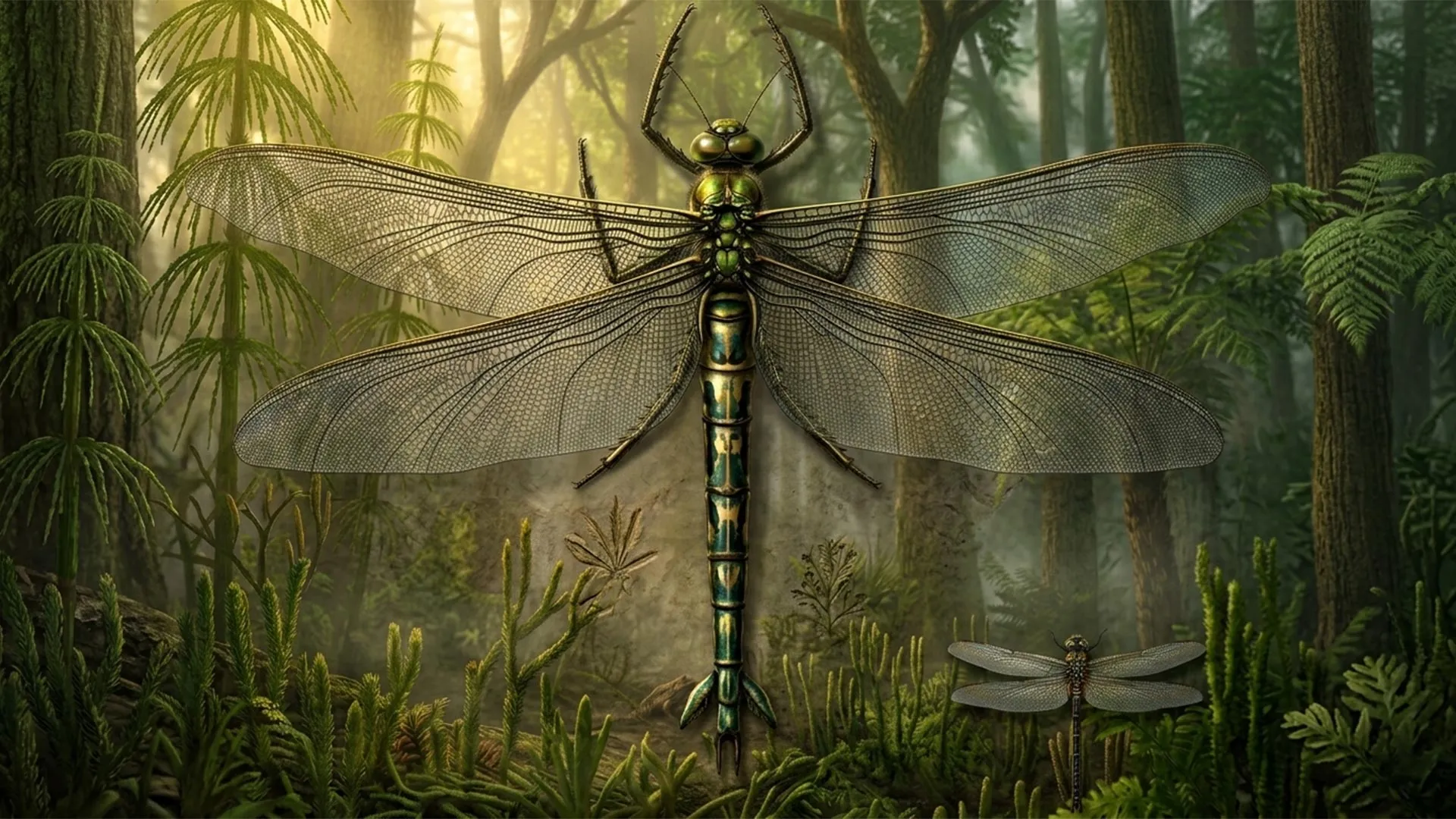
Among these ancient aerial giants were mayfly-like species boasting impressive wingspans of up to 17 inches (45 cm), and their more robust cousins, the dragonfly-like creatures, which could stretch to a remarkable 27 inches (70 cm). These colossal insects, often colloquially referred to as "griffinflies," were first brought to scientific attention nearly a century ago through fossil impressions discovered in fine-grained sedimentary rock formations in Kansas. For decades, the prevailing scientific consensus attributed their gargantuan size to the hyper-oxygenated atmosphere of the Carboniferous period. However, a groundbreaking new study is challenging this long-held and widely accepted tenet of paleoentomology.
The Long-Standing Oxygen Hypothesis
The idea that elevated atmospheric oxygen levels were the primary driver behind the evolution of giant insects gained significant traction in the 1980s. During this period, researchers developed sophisticated techniques that enabled the reconstruction of ancient atmospheric compositions. These analyses consistently indicated a peak in atmospheric oxygen concentration around 300 million years ago, coinciding with the zenith of the Carboniferous period.
Building upon this crucial discovery, a seminal study published in the prestigious journal Nature in 1995 formally linked this oxygen-rich epoch to the proliferation of oversized insects. The researchers proposed a compelling physiological explanation: larger insects, with their increased metabolic demands, required more oxygen. Consequently, the higher atmospheric oxygen concentrations acted as a permissive factor, enabling these creatures to reach unprecedented sizes.
This hypothesis was rooted in the unique respiratory system of insects. Unlike vertebrates, which possess lungs for gas exchange, insects rely on a complex network of air-filled tubes known as the tracheal system. These tubes ramify throughout the insect’s body, terminating in microscopic structures called tracheoles. Oxygen, vital for cellular respiration and muscle function, travels through these tracheoles via diffusion, moving down concentration gradients to reach the flight muscles.
The fundamental principle of diffusion dictates that its efficiency diminishes significantly over longer distances. Therefore, scientists reasoned that at modern atmospheric oxygen levels, diffusion alone would be insufficient to meet the energetic requirements of extremely large flying insects. This constraint was believed to be the critical bottleneck, preventing insects from achieving their Carboniferous dimensions in contemporary environments.
A Paradigm Shift: New Research Challenges the Oxygen Link
A recent study, also published in Nature, has introduced a radical new perspective that directly confronts this established paradigm. Led by Edward (Ned) Snelling, an associate professor in the Faculty of Veterinary Science at the University of Pretoria, the research team employed high-power electron microscopy to meticulously examine the relationship between insect body size and the density of tracheoles within their flight muscles.
The findings from this cutting-edge research revealed a surprising pattern: tracheoles typically constitute a remarkably small fraction of the flight muscle’s volume, often occupying no more than 1% in most insect species. Crucially, when this observed relationship was extrapolated to the massive griffinflies of the Carboniferous, the proportion of tracheoles within their flight muscles remained proportionally small.
This observation strongly suggests that insect flight muscles are not inherently limited by oxygen availability as previously theorized. The limited space occupied by tracheoles indicates that insects possess substantial theoretical capacity to increase the number of these respiratory tubes without encountering significant structural impediments. This implies that the diffusion distance, a presumed bottleneck, may not be as critical as once believed.
Evidence from Modern Insects
Professor Snelling articulated the core of the new findings, stating, "If atmospheric oxygen really sets a limit on the maximum body size of insects, then there ought to be evidence of compensation at the level of the tracheoles. There is some compensation occurring in larger insects, but it is trivial in the grand scheme of things." This statement underscores the lack of a direct, proportional correlation between insect size and tracheole density that would be expected if oxygen diffusion were the primary limiting factor.
To further bolster their argument, the researchers drew parallels with vertebrates. They compared the vascularization of insect flight muscles with that of the cardiac muscle in birds and mammals. In these vertebrate groups, capillaries, which serve a similar oxygen-transport function, occupy approximately ten times the relative space within the heart muscle compared to the space occupied by tracheoles in insect flight muscles.
Professor Roger Seymour of Adelaide University, a collaborator on the study, elaborated on this comparison: "By comparison, capillaries in the cardiac muscle of birds and mammals occupy about ten-times the relative space than tracheoles occupy in the flight muscle of insects, so there must be great evolutionary potential to ramp up investment of tracheoles if oxygen transport were really limiting body size." This highlights that if oxygen transport were the ultimate constraint on size, insects would likely have evolved a much more extensive tracheal system, akin to the dense capillary networks found in the vital organs of vertebrates.
The Enduring Mystery of Giant Insect Evolution
While the new findings present a compelling challenge to the oxygen diffusion hypothesis, some scientists remain cautiously optimistic that oxygen might still play a role in limiting insect size, albeit through different mechanisms or at different stages of the life cycle. For instance, oxygen availability could still be a factor in other body tissues or during earlier developmental stages, such as larval growth. Therefore, the overarching idea that atmospheric oxygen constrains insect size has not been entirely dismissed.
However, the recent research undeniably demonstrates that oxygen diffusion within the flight muscle tracheoles is not the primary limiting factor for insect size. This necessitates a re-evaluation and exploration of alternative hypotheses to explain the remarkable gigantism observed in Carboniferous insects.
Several other factors are now being considered with renewed interest. Increased predation pressure from the burgeoning vertebrate populations could have driven insects to evolve larger sizes as a defense mechanism. Alternatively, purely physical limitations imposed by the insect exoskeleton, the rigid outer covering that provides support and protection, might have played a significant role in setting size limits. The biomechanical challenges of supporting and maneuvering a significantly larger body with an exoskeleton could have presented insurmountable hurdles.
For the time being, the precise reasons behind the spectacular rise and subsequent disappearance of these colossal insects remain an open and captivating scientific inquiry. The journey to unravel this prehistoric puzzle is far from over, with researchers now poised to investigate a broader spectrum of ecological, physiological, and biomechanical influences that may have shaped the ancient insect world. The implications of this ongoing research extend beyond understanding past life forms, offering valuable insights into the intricate interplay between environment, physiology, and the evolution of life itself.