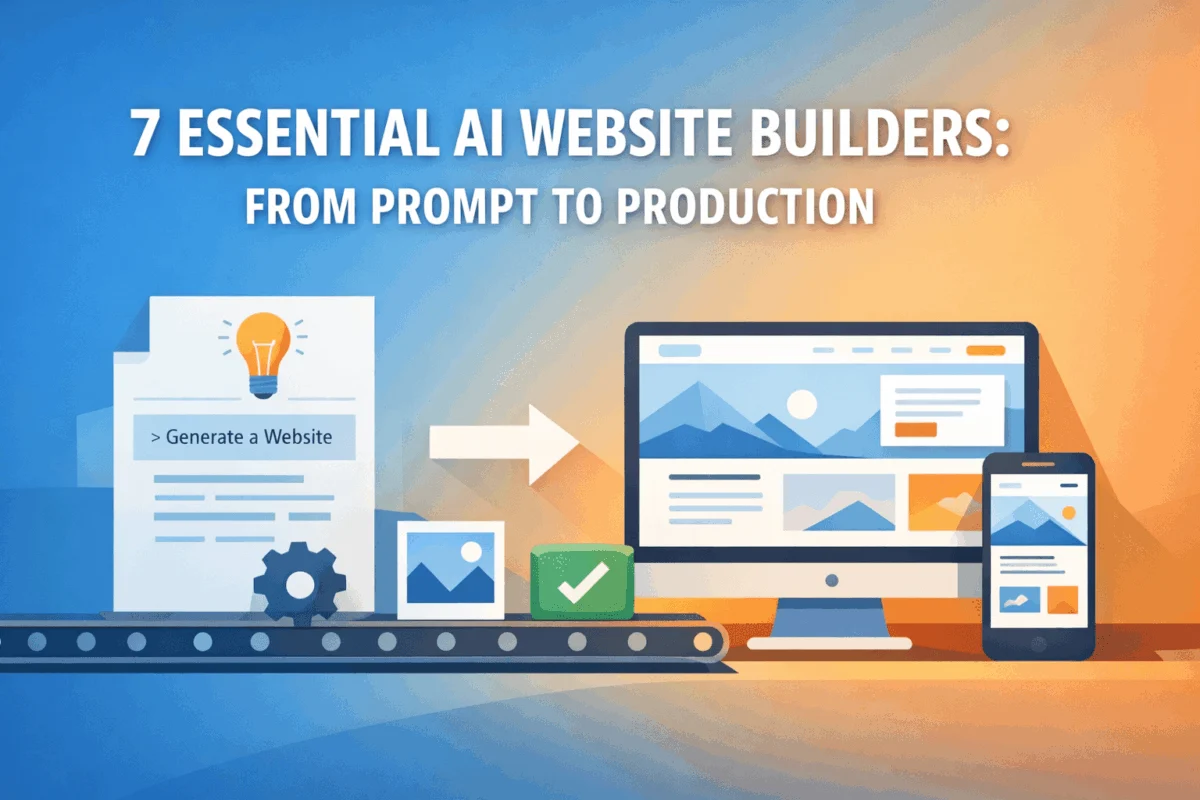
Creating a digital presence, once a complex and often costly endeavor requiring specialized coding skills, has become remarkably more accessible thanks to the advent of artificial intelligence. AI-powered website builders are rapidly transforming the landscape of web development, enabling individuals and businesses alike to generate fully functional websites from simple text prompts in mere minutes. This paradigm shift means that a nascent idea can now be brought to life online with unprecedented speed, offering layouts, basic content, and even initial design elements that serve as a robust starting point, far superior to the daunting blank page of traditional development. While human oversight, editing, and refinement remain crucial for personalization and optimization, the foundational work performed by these intelligent systems significantly lowers the barrier to entry, fostering innovation and empowering a wider demographic to establish an online footprint. This comprehensive overview delves into the evolution of website creation, highlights seven prominent AI website builders currently making waves, and explores the broader implications of this technological revolution on industry practices and future trends.
The Evolution of Web Development: From Code to AI
The journey of website creation has seen several pivotal transformations. In its infancy, building a website was an exclusive domain of skilled programmers who meticulously crafted every line of HTML, CSS, and JavaScript. This bespoke approach, while offering ultimate control, was time-consuming, expensive, and inaccessible to the average user. The late 1990s and early 2000s saw the rise of Content Management Systems (CMS) like WordPress, which abstracted much of the coding complexity, allowing users to manage content through user-friendly interfaces. Following this, drag-and-drop website builders emerged, such as early versions of Wix and Squarespace, providing visual editors that enabled non-coders to design pages by arranging pre-built elements. These tools democratized web design significantly, making it possible for small businesses and individuals to create professional-looking sites without writing a single line of code.
The current epoch marks the integration of artificial intelligence into this evolutionary chain. AI website builders represent the next logical leap, moving beyond mere visual editing to generative design. By leveraging large language models and advanced algorithms, these platforms can interpret natural language prompts, analyze design trends, and synthesize entire website structures, content, and imagery automatically. This shift from manual construction to intelligent generation is not merely an incremental improvement but a fundamental redefinition of the initial stages of web development, promising unparalleled efficiency and scalability. Industry reports indicate a significant growth trajectory for AI in web development, with market analysts projecting that the global AI in web development market size is expected to reach billions by the end of the decade, driven by increasing demand for rapid deployment and personalized digital experiences.
Leading the Charge: Seven Essential AI Website Builders
The market for AI-powered website builders is burgeoning, with several platforms distinguishing themselves through unique features, target audiences, and integration capabilities. These tools offer varying degrees of automation, customization, and ecosystem support, catering to a diverse range of users from individual hobbyists to large enterprises.
-
Wix AI Website Builder:
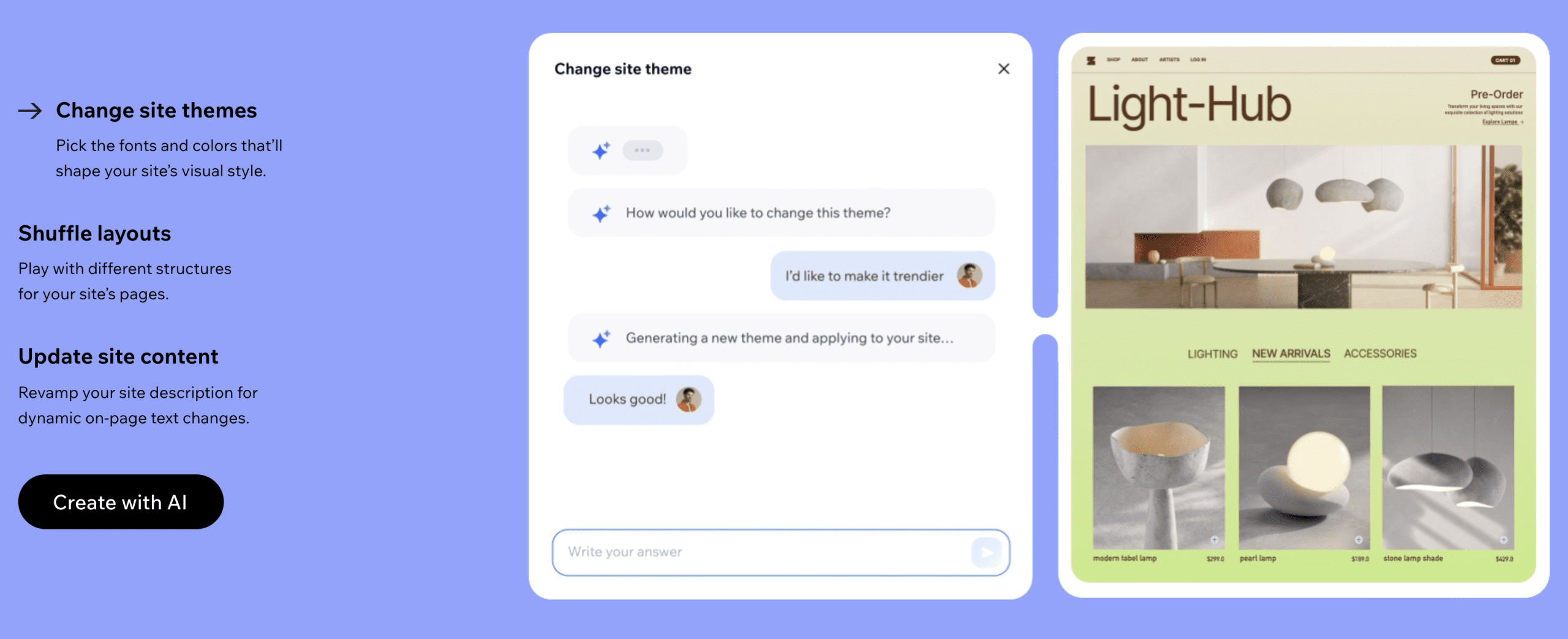
Wix has long been a titan in the all-in-one website builder space, renowned for its comprehensive suite of tools spanning marketing, e-commerce, and booking functionalities. Its foray into AI website building further solidifies its position as a market leader. The Wix AI Website Builder leverages artificial intelligence to generate initial site drafts based on user input, streamlining the setup process dramatically. What sets Wix apart is its "Harmony" workflow, a hybrid approach that seamlessly blends AI-driven generation with intuitive visual editing. This allows users to benefit from the speed of AI for foundational elements while retaining granular control over design specifics through Wix’s robust editor. For instance, a user can prompt the AI to create a website for a "vegan bakery in Brooklyn," and Wix will generate a layout, suggested pages (e.g., "Menu," "About Us," "Contact"), and placeholder content, which the user can then fine-tune using the drag-and-drop interface. This combination makes Wix an exceptionally powerful and flexible option, particularly for small to medium-sized businesses seeking an extensive ecosystem alongside intelligent design assistance. -
Framer AI:
Framer has traditionally been celebrated as a high-fidelity prototyping tool favored by designers, known for its ability to transform design concepts into interactive prototypes with remarkable precision. Its integration of AI has pivoted it into a premier platform for creating polished, modern landing pages directly from text prompts. Framer AI excels in generating visually stunning layouts and compelling content that align with contemporary design aesthetics. Users appreciate its ability to produce sophisticated, "out-of-the-box" designs that often require minimal tweaking. The platform’s generous free plan allows for extensive experimentation, making it an attractive option for designers, marketers, and startups looking to quickly launch visually appealing and responsive landing pages. The AI assists not just with layout but also with generating copy that is often optimized for conversion, reflecting a deep understanding of modern web design principles.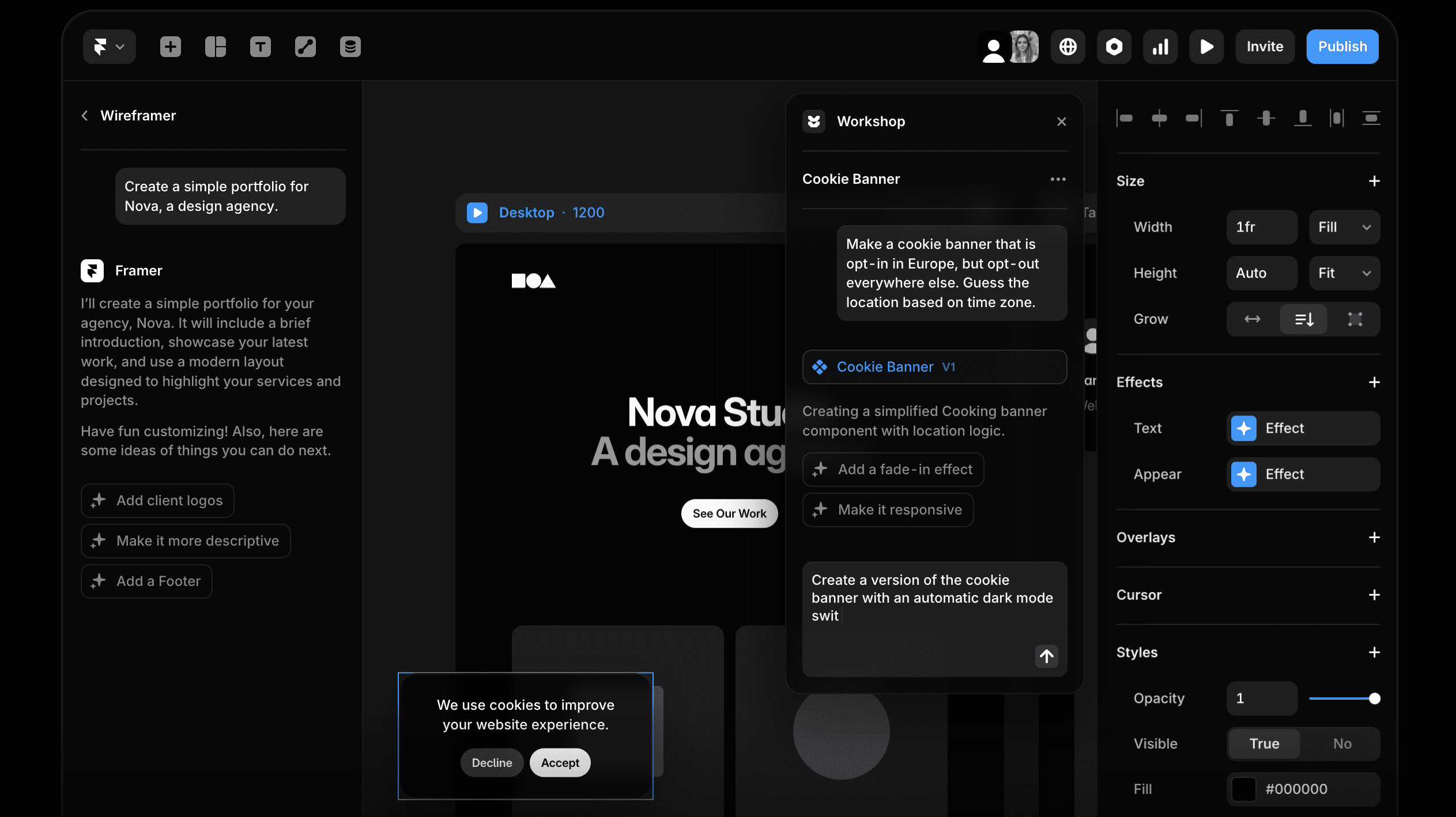
-
Webflow AI:
Webflow stands as a powerful no-code platform that offers a level of design control traditionally associated with custom coding, without requiring developers to write code. Its AI features are strategically integrated to augment, rather than replace, this professional control. Webflow AI assists with various aspects of the web development workflow, including initial site structure generation, content copywriting, and search engine optimization (SEO) suggestions. Unlike builders that aim for "instant site magic," Webflow’s AI tools are designed to empower experienced designers and developers, providing intelligent assistance for complex projects. For instance, the AI can help generate dynamic content for CMS collections or suggest responsive design adjustments. This makes Webflow AI the preferred choice for agencies, professional freelancers, and businesses that demand maximum customization, scalability, and pixel-perfect control, viewing AI as a powerful co-pilot rather than a fully autonomous builder. -
WordPress.com AI Website Builder:
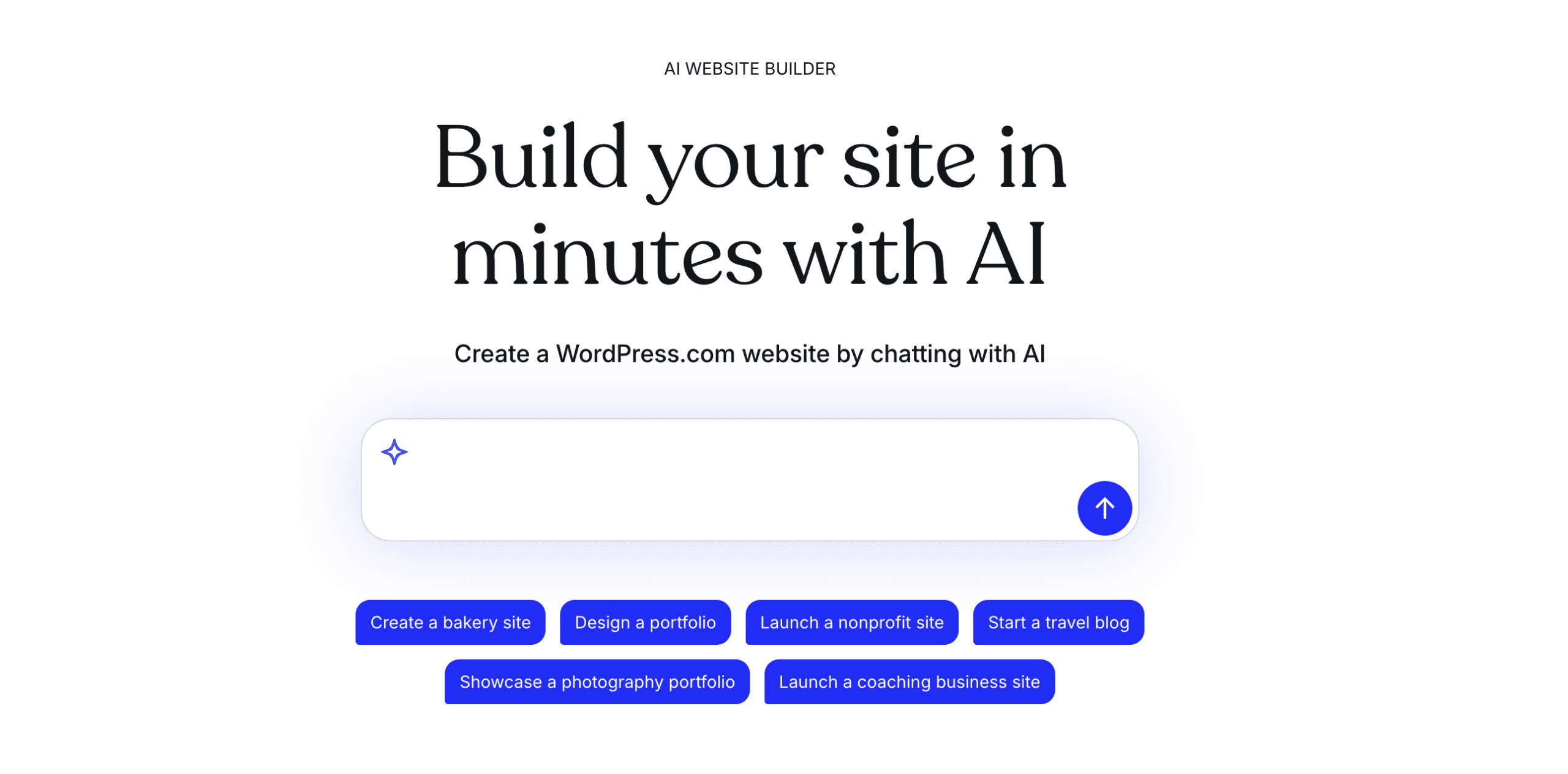
WordPress.com, the hosted version of the world’s most popular CMS, has embraced AI to simplify its onboarding process and accelerate site creation. Its recently launched chat-style builder is a significant step towards making WordPress accessible to an even wider audience. The tool engages users in a conversational manner, asking a series of simple questions about their site’s purpose, content, and desired features. Based on these interactions, the AI quickly generates a comprehensive site draft, complete with suggested pages, relevant text, and appropriate images. This chat-driven approach mimics a personal web designer, guiding users through the initial setup phase. Once the draft is generated, users retain full control to customize the design, refine content, and integrate the vast array of plugins and themes available within the WordPress ecosystem. This makes WordPress.com AI an excellent option for bloggers, content creators, and small businesses who prioritize robust content management capabilities alongside rapid site deployment. -
Durable AI:
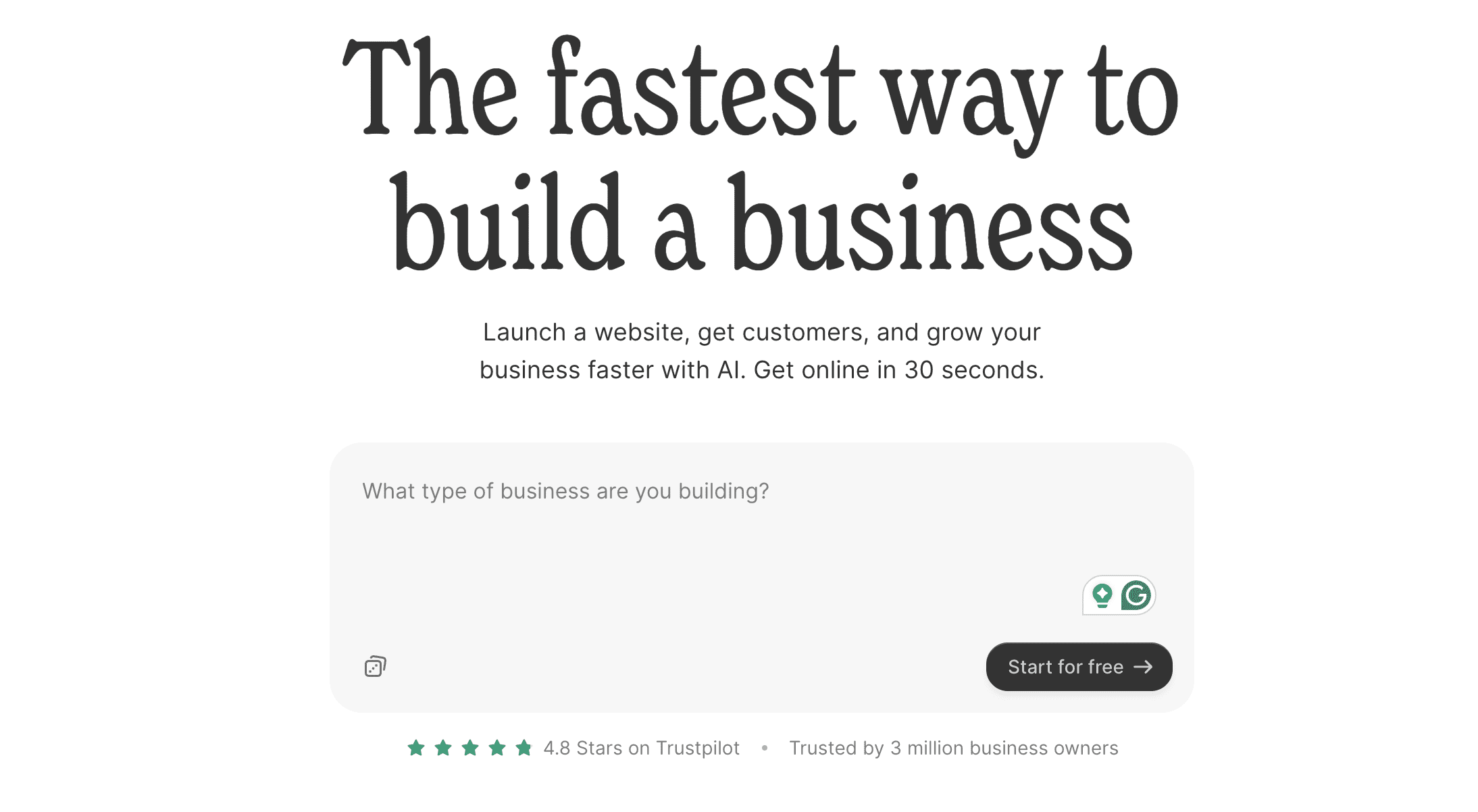
Durable positions itself as the fastest AI website builder, specifically engineered for small businesses and entrepreneurs who need to establish an online presence with minimal friction. Its core promise is rapid site generation, often claiming to create a business website in under 30 seconds. Beyond just website creation, Durable integrates a suite of AI-powered tools for basic business operations, aiming to be an all-in-one digital assistant. These features include built-in customer relationship management (CRM) functionalities to manage client interactions, basic search engine optimization (SEO) tools to improve online visibility, and AI marketing assistants to help craft promotional content. This holistic approach makes Durable particularly attractive to solopreneurs and small business owners who require not just a website but also foundational digital tools to manage and grow their operations efficiently, without investing in multiple separate subscriptions.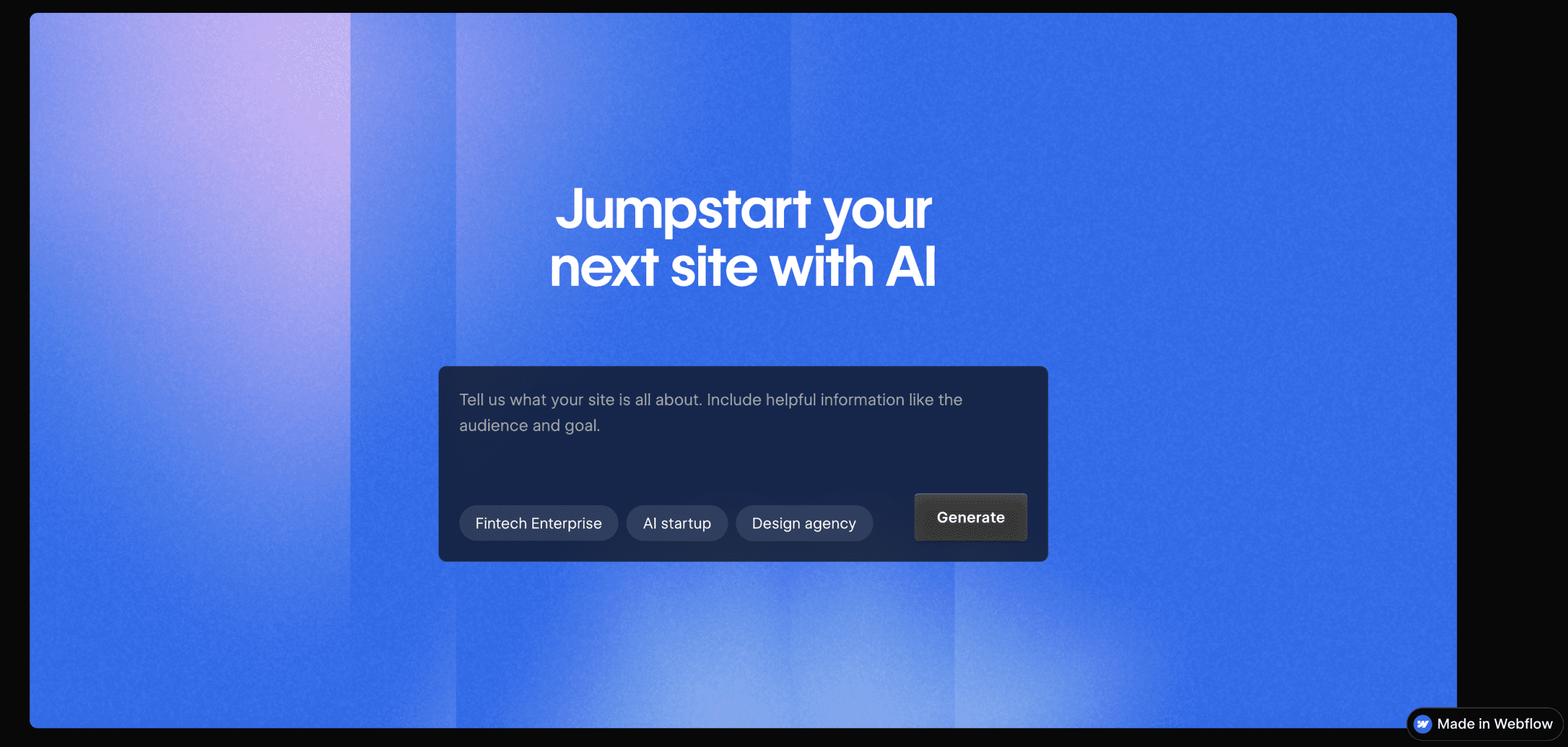
-
Jimdo:
Jimdo has long been recognized for its user-friendly interface and commitment to clean, straightforward designs, offering functional free plans that appeal to individuals and small projects. The platform has consistently integrated AI features to enhance its ease of use and accelerate the website creation process. A notable example is its "Companion" assistant, introduced in late 2025, which provides intelligent suggestions and automates tasks within the builder. Jimdo’s AI capabilities are geared towards simplifying the design and content generation process, making it an ideal choice for users with minimal technical expertise or those who need to quickly set up a professional-looking portfolio or small business site. Its emphasis on rapid setup and a minimal learning curve ensures that users can go from concept to live website in a very short timeframe, embodying the platform’s philosophy of accessible web design. -
Lovable:
Lovable is emerging as a powerful and trending tool that extends beyond traditional website building, positioning itself as a platform for rapidly developing websites, web applications, and even deployable products. It stands out for its advanced integration capabilities, such as seamless Figma imports, allowing designers to transform their high-fidelity mockups directly into functional web pages. Furthermore, Lovable supports backend services like Supabase, enabling users to build more complex, data-driven applications without extensive coding. This makes Lovable particularly valuable for developers, product managers, and startups looking to quickly prototype, iterate, and deploy no-code applications that require robust backend functionality. Its focus on speed, combined with its ability to handle more intricate projects, positions Lovable as a bridge between simple website builders and full-stack development environments, catering to the growing demand for rapid application development (RAD) in the no-code/low-code space.
Industry Perspectives and Broader Implications
The proliferation of AI website builders is reshaping the web development industry in profound ways. Industry analysts, such as those from Gartner and Forrester, have noted a significant uptick in the adoption of AI-powered development tools, projecting continued rapid growth. Data from various market research firms indicates that over 60% of small businesses still lack a strong online presence, a gap that AI builders are uniquely positioned to fill due to their cost-effectiveness and speed.
Impact on Web Designers and Developers:
Initially, some web designers expressed concerns that AI tools might displace human expertise. However, the prevailing sentiment has shifted towards viewing AI as a powerful co-pilot. AI automates repetitive and mundane tasks, such as initial layout generation, content placeholders, and basic SEO, freeing up designers and developers to focus on higher-value activities:
- Strategic Planning: Devising comprehensive digital strategies that integrate user experience (UX), brand identity, and business goals.
- Advanced Customization: Refining AI-generated designs to meet specific client needs, ensuring unique brand aesthetics and complex functionalities.
- Optimization: Conducting in-depth performance optimization, accessibility audits, and conversion rate optimization (CRO).
- Complex Integrations: Implementing bespoke features, third-party APIs, and custom database solutions that require nuanced programming skills.
- Creativity and Innovation: Pushing the boundaries of design and user interaction, which still largely requires human ingenuity.
This shift suggests a future where web professionals evolve into "AI orchestrators," leveraging intelligent tools to enhance their productivity and focus on the intricate, creative aspects of their craft.
Empowering Small Businesses and Entrepreneurs:
Perhaps the most significant impact of AI website builders is the democratization of online presence for small businesses and entrepreneurs. Historically, the cost and time associated with professional web development were prohibitive for many startups and micro-enterprises. AI builders drastically reduce these barriers:
- Cost Efficiency: Many platforms offer robust free tiers or affordable subscription models, making professional-grade websites accessible on a tight budget.
- Speed to Market: Businesses can launch a functional website in hours, not weeks or months, enabling quicker market entry and validation of ideas.
- Reduced Dependency: Entrepreneurs can manage their own digital presence without constantly relying on external developers, fostering greater autonomy.
This empowerment is crucial for economic growth, allowing small ventures to compete more effectively in an increasingly digital marketplace.
Future Trajectory:
The evolution of AI website builders is far from complete. Future developments are likely to include:
- Enhanced Personalization: More sophisticated AI that understands user intent and preferences with greater nuance, delivering hyper-personalized design and content.
- Predictive Design: AI that can anticipate user needs and suggest design elements or functionalities before they are explicitly requested.
- Voice and Multimodal Input: The ability to generate websites not just from text, but also from voice commands, sketches, or even existing brand guidelines.
- Seamless Integration with AI Ecosystems: Deeper integration with other AI tools for marketing, analytics, customer service, and more, creating a truly intelligent digital operations hub.
- Ethical AI in Design: Addressing concerns around data privacy, algorithmic bias in design choices, and ensuring responsible AI development practices.
Conclusion: Tailoring Technology to Needs
The current array of AI website builders presents a compelling solution for anyone looking to establish or enhance their digital footprint with efficiency and innovation. When selecting a tool, the focus should always be on alignment with specific goals rather than merely a list of features. For instance, those prioritizing a comprehensive ecosystem and extensive customization will find Wix to be a formidable all-rounder. Users seeking visually stunning, modern landing pages for quick deployment will likely gravitate towards Framer AI. Professionals requiring deep control and scalability, who view AI as an enhancement to their craft, will find Webflow AI invaluable.

For content-heavy platforms like blogs and news sites, WordPress.com AI offers a familiar and robust environment. Entrepreneurs and small businesses prioritizing speed and integrated operational tools will benefit immensely from Durable. Those seeking the utmost simplicity for portfolios or basic business sites will appreciate Jimdo’s minimal learning curve. Finally, for developers and product builders aiming to rapidly prototype and deploy no-code applications with advanced integrations, Lovable stands out. The availability of free plans or trials across most of these platforms further lowers the entry barrier, allowing users to experiment and find the perfect fit for their digital ambitions. The AI revolution in web development is not just about building websites faster; it’s about fundamentally reshaping who can build, what can be built, and how quickly digital innovation can come to fruition.